
California, often lauded for its stunning coastlines, vibrant cities, and diverse landscapes, is a dream destination for many travelers and a desirable place to live. Whether you’re planning a luxurious escape to Napa Valley, a family adventure to Disneyland, or considering a longer stay to immerse yourself in the local California lifestyle, understanding its unique financial landscape is crucial. One of the most significant financial considerations, particularly for homeowners and those planning a longer-term accommodation in the Golden State, is property tax. This article delves into the intricacies of property tax in California, exploring its origins, how it’s calculated, and its impact on residents and visitors alike.
The Genesis of California Property Tax: Proposition 13
To truly grasp property tax in California, one must understand the foundational legislation that shaped it: Proposition 13. Enacted in 1978, this voter-approved initiative fundamentally altered how real estate is assessed for tax purposes. Before Proposition 13, property taxes were based on the current market value of the property, leading to significant annual fluctuations and often increasing burdens on long-term residents as property values soared.
Proposition 13 aimed to provide stability and predictability for property owners. Its core tenets are:
- Assessment Limitation: It capped the property tax rate at 1% of a property’s assessed value. This means that, generally, the annual property tax will not exceed 1% of the assessed value.
- Acquisition Value Assessment: The assessed value of a property is frozen at its 1975 market value. This value is then reassessed only when the property changes ownership. Upon a new owner acquiring the property, its assessed value is reset to the new purchase price (or fair market value at the time of acquisition).
- Inflationary Adjustment: For properties that have not undergone a change in ownership, the assessed value can increase by no more than 2% per year. This is an annual inflationary adjustment, designed to account for modest increases in value over time without the dramatic spikes seen previously.
The impact of Proposition 13 has been profound and continues to be a subject of debate. For homeowners who purchased their properties decades ago, it has provided immense tax relief, allowing them to benefit from a significantly lower tax burden compared to newer buyers of comparable properties. However, it has also led to disparities in tax burdens between long-term residents and newcomers, and it has significantly impacted the revenue streams for local governments and schools, which rely heavily on property tax.
How is Property Tax Calculated in California?
Understanding the calculation of property tax in California involves two key components: the assessed value of the property and the applicable tax rate.
Assessed Value
As established by Proposition 13, the assessed value is not necessarily the current market value for properties that have not recently changed hands.
- Initial Assessment: When a property is first purchased, its assessed value is set at the acquisition price. For example, if a home in San Francisco is purchased for $1,000,000, its initial assessed value for tax purposes will be $1,000,000.
- Annual Inflationary Adjustment: For properties that remain under the same ownership, the assessed value can increase by up to 2% annually. So, in the second year, the assessed value might be $1,020,000, and in the third year, it could be $1,040,400, and so on.
- Reassessment Upon Change of Ownership: The most significant factor that resets the assessed value is a change in ownership. This includes selling the property, gifting it, or inheriting it in certain circumstances. When a change of ownership occurs, the property is reassessed at its fair market value at the time of the transfer. For instance, if the same home in San Francisco, which was initially assessed at $300,000 and has seen its annual 2% increases, is now worth $1,500,000 on the open market and is sold, its new assessed value will become $1,500,000. This can lead to a substantial jump in property taxes for the new owner.
- New Construction: Additions or new construction on a property also trigger a reassessment of the value of the new construction. The original portion of the property will continue to be assessed under Proposition 13 rules, while the new addition will be assessed at its current market value.
Tax Rate
The “tax rate” is not a single, uniform figure across California. While Proposition 13 set a base rate, the actual tax bill includes additional levies.
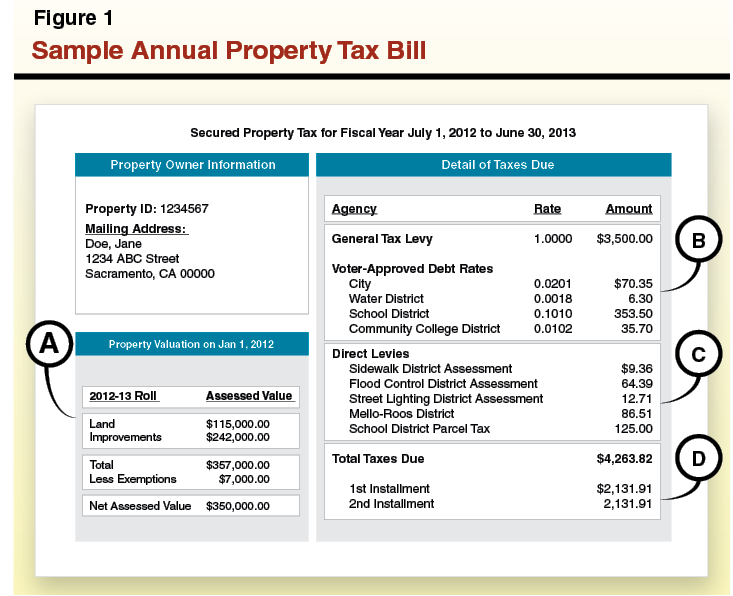
- Base Tax Rate: The fundamental property tax rate in California is 1% of the assessed value. This 1% is allocated to local government services, including schools, police, fire departments, and other public amenities that contribute to the quality of life for residents and visitors alike.
- Local Bonds and Special Assessments: In addition to the base 1%, many local jurisdictions in California have approved various bond measures and special assessments to fund specific local projects or services. These can include funding for schools, libraries, infrastructure improvements, or public safety initiatives. These additional levies are voter-approved and can vary significantly from one city or county to another. For example, a property owner in a district that has passed several school bonds might pay an effective tax rate of 1.1% or 1.2% or even higher, depending on the number and type of these additional assessments.
- Supplemental Taxes: If a property undergoes a reassessment due to a change in ownership or new construction, a supplemental tax bill may be issued. This bill reflects the difference in tax between the old assessed value and the new assessed value for the period between the change of ownership/completion of construction and the end of the fiscal year.
Example of Calculation:

Let’s consider a property in Los Angeles County that was purchased for $700,000 two years ago.
-
Year 1 Assessed Value: $700,000
-
Year 2 Assessed Value: $700,000 * 1.02 = $714,000
-
Assumed Base Tax Rate: 1%
-
Assumed Additional Levies (e.g., local bonds): 0.2%
-
Total Effective Tax Rate: 1.2%
-
Property Tax for Year 2: $714,000 * 0.012 = $8,568
Now, imagine this property is sold today for $1,200,000. The new owner will be assessed at this new value.
- New Assessed Value: $1,200,000
- Property Tax for the New Owner (assuming same tax rate): $1,200,000 * 0.012 = $14,400
This example illustrates the significant increase in property taxes a new owner can face due to the reassessment triggered by a change in ownership.
Factors Affecting Property Tax Bills
Beyond the basic calculation, several other factors can influence the final property tax bill for a homeowner in California:
Exemptions
Certain property owners may qualify for exemptions that reduce their taxable value, thereby lowering their property tax liability.
- Homeowners’ Exemption: This is the most common exemption, providing a reduction of $7,000 from the assessed value of a principal residence. This effectively saves homeowners approximately $70 per year, regardless of their property’s value. To qualify, the property must be the owner’s principal residence as of January 1st of the assessment year.
- Veterans’ Exemption: Eligible disabled veterans may receive additional exemptions.
- Disabled Persons’ Exemption: Similar to the homeowners’ exemption, this can provide further relief for individuals with qualifying disabilities.
- Other Exemptions: There are also exemptions for properties used for religious, charitable, or scientific purposes, though these typically apply to organizations rather than individual homeowners.
Property Type and Location
While the core principles of Proposition 13 apply statewide, the specific tax rate can vary considerably based on the property’s location due to differing local bond measures and special assessments. Furthermore, commercial and industrial properties might be subject to slightly different assessment methodologies or higher tax burdens in some specific districts. Tourist destinations like San Diego or Lake Tahoe may have higher local bond measures to fund tourism-related infrastructure and services, impacting property tax rates in those areas.
Property Tax Limitations and Future Considerations
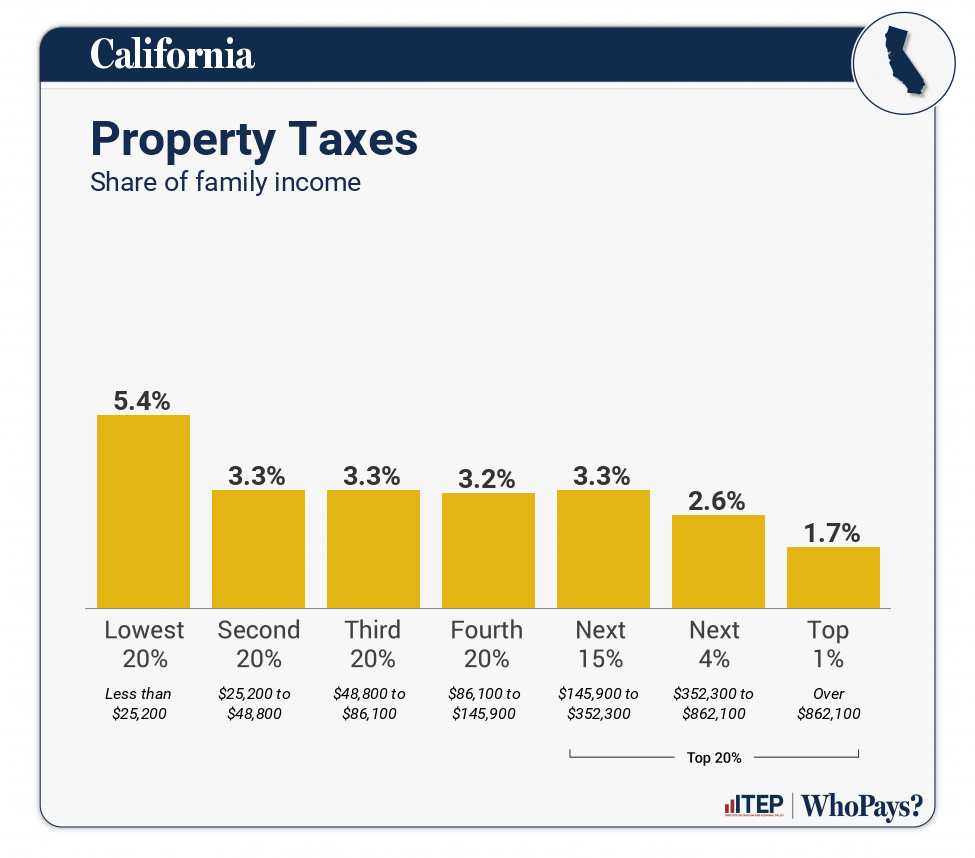
Proposition 13 has been a cornerstone of California‘s property tax system for over four decades. However, its impact and fairness continue to be debated. Critics argue that it creates an uneven playing field, where long-term residents benefit disproportionately from lower taxes compared to newer buyers, potentially hindering mobility and affordability. Supporters contend that it protects homeowners from drastic tax increases and provides stability.
There have been numerous attempts to reform or amend Proposition 13, but none have successfully overturned its fundamental principles. Future discussions and potential ballot initiatives may continue to explore ways to balance the need for local government revenue with the desire for tax fairness and affordability for California residents. For those planning to purchase property, invest in rental accommodations, or even consider long-term stays in a vacation rental in California, understanding the nuances of property tax is an essential part of financial planning. It can influence decisions about where to buy, what to rent, and how to budget for one of the state’s most significant recurring expenses. Whether you are seeking luxury accommodations in Beverly Hills, a charming villa in Sonoma, or a family-friendly resort near Yosemite National Park, understanding property tax is key to a well-informed decision.
LifeOutOfTheBox is a participant in the Amazon Services LLC Associates Program, an affiliate advertising program designed to provide a means for sites to earn advertising fees by advertising and linking to Amazon.com. Amazon, the Amazon logo, AmazonSupply, and the AmazonSupply logo are trademarks of Amazon.com, Inc. or its affiliates. As an Amazon Associate we earn affiliate commissions from qualifying purchases.