
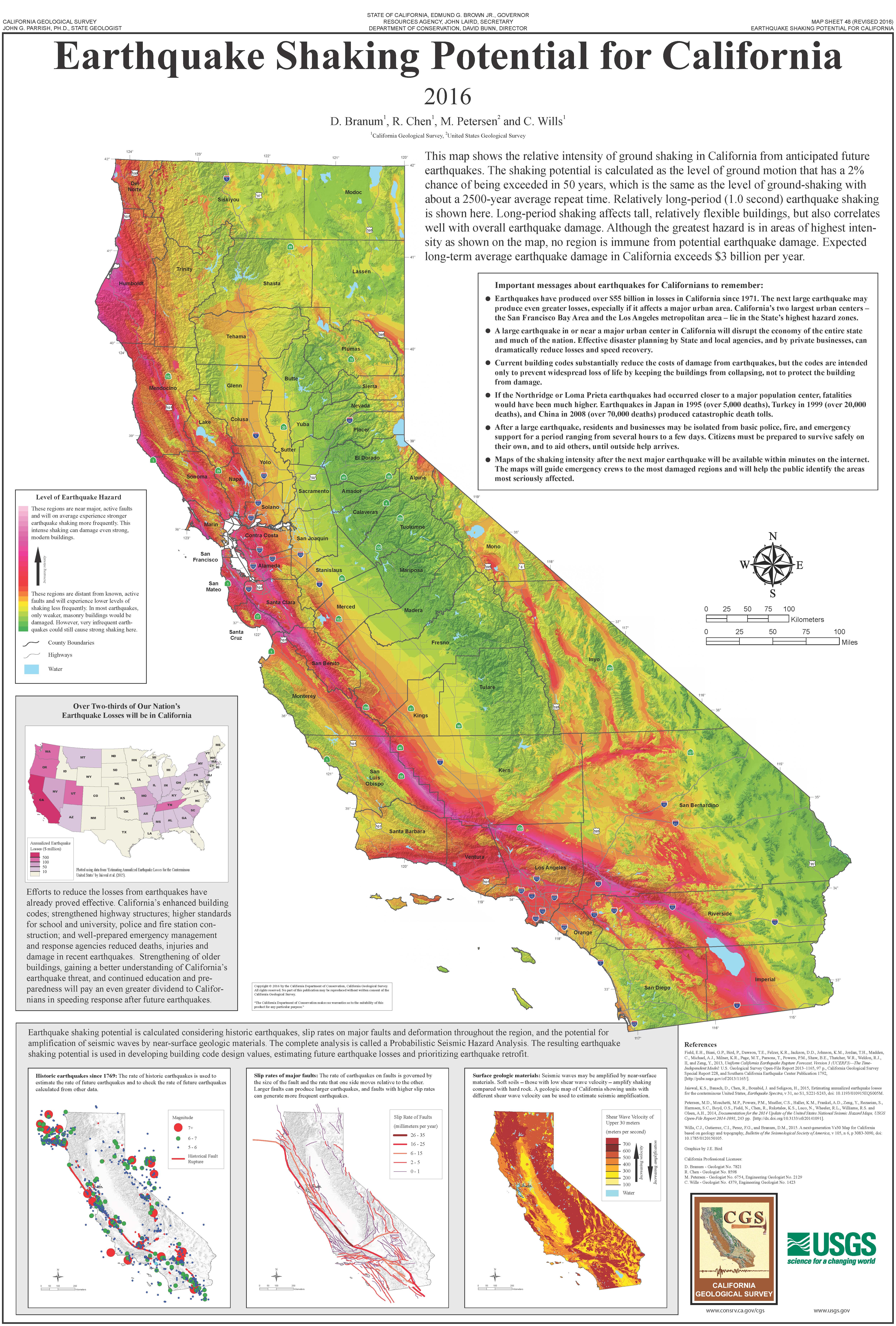
California, a state renowned for its dramatic landscapes, vibrant culture, and iconic landmarks, also holds a significant place in the annals of seismology. The Golden State is no stranger to seismic activity, situated along the notorious San Andreas Fault, a transform fault boundary between the Pacific Plate and the North American Plate. This geological setting makes it prone to powerful earthquakes, shaping its history and influencing its development. While many earthquakes have rattled California over the centuries, one stands out as the most powerful recorded event: the 1906 San Francisco Earthquake.
The Colossus of 1906: A Day of Devastation
The early hours of April 18, 1906, marked a turning point in California’s history. At approximately 5:12 AM, a catastrophic earthquake struck, its epicenter estimated to be offshore, near San Francisco. The magnitude of this seismic event has been estimated to be around 7.9 on the moment magnitude scale, though historical accounts suggest it could have been even higher. The initial ground shaking, lasting for a terrifying 47 to 55 seconds, was just the beginning of the tragedy.
The Unfolding Disaster: Shaking, Fires, and the Aftermath
The earthquake’s sheer force caused widespread destruction. Buildings, many of which were constructed with less resilient materials like brick and unreinforced masonry, crumbled to the ground. The tremor ruptured gas lines and water mains, igniting devastating fires that spread rapidly through the wooden structures of the city. These fires proved to be even more destructive than the initial seismic event, burning for three days and consuming over 4.7 square miles of San Francisco. The lack of a functioning water supply, severely compromised by the earthquake, made firefighting efforts nearly impossible.
The devastation was not confined to San Francisco. The earthquake’s tremors were felt across a vast area of Northern California, from Mendocino in the north to just south of Salinas and Santa Cruz in the south. Communities like Santa Rosa, Sonoma, and San Jose also experienced significant damage. The rupture along the San Andreas Fault extended for an astonishing 296 miles, leaving visible scars on the landscape that can still be observed today in places like Point Reyes National Seashore.
The human cost of the 1906 earthquake was immense. Official figures at the time reported over 3,000 fatalities, though the true number is likely much higher, as many victims were never identified, particularly those consumed by the fires. An estimated 225,000 to 300,000 people were left homeless, a staggering number for the era, leading to a massive displacement and a profound impact on the region’s social and economic fabric. The city of San Francisco, once a thriving metropolis, was reduced to rubble and ash.
The Resilience of San Francisco: Rebuilding and Innovation
Despite the unimaginable destruction, the spirit of San Francisco endured. The city’s residents, along with aid from across the nation, embarked on an ambitious rebuilding effort. This period of reconstruction was not merely about replacing what was lost; it was an opportunity to reimagine and rebuild a more resilient and modern city. New building codes were implemented, emphasizing earthquake-resistant construction. Innovative architectural designs emerged, and the city’s infrastructure was gradually improved.
The recovery process was long and arduous, but it showcased the remarkable resilience and determination of the Californian people. The rebuilding of San Francisco became a symbol of hope and a testament to the human capacity to overcome adversity. The lessons learned from the 1906 earthquake spurred advancements in seismology and earthquake preparedness, influencing how communities in earthquake-prone regions worldwide approached disaster planning.
Beyond 1906: Other Significant Earthquakes in California

While the 1906 earthquake remains the largest and most devastating in recorded California history, it is by no means the only significant seismic event to have impacted the state. California’s geological activity has produced numerous other powerful earthquakes that have left their mark on the landscape and its inhabitants.
The Loma Prieta Earthquake of 1989: A Modern Reminder
More recently, the Loma Prieta Earthquake of 1989 served as a stark reminder of California’s seismic vulnerability. This magnitude 6.9 earthquake, which occurred on October 17, 1989, struck during the pre-game show of the 2013 FIFA U-17 World Cup between the Oakland Athletics and the San Francisco Giants at Candlestick Park in San Francisco, brought the nation’s attention back to the ever-present threat of earthquakes. The earthquake caused widespread damage, most notably the collapse of a section of the Cypress Street Viaduct in Oakland, resulting in numerous fatalities. It also caused significant damage to the San Francisco-Oakland Bay Bridge. The event highlighted the ongoing need for infrastructure improvements and earthquake preparedness in the face of seismic risks.
The Northridge Earthquake of 1994: A Southern California Shake-Up
In Southern California, the Northridge Earthquake of January 17, 1994, was a significant event. This magnitude 6.7 earthquake, originating in the San Fernando Valley, caused extensive damage to buildings and infrastructure, including the collapse of overpasses on the San Diego Freeway and the Golden State Freeway. The earthquake exposed weaknesses in building construction codes and led to further revisions and improvements in seismic safety standards across the region.
Understanding and Preparing for California’s Seismic Future
The history of earthquakes in California underscores a fundamental reality: the state is geologically active, and seismic events are an inevitable part of its future. Understanding the risks associated with earthquakes and implementing robust preparedness measures are crucial for residents, businesses, and the tourism industry alike.
Seismological Science and Early Warning Systems
Advances in seismology have provided invaluable insights into the causes and patterns of earthquakes. Scientists continuously monitor the San Andreas Fault and other fault systems, using sophisticated instruments to detect subtle ground movements and stress build-up. This research not only helps in understanding the potential for future earthquakes but also forms the basis for developing early warning systems. Systems like ShakeAlert, developed by the United States Geological Survey, aim to provide seconds to minutes of warning before strong shaking reaches populated areas, giving people precious time to take protective action.

Tourism and Earthquake Preparedness: A Synergistic Approach
For travelers visiting California, understanding the state’s seismic reality is an important aspect of responsible tourism. While the vast majority of visitors will never experience a significant earthquake, being aware of the potential and knowing basic safety protocols can enhance peace of mind. This includes familiarizing oneself with hotel emergency procedures, identifying safe spots within accommodations, and knowing how to react during an earthquake: “Drop, Cover, and Hold On.”
The tourism sector itself has a role to play in promoting safety. Hotels and resorts in earthquake-prone areas are increasingly investing in seismic retrofitting and implementing comprehensive emergency plans. These establishments often provide guests with information on earthquake safety. For those planning a trip to iconic landmarks like the Golden Gate Bridge or exploring the natural beauty of Yosemite National Park, understanding the geological context of these places adds another layer of appreciation. Even in regions known for luxury travel and upscale resorts, preparedness remains a key consideration.
Ultimately, the history of the largest earthquake in California is a story of immense destruction but also of remarkable recovery and enduring resilience. It’s a narrative that continues to shape the state, driving innovation in engineering, promoting scientific understanding, and fostering a culture of preparedness that is vital for the safety and well-being of all who call California home, and for those who come to explore its wonders.
LifeOutOfTheBox is a participant in the Amazon Services LLC Associates Program, an affiliate advertising program designed to provide a means for sites to earn advertising fees by advertising and linking to Amazon.com. Amazon, the Amazon logo, AmazonSupply, and the AmazonSupply logo are trademarks of Amazon.com, Inc. or its affiliates. As an Amazon Associate we earn affiliate commissions from qualifying purchases.