
The dream of zipping across the Golden State on a high-speed rail system has captivated Californians and travelers alike for decades. The prospect of a swift, efficient, and environmentally friendly way to connect major cities like Los Angeles and San Francisco promises to revolutionize travel within California. However, the question on everyone’s mind remains: when will this ambitious project finally be finished? The answer, unfortunately, is not a simple one, as the California High-Speed Rail project is a complex undertaking facing numerous challenges and evolving timelines.
A Vision for a Connected California
The vision for a high-speed rail network in California is rooted in the need for sustainable transportation solutions and the desire to alleviate the state’s chronic traffic congestion. The project, overseen by the California High-Speed Rail Authority, aims to eventually link San Francisco to Los Angeles and eventually San Diego with trains capable of speeds exceeding 200 miles per hour. This would dramatically reduce travel times between these major urban centers, offering a compelling alternative to air travel and the often gridlocked highways.
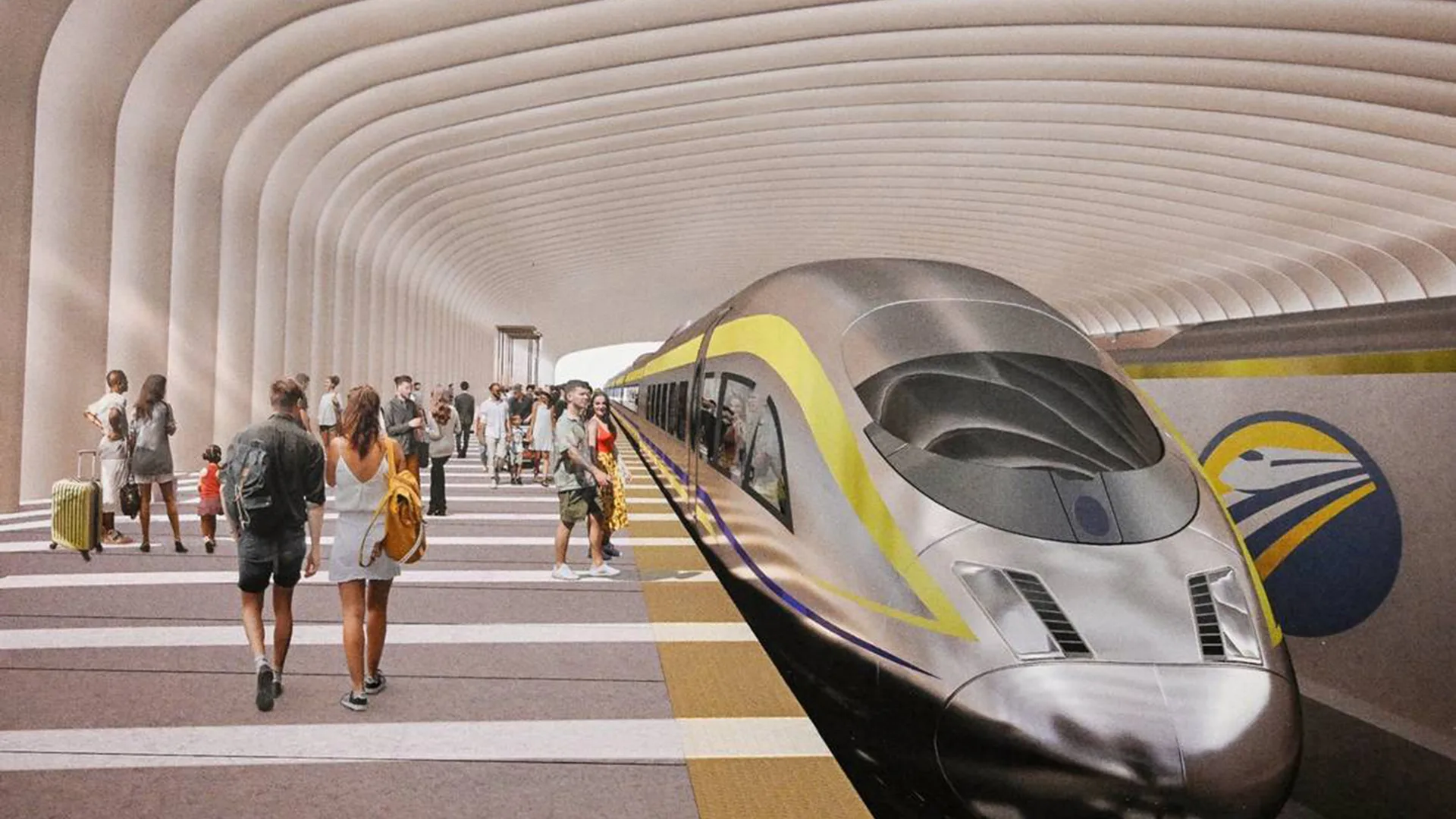
Beyond mere speed, the proponents of the project highlight its significant economic and environmental benefits. High-speed rail is a more energy-efficient mode of transportation compared to cars and airplanes, contributing to reduced greenhouse gas emissions and improved air quality. Economically, the construction and operation of the system are expected to create thousands of jobs, stimulate local economies, and foster new development around stations. The project’s potential to transform how people experience California by making intercity travel seamless aligns perfectly with the spirit of exploration and experiencing new destinations that is central to the travel industry. Imagine arriving in Anaheim from San Jose in under two hours, freeing up more time to explore Disneyland or enjoy the vibrant atmosphere of Southern California.
The Phased Approach: Building Segment by Segment
The sheer scale of the California High-Speed Rail project necessitates a phased approach. Construction is not happening simultaneously across the entire proposed route. Instead, efforts are concentrated on specific segments, with the initial focus on the Central Valley. This strategy allows the authority to gain experience, demonstrate progress, and secure funding for subsequent phases.
The Inaugural Segment: The Central Valley
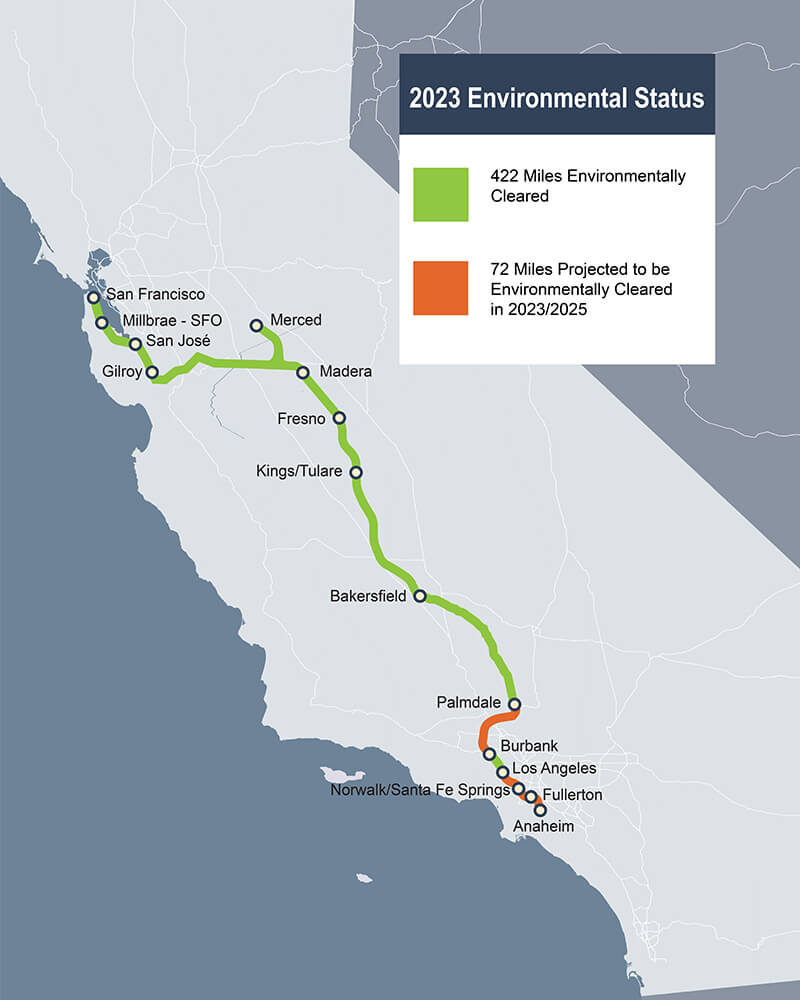
The first operational segment of the high-speed rail line is under construction in the Central Valley, stretching from Bakersfield to Merced. This 119-mile stretch is considered the backbone of the initial phase and is intended to be the first to carry passengers. Significant progress has been made in this area, with viaducts, bridges, and track laying underway. This segment is crucial for proving the technology and operational capabilities of the system before it expands to more densely populated and complex urban environments.
While this Central Valley segment is the most advanced, its completion date has also been subject to revision. Initial projections aimed for passenger service by 2028, a goal that has proven overly optimistic. The current revised target for the Central Valley segment is now closer to 2030. This delay is attributed to a combination of factors, including funding challenges, environmental reviews, land acquisition complexities, and the sheer logistical hurdles of building a high-speed rail line through agricultural land and existing communities.
Overcoming Hurdles: Challenges and Delays
The journey of the California High-Speed Rail project has been anything but smooth. It has encountered significant obstacles that have contributed to its protracted timeline and escalating costs. Understanding these challenges is key to comprehending why a definitive completion date for the entire network remains elusive.

Funding: The Ever-Present Obstacle
Perhaps the most significant hurdle has been securing consistent and adequate funding. The project, initially estimated to cost tens of billions of dollars, has seen its projected expenses increase over time. Funding sources are a mix of state bonds, federal grants, and private investment. However, the flow of these funds has been inconsistent, subject to political shifts and economic fluctuations. The initial bond measure, Proposition 1A passed in 2008, provided a crucial initial investment, but it was not enough to complete the entire system. Subsequent efforts to secure additional state and federal funding, as well as attract private partners, have been met with varying degrees of success. The uncertainty surrounding future funding streams makes it difficult for the authority to commit to firm construction schedules for later phases.
Environmental and Land Use Approvals
Building a high-speed rail line through a state as populous and environmentally diverse as California involves navigating a complex web of environmental regulations and land use approvals. Environmental impact reports are required for each segment, and these processes can be lengthy and contentious. Concerns range from the impact on sensitive habitats and wildlife corridors to noise pollution and visual aesthetics. Furthermore, acquiring the necessary rights of way through private property and existing urban areas presents significant challenges, often leading to lengthy legal battles and negotiations. The process of eminent domain, while sometimes necessary, can significantly slow down construction timelines.
Political and Public Opposition
The high-speed rail project has also faced its share of political opposition and public skepticism. While many support the concept, concerns about its cost, perceived inefficiencies, and the disruption caused by construction have led to vocal opposition from various groups and elected officials. These differing opinions can translate into legislative roadblocks and a lack of sustained political will, further impacting the project’s progress and funding stability. The debate over the project’s priorities and its ultimate benefit to taxpayers is ongoing and influences the pace at which it can move forward.
The Evolving Timeline: What to Expect
Given the complexities, the original target of having the entire system operational by the mid-2020s is no longer realistic. The California High-Speed Rail Authority has revised its projections, and the completion of the full San Francisco to Los Angeles route is now anticipated in the early 2030s, with some segments potentially opening even later.
Phase 1: Connecting the Valley and Expanding South
The immediate focus remains on completing the Central Valley segment between Merced and Bakersfield, with the aim of commencing revenue service around 2030. Following this, efforts will shift towards extending the line south towards Los Angeles and north towards San Francisco. These segments involve navigating some of the most challenging terrain and urban environments in the state, including crossing mountain ranges and integrating into existing city infrastructure. The connection to Los Angeles Union Station is a critical milestone for the southern portion of the line.
Phase 2: The Northern and Southern Extensions
The timeline for the northern extension from San Francisco to a connection with the Central Valley segment, and the southern extension from Bakersfield to Los Angeles, remains less defined. These sections are heavily dependent on securing the substantial funding required and completing extensive planning and environmental reviews. While some preliminary work and environmental studies are underway, full-scale construction on these parts of the system is unlikely to begin in earnest until the mid-2020s, with completion likely stretching into the early 2030s or beyond. The ultimate goal of extending the line to San Diego is even further off, dependent on the success and completion of the initial phases.
In conclusion, the question of “When Will The California High-Speed Train Be Finished?” is a dynamic one. While the dream is closer to reality than ever before, the project’s completion is a long-term endeavor. Travelers and residents of California will need patience as this monumental infrastructure project unfolds. The vision of a high-speed rail network that connects major cities, reduces travel times, and offers a sustainable transportation option for generations to come is a powerful one, and the ongoing progress, however gradual, signifies a commitment to that future. For those interested in experiencing the unfolding progress, the Central Valley segment offers the first glimpse into what this transformative travel experience will be like.
LifeOutOfTheBox is a participant in the Amazon Services LLC Associates Program, an affiliate advertising program designed to provide a means for sites to earn advertising fees by advertising and linking to Amazon.com. Amazon, the Amazon logo, AmazonSupply, and the AmazonSupply logo are trademarks of Amazon.com, Inc. or its affiliates. As an Amazon Associate we earn affiliate commissions from qualifying purchases.