
For anyone planning a trip to the vast and diverse Lone Star State, coordinating a business call with a Texas contact, or simply curious about the clock in this iconic part of the United States, the question “What is the time in Texas right now?” is more nuanced than it might seem. While many assume a single time zone for such a prominent state, Texas actually straddles two distinct zones, a detail crucial for seamless travel, accommodation bookings, and general lifestyle management. This article delves into the intricacies of Texas’ time zones, offering essential insights for adventurers, business professionals, and anyone connecting with this dynamic destination.
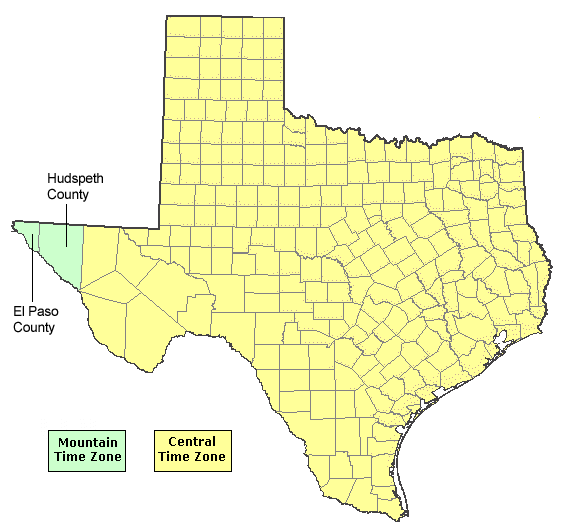
At its heart, the vast majority of Texas observes Central Standard Time (CST), which is UTC-6 during standard time and UTC-5 during Daylight Saving Time (DST). However, a small but significant western sliver of the state, primarily around El Paso, operates on Mountain Standard Time (MST), which is UTC-7 during standard time and UTC-6 during Daylight Saving Time. Understanding this geographical division is paramount for anyone planning to explore the diverse destinations Texas has to offer, from the bustling metropolises of Houston and Dallas to the remote, rugged beauty of its western landscapes. This guide aims to provide clarity, ensuring your Texas experience is timed to perfection, whether you’re navigating urban attractions or embarking on a wilderness adventure.
Navigating Time Zones in the Lone Star State
Texas’ colossal size makes it one of the largest states in the United States, spanning nearly 800 miles from east to west at its widest point. This expansive geography naturally leads to a division in its observed time. For most travelers and residents, Central Time will be the default, governing the rhythms of daily life, business, and leisure across the majority of the state’s vibrant cities and charming towns. However, to ignore the presence of Mountain Time would be to invite unnecessary logistical challenges, particularly for those venturing into the far western reaches.
Central Time vs. Mountain Time: The Texas Divide
The vast majority of Texas falls squarely within the Central Time Zone. This encompasses major economic hubs, cultural centers, and popular tourist destinations like Houston, Dallas-Fort Worth, Austin, and San Antonio. When someone typically asks about the time in Texas, they are almost always referring to Central Time. During standard time, CST is six hours behind Coordinated Universal Time (UTC-6).
However, a unique exception exists in the westernmost part of the state. The counties of El Paso and Hudspeth observe Mountain Time. This means that these areas are consistently one hour behind the rest of Texas. For instance, if it’s 3:00 PM in Dallas, it will be 2:00 PM in El Paso. This distinction becomes particularly important when planning inter-state travel or scheduling calls between different regions of Texas.

Both time zones in Texas observe Daylight Saving Time (DST), which typically begins on the second Sunday in March and ends on the first Sunday in November. During DST, clocks are moved forward by one hour. This means CST becomes Central Daylight Time (CDT) (UTC-5), and MST becomes Mountain Daylight Time (MDT) (UTC-6). This consistent application of DST across the state ensures that the one-hour difference between Central and Mountain Time is maintained year-round, simplifying coordination once the initial time zone is identified.
Practical Implications for Travelers and Business
Understanding Texas’ time zones is not merely an academic exercise; it has tangible implications for various aspects of travel and business. For visitors, a miscalculation could lead to missed flights, late hotel check-ins, or exasperating delays for pre-booked tours and activities. Imagine flying from Houston (Central Time) to El Paso (Mountain Time): if your flight arrives at 10:00 AM Central Time, you’d actually land at 9:00 AM Mountain Time, gaining an hour. While this can sometimes be a pleasant surprise, the reverse scenario – traveling eastward and losing an hour – can cause significant disruption if not anticipated.
For accommodation, most hotels, resorts, and apartments strictly adhere to local check-in and check-out times. Arriving an hour late for a check-in could risk losing your reservation or incurring additional fees. Similarly, restaurant reservations, particularly for popular dining experiences in cities like Austin or San Antonio, are strictly time-bound. A missed reservation due to a time zone oversight can be frustrating, especially when planning special evenings out during your tourism adventure.
From a business perspective, the time difference can affect everything from conference calls and virtual meetings to supply chain logistics and delivery schedules. Companies operating across the state must clearly communicate local times to avoid confusion and ensure efficient operations. For international travelers or business associates, knowing Texas’ specific time zones in relation to Greenwich Mean Time (GMT) or UTC is essential for effective global communication. Whether you’re arranging a luxury travel experience or coordinating a business stay, a clear understanding of the local time is the first step toward a successful endeavor.
Time-Sensitive Travel: Planning Your Texas Itinerary
Texas offers an unparalleled array of experiences, from historic sites to vibrant urban districts and breathtaking natural landscapes. Effective planning, particularly concerning time, is the key to maximizing your trip. This is especially true for those undertaking extensive road trips across the state, which might involve transitioning from Central to Mountain Time zones.
Scheduling Attractions and Experiences
Every major Texas landmark and attraction operates on local time, and their opening and closing hours are fixed accordingly. Consider visiting the iconic Alamo in San Antonio or the Space Center Houston; their operating hours are set by Central Time. If you’re coming from a different time zone within Texas or even another state, factor in that potential adjustment. A carefully planned morning visit can quickly become an afternoon rush if you lose an hour crossing a time zone boundary without realizing it.
For those exploring the rugged beauty of Big Bend National Park or the unique desert landscape around El Paso, time zone awareness is critical. These areas primarily observe Mountain Time. Activities like hiking, guided tours, or even simply catching a sunset in Big Bend require precise timing. Miscalculating an hour could mean missing a sunrise vista or arriving too late for a guided trek. Always double-check the local time for any pre-booked tours or specific entry windows, especially when dealing with popular national parks or limited-access historical sites. For instance, an early morning departure planned for 7 AM Central Time for an activity in El Paso means you’d need to start your activity at 6 AM Mountain Time, potentially requiring a much earlier start than anticipated.

Moreover, the sun’s schedule changes with time zones. While Central Texas might experience a particular sunrise and sunset, West Texas (Mountain Time) will have its own distinct schedule, often with later sunrises and sunsets. This can influence the optimal timing for outdoor photography, scenic drives, or even just deciding when to head out for dinner.
Accommodation and Dining Across Time Zones
When it comes to accommodation, every check-in and check-out time is dictated by the local time zone of the hotel, resort, or rental property. If you’re driving from Austin (Central Time) to a boutique hotel in El Paso (Mountain Time), you’ll technically gain an hour upon arrival. This can be beneficial, potentially allowing for an earlier check-in. However, the reverse journey from El Paso to Dallas means losing an hour, and arriving “on time” based on your departure zone could actually make you an hour late for your hotel booking, risking a cancellation or a late fee. Always confirm the local time for your booking and plan your travel accordingly. This applies to all forms of accommodation, from budget-friendly motels to luxury suites.
Dining experiences are equally time-sensitive. A reservation at a highly sought-after restaurant on San Antonio’s River Walk or in Houston’s culinary scene is based on Central Time. Arriving late, even by an hour due to a time zone miscalculation, could mean forfeiting your table. Similarly, if you plan to enjoy local cuisine during your tourism adventures, be mindful of kitchen closing times, which strictly adhere to the local clock.
Beyond logistics, adjusting your internal clock is an important aspect of travel across time zones, even domestically. While a one-hour shift might not induce severe jet lag, it can still affect your energy levels, appetite, and sleep patterns, especially if you’re sensitive to such changes. Building a little flexibility into your schedule, especially on arrival days, can help you acclimate more comfortably and enjoy your Texas experience fully.
Mastering the Clock: Tips for a Seamless Texas Trip
Navigating Texas’ time zones doesn’t have to be a source of stress. With a few simple strategies, you can ensure your trip unfolds smoothly, allowing you to focus on the incredible destinations, unique local culture, and memorable experiences awaiting you.
Technology as Your Time Zone Ally
In the modern age, technology is your best friend when it comes to time zone management.
- Smartphones and Devices: Most modern smartphones, smartwatches, and laptops automatically update to the local time zone when connected to the internet or cellular network. This is incredibly convenient but always ensure your device’s automatic time zone setting is enabled.
- World Clock Features: Utilize the “World Clock” feature on your smartphone to quickly view the current time in different Texas cities (e.g., Dallas for CST and El Paso for MST). This visual comparison can prevent confusion when coordinating plans across the state.
- Time Zone Converter Apps and Websites: Numerous online tools and mobile applications are designed specifically for converting time zones. These are invaluable for planning complex itineraries or scheduling important calls. Simply input your current location and desired Texas city, and it will instantly display the current local time.
Always verify that your devices are indeed showing the correct local time upon arrival in a new time zone. Sometimes, especially with older phones or spotty network coverage, manual adjustment might be necessary.
Cultivating a Time-Aware Mindset
Beyond technology, adopting a proactive and time-aware mindset is crucial for a smooth Texas journey.
- Double-Check Everything: When making reservations for hotels, flights, car rentals, tours, or dining, explicitly confirm the time zone. Many confirmation emails will specify local time, but it’s always wise to re-read carefully.
- Clear Communication: If you are coordinating with others – whether it’s family, friends, tour operators, or business colleagues – always specify the time zone. Instead of just saying “Let’s meet at 2 PM,” say “Let’s meet at 2 PM Central Time” or “2 PM El Paso time.” This eliminates ambiguity and ensures everyone is on the same page.
- Build in Buffer Time: When traveling long distances within Texas that cross the time zone boundary, build extra buffer time into your schedule. This flexibility accounts for potential delays, allows for a relaxed adjustment, and mitigates the impact of losing or gaining an hour. It’s especially important for those on budget travel who might have tighter schedules.
- Embrace Flexibility: While planning is essential, unexpected delays or changes can occur. Cultivating a flexible attitude will help you adapt to minor inconveniences, including slight time discrepancies, without letting them derail your overall travel experience. Remember, the goal is to enjoy the journey, not just adhere rigidly to a schedule.
In conclusion, understanding “what is the time in Texas right now?” requires a brief look at a map. While the vast majority of the state operates on Central Time (currently one hour behind Eastern Time and two hours ahead of Pacific Time), the Mountain Time Zone in El Paso and Hudspeth County is a critical detail for certain itineraries. By leveraging technology and adopting a mindful approach to scheduling, you can confidently navigate the temporal landscape of Texas and immerse yourself fully in its rich tapestry of culture, history, and natural beauty. Whether your Texas adventure involves exploring bustling cities, relaxing at a resort, or discovering remote landmarks, a little time zone savvy will ensure your journey is nothing short of extraordinary.
LifeOutOfTheBox is a participant in the Amazon Services LLC Associates Program, an affiliate advertising program designed to provide a means for sites to earn advertising fees by advertising and linking to Amazon.com. Amazon, the Amazon logo, AmazonSupply, and the AmazonSupply logo are trademarks of Amazon.com, Inc. or its affiliates. As an Amazon Associate we earn affiliate commissions from qualifying purchases.