
Navigating the intricacies of selling a car in the Golden State can feel as complex as planning a multi-city itinerary across California. While your mind might be on discovering hidden gems in Big Sur or enjoying the vibrant nightlife of Los Angeles, the practicalities of transferring ownership require precise attention. One crucial step is understanding precisely where to sign the title. This document is the legal proof of ownership, and any errors in its signing can lead to significant delays or even invalidate the sale. This guide aims to demystify the process, ensuring a smooth transaction, whether you’re a seasoned traveler or a local resident.
Understanding the California Certificate of Title
Before delving into the specifics of signing, it’s essential to grasp what the California Certificate of Title is and why it’s so important. This official document, issued by the California Department of Motor Vehicles (DMV), contains vital information about your vehicle, including its make, model, year, Vehicle Identification Number (VIN), and current registered owner(s). When you sell your car, you are essentially transferring this legal ownership to the buyer. The title acts as the key to this transfer.
Key Information on the Title
When you hold your California Certificate of Title, you’ll notice several sections. For the purpose of selling your vehicle, two primary areas are of concern: the “Odometer Disclosure” section and the “Seller’s Signature” section. The odometer reading is critical for accurately reflecting the vehicle’s usage, and the seller’s signature officially signifies their intent to relinquish ownership. It’s vital to ensure all information is accurate and legible. Any discrepancies can lead to issues with the DMV, potentially requiring you to apply for a replacement title or correct existing errors, which can be a time-consuming process, akin to navigating the winding roads of the Pacific Coast Highway without a map.
The Seller’s Role
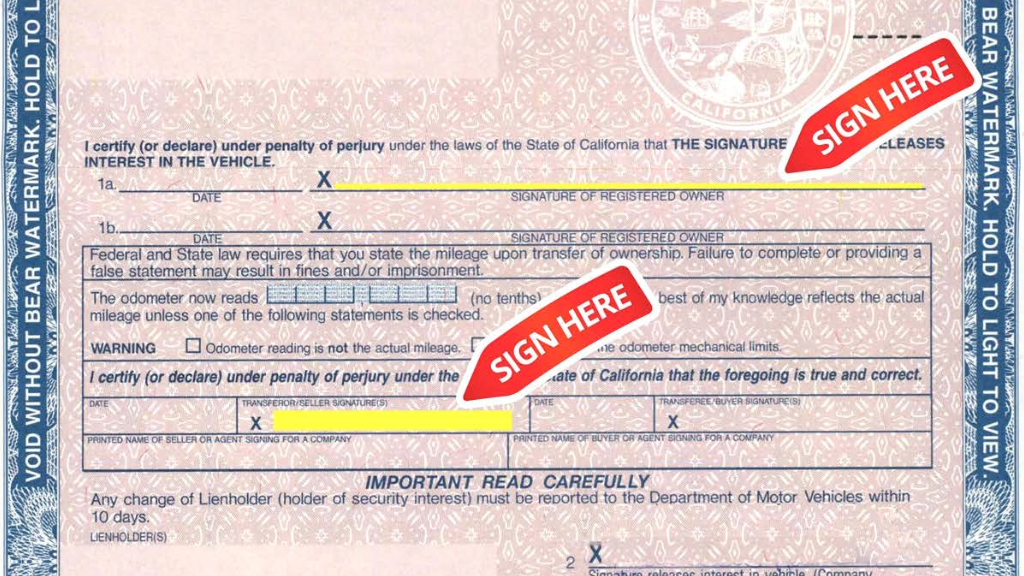
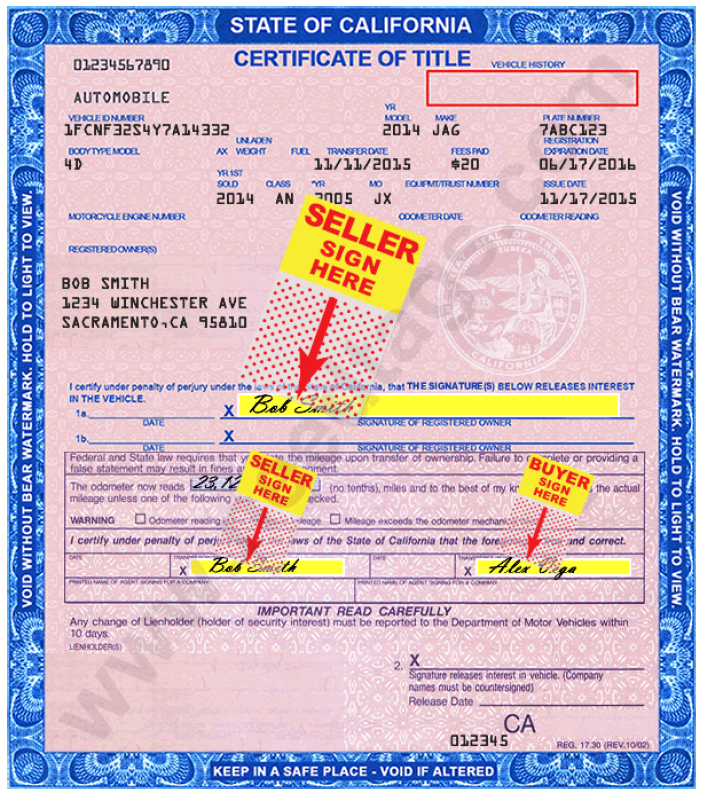
As the seller, you are the one who needs to sign the title to indicate that you are transferring ownership. The buyer, in turn, will sign their portion to acknowledge receipt and intent to register the vehicle in their name. The exact location of these signatures is crucial. The DMV provides specific fields for these actions, and it’s imperative to use them. Failing to sign in the designated areas can render the title incomplete and unprocessable, causing headaches for both parties.
Locating the Signature Areas on the Title
The California Certificate of Title is designed with specific sections for various actions, including the transfer of ownership. For sellers, the critical area is typically found on the back of the title. It will often be labeled as “Signature(s) of Registered Owner(s)” or similar wording. Alongside this, you will usually find a section for the “Odometer Reading” and the “Date of Sale.”
The Seller’s Signature Line
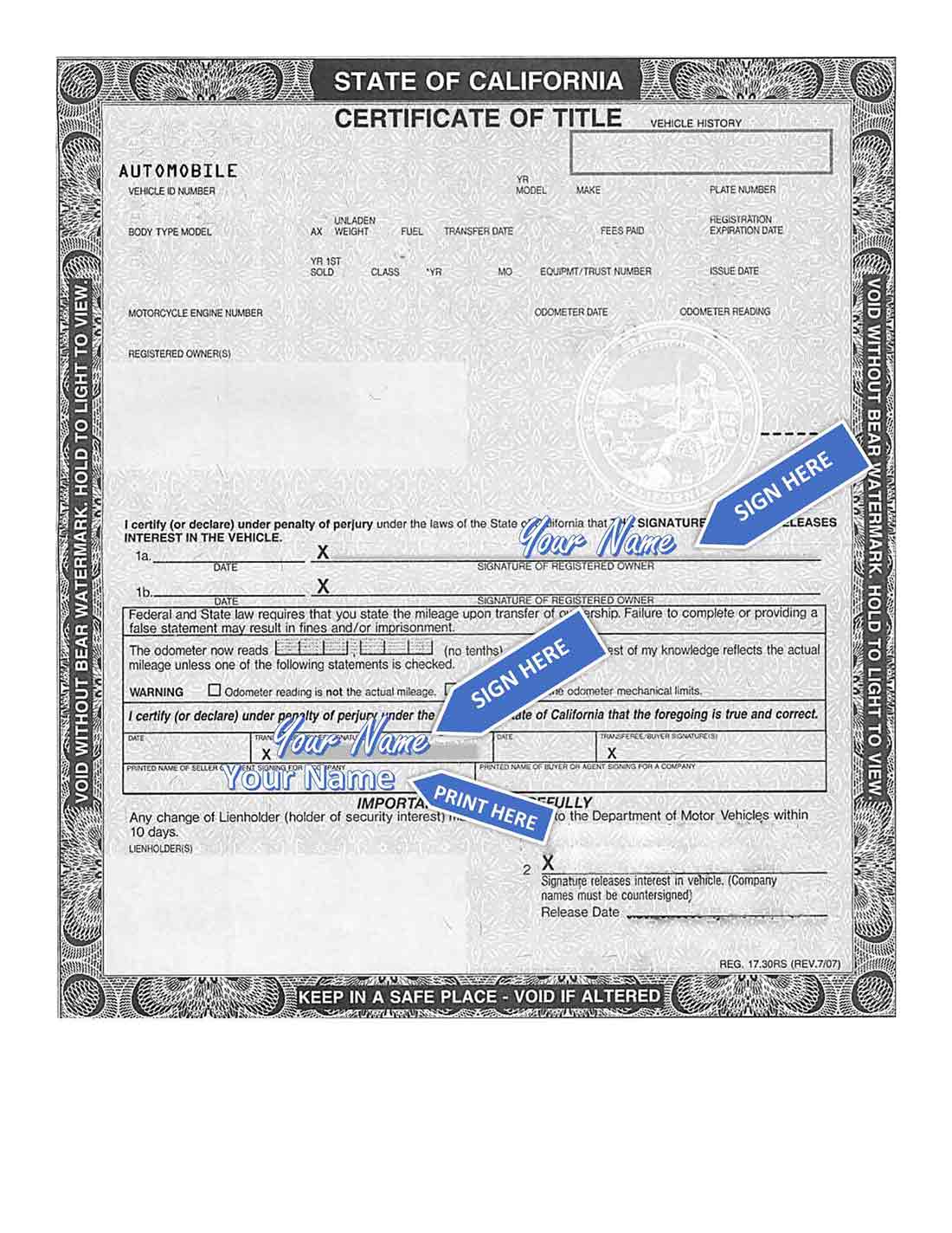
When you are ready to finalize the sale, locate the designated line for your signature. This is where you, as the legal owner, will formally endorse the document, indicating your agreement to transfer ownership to the buyer. It’s crucial to sign your name exactly as it appears on the front of the title. If there are multiple owners listed on the title (e.g., spouses), all registered owners will need to sign. The title will specify if the signatures are required to be “and” or “or” between owners. For example, if the title lists “John Doe and Jane Doe,” both must sign. If it lists “John Doe or Jane Doe,” only one of them needs to sign.
The Buyer’s Signature Line
The buyer will have their own designated section to sign, confirming their intent to purchase the vehicle and take legal ownership. This usually appears in close proximity to the seller’s signature area. It’s good practice for both parties to be present when signing, allowing for immediate clarification of any questions and ensuring all parties understand the transaction. This is similar to the collaborative planning required for a family vacation to Disneyland, where everyone needs to be on the same page.
Odometer Disclosure
The odometer reading is a mandatory field that must be filled out accurately. This section is crucial for preventing odometer fraud. You will need to write down the exact mileage shown on your car’s odometer at the time of sale. Be precise; even a few miles can make a difference. If your vehicle has an odometer that is broken or has rolled over, there are specific instructions on the title or DMV website for how to disclose this. Misrepresenting the odometer reading can have serious legal consequences.
Common Pitfalls and How to Avoid Them
Mistakes when signing a car title can be costly and time-consuming, akin to booking the wrong flight to San Francisco and realizing it only upon arrival. Understanding the most common errors can help you avoid them.
Incomplete Information
Failing to fill out all required fields is a frequent mistake. This includes not providing the buyer’s name and address, not accurately recording the odometer reading, or neglecting to sign in the correct spot. Always double-check that every blank space relevant to the transfer of ownership is completed legibly and accurately. This meticulousness is as important as ensuring your booking for a luxury resort in Napa Valley is confirmed with all amenities.
Illegible Signatures
A signature that cannot be read by the DMV clerk can cause the title to be rejected. Ensure your signature is clear and matches the name printed on the title. If you have a very illegible signature, consider printing your name clearly next to your signature. This ensures clarity, much like a well-written travel guide makes navigating a new city like San Diego effortless.
Signing in the Wrong Place
The title has specific fields for different purposes. Signing in a section meant for lienholder information or other administrative details, rather than the seller’s signature area, will invalidate the transfer. Always refer to the instructions on the title or the DMV‘s official website for the correct placement of signatures.
Alterations or White-Out
Never use white-out or attempt to erase any information on the title. Any alterations can make the title void. If you make a mistake, it is often best to surrender the title to the DMV and apply for a duplicate, explaining the situation. This is a more secure approach than attempting to correct errors, much like you wouldn’t try to “fix” a faulty tour booking with a pen; you’d contact the agency.
Not Transferring with the Sale
If you sold the car “as-is,” you still need to properly sign over the title to the buyer. The sale of the vehicle legally obligates you to complete the title transfer documentation. This is a fundamental part of the transaction and cannot be bypassed, regardless of the sale terms.
What to Do After Signing the Title
Once you’ve signed the title and completed all necessary fields, your responsibility as the seller isn’t entirely over. The next steps are crucial for protecting yourself and ensuring the buyer can legally register the vehicle.
Notifying the DMV
In California, it is highly recommended, and in some cases legally required, to file a Notice of Transfer and Release of Liability (NRL) with the DMV. This is a critical step that informs the DMV that you are no longer the owner of the vehicle. It protects you from parking tickets, traffic violations, and any accidents that may occur after the sale. You can typically file the NRL online or by mail. This is akin to sending a confirmation email after booking a flight to Hawaii; it serves as proof of your transaction.
Keeping a Copy
It is wise to make a photocopy or take a clear picture of the signed title before handing it over to the buyer. This serves as your personal record of the transaction and can be invaluable if any disputes or issues arise later. This record-keeping is as important as keeping your hotel booking confirmations when embarking on a lavish getaway to Las Vegas.
Bill of Sale
While not always mandatory for title transfer in California, a Bill of Sale is a highly recommended document. It acts as a receipt for the transaction, detailing the vehicle’s information, the sale price, the date of sale, and the names and signatures of both the buyer and seller. This document can be crucial in resolving any disputes about the sale terms or vehicle condition. It’s like having a detailed itinerary for a complex tour across Europe, providing clarity and accountability.
By understanding these steps and potential pitfalls, selling your car in California can be a straightforward process, allowing you to focus on your next adventure, whether it’s exploring the wine regions of Sonoma or relaxing on the beaches of Malibu. Remember, proper documentation and adherence to DMV procedures are key to a successful and hassle-free sale.
LifeOutOfTheBox is a participant in the Amazon Services LLC Associates Program, an affiliate advertising program designed to provide a means for sites to earn advertising fees by advertising and linking to Amazon.com. Amazon, the Amazon logo, AmazonSupply, and the AmazonSupply logo are trademarks of Amazon.com, Inc. or its affiliates. As an Amazon Associate we earn affiliate commissions from qualifying purchases.