
Chicago, a city synonymous with architectural marvels and a breathtaking skyline, has long been a beacon for those fascinated by towering structures. For decades, its buildings have pushed the boundaries of engineering and design, creating a visual spectacle that draws millions of visitors each year. When considering the impressive urban landscape of the Windy City, one question inevitably arises: what stands as its tallest building? The answer, a testament to modern ambition and innovation, is the Willis Tower.
This iconic skyscraper, previously known to many as the Sears Tower, has held the title of Chicago’s tallest building since its completion in 1973. Its imposing presence dominates the city’s panorama, a constant reminder of Chicago’s legacy as a pioneer in skyscraper development. Beyond its sheer height, the Willis Tower is a multifaceted landmark, offering unique experiences and contributing significantly to the city’s tourism and cultural fabric. This article will delve into the history, features, and significance of Chicago’s tallest structure, exploring why it remains a must-visit destination for any traveler.
A Legacy of Height: The Rise of the Willis Tower
The story of the Willis Tower is intrinsically linked to the history of skyscraper construction in Chicago. Following the Great Chicago Fire of 1871, the city embarked on a remarkable period of rebuilding and innovation, leading to the development of early skyscrapers. By the mid-20th century, the ambition to construct even taller buildings was palpable. The Sears, Roebuck and Company, then the world’s largest retailer, commissioned a new headquarters that would not only be functional but also a symbol of its immense success and reach.
The Architectural Vision and Engineering Prowess
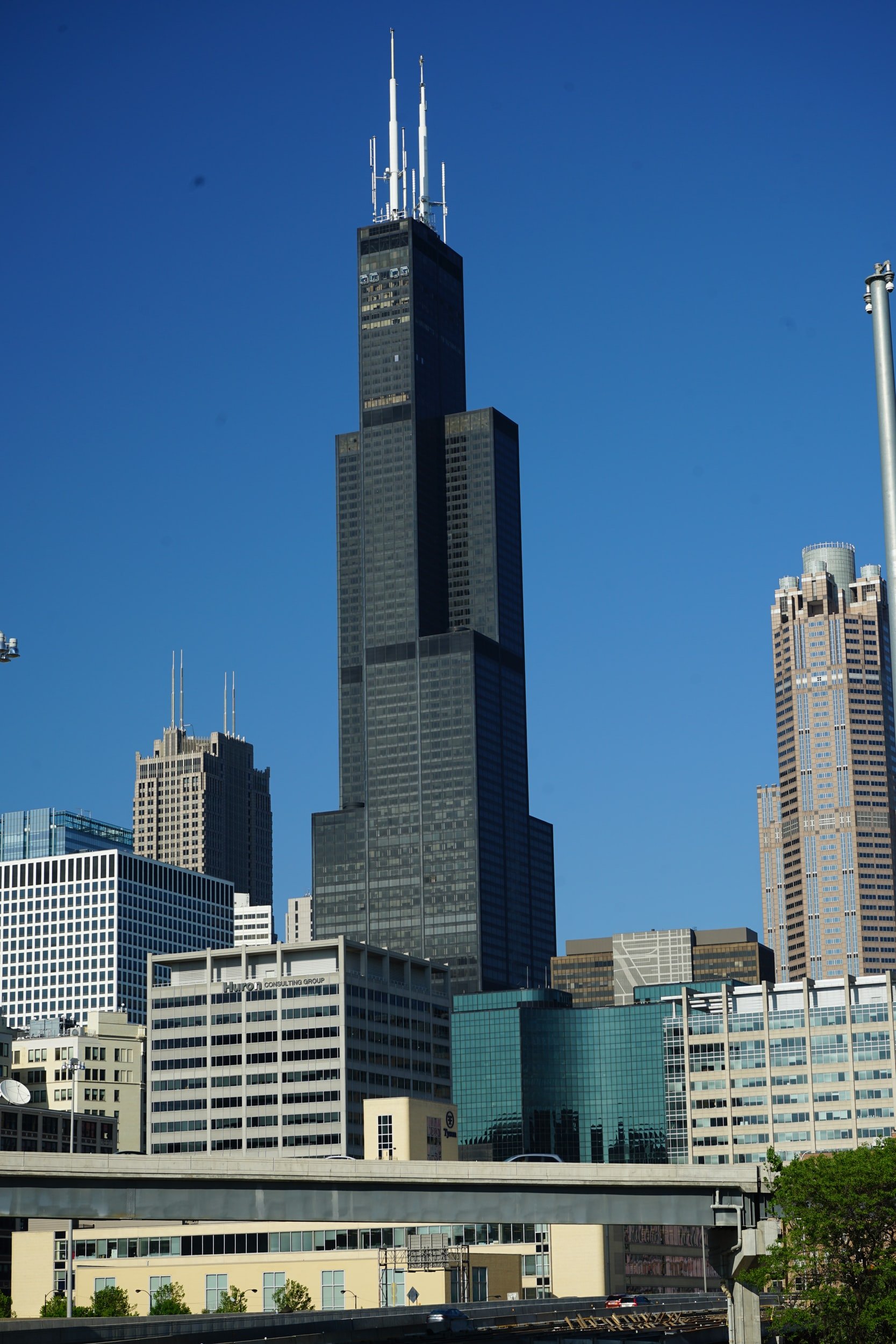
The design of what would become the Willis Tower was a monumental undertaking. Architects Skidmore, Owings & Merrill (SOM), led by Bruce Graham and Fazlur Khan, envisioned a structure that was both aesthetically striking and structurally sound. Khan, a pioneering structural engineer, developed the bundled tube system for the building, a revolutionary concept that allowed for unprecedented height and stability. This innovative design, featuring nine square tubes clustered together, distributed the building’s immense weight and resisted wind loads, which are particularly significant in a city like Chicago situated on the shores of Lake Michigan.
Construction began in August 1970, and the project was completed in a remarkably swift timeframe, with the building officially opening in 1973. The Willis Tower quickly surpassed the World Trade Center in New York City to become the tallest building in the world, a title it held for nearly 25 years. This achievement cemented Chicago’s reputation as a global leader in architectural innovation and set a new benchmark for skyscraper development worldwide. The building’s distinctive shape, with its setbacks creating a stepped appearance, is instantly recognizable and has become an integral part of the Chicago skyline.
The sheer scale of the project was staggering. Over 2,000 workers were employed during its construction, and the building required an enormous amount of materials. It stands at a staggering 1,450 feet (442 meters) to the roof, with its antennas reaching an even greater height. The Willis Tower is not just a tall building; it’s a testament to human ingenuity and the relentless pursuit of pushing architectural and engineering boundaries. Its construction represented a significant leap forward in skyscraper technology, influencing the design of many future tall buildings across the globe.
Experiencing the Skyline: Attractions within the Willis Tower
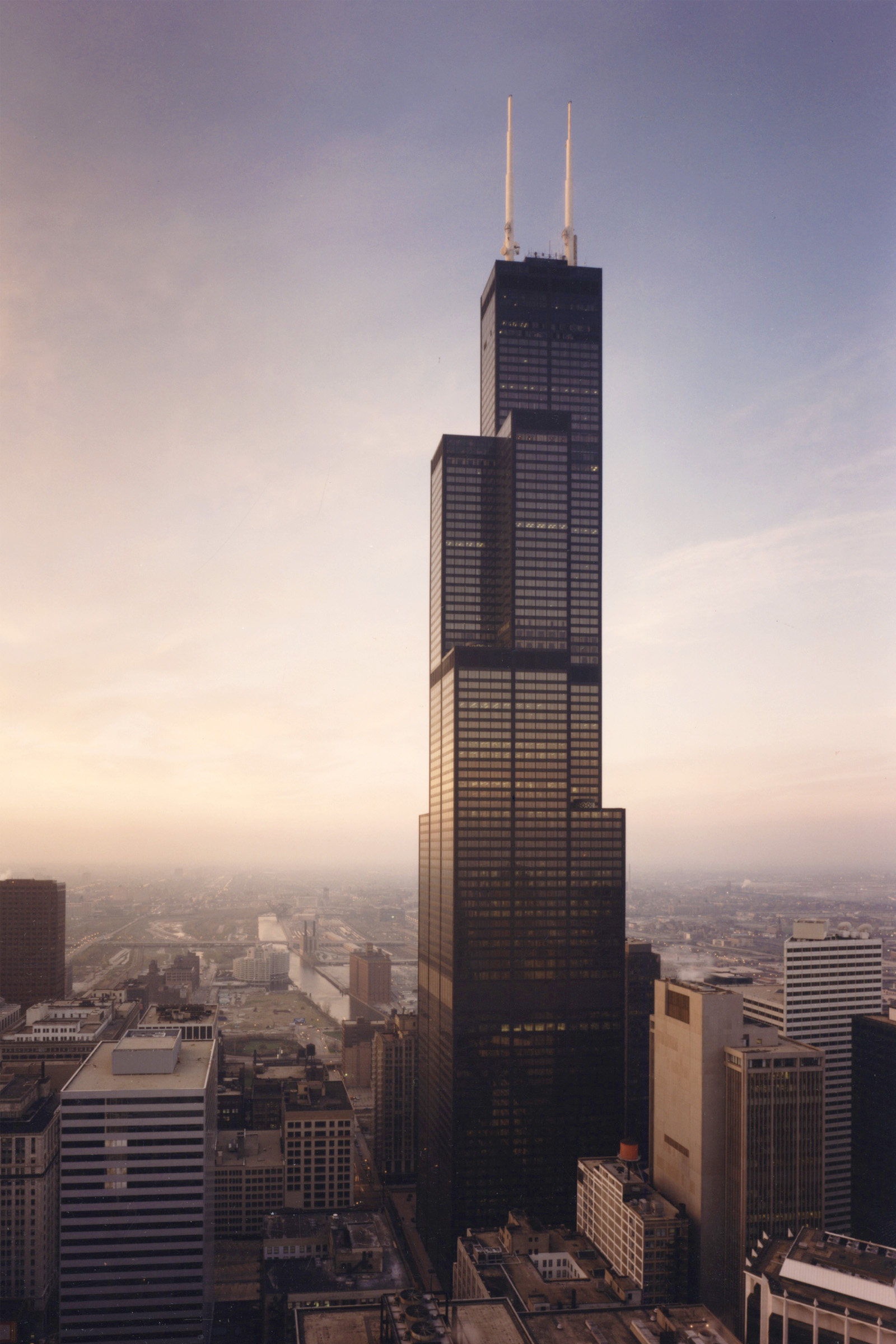
While its height is its most defining characteristic, the Willis Tower offers much more than just a towering presence. It is a vibrant hub of activity, housing offices, restaurants, and, most famously, a world-renowned observation deck that provides unparalleled views of Chicago and beyond. This makes it a prime attraction for tourists and locals alike, offering a unique perspective on the city’s sprawling urban landscape and its geographical setting.
The Skydeck Chicago: A Bird’s-Eye View
The jewel in the Willis Tower’s crown for visitors is undoubtedly the Skydeck Chicago. Located on the 103rd floor, this observation deck provides an exhilarating 360-degree panorama of Chicago, stretching out over four states on a clear day: Illinois, Indiana, Wisconsin, and Michigan. The view encompasses iconic landmarks, the shimmering waters of Lake Michigan, and the intricate network of streets and avenues that define the city’s layout.
To enhance the experience, the Skydeck features “The Ledge,” a series of glass boxes that extend 4.3 feet out from the side of the building. Standing within one of these transparent enclosures, with nothing but a pane of glass between you and the dizzying drop below, is a thrilling and unforgettable experience. It allows visitors to truly grasp the immense scale of the Willis Tower and the city it presides over. For photography enthusiasts, the Skydeck offers unparalleled opportunities to capture the essence of Chicago’s architectural grandeur and its dynamic urban life.
Beyond the breathtaking views, the Skydeck also provides educational exhibits that delve into the history and architecture of Chicago. Visitors can learn about the city’s pioneering role in skyscraper development, the engineering marvels behind its iconic buildings, and the cultural significance of its urban design. This blend of thrilling views and informative content makes the Skydeck a comprehensive and engaging tourist destination.
Beyond the Observation Deck: The Willis Tower’s Role in Chicago
The Willis Tower is more than just a tourist attraction; it is a vital component of Chicago’s economic and cultural landscape. Its imposing structure houses a significant number of businesses, contributing to the city’s status as a major commercial center. The building’s presence has also influenced the surrounding area, spurring development and enhancing the vibrancy of the downtown district.

A Hub of Commerce and Culture
As a major office building, the Willis Tower is home to numerous corporations, employing thousands of people daily. This economic activity is crucial to Chicago’s prosperity, making the tower a symbol of the city’s commercial prowess. Its central location makes it easily accessible for business travelers and contributes to the bustling atmosphere of the Loop, Chicago’s central business district.
In recent years, the Willis Tower has undergone significant renovations to enhance its appeal as a mixed-use development. These upgrades have included improvements to the public spaces, the addition of new retail and dining options, and enhancements to the visitor experience at the Skydeck. These investments aim to ensure the building remains a relevant and attractive destination for both business and leisure, solidifying its place in Chicago’s evolving urban narrative.
The tower’s impact on the city’s identity cannot be overstated. It is a landmark recognized globally, a shorthand for Chicago’s architectural ambition and its impressive skyline. For those who live in or visit Chicago, the Willis Tower is a constant, reassuring presence, a symbol of the city’s enduring strength and its forward-looking spirit. Whether one is marveling at its height from afar or experiencing the city from its Skydeck, the Willis Tower offers a profound connection to the spirit of Chicago. Its status as the tallest building in Illinois is not merely a statistic; it is a defining characteristic of a city that continues to reach for the sky.
LifeOutOfTheBox is a participant in the Amazon Services LLC Associates Program, an affiliate advertising program designed to provide a means for sites to earn advertising fees by advertising and linking to Amazon.com. Amazon, the Amazon logo, AmazonSupply, and the AmazonSupply logo are trademarks of Amazon.com, Inc. or its affiliates. As an Amazon Associate we earn affiliate commissions from qualifying purchases.