
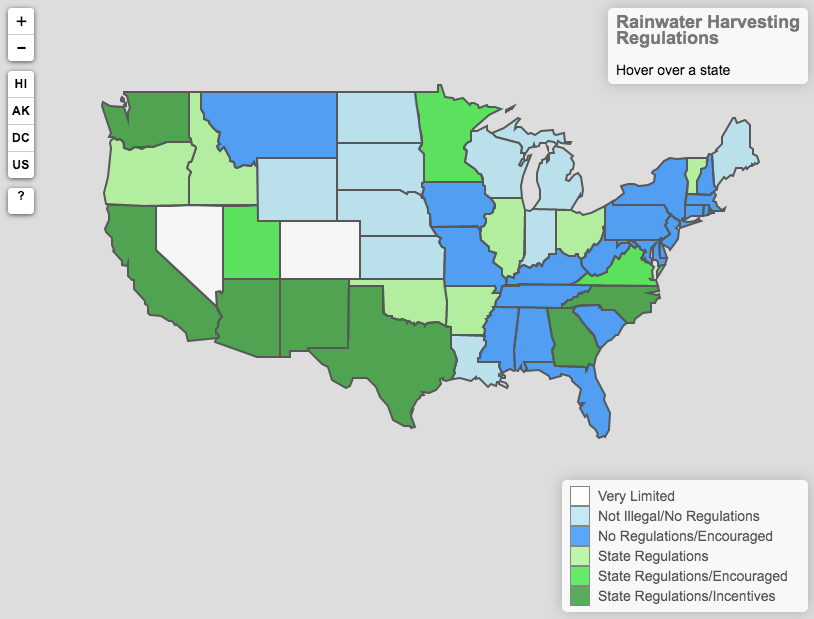
The arid beauty of Colorado is undeniable, from the towering Rocky Mountains to the vibrant cities like Denver. Yet, for many visiting or considering a lifestyle change to this stunning state, a peculiar and often surprising law emerges: the prohibition against collecting rainwater. This isn’t a mere suggestion or a local quirk; it’s a deeply ingrained legal principle with roots in the state’s history and its unique approach to water management. Understanding why Colorado has such stringent regulations on rainwater harvesting requires a journey into the state’s water rights system, its arid climate, and the delicate balance of resources.

The Complexities of Water Law in the West
The answer to why Colorado prohibits individual rainwater collection lies primarily in its adherence to the doctrine of “prior appropriation.” This doctrine, a cornerstone of water law across much of the American West, operates on the principle of “first in time, first in right.” It means that whoever first put water to beneficial use has the senior claim to that water, regardless of their proximity to the water source. This system developed in the 19th century out of necessity, as settlers and miners needed to secure water for their endeavors in a region where water is scarce.
Prior Appropriation and Its Implications
In a place like Colorado, where water is a precious and often limited commodity, every drop is accounted for. The state’s water system is designed to ensure that existing water rights holders, ranging from large agricultural operations to municipalities and even some industrial users, receive their allocated water. When it rains, that precipitation eventually flows into streams, rivers, and underground aquifers, becoming part of the state’s managed water system.
Under the prior appropriation doctrine, any water that falls on your property and then flows off—be it into a stream or a ditch—is considered part of the public water supply. By collecting rainwater, individuals are, in essence, intercepting water that would otherwise contribute to this public supply and be subject to existing water rights. This diversion, even if it’s just a few gallons from a rain barrel, could theoretically diminish the water available for those with senior rights.
The legal framework in Colorado views rainwater as belonging to the “public domain” once it leaves the rooftop and begins to flow. This might seem counterintuitive. After all, the rain falls on your property, doesn’t it belong to you? Legally, however, the state asserts ownership and control over all water resources within its borders to ensure equitable distribution and prevent the chaotic depletion of a vital resource.
This legal perspective is crucial for understanding the restrictions. It’s not about preventing people from enjoying the benefits of rain; it’s about maintaining the integrity of a complex system designed to manage scarcity. The fear is that widespread, unregulated rainwater collection could destabilize this system, impacting downstream users and potentially leading to water shortages for communities and industries that rely on a consistent supply.
This doctrine extends beyond just rainwater. It also affects how surface water and groundwater are managed. In Colorado, simply owning land doesn’t grant you the right to divert water from a river or well on that land without proper adjudication and a valid water right. Rainwater collection, in this context, is seen as an unadjudicated diversion.
Historical Context and the Arid Climate
The historical development of water law in the American West is inextricably linked to the region’s naturally arid climate. Areas like Colorado receive significantly less precipitation than many other parts of the United States. This scarcity has historically driven innovation and conflict over water resources.
The Genesis of Water Rights
In the early days of settlement, prospectors, ranchers, and farmers needed to secure water to survive and thrive. Without a clear system of water allocation, disputes would have been constant and potentially violent. The prior appropriation doctrine emerged as a pragmatic solution, encouraging investment and development by providing a degree of certainty regarding water access.
The “beneficial use” clause is also important here. Water rights are granted for specific purposes – irrigation, municipal supply, industrial use, recreation, etc. Collecting rainwater for personal use, while beneficial to the individual, hasn’t traditionally been recognized as a “beneficial use” that warrants a formal water right under the prior appropriation system.
The state legislature recognized the need to manage this vital resource efficiently. Laws were enacted to define how water could be used, who could use it, and how much they could use. These laws are not arbitrary; they are the product of decades of experience, legal precedent, and the ongoing challenge of serving a growing population in a water-limited environment.
Moreover, the geography of Colorado plays a significant role. Much of the state’s water originates as snowmelt in the high Rocky Mountains. This snowpack is carefully monitored and managed, as it feeds the major rivers that serve not only Colorado but also other downstream states through interstate compacts. Any action that potentially diminishes this flow, even at a local level, can have broader implications.
Evolving Perspectives and Limited Exceptions
While the general prohibition on rainwater collection in Colorado remains, it’s important to note that the legal landscape is not entirely static. Recognizing the growing interest in water conservation and sustainable practices, the state has made some limited exceptions and is continually reviewing its water policies.
The “Rain Barrel Bill” and Modern Interpretations
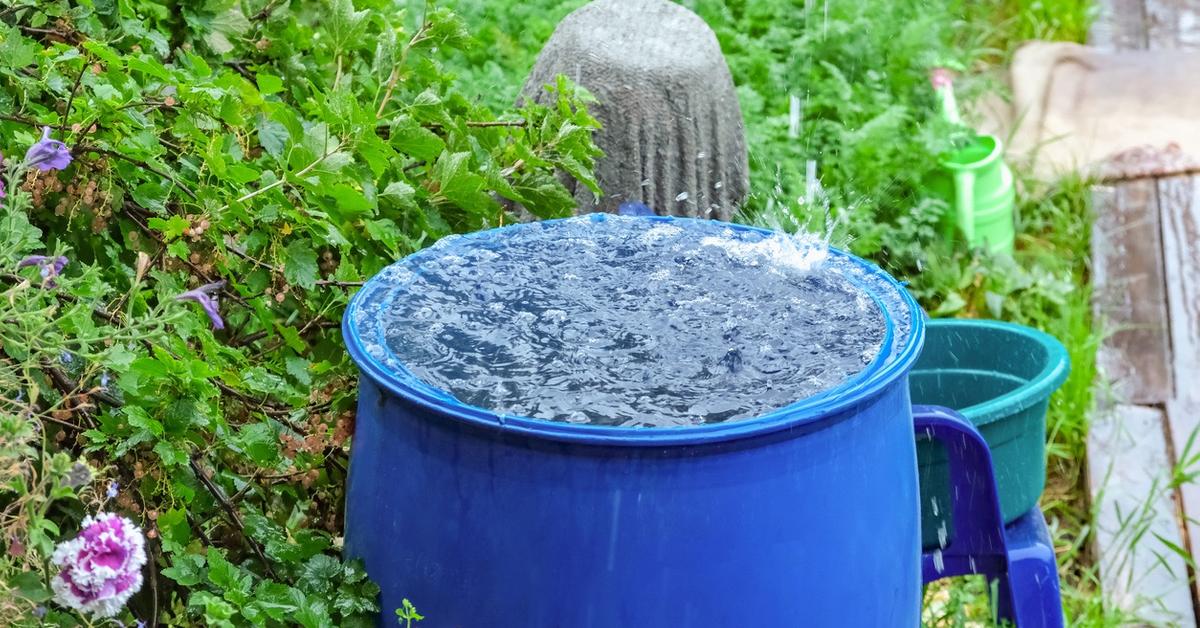
In more recent years, there have been legislative efforts to allow for limited rainwater harvesting. For instance, the “Rain Barrel Bill,” enacted in 2014, created an exception allowing individuals to collect and use rainwater from their roofs for non-potable purposes, specifically for landscaping. However, this exception comes with strict limitations. Typically, the amount of water that can be collected is capped, and the water must be used on the property from which it is collected. It cannot be stored in large quantities, and it cannot be used for drinking or other potable purposes without proper treatment and permitting.
These exceptions are a testament to the evolving understanding of water management. They acknowledge that small-scale, responsible rainwater harvesting can contribute to water conservation efforts, especially in urban areas where landscaping can be a significant water consumer. However, these allowances are carefully crafted to avoid undermining the foundational principles of the prior appropriation doctrine.
The distinction between collecting for landscaping versus other uses is significant. Using collected rainwater for gardening can reduce reliance on municipal water supplies, which are often derived from senior water rights. However, using it for potable purposes would require a much more rigorous system of testing and regulation to ensure public health and safety.
It’s also worth noting that the specifics of rainwater collection laws can vary by municipality or water conservancy district within Colorado. While state law provides the overarching framework, local regulations might impose additional restrictions or offer more specific guidance. Therefore, anyone considering installing a rain barrel or any form of rainwater harvesting system in Colorado should always consult with local authorities and relevant water management agencies to ensure compliance.
The evolution of these laws reflects a broader trend towards water-wise living. As climate change presents new challenges and populations grow, finding innovative ways to conserve and manage water becomes increasingly critical. While Colorado may have a reputation for strict rainwater laws, the exceptions being carved out, however limited, indicate a willingness to adapt and embrace more sustainable practices, while always prioritizing the established framework of water rights that is vital to the state’s existence.
Ultimately, the prohibition on widespread, unregulated rainwater collection in Colorado is not an arbitrary rule but a carefully considered consequence of its legal and environmental realities. It’s a system designed to ensure fairness and sustainability in a region where water is the lifeblood of its communities, its tourism industry, and its breathtaking natural landscapes, from the Garden of the Gods to the peaks of Aspen.
LifeOutOfTheBox is a participant in the Amazon Services LLC Associates Program, an affiliate advertising program designed to provide a means for sites to earn advertising fees by advertising and linking to Amazon.com. Amazon, the Amazon logo, AmazonSupply, and the AmazonSupply logo are trademarks of Amazon.com, Inc. or its affiliates. As an Amazon Associate we earn affiliate commissions from qualifying purchases.