
Navigating the nuances of Florida‘s driving laws, especially for younger drivers, can be a complex undertaking. The question of whether a 16-year-old can drive with passengers in the Sunshine State is a common one, impacting families planning road trips, teenagers eager for independence, and anyone considering hiring young drivers for local errands or transport. The answer, like many legal matters, isn’t a simple yes or no; it’s intricately tied to the specific licensing stage a 16-year-old holds. Florida operates under a graduated driver licensing system designed to gradually introduce new drivers to the responsibilities and challenges of operating a vehicle. This system acknowledges that driving is a skill that requires practice and experience in progressively complex situations.

For 16-year-olds in Florida, the key determinant of their passenger-carrying privileges hinges on whether they possess a learner’s permit or a Florida driver’s license. The distinctions between these two are crucial for understanding the limitations and freedoms afforded to them on the road. It’s vital for both young drivers and their guardians to be well-informed about these regulations to ensure compliance and, more importantly, safety. This guide will delve into the specifics of Florida‘s laws regarding 16-year-old drivers and passengers, providing clarity for those seeking to understand the rules of the road.
Understanding Florida’s Graduated Driver Licensing Program
Florida‘s Graduated Driver Licensing (GDL) program is a multi-stage process designed to ensure that new drivers gain experience in a controlled environment before being granted full driving privileges. This program is not unique to Florida, as many states have adopted similar approaches to enhance road safety. The GDL system is built on the principle that unsupervised driving for novice drivers carries a higher risk, and therefore, restrictions are gradually lifted as the driver matures and demonstrates competence.
The GDL program in Florida typically involves three main stages:
Stage 1: Learner’s Permit
This is the initial step for most individuals seeking a driver’s license. To obtain a learner’s permit, an applicant must be at least 15 years old, have completed a Traffic Law and Substance Abuse Education (TLSAE) course, and passed a vision and hearing screening. Once the learner’s permit is issued, the young driver is allowed to practice driving under specific conditions.
A critical restriction for learner’s permit holders, regardless of age, is the requirement for a licensed driver aged 21 or older to occupy the front passenger seat. This supervising driver must hold a valid Florida driver’s license. The purpose of this restriction is to provide immediate guidance and intervention if the permit holder makes a mistake or faces a difficult driving situation. This stage is all about supervised practice and familiarization with the driving environment.
Stage 2: Intermediate Driver’s License
After holding a learner’s permit for at least one year (or turning 18, whichever comes first) and completing 50 hours of supervised driving (including 10 hours at night), a 16-year-old can apply for an intermediate driver’s license. This is often referred to as a Provisional Driver’s License. To obtain this license, the applicant must be at least 16 years old, have held their learner’s permit for at least a year, completed the required supervised driving hours, and passed a driving skills test.
This intermediate license grants the young driver more freedom than a learner’s permit but still comes with significant restrictions, especially concerning passengers. While the presence of a supervising adult in the front seat is no longer mandatory for every trip, the limitations on who else can be in the vehicle are in place to mitigate risks associated with peer influence and inexperience.
Passenger Restrictions for 16-Year-Old Drivers in Florida
The core of the question—whether a 16-year-old can drive with passengers—is directly addressed by the rules governing the intermediate driver’s license. In Florida, a 16-year-old holding an intermediate driver’s license faces specific passenger limitations designed to enhance safety.
Who Can a 16-Year-Old Drive With?
A 16-year-old with an intermediate driver’s license in Florida can drive with passengers, but with crucial stipulations. The primary restriction is related to the age and licensing status of the passengers.

-
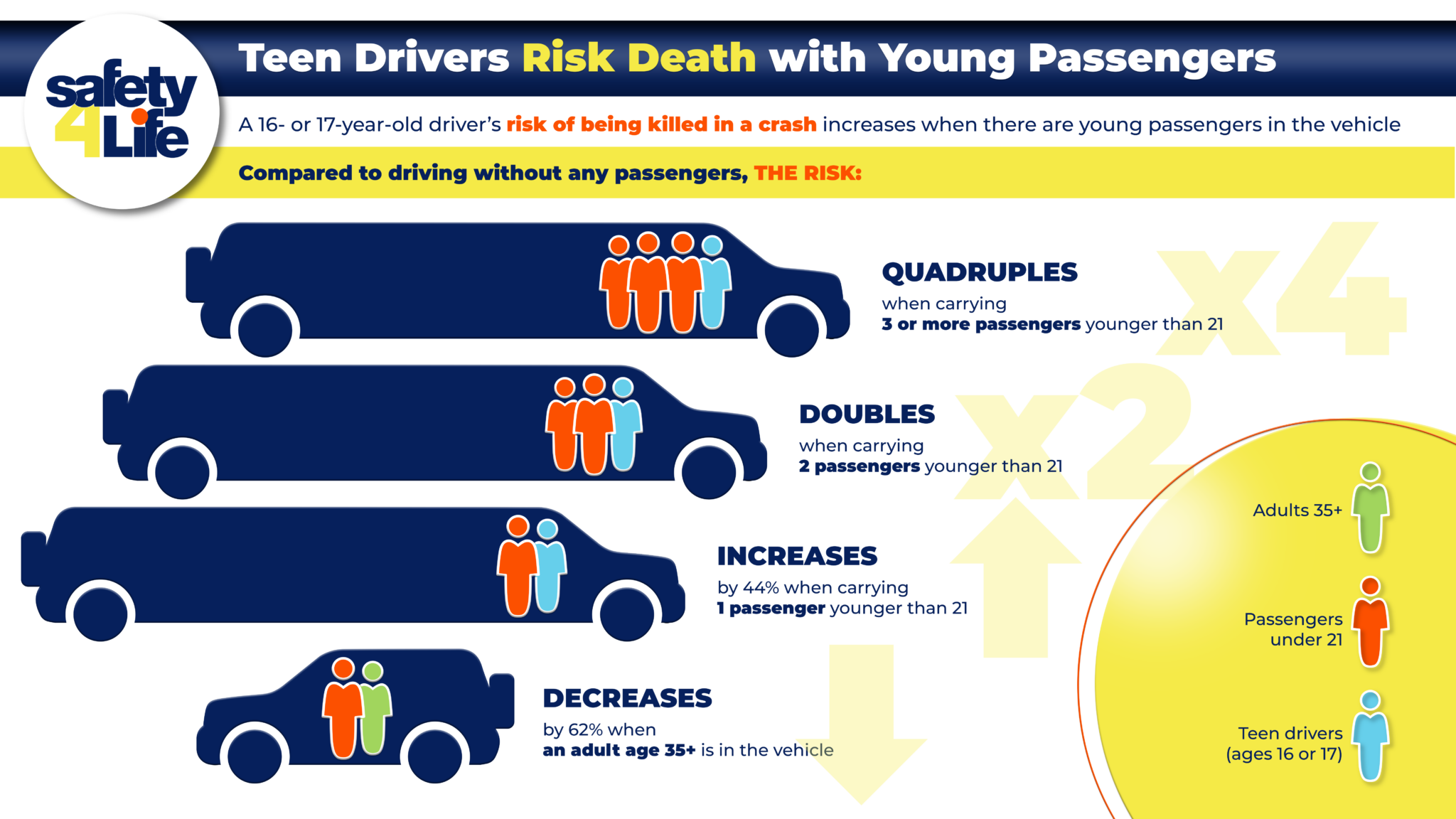
One Passenger Under the Age of 21: A 16-year-old driver is generally permitted to have one passenger under the age of 21 in the vehicle. This passenger must not be a member of the driver’s immediate family. The rationale behind this rule is to limit the potential for distraction from friends or peers while still allowing for some social engagement. Having only one non-family passenger under 21 is intended to reduce the likelihood of the driver being influenced by a car full of friends.
-
Immediate Family Members: The restriction on carrying multiple passengers under 21 does not apply to immediate family members. This means a 16-year-old can drive with their parents, siblings, or other close relatives who are under the age of 21, provided they are also licensed. The definition of “immediate family” typically includes parents, stepparents, guardians, siblings, half-siblings, step-siblings, grandparents, and the children of these individuals. This exception recognizes the need for young drivers to assist family members with transportation, such as picking up younger siblings from school or taking a parent to an appointment.
-
Emergency Situations: The law generally allows for exceptions in cases of emergency, where the presence of additional passengers might be necessary to assist or ensure safety. However, these are typically interpreted narrowly and should not be used to circumvent the general passenger restrictions for routine travel.
It is important to note that these passenger restrictions for a 16-year-old with an intermediate license typically apply during daylight hours. At night, the restrictions might be further compounded by curfews, depending on the specific county or municipality, and the overall GDL provisions. Florida law mandates that intermediate license holders under 17 years old cannot drive between 11 p.m. and 6 a.m., unless accompanied by a licensed driver 21 years of age or older, or if the travel is for work or school purposes.
These passenger limitations are a cornerstone of the GDL program, aimed at providing young drivers with the opportunity to gain experience in various driving scenarios without the added risk and distraction that multiple inexperienced passengers can introduce.
Exceptions and Moving Beyond the Intermediate License
While the general rules for 16-year-old drivers with intermediate licenses are clear, it’s important to be aware of potential exceptions and the progression to full driving privileges. Understanding these aspects ensures comprehensive knowledge of Florida‘s driving regulations.
When Restrictions are Lifted
The passenger restrictions for a 16-year-old are not permanent. As a driver progresses through the GDL system, these limitations are gradually eased.
-
Turning 17 Years Old: Once a driver turns 17 years old and has held their intermediate (provisional) driver’s license for a specified period (or meets other criteria), many of the passenger restrictions may be lifted. Florida law states that a driver who is 17 years old and holds a provisional license is generally allowed to drive with any number of passengers, as long as those passengers are also licensed. However, the nighttime driving curfew may still apply until they reach 18 years of age.
-
Full Driver’s License: The ultimate goal of the GDL program is to obtain an unrestricted, full driver’s license. This typically occurs at age 18, provided all previous requirements have been met. Upon obtaining a full Florida driver’s license, the individual is no longer subject to the passenger or nighttime driving restrictions associated with the GDL program.
Consequences of Violations
It is crucial for young drivers and their families to understand that violating these passenger restrictions can have serious consequences. These can include:
- Traffic Citations: Drivers may receive traffic tickets, resulting in fines.
- Points on Driving Record: Violations can lead to points being added to the driver’s record, which can increase insurance premiums.
- License Suspension: Accumulating too many points or committing serious offenses can lead to the suspension of the driver’s license, further restricting their ability to drive.
- Impact on Future Licensing: A poor driving record at a young age can affect the ability to obtain insurance and may lead to stricter conditions on future licenses.
For families planning a trip to Florida, whether for a vacation involving theme parks like Walt Disney World or Universal Orlando Resort, or for a longer stay exploring the natural beauty of the Everglades National Park, understanding these driving laws is essential for peace of mind and adherence to state regulations. Similarly, if considering accommodation options ranging from luxurious Four Seasons Hotels and Resorts to budget-friendly apartments found through services like Booking.com, knowing the driving rules for young family members is a practical consideration.
Ultimately, Florida‘s approach to young drivers is designed to foster a culture of safety and responsibility. By adhering to the graduated licensing stages and their associated restrictions, 16-year-olds can build the necessary skills and experience to become safe and confident drivers, ready to enjoy the freedom of the open road across the beautiful landscapes of the Sunshine State.
LifeOutOfTheBox is a participant in the Amazon Services LLC Associates Program, an affiliate advertising program designed to provide a means for sites to earn advertising fees by advertising and linking to Amazon.com. Amazon, the Amazon logo, AmazonSupply, and the AmazonSupply logo are trademarks of Amazon.com, Inc. or its affiliates. As an Amazon Associate we earn affiliate commissions from qualifying purchases.