
Florida, the Sunshine State, beckons with its sun-drenched beaches, vibrant theme parks, and rich cultural tapestry. Whether you’re planning a luxurious Miami escape, a family adventure in Orlando, or a serene retreat in the Florida Keys, the thought of experiencing all the state has to offer is often accompanied by the practicalities of travel. For those venturing onto its roads, a crucial consideration arises: uninsured motorist coverage.
While the allure of Walt Disney World, the thrilling rides of Universal Orlando Resort, or the artistic charm of Wynwood Walls might dominate your planning, understanding your auto insurance needs is paramount. This isn’t just about adhering to legal requirements; it’s about safeguarding your peace of mind and your financial well-being while you explore the countless attractions and experiences Florida offers.
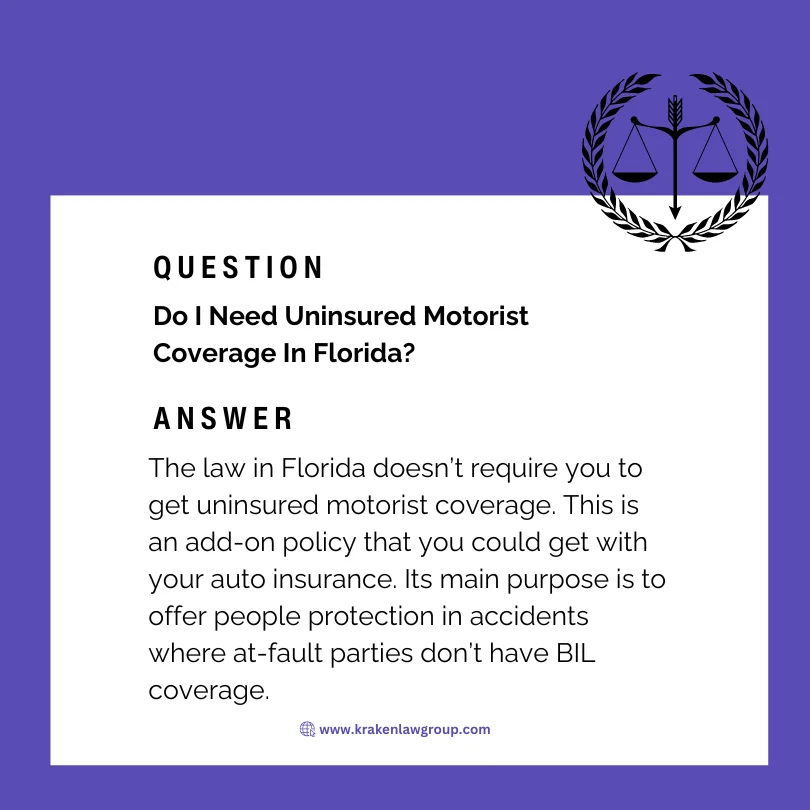
The question of whether you need uninsured motorist coverage in Florida is not a simple yes or no. It delves into the nuances of the state’s insurance laws, the commonality of uninsured drivers on its roads, and the potential financial ramifications of being involved in an accident. As you book your stay at a boutique hotel in Savannah (a common side trip for those exploring Northern Florida) or a beachfront villa in Clearwater Beach, it’s wise to equip yourself with this knowledge.
Understanding Florida’s Auto Insurance Landscape
Florida operates under a “no-fault” insurance system for auto accidents. This means that regardless of who is at fault for an accident, your own insurance policy is primarily responsible for covering your medical expenses and lost wages, up to a certain limit. This system is designed to expedite the payment of basic expenses and reduce the number of lawsuits filed after minor collisions.
Personal Injury Protection (PIP)
In Florida, all drivers are required to carry a minimum of $10,000 in Personal Injury Protection (PIP) coverage. This coverage is the cornerstone of the no-fault system. It pays for 80% of your medical bills and 60% of your lost wages, regardless of who caused the accident. PIP also covers essential services, such as help with household tasks, if you’re unable to perform them due to accident-related injuries.
However, PIP has its limitations. It does not cover property damage, such as repairs to your vehicle or the vehicle of the other party involved. Furthermore, it has coverage limits, and if your medical expenses exceed those limits, you will be responsible for the remainder. This is where other types of coverage become critically important, especially when considering the realities of driving in a state as popular and populous as Florida.
Bodily Injury Liability and Property Damage Liability
While PIP handles your own immediate medical needs, Bodily Injury (BI) Liability coverage is designed to protect you if you cause an accident that injures another person. Property Damage (PD) Liability coverage protects you if you cause an accident that damages someone else’s property, like their car. Florida law requires a minimum of $10,000 in PD Liability coverage per accident and $10,000 in BI Liability coverage per person and $20,000 per accident.
It’s crucial to understand that these liability coverages are designed to protect others from your actions. They do not provide benefits to you if you are injured in an accident. This is a significant distinction and directly leads to the discussion of uninsured motorist coverage.
The Prevalence of Uninsured and Underinsured Motorists in Florida
The Sunshine State, while a paradise for tourists, unfortunately, also sees a significant number of drivers who are uninsured or underinsured. This is a statistic that directly impacts the safety and financial security of all drivers on the road.
Why Uninsured Motorists are a Concern
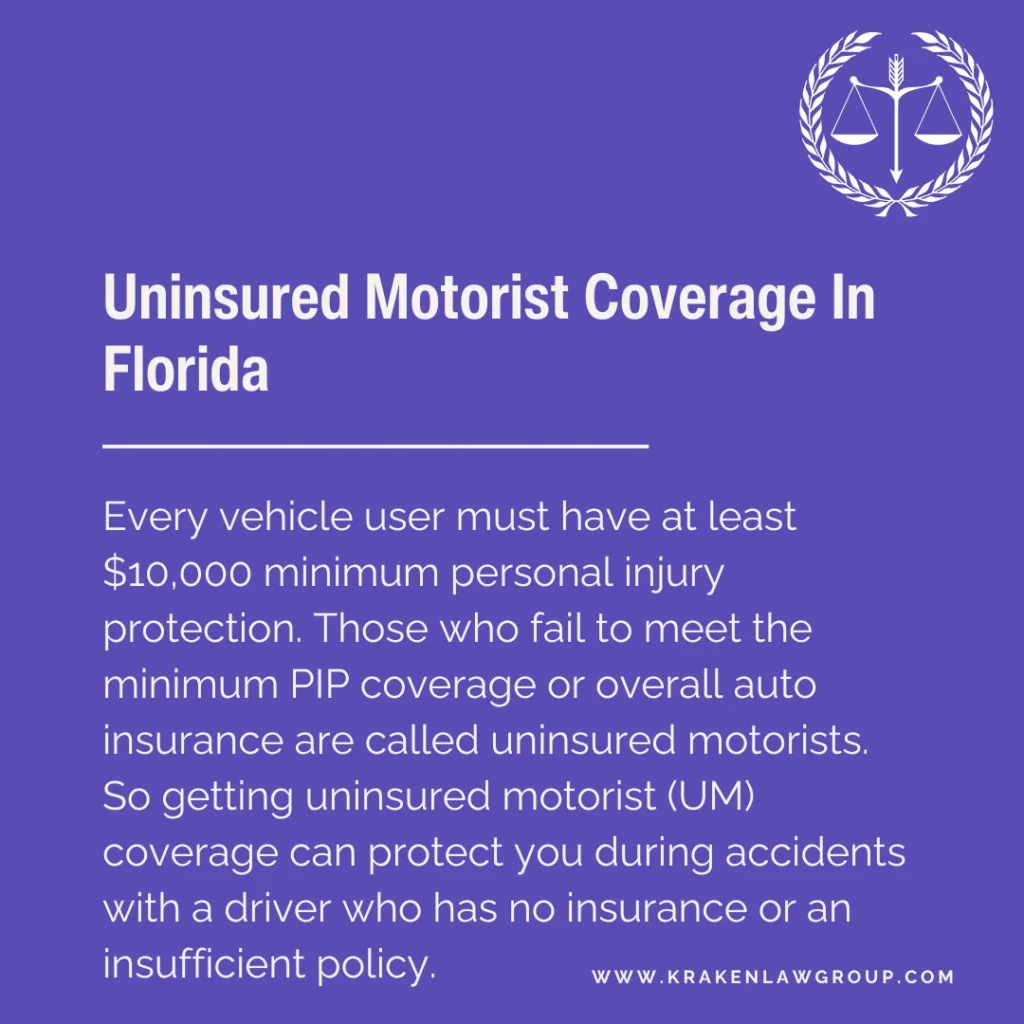
An “uninsured motorist” is a driver who does not carry any auto insurance at all. This is illegal in Florida, but it remains a reality. An “underinsured motorist” is a driver who has insurance, but their coverage limits are too low to adequately cover the damages and injuries they cause in an accident.
When you are involved in an accident with an uninsured motorist, and you do not have uninsured motorist coverage, you are essentially left to absorb the costs of your medical bills, lost wages, and vehicle repairs yourself. Even with PIP, the coverage limits can be quickly exhausted in serious accidents, leaving you with substantial out-of-pocket expenses. Similarly, if you are hit by an underinsured motorist, their insufficient insurance will not cover the full extent of your damages, and you will again bear the brunt of the remaining costs.
Statistics and Realities
While specific up-to-the-minute statistics can fluctuate, Florida has consistently ranked among the states with a higher percentage of uninsured drivers. This means the likelihood of encountering such a driver is not negligible. Consider the sheer volume of traffic in popular tourist destinations like South Beach, the ever-present traffic on the Florida Turnpike, or the bustling roads around Key West. In such environments, the risk of encountering an uninsured or underinsured driver is amplified.
This isn’t a deterrent to enjoying your vacation or exploring the local culture and cuisine at places like Joe’s Stone Crab. However, it is a stark reminder that proactive measures are essential for a truly worry-free experience.
Uninsured Motorist Coverage: Your Shield on Florida Roads
Uninsured Motorist (UM) coverage is specifically designed to protect you and your passengers when you are involved in an accident with an uninsured or underinsured driver. It acts as a crucial safety net, filling the financial gaps that PIP and liability coverage may not address.
Types of Uninsured Motorist Coverage
In Florida, there are two main types of uninsured motorist coverage you can purchase:
- Uninsured Motorist Property Damage (UMPD): This coverage helps pay for repairs to your vehicle if it’s damaged by an uninsured or underinsured motorist. It typically has a deductible, and the payout is usually limited to the actual cash value of your vehicle.
- Uninsured Motorist Bodily Injury (UMBI): This is the more critical component for covering medical expenses and lost wages. UMBI coverage provides benefits to you and your passengers if you are injured in an accident caused by an uninsured or underinsured driver. It can cover medical bills, lost income, and pain and suffering.
It’s important to note that Florida law requires insurance companies to offer UM coverage, but it does not mandate that you purchase it. You have the option to reject UM coverage in writing. However, given the prevalence of uninsured drivers and the potential for severe financial hardship, rejecting this coverage is a significant risk.
How UM Coverage Works in Practice
Imagine you’re driving your rental car from Fort Lauderdale to visit the Everglades National Park, and another vehicle runs a red light and crashes into you. If that driver has no insurance, your PIP will cover a portion of your medical expenses. If your injuries are severe and require extensive treatment, or if you’re unable to work for an extended period, your UMBI coverage would step in to cover the remaining costs, up to your policy limits. Without UMBI, you could be facing tens of thousands of dollars in medical debt.
Similarly, if you’re staying at a luxury resort in Naples and are involved in an accident caused by someone with only the minimum required liability insurance, their coverage might not be enough to cover your damages. Your UMBI coverage would then bridge the gap.
Making the Decision: Is UM Coverage Right for You?
The decision of whether to purchase uninsured motorist coverage in Florida boils down to a personal assessment of risk versus reward. While it’s an additional cost, the potential financial devastation from an accident with an uninsured driver can far outweigh the premium you pay.
Factors to Consider
- Your Financial Situation: Can you afford to pay for extensive medical treatment, lost wages, and vehicle repairs out of pocket if you’re involved in an accident with an uninsured driver? If the answer is no, UM coverage is a wise investment.
- Your Risk Tolerance: How comfortable are you with the possibility of encountering an uninsured driver on Florida’s busy roadways? The statistics suggest this is a real and present risk.
- Your Travel Plans: If you plan on driving extensively throughout Florida, visiting multiple cities like Tampa or St. Augustine, or taking day trips to explore hidden gems and natural wonders like Bok Tower Gardens, your exposure to risk increases.
- The Cost vs. Benefit: Obtain quotes for UM coverage and compare them to the potential costs of being uninsured. In many cases, the cost of UM coverage is relatively modest compared to the potential financial burden it can alleviate.
Legal Requirements vs. Practical Protection
It’s essential to reiterate that Florida law does not mandate UM coverage. However, insurance is not just about meeting legal minimums; it’s about providing adequate financial protection. Relying solely on PIP and the minimum liability coverages can leave you dangerously exposed.
For anyone planning a trip to Florida, whether for a short vacation to explore historical sites like Castillo de San Marcos or a longer stay to enjoy the vibrant nightlife of Fort Lauderdale, understanding your auto insurance is as crucial as booking your flights and accommodations at a comfortable hotel.

Recommendations for Travelers
If you are driving your own vehicle to Florida, or if you are renting a car and have the option to purchase additional coverage, it is strongly recommended to opt for uninsured motorist coverage. This coverage will provide a vital layer of financial security, allowing you to enjoy all the wonders Florida has to offer, from the serene beauty of the Dry Tortugas National Park to the bustling city life of Jacksonville, with greater peace of mind. Do not let the fear of an accident with an uninsured driver detract from your travel experiences. Invest in UM coverage, and drive with confidence throughout the Sunshine State.
LifeOutOfTheBox is a participant in the Amazon Services LLC Associates Program, an affiliate advertising program designed to provide a means for sites to earn advertising fees by advertising and linking to Amazon.com. Amazon, the Amazon logo, AmazonSupply, and the AmazonSupply logo are trademarks of Amazon.com, Inc. or its affiliates. As an Amazon Associate we earn affiliate commissions from qualifying purchases.