
When planning a trip to the Sunshine State, many travelers ponder a seemingly simple question: Does Florida have two time zones? While the answer might not be immediately obvious, understanding the temporal divisions within Florida is crucial for seamless travel, avoiding missed flights, and enjoying every moment of your vacation. This article delves into Florida’s time zone situation, exploring the historical context, the practical implications for travelers, and how it might affect your next adventure in this vibrant destination.
The vast majority of Florida operates under Eastern Standard Time (EST), which is UTC-5, and observes Eastern Daylight Time (EDT), UTC-4, during daylight saving months. This means that when it’s noon in New York City, it’s also noon in Miami, Orlando, and Tampa. This uniformity across the most populated areas simplifies logistics for most tourists. However, a small but significant portion of the state adheres to a different temporal rhythm, leading to the confusion and the question of Florida’s time zones.
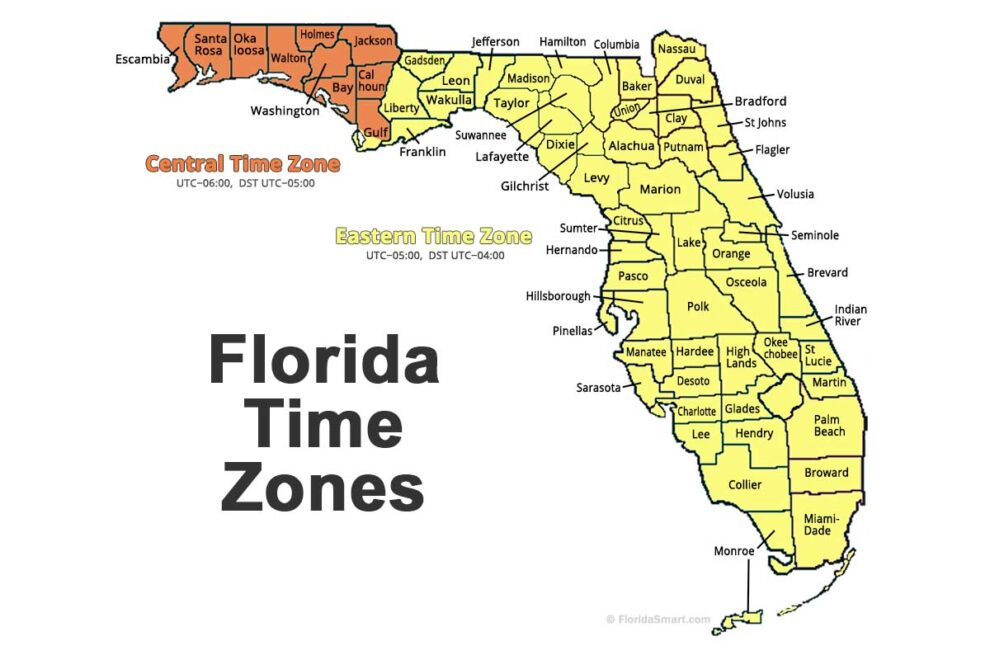
The Time Zone Divide: Eastern vs. Central
The key to understanding Florida’s time zones lies in its western panhandle. A sliver of this region, roughly west of the Apalachicola River, observes Central Standard Time (CST), which is UTC-6, and transitions to Central Daylight Time (CDT), UTC-5, during daylight saving periods. This means that during standard time, towns like Pensacola, Fort Walton Beach, and Destin are one hour behind cities like Tallahassee and the rest of Florida.
A Historical Perspective on Florida’s Time Zones
The current time zone division in Florida is not a recent development but rather a legacy of historical and economic factors. The establishment of time zones in the United States was initially driven by the railroads, which needed standardized times for scheduling their journeys. As the country expanded and settled, time zone boundaries often followed natural geographical features or political lines.
In Florida, the division between Eastern and Central time has its roots in the early 20th century. The state legislature, at various points, has debated and even legislated on time zone matters. Historically, the division was often attributed to the influence of nearby Alabama, which is predominantly in the Central Time Zone. The economic and social ties between the western panhandle of Florida and Alabama led to a preference for aligning with the Central Time Zone for business and communication purposes.
The Interstate Commerce Commission (ICC), and later the Department of Transportation (DOT), became responsible for establishing and regulating time zone boundaries in the United States. Their decisions were often influenced by local preferences and economic considerations. For Florida’s panhandle, the argument for Central Time often centered on its proximity to and stronger economic ties with the Central Time Zone areas of Alabama and Mississippi. This historical precedent is why a portion of Florida continues to operate on a different time than the rest of the state.
Practical Implications for Travelers
For the vast majority of tourists visiting popular destinations like Orlando, Miami, Fort Lauderdale, Key West, or Naples, the time zone difference will have no impact. These cities are firmly within the Eastern Time Zone. However, if your travel plans include the westernmost part of Florida’s panhandle, awareness of the time zone shift is essential.
Consider a scenario where you are driving from Atlanta, Georgia (Eastern Time), to Destin, Florida (Central Time). When you cross the state line into Florida, you will not immediately change time zones. The transition occurs further west. It’s when you cross the invisible line near the Apalachicola River that you’ll need to adjust your watch or phone. Similarly, if you’re flying into Pensacola International Airport, its operating times and flight schedules will be based on Central Time.
Booking accommodations and planning activities requires attention to detail. If you book a resort in Panama City Beach and plan a day trip to Tallahassee, remember the one-hour difference. This can affect everything from restaurant reservations to tour departure times. For example, if a tour in Tallahassee starts at 9:00 AM EST, it will effectively be 8:00 AM CST for someone coming from the Central Time Zone portion of the panhandle.
The impact of the time zone difference is most keenly felt by those who live and work in the border region. Many residents find themselves crossing time zones daily for work or shopping. While many modern devices automatically update time zones, it’s still a point of local discussion and occasional confusion.
Navigating Time Zones for Your Florida Adventure

To ensure a smooth travel experience, here are a few tips:
- Identify Your Destination: The first step is to know precisely where in Florida you are headed. Use maps and destination guides to pinpoint your location. If your destination is west of the Apalachicola River, assume Central Time. Otherwise, it’s Eastern Time.
- Verify with Local Sources: When making reservations, confirm the time zone with the hotel, attraction, or tour operator. Websites and booking platforms often specify the local time, but it’s always wise to double-check, especially for smaller businesses.
- Consider Your Travel Itinerary: If your trip involves crossing between the Eastern and Central time zones within Florida, factor in the one-hour adjustment. This is particularly important if you have early morning or late-night commitments.
- Understand Daylight Saving Time: Both time zones in Florida observe Daylight Saving Time. This means the one-hour difference between Eastern and Central time persists year-round, although the specific UTC offsets change.
Attractions and Landmarks Across Time Zones
Florida boasts a diverse range of attractions, from the iconic theme parks of Orlando to the historic charm of St. Augustine and the natural beauty of the Everglades National Park. These popular destinations are all within the Eastern Time Zone.
However, if your travels take you to the panhandle, you’ll discover unique attractions that fall under Central Time. Pensacola, for instance, is home to the National Naval Aviation Museum and the historic Fort Pickens. The pristine beaches of Destin and Miramar Beach are also in this time zone.
When planning visits to these attractions, always confirm their operating hours and any associated tour times in the local time zone. For example, a sunset cruise departing from Fort Walton Beach will be on Central Time.
Types of Tourism Affected by Time Zones
The distinction in time zones can subtly influence different types of tourism:
- Beach Vacations: For those seeking relaxation on the Gulf Coast, knowing whether you’re in Eastern or Central Time affects when you catch the sunrise or sunset. Beaches like Clearwater Beach and Siesta Key are Eastern, while Gulf Shores (just across the border in Alabama, but relevant to panhandle travelers) is Central. The westward-facing beaches of the panhandle, such as those in 30A, offer spectacular sunsets on Central Time.
- Historical and Cultural Tourism: Cities like St. Augustine, the nation’s oldest continuously inhabited European-established settlement, operate on Eastern Time. Visiting its historic fortresses and cobblestone streets is a journey into the past within the Eastern Time framework.
- Outdoor and Nature Experiences: Exploring the Dry Tortugas National Park from Key West is an Eastern Time endeavor. In contrast, exploring the natural beauty of the Florida Caverns State Park near Marianna falls into the Central Time Zone.
The Impact on Hotels and Accommodation
The time zone difference has minimal impact on the booking process itself, as most booking platforms and hotel websites will automatically display times in the local zone of the property. However, it’s crucial to be aware of this when making arrangements.
- Resort Bookings: If you’re booking a stay at a luxury resort in Miami Beach (Eastern Time) and plan to visit a friend staying in a vacation rental in Orange Beach, Alabama (Central Time), remember the hour difference when coordinating meetups or dining reservations.
- Long-term Stays: For those considering a long-term stay in Florida, understanding the local time is part of integrating into the community. If you’re choosing an apartment in the panhandle, your daily schedule will naturally align with Central Time.
- Accommodation Comparison: When comparing hotel prices or availability across different cities, the time zone is usually a secondary consideration after price, amenities, and location. However, for the panhandle, it’s an important detail to note for operational purposes.
Lifestyle Considerations: Luxury, Budget, and Family Travel
The time zone distinction doesn’t fundamentally alter the experience of luxury, budget, or family travel in Florida, but it adds a layer of logistical awareness.
- Luxury Travel: High-end resorts in Palm Beach or Boca Raton are in the Eastern Time Zone. Guests accustomed to precise scheduling might appreciate the straightforwardness of Eastern Time across most of the state.
- Budget Travel: Backpackers or those on a budget exploring the panhandle might find a slightly more relaxed pace in the Central Time Zone, although the hour difference itself is a constant.
- Family Trips: For families with young children, maintaining a consistent schedule is often paramount. When traveling to or through the panhandle, explaining the time change to children can be an added, albeit minor, consideration to avoid meltdowns over perceived lost or gained time.
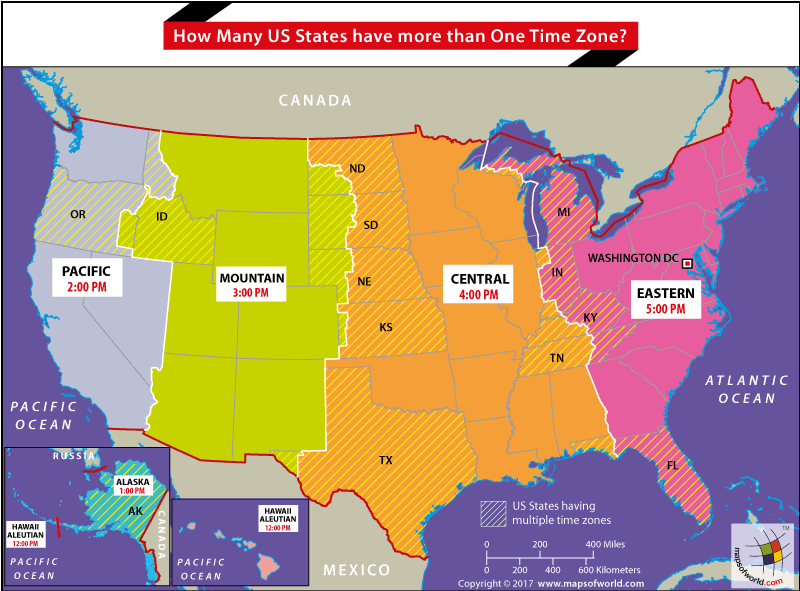
In conclusion, while Florida does technically have two time zones, the vast majority of the state operates under Eastern Standard Time. Only the westernmost portion of the panhandle observes Central Standard Time. For most travelers, this distinction will likely not impact their trip, but for those venturing into the panhandle, a little awareness goes a long way in ensuring a smooth and enjoyable Florida experience. So, as you plan your escape to the Sunshine State, remember to check your watch – and your map!
LifeOutOfTheBox is a participant in the Amazon Services LLC Associates Program, an affiliate advertising program designed to provide a means for sites to earn advertising fees by advertising and linking to Amazon.com. Amazon, the Amazon logo, AmazonSupply, and the AmazonSupply logo are trademarks of Amazon.com, Inc. or its affiliates. As an Amazon Associate we earn affiliate commissions from qualifying purchases.