
Florida, a sun-drenched peninsula renowned for its vibrant beaches, lush landscapes, and captivating history, is a jewel in the crown of the United States. Millions flock to its shores each year, drawn by the allure of world-class theme parks like Walt Disney World and Universal Studios Florida, the serene beauty of the Everglades National Park, and the historic charm of cities like St. Augustine. But how did this strategically vital and geographically stunning territory become part of the American fabric? The journey was not a simple conquest but a complex series of negotiations, treaties, and political maneuvering, spanning centuries and involving European powers that vied for control of this valuable land.
The Early European Claims and Colonial Rivalries
The story of Florida’s acquisition by the United States begins not with America but with European explorers. The first European to claim the land for a European power was the Spanish explorer Juan Ponce de León in 1513, who named it “La Florida” in honor of Pascua Florida, the Easter season. For centuries, Spain maintained a significant presence in Florida, establishing settlements and missions, though its colonial efforts were often hampered by distance, native resistance, and the formidable competition from other European nations.
Spain’s Dominance and the Seeds of Change
Spain’s claim to Florida was undisputed for a long time. They established the oldest continuously inhabited European-established settlement in the continental United States in St. Augustine in 1565. However, the ambitions of other European powers, particularly Great Britain and France, began to challenge Spanish hegemony.
The British, with their growing empire, established colonies to the north of Florida. Their presence, especially in Georgia and the Carolinas, created a constant source of friction and territorial disputes with the Spanish. The British viewed Florida as a buffer zone and a potential threat to their burgeoning colonies. Consequently, conflicts between these powers often spilled over into the Florida territory.
The French Interlude
France also made an early attempt to establish a foothold in Florida, with French Huguenots attempting to found a colony called Fort Caroline in 1564. However, their efforts were brutally suppressed by the Spanish under Pedro Menéndez de Avilés, who went on to found St. Augustine. This early French failure did not deter other European powers from eyeing Florida’s strategic location and potential resources.
Shifting Tides of Empire
The 18th century marked a significant turning point in the struggle for control of North America. The Seven Years’ War, known as the French and Indian War in North America, pitted Great Britain against France. When Great Britain emerged victorious, it dramatically reshaped the colonial map. In the Treaty of Paris of 1763, which ended the war, France ceded all of its North American territories east of the Mississippi River to Great Britain. Crucially, Spain, which had allied with France, ceded Florida to Great Britain in exchange for regaining control of Cuba.
British Rule and the American Revolution’s Influence
The period of British rule in Florida, from 1763 to 1783, was a time of significant administrative and demographic changes. The British divided Florida into two colonies: East Florida, with its capital at St. Augustine, and West Florida, with its capital at Pensacola. They encouraged settlement by offering land grants and promoting agriculture, particularly the cultivation of indigo and sugar cane.
Florida’s Strategic Importance During the Revolution
The American Revolutionary War had a profound impact on Florida. While most of the thirteen colonies were fighting for independence from Great Britain, Florida remained loyal. Its strategic location made it a valuable asset for the British Crown. British forces used Florida as a base for military operations against the American colonies, and its ports were crucial for supplying British troops.
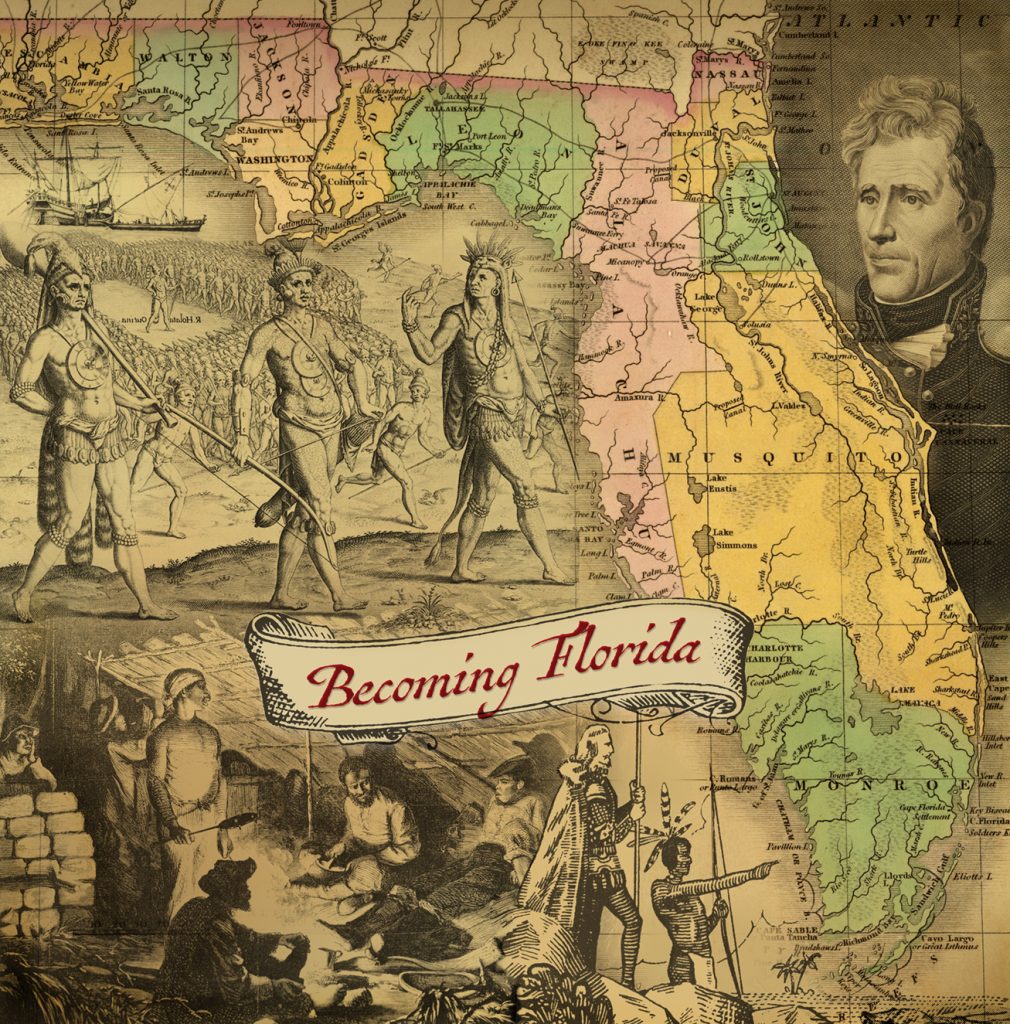
During the war, the Spanish, under King Charles III, saw an opportunity to regain their lost territory. Allied with the French and the Americans, Spain launched military campaigns against the British in West Florida. Bernardo de Gálvez y Madrid, the Spanish governor of Louisiana, played a pivotal role, capturing key British strongholds such as Baton Rouge and Pensacola.
The Return to Spain and the Road to American Acquisition
The outcome of the American Revolutionary War led to a significant shift in Florida’s status. The Treaty of Paris of 1783, which formally ended the war, saw Great Britain recognize the independence of the United States. As part of the peace negotiations, Great Britain ceded Florida back to Spain, much to the chagrin of its British inhabitants.
A Brief Spanish Revival
Spain’s second period of rule in Florida, from 1783 to 1821, was marked by a renewed effort to develop the territory. The Spanish encouraged immigration, particularly from the newly formed United States and the Caribbean, aiming to bolster the population and economy. However, the administration was often inefficient, and the territory remained relatively sparsely populated compared to its northern neighbors.
The Growing American Interest
Meanwhile, the young United States was experiencing rapid expansion and a growing desire for westward movement. Florida, with its fertile lands and strategic coastline, became an increasingly attractive prospect. The border between Spanish Florida and the United States, particularly with the state of Georgia, was often a source of contention.
One of the primary concerns for the United States was the presence of Native American tribes, such as the Seminole, within Florida. These tribes were often perceived as a threat to American settlers in neighboring territories, and raids from Florida into Georgia were a recurring problem.
The Adams-Onís Treaty and the Peaceful Cession
The desire to resolve border disputes, secure its southern frontier, and potentially acquire Florida without resorting to military conflict led the United States to pursue diplomatic avenues with Spain. The key figure in these negotiations was John Quincy Adams, the U.S. Secretary of State under President James Monroe.
Negotiating the Deal
Adams engaged in protracted negotiations with the Spanish ambassador, Luis de Onís y González-Vara. Spain was in a precarious position. It had lost most of its American colonies to independence movements and was facing internal instability. The administration of Ferdinand VII was aware of its weakening grasp on Florida and the increasing pressure from the United States.
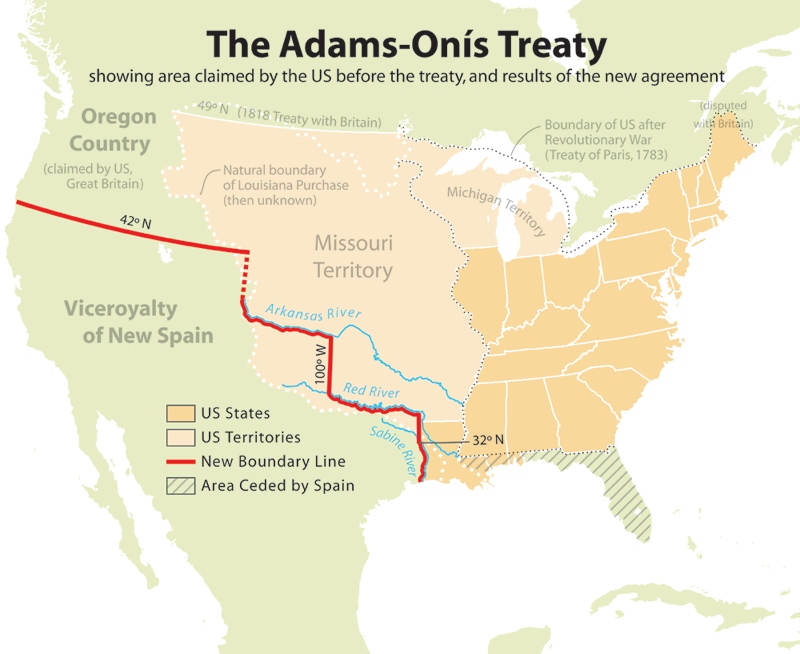
The negotiations culminated in the signing of the Adams-Onís Treaty, also known as the Transcontinental Treaty, on February 22, 1819. This landmark treaty was a diplomatic triumph for the United States. In exchange for a peaceful cession of Florida, the United States agreed to assume the claims of its citizens against the Spanish government, amounting to approximately $5 million. More significantly, the treaty established a clear western boundary for the Louisiana Purchase, extending U.S. claims to the Pacific Ocean and solidifying American dominance in North America.
Ratification and Transfer of Power
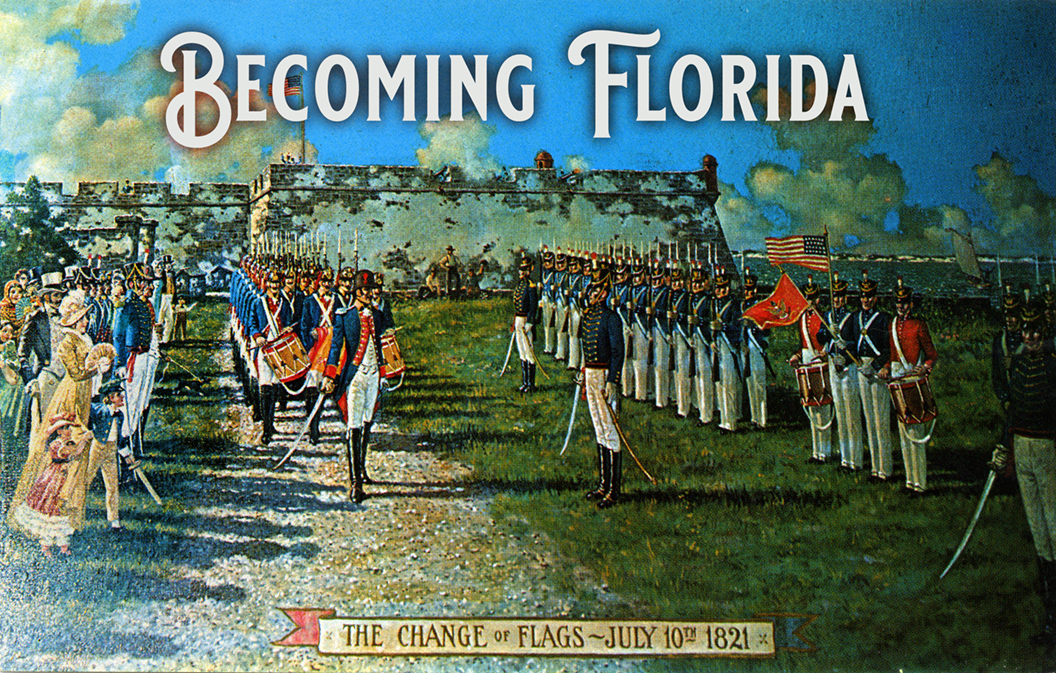
While the treaty was signed in 1819, its ratification by the Spanish government was delayed due to political turmoil in Spain. However, by 1821, Spain finally ratified the treaty, and the official transfer of Florida to the United States took place on July 17, 1821, in St. Augustine. Andrew Jackson, a key figure in American military actions in Florida, was appointed the first military governor of the territory.
Thus, Florida, after centuries of colonial rule by Spain and brief periods of control by other European powers, peacefully became the 27th state of the United States on March 3, 1845. Its acquisition was a testament to both astute diplomacy and the growing power and territorial ambitions of the young American nation, a journey that has shaped its identity and destiny as a prominent destination for travel, tourism, and a unique lifestyle for millions. From the historic forts of St. Augustine to the tropical paradises of the Florida Keys, Florida’s past is inextricably linked to its present as a vibrant and integral part of the United States.
LifeOutOfTheBox is a participant in the Amazon Services LLC Associates Program, an affiliate advertising program designed to provide a means for sites to earn advertising fees by advertising and linking to Amazon.com. Amazon, the Amazon logo, AmazonSupply, and the AmazonSupply logo are trademarks of Amazon.com, Inc. or its affiliates. As an Amazon Associate we earn affiliate commissions from qualifying purchases.