
Navigating the Sunshine State with a disability can be immensely rewarding, offering a wealth of experiences from the vibrant theme parks of Orlando to the pristine beaches of the Florida Keys. To ensure your travels are as smooth and accessible as possible, obtaining a handicap placard, often referred to as a disabled parking permit, is a crucial step. This guide will walk you through the process in Florida, covering eligibility, required documentation, application procedures, and the benefits you can expect. Whether you’re a resident planning an extended stay or a visitor seeking to enhance your trip, understanding how to secure this permit will unlock greater freedom and convenience across Florida.

Understanding Florida’s Disabled Parking Permit System
Florida provides disabled parking permits to individuals who have a qualifying mobility impairment or other disability that significantly limits their ability to walk. These permits come in two forms: a removable windshield placard and a disabled license plate. Both offer the same parking privileges, allowing the holder to park in designated disabled parking spaces, which are typically located closer to building entrances, offering a significant advantage for those with mobility challenges. The Florida Department of Highway Safety and Motor Vehicles (FLHSMV) oversees the issuance of these permits, ensuring compliance with state laws and regulations.
Types of Disabled Parking Permits in Florida
The state of Florida offers several types of disabled parking permits to cater to varying needs and durations of disability. Understanding these distinctions is key to applying for the most appropriate permit for your situation.
Temporary Disabled Parking Placards
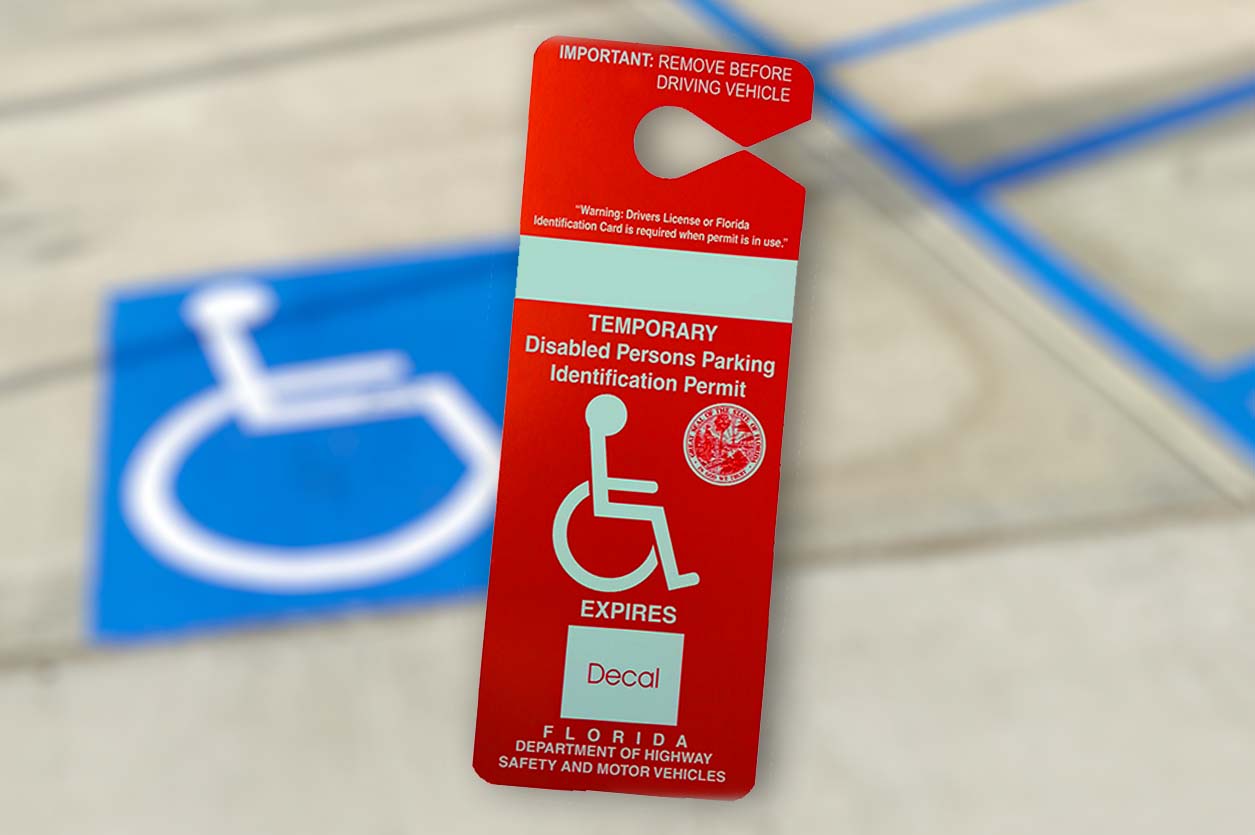
Temporary disabled parking placards are available for individuals with a disability that is expected to last for six months or less. This option is ideal for those recovering from surgery or experiencing a temporary medical condition that affects their mobility.
- Issuance: These placards are issued by medical professionals and are typically valid for the duration of the medical professional’s certification, up to a maximum of six months.
- Renewal: If the temporary disability persists beyond the initial six-month period, an individual may reapply for a new temporary placard, provided they obtain a new certification from their medical provider.
- Application Process: The application process for a temporary placard is similar to that of a permanent one, requiring a completed application form and a certification from a licensed physician.
Permanent Disabled Parking Placards
Permanent disabled parking placards are designed for individuals with long-term or permanent disabilities that significantly limit their mobility. These placards do not expire and remain valid as long as the applicant continues to meet the eligibility criteria.
- Eligibility: The eligibility for a permanent placard is determined by a licensed physician who certifies that the applicant meets the state’s definition of disabled. This typically involves conditions that prevent the person from walking 200 feet without stopping to rest, or conditions that require the use of a wheelchair, brace, cane, crutch, or other assistive device.
- Validity: Once issued, a permanent placard is valid indefinitely. However, the Florida Department of Highway Safety and Motor Vehicles (FLHSMV) may periodically require recertification to ensure continued eligibility.
- Application Process: The application involves a medical certification from a licensed physician and submission of the relevant forms to the local county tax collector’s office.
Disabled License Plates
In addition to placards, Florida also offers disabled license plates that can be affixed to a vehicle. These plates serve the same purpose as placards, granting access to disabled parking spaces.
- Application: Obtaining a disabled license plate requires the same medical certification as a placard. The application is submitted through the county tax collector’s office, and there may be additional registration fees associated with personalized plates.
- Benefits: Disabled license plates offer the convenience of not having to remember to place a placard in the vehicle each time you park. However, the vehicle must be registered in the name of the person with the disability or their spouse.
- Limitations: If the disabled individual does not own a vehicle, or if the vehicle is not registered in their name, a placard is a more suitable option.
Special Parking Permits for Organizations
Florida also provides special parking permits for organizations that transport individuals with disabilities. These permits allow the organization’s vehicles to use disabled parking spaces when transporting eligible individuals.
- Eligibility: Organizations must meet specific criteria, typically related to their mission of serving individuals with disabilities, and their vehicles must be used for such purposes.
- Application: The application process for these organizational permits involves demonstrating the organization’s eligibility and the intended use of the permits.
Eligibility and Documentation Requirements
To successfully obtain a handicap placard in Florida, you must meet specific eligibility criteria and have the necessary documentation readily available. The process is designed to ensure that permits are issued to those who genuinely need them, thereby preserving the integrity of the disabled parking system.
Qualifying Disabilities
Florida law defines a disability for parking permit purposes as a condition that prevents the person from walking 200 feet without stopping to rest or requiring the use of a wheelchair, cane, crutch, brace, prosthetic device, or other assistive device, or an artificial leg or arm. Other qualifying conditions include:
- Lung Disease: Individuals whose breathing capacity is severely impaired, as evidenced by certain pulmonary function test results.
- Severe Cardiac Condition: Those with a severe cardiac condition, as classified by the American Heart Association, Functional Class III or IV.
- Disability Requiring Assistance: Individuals who have a disability that requires the assistance of another person to walk, or who are legally blind.
It is essential to consult with your physician to determine if your condition meets the state’s eligibility requirements.
Required Documentation
The primary document required for obtaining a handicap placard in Florida is a completed application form, which includes a section for medical certification.
- Application Form: The “Application for State Parking Permit” (HSMV 83007) is available on the Florida Department of Highway Safety and Motor Vehicles (FLHSMV) website or at your local county tax collector’s office.
- Medical Certification: This crucial part of the application must be completed and signed by a licensed physician, osteopathic physician, chiropractor, podiatric physician, or optometrist (for legal blindness only) who has knowledge of the applicant’s medical condition. The physician will certify that the applicant meets the eligibility criteria.
- Proof of Identity: Applicants may need to provide proof of identity, such as a Florida driver’s license or identification card. If applying for a disabled license plate, vehicle registration documents will also be necessary.
- Fees: There is typically no fee for a temporary or permanent placard. However, a fee is associated with disabled license plates, which varies depending on the type of plate.
It is advisable to check with your local county tax collector’s office for any specific local requirements or procedures.
The Application Process
Once you have gathered the necessary documentation, the next step is to submit your application. The process is designed to be straightforward, ensuring that eligible individuals can obtain their placards without undue difficulty.
Where to Apply
Applications for disabled parking permits in Florida are primarily processed through the county tax collector’s offices. These offices serve as the local agents for the Florida Department of Highway Safety and Motor Vehicles (FLHSMV).
- County Tax Collector’s Office: You can visit any county tax collector’s office in Florida to submit your completed application. It is a good idea to check the operating hours and any specific appointment requirements of the office you plan to visit.
- Online (for renewal of existing placards): While initial applications and changes generally require in-person submission, the FLHSMV may offer online renewal options for certain types of existing placards, subject to specific conditions. However, for new applications or significant changes, visiting the tax collector’s office is the standard procedure.
Submitting Your Application
The submission process is generally as follows:
- Complete the Application Form: Ensure all sections of the “Application for State Parking Permit” (HSMV 83007) are filled out accurately and legibly.
- Obtain Medical Certification: Have your physician complete and sign the medical certification section of the application.
- Gather Supporting Documents: Have your proof of identity ready. If applying for a disabled license plate, ensure you have your vehicle registration details.
- Visit the County Tax Collector’s Office: Take your completed application and supporting documents to your local county tax collector’s office.
- Submit and Receive: The staff at the tax collector’s office will review your application. If everything is in order, they will process your request, and you will typically receive your placard (or information regarding your disabled license plate) on the spot or via mail shortly thereafter.
For visitors who are not Florida residents but require a placard for their stay, Florida does recognize valid disabled parking permits issued by other states and countries. However, if you plan to stay for an extended period or wish to obtain a Florida permit, you can follow the same application process outlined above.
Utilizing Your Handicap Placard in Florida
Once you have successfully obtained your handicap placard, you can begin to enjoy the benefits of accessible parking throughout Florida. Understanding how to use it properly and where it is valid will enhance your travel experiences.
Parking Privileges and Regulations
Your Florida handicap placard grants you the right to park in designated disabled parking spaces. These spaces are marked with the International Symbol of Access (wheelchair symbol).
- Designated Spaces: You may park in any disabled parking space, including those in public parking lots, at shopping centers, theme parks like Walt Disney World or Universal Orlando Resort, and near entrances to businesses and attractions.
- Display: The placard must be hung from the rearview mirror when the vehicle is parked in a disabled space. It should be removed when the vehicle is in motion.
- Use: The placard is for the sole use of the person to whom it was issued or when that person is a passenger in the vehicle. Misuse of a disabled parking permit is a serious offense and can result in fines and the revocation of the permit.
- Interstate Recognition: Florida honors disabled parking permits from all other U.S. states and many foreign countries. This means that if you have a valid placard from your home state or country, you can use it to access disabled parking spaces in Florida.
Making Your Florida Travels More Accessible
With your handicap placard in hand, your exploration of Florida can be significantly more comfortable and convenient. Whether you’re planning a visit to the historic streets of St. Augustine, the vibrant nightlife of Miami, or a relaxing getaway to a resort like the Ritz-Carlton Naples, accessible parking will be a significant asset.
- Accommodation: When booking hotels, such as the Grand Hyatt Hotel or a charming villa in the Florida Keys, inquire about the availability of accessible rooms and parking. Many establishments are equipped to accommodate individuals with disabilities.
- Attractions: Major tourist attractions like the Kennedy Space Center Visitor Complex and Busch Gardens Tampa Bay generally have ample disabled parking available near their entrances. Planning your visit and understanding their accessibility policies in advance can further streamline your experience.
- Dining and Shopping: Restaurants, shopping centers, and local eateries across Florida are required to provide accessible parking. This makes it easier to access local culinary delights and explore the diverse shopping opportunities available.
By understanding and utilizing your handicap placard effectively, you can maximize your enjoyment of all that Florida has to offer, ensuring a more pleasant and stress-free travel experience.
LifeOutOfTheBox is a participant in the Amazon Services LLC Associates Program, an affiliate advertising program designed to provide a means for sites to earn advertising fees by advertising and linking to Amazon.com. Amazon, the Amazon logo, AmazonSupply, and the AmazonSupply logo are trademarks of Amazon.com, Inc. or its affiliates. As an Amazon Associate we earn affiliate commissions from qualifying purchases.