
Navigating the legal intricacies of changing your last name can feel like embarking on an unfamiliar journey, particularly when it involves official documentation. While this might not be directly related to booking a suite at the Grand Hyatt Hotel in Orlando or planning a lavish resort experience in the Florida Keys, understanding this legal process is a crucial aspect of life management, much like securing the perfect accommodation for your travels. This guide aims to demystify the process of changing your last name in the Sunshine State, offering a clear roadmap for residents. Whether you’re considering a name change due to marriage, divorce, personal preference, or other significant life events, knowing the steps involved is paramount.

Understanding the Florida Name Change Process
The state of Florida has established a clear legal framework for individuals seeking to alter their surnames. The primary method involves petitioning a court for a legal name change. This process is distinct from a name change that occurs automatically as a consequence of marriage or divorce, which often has its own set of associated paperwork.
Petitioning the Court for a Legal Name Change
For those who are not changing their name due to marriage or divorce, the most common route is to file a formal petition with a Florida Circuit Court. This involves several key stages designed to ensure the legitimacy and legality of the proposed change.
Filing the Petition and Required Documentation
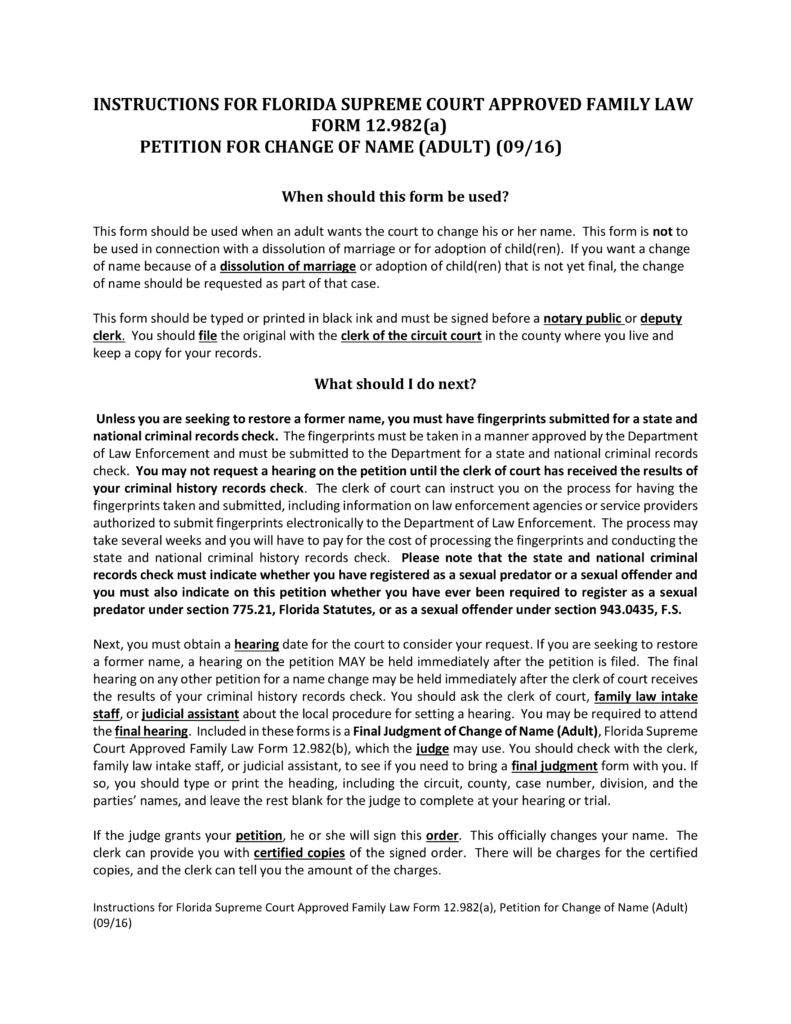
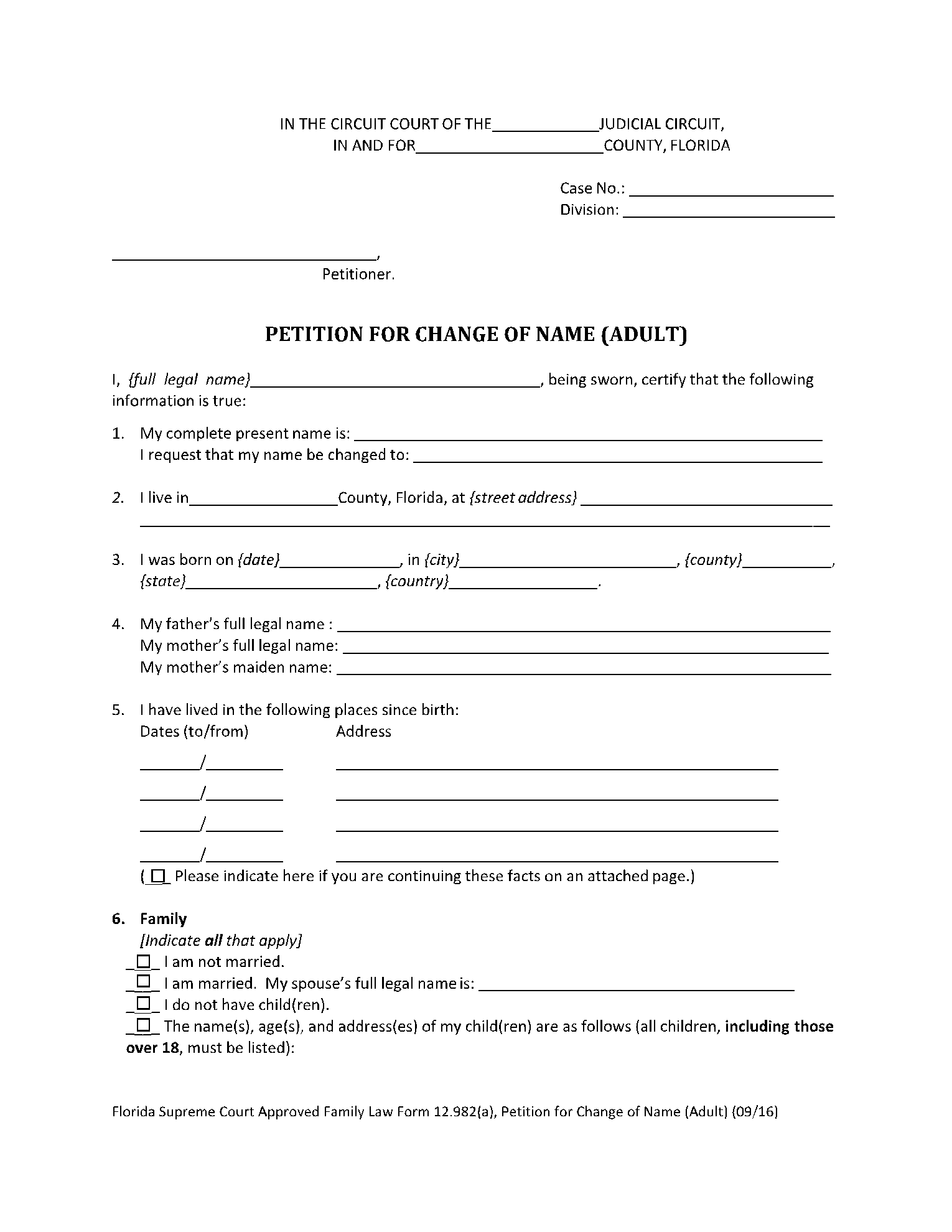
The initial step is to prepare and file a “Petition for Change of Name” with the clerk of the Circuit Court in the county where you reside. This document is the formal request to the court, outlining your current name, your desired new name, and the reasons for the change. It’s essential to be accurate and thorough in this petition.
To accompany the petition, several supporting documents are typically required. These may include:
- Proof of Residency: This could be a valid Florida driver’s license, a voter registration card, or utility bills. Establishing residency is a fundamental requirement for petitioning a Florida court.
- Birth Certificate: A copy of your original birth certificate is usually needed.
- Fingerprints: In most cases, you will need to be fingerprinted by law enforcement or an authorized agency. These prints are submitted to the Florida Department of Law Enforcement (FDLE) and the Federal Bureau of Investigation (FBI) for a criminal background check. This is a critical step to ensure the name change is not being sought for fraudulent purposes.
- Other Identification: Additional forms of identification, such as a social security card or passport, may also be requested.
The court clerk will provide you with the necessary forms, or you can often find them on the official Florida Courts website. It’s advisable to consult with the clerk’s office or a legal professional if you have any doubts about the specific forms or requirements in your county.
The Background Check and Publication Requirements
Once your petition is filed, the court will initiate a background check based on your fingerprints. This is a standard procedure to prevent individuals from changing their names to evade legal obligations, such as debts, criminal charges, or child support.
Another crucial aspect of the Florida name change process involves publication. Florida law requires that notice of your intended name change be published in a local newspaper of general circulation for a specific period. This publication serves to inform the public of your petition, allowing any interested parties to object to the change. The exact duration and publication requirements can vary, so it’s important to confirm these details with the court clerk. Failure to adhere to these publication rules can lead to delays or dismissal of your petition.
The Court Hearing and Final Decree
After the background check is completed and the publication period has passed without any objections, your case will typically be scheduled for a court hearing. This hearing is generally a brief affair. The judge will review your petition, the supporting documents, and the results of the background check. If everything is in order and there are no valid objections, the judge will grant your petition and issue a “Final Decree of Name Change.”
This Decree is the official legal document that recognizes your new name. It’s vital to obtain certified copies of this decree, as you will need them to update your name on various official documents.
Name Changes Due to Marriage and Divorce
While a formal court petition is the standard route for a voluntary name change, Florida law provides streamlined processes for individuals changing their name as a result of marriage or divorce.
Changing Your Name After Marriage
When you get married in Florida, you have the option to change your last name to your spouse’s surname, adopt a hyphenated name, or continue using your current surname. The marriage certificate itself serves as the primary document for this change.
After the wedding ceremony, your officiant will file the marriage license with the county clerk. Once the marriage is officially recorded, you can use your certified marriage certificate to update your name on various identification documents. This is significantly simpler than the formal court petition process.
Key Steps After Marriage:
- Obtain Certified Copies of Your Marriage Certificate: Request certified copies from the county where your marriage license was issued.
- Update Social Security: The first official document to change is your Social Security card. Visit a Social Security Administration office with your marriage certificate and identification.
- Update Driver’s License/ID: Visit a Florida Department of Highway Safety and Motor Vehicles (FLHSMV) office with your updated Social Security card, marriage certificate, and other required identification.
- Update Other Documents: This includes your passport, bank accounts, credit cards, employer records, voter registration, and any other relevant personal or financial documents.
Reverting to a Former Name After Divorce
Following a divorce in Florida, either spouse has the option to resume using their maiden name or a former surname. This can be requested as part of the divorce proceedings.
When the divorce decree is finalized, if a request to revert to a former name was made and granted by the judge, the decree itself will typically specify the former name you will be reverting to.
Steps to Revert Your Name After Divorce:
- Obtain a Certified Copy of the Divorce Decree: Ensure the decree explicitly states your reversion to your former name.
- Update Social Security: Similar to marriage, the Social Security Administration is often the first place to visit with your divorce decree.
- Update Driver’s License/ID: Head to the FLHSMV with your divorce decree and updated Social Security card.
- Update Other Documents: Proceed to update your passport, bank accounts, credit cards, and other important records, just as you would after a marriage-related name change.
It’s important to note that if the name change was not specifically requested and granted within the divorce decree, you may need to pursue the formal court petition process for a legal name change, even after the divorce.
Updating Your Identification and Records
Once you have legally changed your name, the next crucial phase is to update all your official documents and records. This is an essential step to ensure your legal identity aligns with your current name, facilitating everything from travel to financial transactions.
Essential Documents to Update
The process of updating your identification typically begins with the most critical documents and then moves to other accounts and memberships.
- Social Security Card: This is usually the first document to update. You’ll need to visit a Social Security Administration office with your certified court order or marriage/divorce decree.
- Driver’s License or State ID: The Florida Department of Highway Safety and Motor Vehicles (FLHSMV) requires a certified copy of your name change document (Decree of Name Change, Marriage Certificate, or Divorce Decree) and your updated Social Security card.
- Passport: If you have a passport, you’ll need to apply for a replacement. The process varies depending on whether your passport is newly issued or needs updating. You’ll need your name change document and proof of identity.
- Birth Certificate: While not always necessary for every transaction, you can petition to amend your birth certificate with the Florida Bureau of Vital Statistics if you were born in Florida.
- Bank Accounts and Credit Cards: Contact each financial institution to update your name. You’ll typically need to provide a copy of your name change document.
- Employer Records: Inform your employer and provide them with the necessary documentation so they can update your payroll and HR records.
- Voter Registration: Update your voter registration with your new name to ensure you can vote under your current identity.
- Other Important Records: This includes insurance policies, loan documents, property deeds, vehicle registrations, professional licenses, and any other legal or personal documents where your name is listed.
The Importance of Certified Copies
Throughout this process, having certified copies of your legal name change document (whether it’s a court decree, marriage certificate, or divorce decree) is paramount. Many government agencies and private institutions will require these certified copies for verification. It’s wise to obtain several certified copies from the issuing authority, as you will likely need them for multiple updates.
The journey of changing your last name in Florida, while requiring attention to detail and adherence to legal procedures, is a manageable process. Whether you’re embarking on this change for personal reasons, or it’s a happy consequence of a new chapter like marriage or divorce, understanding the steps involved will ensure a smooth transition. This legal formality, much like planning a memorable trip to the Everglades National Park or finding the ideal beachfront villa in Miami Beach, contributes to the overall order and clarity in one’s life.
LifeOutOfTheBox is a participant in the Amazon Services LLC Associates Program, an affiliate advertising program designed to provide a means for sites to earn advertising fees by advertising and linking to Amazon.com. Amazon, the Amazon logo, AmazonSupply, and the AmazonSupply logo are trademarks of Amazon.com, Inc. or its affiliates. As an Amazon Associate we earn affiliate commissions from qualifying purchases.