
Navigating the intricacies of a divorce in any jurisdiction can be a daunting prospect, filled with emotional turmoil and legal complexities. When considering a divorce in the Sunshine State, understanding the timeline is crucial for managing expectations and planning for the future. Florida, like other states, has specific statutes that govern the divorce process, and the duration can vary significantly based on numerous factors. This article will delve into the typical timelines, the elements that influence them, and what you can expect when seeking a dissolution of marriage in Florida.
While the legal framework aims for efficiency, the reality of divorce proceedings often involves a dance between legal requirements, individual circumstances, and the inherent complexities of human relationships. Whether you are contemplating an uncontested divorce or anticipating a more contentious battle, grasping the potential length of the process is a vital first step. This exploration will touch upon aspects that resonate with our core interests: planning future adventures, understanding accommodation needs, immersing ourselves in local culture, and embracing a new lifestyle.
The Minimum Waiting Period and Basic Divorce Timelines in Florida
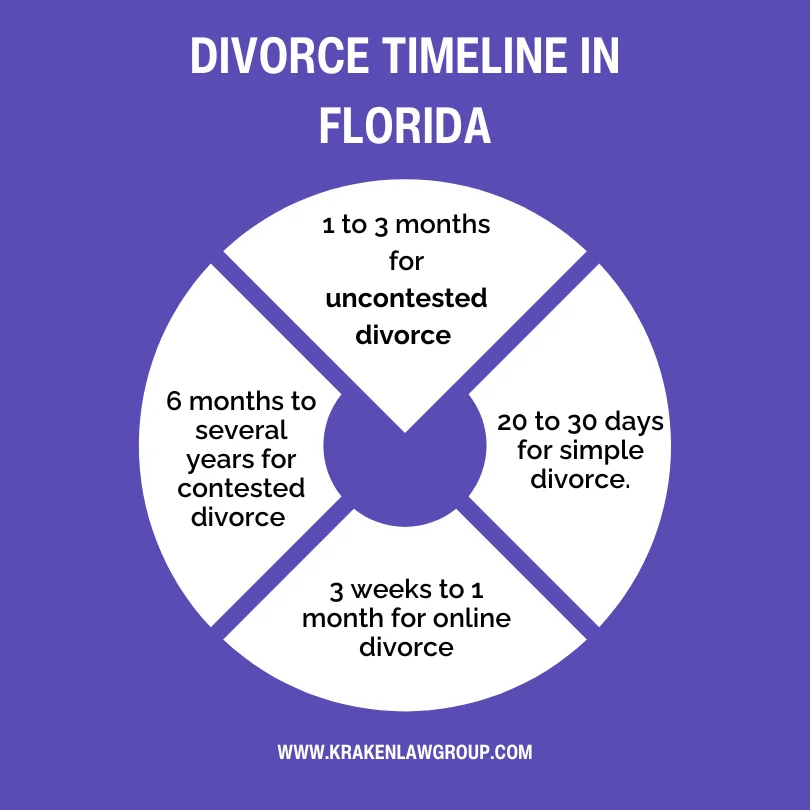
Florida law mandates a minimum waiting period before a divorce can be finalized. This requirement is designed to provide a cooling-off period and prevent impulsive decisions. For most divorce cases, this waiting period is 60 days from the date the respondent is served with the petition for dissolution of marriage. It’s important to understand that this is a minimum, and most divorces will take longer.
Uncontested Divorces: The Express Lane
The fastest route to divorce in Florida is through an uncontested divorce. This occurs when both parties agree on all the major issues, including:
- Equitable Distribution of Assets and Debts: This covers everything from shared bank accounts and investments to real estate and vehicles, as well as any outstanding credit card debt or loans.
- Child Custody and Timesharing: If there are minor children, parents must agree on legal and physical custody, as well as a detailed timesharing schedule.
- Child Support: This involves calculating the financial support one parent will provide to the other for the upbringing of their children.
- Alimony: If one spouse earned significantly more than the other, or if a spouse sacrificed career opportunities for the marriage, alimony (spousal support) may be a consideration.
In an uncontested divorce, once the 60-day waiting period has passed and all necessary paperwork has been filed with the court and approved, the divorce can be finalized relatively quickly. It’s not uncommon for these cases to conclude within two to four months, assuming both parties are cooperative and efficient in their dealings with legal counsel and the court system. This scenario is akin to booking a last-minute getaway to a popular destination; while possible, it requires prompt decisions and minimal complications.
Contested Divorces: Navigating the Complexities
A contested divorce arises when spouses cannot agree on one or more of the key issues mentioned above. This type of divorce invariably takes longer and is often more emotionally and financially taxing. The timeline for a contested divorce in Florida can range from six months to over a year, and in particularly complex or acrimonious cases, it can extend even further.
The duration of a contested divorce is influenced by several factors:
- The Number of Disputed Issues: The more issues on which the parties disagree, the longer the process will likely take. For example, a dispute over child custody can involve extensive evaluations and negotiations, adding significant time.
- The Complexity of Assets and Debts: If the couple has extensive business interests, numerous investment properties, or significant debt portfolios, the process of valuation and division can be protracted. This might involve hiring forensic accountants or business valuators, similar to researching the intricate details of a luxury resort’s amenities before booking.
- Cooperation Between Spouses: Even in a contested divorce, a degree of cooperation can expedite the process. If parties are willing to compromise and engage in good-faith negotiations, delays can be minimized. Conversely, a lack of cooperation, stonewalling, or refusal to provide information will inevitably draw out the proceedings.
- Court Dockets and Judge Availability: The efficiency of the court system itself plays a role. Heavy caseloads and limited judicial availability can lead to delays in scheduling hearings, mediation sessions, and ultimately, final judgment. This is somewhat analogous to trying to book a sought-after tour during peak tourist season; demand can impact availability.
Key Factors Influencing Divorce Duration in Florida
Beyond the fundamental distinction between contested and uncontested matters, a multitude of specific factors can significantly impact how long your divorce takes in Florida. Understanding these elements can help parties prepare for the journey ahead and potentially identify areas where proactive measures might expedite the process.
Children and Custody Disputes
When minor children are involved, the divorce process often becomes more complex and, consequently, longer. Florida courts prioritize the best interests of the child, and this often necessitates detailed investigations into parental fitness, living situations, and the child’s overall well-being.
Timesharing and Parental Responsibility Evaluations
If parents cannot agree on a timesharing schedule or issues of parental responsibility, the court may order evaluations. These can include:
- Custody Evaluations: A mental health professional assesses the family dynamics and makes recommendations regarding custody and timesharing. This process involves interviews with parents, children, and potentially other individuals in the child’s life, as well as a review of relevant documents. These evaluations can take several months to complete.
- Guardian ad Litem Appointments: A Guardian ad Litem (GAL) is appointed to represent the child’s best interests in court. The GAL conducts an independent investigation and reports their findings to the judge. Similar to a travel guide providing insights into a local culture, the GAL offers an objective perspective focused on the child’s needs.
- Mediation: Courts often mandate mediation for custody disputes, requiring parents to attempt to reach an agreement with the help of a neutral third party. While mediation can be an effective tool, it may require multiple sessions and can still lead to disputes if common ground cannot be found.
The emotional intensity surrounding child custody matters can also lead to increased conflict, prolonging negotiations and court interventions.
Financial Complexity and Asset Division
The division of marital property and debts is another area that frequently contributes to the length of a divorce. Florida follows the principle of equitable distribution, meaning marital assets and debts are divided fairly, though not necessarily equally.
Discovery and Valuation of Assets
The discovery process is critical here. This involves gathering financial information from both parties, including bank statements, tax returns, property deeds, business records, and investment portfolios. If one party suspects the other is not being fully transparent, or if there are complex financial instruments involved, the discovery phase can become extensive and contentious.
- Business Valuations: If one or both spouses own a business, obtaining a reliable valuation can be a lengthy and expensive undertaking, often requiring the expertise of forensic accountants or specialized business appraisers. This is akin to meticulously researching the history and architecture of a famous landmark before a visit.
- Real Estate Appraisals: Marital homes or investment properties will likely require appraisals to determine their current market value.
- Debt Division: Similarly, verifying and valuing shared debts, such as mortgages, car loans, and credit card balances, is necessary.

The more assets and debts involved, the more time is required for thorough investigation, valuation, negotiation, and eventual court approval of the division. This meticulous approach ensures a fair outcome, much like a traveler ensuring all aspects of their accommodation are suited to their long-term stay needs.
Alimony and Spousal Support Negotiations
Alimony, or spousal support, is another significant factor that can extend the divorce timeline. Florida law recognizes various forms of alimony, including bridge-the-gap, rehabilitative, durational, and permanent alimony. Determining eligibility and the appropriate amount and duration of alimony involves analyzing factors such as the length of the marriage, each spouse’s financial resources, the standard of living during the marriage, and the earning capacity of each spouse.
Negotiating alimony can be particularly challenging, especially when there is a significant disparity in income between the spouses or when one spouse has been out of the workforce for an extended period. This can lead to lengthy discussions, potentially requiring financial experts to provide testimony or analysis. The intricacies of alimony calculations can be as complex as planning a luxury travel itinerary, requiring careful consideration of various components to achieve a desired outcome.
The Role of Legal Counsel and Court Procedures
The involvement of legal counsel, while essential for protecting your rights, can also influence the divorce timeline. Attorneys must navigate legal procedures, file necessary documents, engage in negotiations, and represent their clients in court.
Attorney Fees and Client Cooperation
The efficiency of your attorney and your level of cooperation with them will play a role. Promptly responding to requests for information and making timely decisions can prevent delays. Conversely, changing attorneys mid-case or being uncooperative can significantly prolong the process.
Court System Efficiency
As mentioned earlier, the court system’s efficiency is a factor beyond the parties’ direct control. Delays in scheduling hearings, mediation, or the judge’s final ruling can add weeks or months to the overall timeline. This is a reminder that even with the best planning, external factors can impact travel plans, like a sudden weather event affecting a flight schedule.
Strategies to Expedite Your Florida Divorce
While some factors are beyond your control, there are strategies you can employ to potentially expedite your Florida divorce:
1. Strive for Amicable Resolutions and Mediation
The most effective way to shorten a divorce is to aim for an uncontested divorce. This means open and honest communication with your spouse and a willingness to negotiate and compromise. If direct communication is difficult, consider utilizing mediation services. A neutral mediator can facilitate discussions and help you and your spouse reach agreements on all issues. Successful mediation can save both time and money, much like finding a well-priced, high-quality apartment for a long-term stay in a desirable location.
2. Be Prepared and Organized
Gathering all necessary financial documents, personal records, and relevant information before you file or as soon as possible thereafter can significantly speed up the process. This includes:
- Tax returns (past 3-5 years)
- Bank statements and investment account statements
- Pay stubs and income information
- Deeds to real estate, titles to vehicles
- Mortgage statements and loan documents
- Retirement account statements
- Information about any businesses owned
Being organized demonstrates to the court and your spouse that you are serious about resolving matters efficiently. This preparedness is similar to having a detailed itinerary and pre-booked experiences for a trip, ensuring a smoother journey.
3. Understand and Comply with Legal Requirements
Familiarize yourself with Florida’s divorce laws and court procedures. Ensure all paperwork is accurately completed and filed on time. Failure to comply with procedural rules can lead to delays or even the dismissal of your case. Working closely with experienced legal counsel can help you navigate these requirements effectively.
4. Focus on Essential Issues
While it’s natural to feel emotional during a divorce, try to focus on resolving the legal and financial matters at hand. Avoid unnecessary arguments or bringing up past grievances that are not directly relevant to the issues being decided. This focused approach helps in reaching agreements on critical points, much like prioritizing key attractions when planning a short trip to a city like Miami or Orlando.
5. Consider Collaborative Divorce
For couples who want to avoid court battles altogether, collaborative divorce is an option. In this process, both parties and their attorneys agree to work together cooperatively to reach a settlement outside of court. It emphasizes respect, honesty, and a shared commitment to finding solutions that work for everyone involved, including children.
Conclusion: Setting Realistic Expectations for Your Florida Divorce
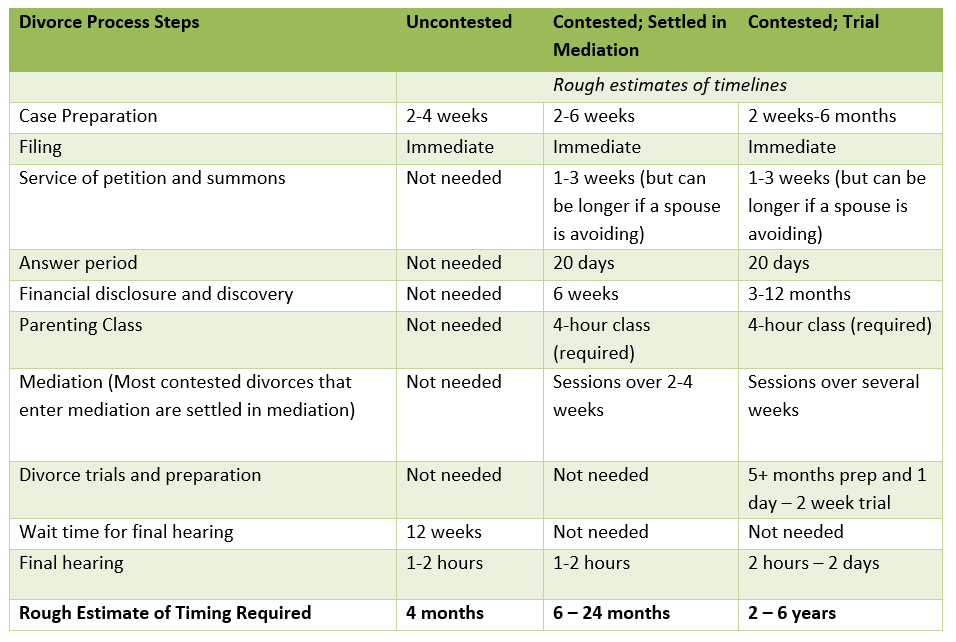
The question of “How Long Can A Divorce Take In Florida?” does not have a single, definitive answer. While the law mandates a minimum 60-day waiting period, the reality is that the duration of a divorce in Florida is highly variable. An uncontested divorce, characterized by mutual agreement on all issues, can often be finalized within a few months. However, contested divorces, where significant disagreements exist regarding assets, debts, child custody, or alimony, can take anywhere from six months to over a year, and sometimes longer, depending on the complexity and the parties’ willingness to cooperate.
Understanding the factors that influence this timeline – the presence of children, the complexity of finances, the need for alimony discussions, and the efficiency of the legal system – is crucial for setting realistic expectations. By striving for amicable resolutions, staying organized, understanding legal requirements, and focusing on the core issues, parties can potentially expedite their divorce proceedings. Ultimately, a divorce is a significant life transition, and while speed is often desired, achieving a fair and sustainable resolution is paramount. Whether you are planning your next adventure in the Florida Keys or establishing a new home, a well-managed divorce process can help you move forward with greater clarity and confidence.
LifeOutOfTheBox is a participant in the Amazon Services LLC Associates Program, an affiliate advertising program designed to provide a means for sites to earn advertising fees by advertising and linking to Amazon.com. Amazon, the Amazon logo, AmazonSupply, and the AmazonSupply logo are trademarks of Amazon.com, Inc. or its affiliates. As an Amazon Associate we earn affiliate commissions from qualifying purchases.