
Embarking on a journey to the sun-drenched landscapes and iconic landmarks of Arizona promises an unforgettable experience, but there’s a unique aspect of this southwestern state that often sparks confusion for travelers: its approach to time. Unlike most of the United States, Arizona largely opts out of Daylight Saving Time, creating a fascinating temporal anomaly that impacts everything from flight schedules to dinner reservations. Understanding Arizona’s time zone system isn’t just a matter of trivial knowledge; it’s a crucial piece of the puzzle for seamless travel planning, ensuring you make the most of your explorations, whether you’re chasing sunsets over the Grand Canyon National Park or enjoying the vibrant city life of Phoenix.
This distinct time zone policy stems from a blend of historical context, practical considerations, and the state’s unique climate. While Arizona indeed lies geographically within the Mountain Time Zone, its steadfast refusal to “spring forward” or “fall back” means that for a significant portion of the year, its local time aligns with neighboring states observing Pacific Time. This article delves deep into the intricacies of Arizona’s time zone, exploring its historical roots, its implications for travelers, and offering essential tips to help you navigate this peculiar aspect of one of North America’s most captivating destinations. Prepare to unlock the secrets of time in the Grand Canyon State, ensuring your visit is as smooth and enjoyable as the desert breeze.
Arizona’s Unique Time Zone System: A Deep Dive into MST
The question “Is Arizona in Mountain Time?” has a straightforward yet nuanced answer. Geographically, much of Arizona is located within the physical boundaries of the Mountain Time Zone. However, the critical distinction lies in its non-observance of Daylight Saving Time (DST). This choice means that for roughly half the year, from March to November, Arizona’s time diverges from its Mountain Time neighbors.
Understanding Mountain Standard Time (MST)
For the vast majority of the year, Arizona operates on Mountain Standard Time (MST), which is UTC-7. When Daylight Saving Time is in effect across most of the United States (from the second Sunday in March to the first Sunday in November), states in the Mountain Time Zone advance their clocks by one hour, moving to Mountain Daylight Time (MDT), which is UTC-6. During this period, Arizona remains on MST (UTC-7). This effectively means that from spring to fall, Arizona’s time becomes equivalent to Pacific Daylight Time (PDT), which is also UTC-7.
Consider this practical example: if it’s 3:00 PM in Denver (Colorado), which observes MDT during summer, it will be 2:00 PM in Phoenix (Arizona) on MST. Conversely, if it’s 2:00 PM in Las Vegas (Nevada), which observes PDT during summer, it will also be 2:00 PM in Phoenix. This synchronization with Pacific Time states like California and Nevada during the summer months is a significant point of confusion and a critical piece of information for anyone planning a visit or conducting business with Arizona. For the rest of the year, when DST is not observed anywhere, Arizona correctly aligns with Mountain Standard Time.
The Exceptional Case of the Navajo Nation
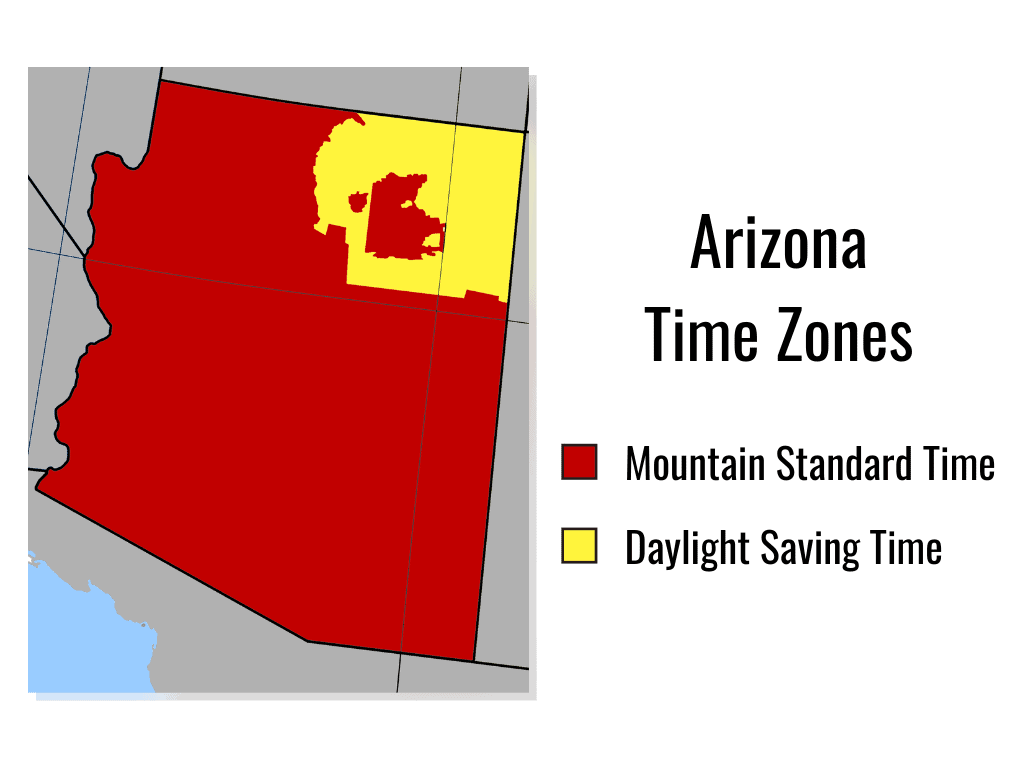
While the vast majority of Arizona eschews Daylight Saving Time, there’s one significant exception: the Navajo Nation. This autonomous Native American territory, which encompasses a substantial portion of northeastern Arizona and extends into Utah and New Mexico, does observe DST. This decision by the Navajo Nation is primarily for consistency with the rest of its reservation lands that spill into neighboring states, which also observe DST.
This creates a peculiar “time island” within Arizona’s borders. For travelers exploring iconic sites like Monument Valley or the Canyon de Chelly National Monument – both located within the Navajo Nation – it’s crucial to remember that their clocks will be an hour ahead of surrounding Arizona regions during the DST period. This can lead to significant logistical challenges, especially when coordinating tours, booking accommodation within the reservation, or even just remembering when to arrive for a scheduled activity. For instance, if you’re driving from Flagstaff (MST) to a tour starting in Page, you must account for the time change as Page is within the Navajo Nation’s DST observance. Adding another layer of complexity, the Hopi Nation, an enclave entirely surrounded by the Navajo Nation, does not observe Daylight Saving Time, remaining on MST year-round. This creates a fascinating triple time zone interaction in a relatively small geographical area during the summer months. Always double-check the local time for specific locations within these tribal lands.

Navigating Time Across Arizona: What Travelers Need to Know
For those planning a trip, understanding Arizona’s time zone situation is paramount for a smooth and stress-free experience. Whether you’re flying into a major city, embarking on a multi-day road trip, or scheduling unique tourism activities, being aware of the temporal nuances will save you from missed connections and lost opportunities.
Planning Your Itinerary: Time Zone Considerations for Major Cities and Attractions
The impact of Arizona’s time zone choice is felt most acutely when coordinating schedules across state lines or within the diverse regions of the state itself. For example, during the spring and summer months, when most of the United States observes Daylight Saving Time:
- Phoenix and Tucson: These major metropolitan areas, along with popular destinations like Sedona, Flagstaff, and the Grand Canyon National Park, all remain on Mountain Standard Time (MST). This means they will be the same time as Los Angeles or Las Vegas (PDT) and one hour behind Denver or Salt Lake City (MDT).
- Flights and Connections: If you’re flying into Phoenix Sky Harbor International Airport from a state observing DST, be mindful of the time change. An arrival time of 3:00 PM CST will mean 1:00 PM MST in Phoenix, effectively giving you an “extra” hour upon arrival, which can be a pleasant surprise if you’re prepared. Conversely, departing flights to DST-observing states will feel shorter by an hour in travel time. Always confirm flight times in local Arizona time.
- Grand Canyon National Park: Both the North and South Rims observe MST, meaning that during the summer, they are an hour behind the Navajo Nation (which encompasses parts of the park’s eastern entrance areas). This is crucial for booking sunrise/sunset tours or planning drives through the eastern sections.
- Border Towns: When traveling between Arizona and neighboring states like Utah, Colorado, or New Mexico, remember that these states observe DST. Crossing the border means an immediate one-hour time shift during the DST period. This is particularly relevant around destinations like the Four Corners Monument, where four states with potentially different times meet. Similarly, travelers coming from California or Nevada will find their clocks align with Arizona’s during the summer, making day trips to places like Hoover Dam (on the Arizona-Nevada border) straightforward.
When booking tours, making restaurant reservations, or checking opening hours for attractions, always confirm the time zone with the local provider. Many online booking systems will automatically convert to your device’s current time zone, which can create confusion if your device hasn’t updated to Arizona’s specific rule.
Accommodation and Logistics: Checking In, Tours, and Daily Activities
The time zone difference has practical implications for nearly every aspect of your Arizona trip, from your initial arrival to your daily lifestyle while exploring.
- Hotel Check-in/Check-out: Most hotels, resorts, and other forms of accommodation in Arizona operate on MST year-round. If you’re arriving from a DST-observing state, an early check-in might feel even earlier, or a late check-out might be more challenging to secure. Always confirm specific times with your hotel directly, especially if you have a tight schedule for activities.
- Organized Tours and Excursions: Many of Arizona’s most popular experiences, from Grand Canyon bus tours to Sedona jeep rides, are time-sensitive. Reputable tour operators are well-versed in the time zone quirks and will usually specify departure and return times in local Arizona time. However, if your tour involves crossing into the Navajo Nation, the operator will typically clarify the time changes or ensure the schedule accounts for them. When booking, double-check if times are listed in “local Arizona time” or if any adjustments are needed for areas like the Navajo Nation.
- Dining and Entertainment: Restaurants, bars, and entertainment venues across Arizona operate on MST. This means if you’re used to dining at 6 PM local time in a DST-observing state, you might find yourself eating at what feels like 5 PM to your body clock. This can be an advantage for early bird specials or for fitting in more activities after dinner.
- Business Stays: For those on business stays in Arizona, coordinating meetings with colleagues in other states requires careful attention. During DST, a 9 AM meeting with someone in New York (EDT) would mean a 6 AM start in Phoenix (MST), while a 9 AM meeting with someone in Los Angeles (PDT) would align perfectly. Always clarify time zones when scheduling interstate calls or virtual meetings.
The Historical and Climatic Rationale Behind Arizona’s Choice
Arizona’s decision to opt out of Daylight Saving Time is not a random anomaly but a deliberate choice rooted in practical considerations, primarily its extreme climate and unique daily rhythms. This historical context provides valuable insight into the state’s distinct lifestyle and why it continues to stand apart from most of the United States.
A Legacy of Practicality: Why Arizona Opted Out of DST
The Uniform Time Act of 1966 established the nationwide observance of Daylight Saving Time, but it also gave states the option to opt out. Arizona initially experimented with DST, but quickly found it to be impractical and undesirable. The primary reason for its rejection of DST is the intense summer heat.
- Energy Conservation (or lack thereof): The original intent of Daylight Saving Time was to conserve energy by maximizing natural daylight and reducing the need for artificial lighting in the evenings. However, in Arizona’s scorching summers, where temperatures frequently soar above 100°F (38°C), the opposite effect often occurred. Pushing the clock forward would mean the sun would set an hour later, extending the period of extreme heat into the evening. This would compel residents to use air conditioning for longer hours, thereby increasing energy consumption rather than decreasing it. For a state where AC is a necessity, not a luxury, this was a significant factor.
- Outdoor Activities and Daily Routines: Many of Arizona’s outdoor activities, from sports practices to evening strolls, are scheduled for later in the day to avoid the peak afternoon heat. If Arizona observed DST, a 7 PM sunset would effectively feel like an 8 PM sunset, pushing back these activities even later into the night, which is disruptive for families and those with early morning commitments. Children would be playing outside later in dangerous heat, and farmers would have to adjust irrigation schedules. Maintaining a consistent time year-round helps stabilize daily routines and school schedules, especially for a population accustomed to adapting to extreme weather.
- Historical Context: After experimenting with DST in 1967, Arizona legislators recognized the unique challenges it posed and voted to opt out in 1968. This decision has been widely supported by residents and has since become an ingrained part of the state’s identity. This commitment to a consistent time throughout the year provides a level of predictability that many Arizonans appreciate.
Economic and Social Ramifications
Arizona’s time zone choice also has various economic and social implications, impacting everything from interstate commerce to the overall quality of life.
- Commerce with Neighboring States: While the lack of DST creates some confusion, it also simplifies interactions with California and Nevada during the summer months, as Arizona’s MST aligns with their PDT. This is particularly beneficial for businesses operating along the border, such as those near Lake Havasu City or Yuma, facilitating easier scheduling of freight, deliveries, and business meetings. However, it creates a one-hour difference with Utah, New Mexico, and Colorado during the DST period, requiring careful coordination for interstate projects.
- Quality of Life and Lifestyle: For residents, the consistent clock throughout the year contributes to a stable daily rhythm. There’s no disruption of sleep patterns or adjustment period twice a year, which many appreciate for its positive impact on health and well-being. This consistency also means that sunrise and sunset times gradually shift, rather than abruptly jumping an hour, making the transition between seasons feel more natural. This contributes to Arizona’s unique lifestyle, where residents plan their days around the sun’s position rather than the clock’s artificial adjustments.
- Tourism and Travel: While it presents a minor learning curve for visitors, the consistent time zone can also be seen as an advantage for tourism. Many travelers enjoy the consistent daylight hours, especially when planning late afternoon activities or enjoying extended sunsets over landmarks like the Mogollon Rim. It simplifies internal travel within the state (outside of the Navajo Nation) once the initial understanding is grasped.
Maximizing Your Arizona Experience: Time Zone Tips for Visitors
Understanding Arizona’s unique time zone policy is a crucial step in ensuring your travel plans unfold seamlessly. With a few simple strategies, you can easily navigate the temporal landscape and fully immerse yourself in the wonders of the Grand Canyon State.
Essential Advice for a Seamless Trip
Preparation is key when venturing into a region with distinct time zone rules. By keeping the following tips in mind, you can avoid common pitfalls and enhance your Arizona adventure.
- Always Confirm Local Time: This is the golden rule. When booking anything – flights, hotels, tours, restaurant reservations, or even just checking operating hours for a destination – always confirm that the times are listed in “local Arizona time.” If you’re dealing with entities within the Navajo Nation, explicitly ask if they observe Daylight Saving Time. Most reputable services are aware of the confusion and will proactively clarify.
- Adjust Your Devices (Manually if Necessary): While most smartphones and GPS devices automatically update time zones, it’s wise to double-check. Upon arrival, confirm your phone has switched to MST and, if you’re traveling through the Navajo Nation, ensure it updates there too, or manually adjust if you find discrepancies. Setting an alarm to confirm the time change when crossing into the Navajo Nation can be a helpful reminder.
- Communicate with Tour Operators and Hosts: If you’re meeting a guide, joining a group tour, or staying at a vacation rental, ensure clear communication regarding meeting times. A quick text or email confirming “Is this 9 AM Arizona time?” can prevent misunderstandings. This is particularly important for early morning activities like hot air balloon rides or Grand Canyon sunrise viewing, where punctuality is paramount.
- Plan Buffer Time for Border Crossings: If your itinerary involves crossing state lines into Utah, New Mexico, or Colorado during the DST period, build in an extra hour of buffer time to accommodate the time change, especially if you have scheduled appointments or connections. The same applies to traveling into or out of the Navajo Nation within Arizona.
- Consider a Traditional Watch: For those who prefer a low-tech solution or are concerned about device reliability, wearing a traditional watch set to Arizona time can offer a reassuring constant.
Embracing Arizona’s Unique Rhythm
Rather than seeing Arizona’s time zone as a complication, view it as part of the state’s unique character and charm. It’s a facet that contributes to the distinct lifestyle and travel experience.
- Extended Daylight in Summer: For much of the year, especially the popular spring and fall shoulder seasons, Arizona’s non-observance of DST means sunsets occur later than in states that are on Pacific Daylight Time but earlier than those on Mountain Daylight Time. This provides ample daylight for sightseeing and outdoor activities without feeling rushed. You can enjoy those stunning desert sunsets and still have time for dinner.
- A Consistent Internal Clock: For longer stays, you’ll appreciate the stability. There’s no biannual “jet lag” to contend with, allowing your body to settle into a consistent rhythm that aligns with the state’s natural flow. This can be particularly beneficial for family trips or extended explorations.
- Part of the Arizona Story: The time zone rule is often a topic of conversation with locals, offering an opportunity to learn more about the state’s history and culture. It’s a small but significant piece of what makes Arizona distinctive and memorable.
In conclusion, while the question “Is Arizona in Mountain Time?” might initially seem confusing, the answer is a simple “yes, but with a twist.” By understanding that the majority of the state adheres to Mountain Standard Time year-round, while the Navajo Nation observes Daylight Saving Time, you’ll be well-equipped to navigate the temporal intricacies of your journey. Armed with this knowledge, you can confidently plan your itinerary, book your accommodation, and embark on a remarkable adventure through Arizona’s breathtaking landscapes and vibrant cities, making every moment count.
LifeOutOfTheBox is a participant in the Amazon Services LLC Associates Program, an affiliate advertising program designed to provide a means for sites to earn advertising fees by advertising and linking to Amazon.com. Amazon, the Amazon logo, AmazonSupply, and the AmazonSupply logo are trademarks of Amazon.com, Inc. or its affiliates. As an Amazon Associate we earn affiliate commissions from qualifying purchases.