
Securing Florida teacher certification is a pivotal step for aspiring educators aiming to shape young minds within the vibrant educational landscape of the Sunshine State. This process, while comprehensive, is designed to ensure that all individuals entering the teaching profession meet rigorous standards of knowledge, skills, and professionalism. Understanding the requirements, navigating the application procedures, and preparing effectively are crucial for a successful outcome. This guide aims to demystify the journey to becoming a certified teacher in Florida, offering a clear roadmap for all prospective candidates.
Understanding Florida Teacher Certification Requirements
Florida’s approach to teacher certification is built on a foundation of ensuring quality instruction and student success. The state’s Department of Education oversees the certification process, which primarily involves meeting educational prerequisites, demonstrating subject matter competency, and completing background checks. For individuals coming from outside of Florida, or those who have been out of the profession for some time, understanding these core requirements is the essential first step.

Educational Attainment and Program Completion
The bedrock of Florida teacher certification is a bachelor’s degree from an accredited institution. This degree must be in the subject area or a closely related field for which you intend to teach. Beyond the bachelor’s degree, candidates are generally required to complete a state-approved teacher preparation program. These programs are designed to equip individuals with pedagogical knowledge, classroom management strategies, and an understanding of child development and diverse learning needs.
For those who earned their degrees in Florida, completion of a program at a Florida-approved college or university typically fulfills this requirement. Out-of-state candidates may have their programs evaluated for equivalency by the Florida Department of Education. In some cases, individuals with a bachelor’s degree but without a formal teacher preparation program might be eligible for alternative routes to certification, which often involve specialized internships or additional coursework.
Subject Area Competency and Examinations
A critical component of Florida teacher certification is demonstrating mastery of the subject matter you wish to teach. This is primarily achieved through passing Florida-issued subject area examinations, often referred to as the Florida Teacher Certification Examinations (FTCE). These exams are designed to assess your knowledge in your chosen specialization, such as elementary education, mathematics, English, or science.
The FTCE program includes a General Knowledge Test, which assesses basic skills in reading, writing, and mathematics, and professional education competencies. It also includes specific subject area exams tailored to the grade levels and disciplines you intend to teach. Passing these exams is a non-negotiable requirement for certification and demonstrates your readiness to impart knowledge effectively in your field. It is advisable to research the specific FTCE exams required for your desired certification area well in advance and to utilize available study materials and resources to prepare thoroughly.
Background Screening and Other Prerequisites
All individuals seeking Florida teacher certification must undergo a thorough background screening. This process includes fingerprinting and checks against state and federal databases to ensure the safety and well-being of students. Successful completion of this screening is mandatory. Additionally, candidates must provide official transcripts from all post-secondary institutions attended, demonstrating the conferral of degrees and completion of required coursework. Specific endorsements or specializations may have additional requirements, such as practical experience or specific coursework in areas like special education or English as a Second Language (ESL).
Navigating the Application Process
Once you have met the core requirements, the next crucial step is to meticulously navigate the application process for Florida teacher certification. This involves gathering all necessary documentation, submitting the application through the correct channels, and understanding the associated fees and timelines. Precision and attention to detail are paramount to avoid delays or complications.
Gathering Required Documentation
The application process begins with the systematic collection of all supporting documents. This typically includes:
- Official Transcripts: Sealed or electronic official transcripts from all colleges and universities attended. These must clearly indicate degrees awarded and coursework completed.
- Verification of Experience: If applicable, documentation verifying teaching experience from previous states or institutions.
- FTCE Scores: Official score reports from all successfully passed FTCE exams.
- Application Form: The completed application form, which can usually be accessed and submitted online through the Florida Department of Education’s website.
- Background Screening Results: Confirmation that your background screening has been initiated and is being processed.
- Application Fee: Payment for the application processing fee.
It is essential to verify the most current list of required documents directly from the Florida Department of Education, as requirements can be updated. Missing or incomplete documentation is a primary reason for application delays.
Submitting Your Application
The Florida Department of Education primarily manages teacher certification applications electronically. Aspiring teachers are generally required to create an account on the state’s Educator Certification website. Through this online portal, you can:
- Complete and submit your application form.
- Upload or have your transcripts and other documents sent directly to the department.
- Track the status of your application.
- Pay the associated fees.
Some districts or approved preparation programs may offer assistance with the application process, providing guidance and support to candidates. However, the ultimate responsibility for the accuracy and completeness of the application lies with the applicant.
Understanding Fees and Timelines
The application for Florida teacher certification involves several fees, including the application processing fee and fees for background screening. The cost can vary depending on the type of certification sought and any additional endorsements. It is important to budget for these expenses as part of your certification journey.
Timelines for processing applications can also vary. Generally, the Department of Education aims to process applications within a reasonable timeframe, but it can be influenced by the volume of applications received, the completeness of the submitted documentation, and the time it takes for background checks to be finalized. Applicants are encouraged to apply well in advance of their desired start date for employment, as the certification process can take several weeks or even months to complete. Regular monitoring of your application status through the online portal is recommended.
Types of Florida Teacher Certifications and Endorsements
Florida offers various pathways to teacher certification, catering to different backgrounds and career aspirations. Understanding these options, including the concept of endorsements, can help you select the most appropriate certification for your teaching goals.
Professional Certificate
The standard for practicing teachers in Florida is the Professional Certificate. This is typically issued after an individual has met all the initial requirements, including a bachelor’s degree, completion of an approved teacher education program, passing the FTCE exams, and completing the background check. The Professional Certificate is valid for a period of five years and can be renewed by completing a required number of inservice points or college credits.
Temporary Certificate
In certain circumstances, a Temporary Certificate may be issued. This is often for individuals who are enrolled in an approved teacher education program and have met specific criteria, or for those who are hired provisionally while completing outstanding certification requirements. A Temporary Certificate is valid for a limited period and has specific conditions for renewal or conversion to a Professional Certificate.
Adding Endorsements
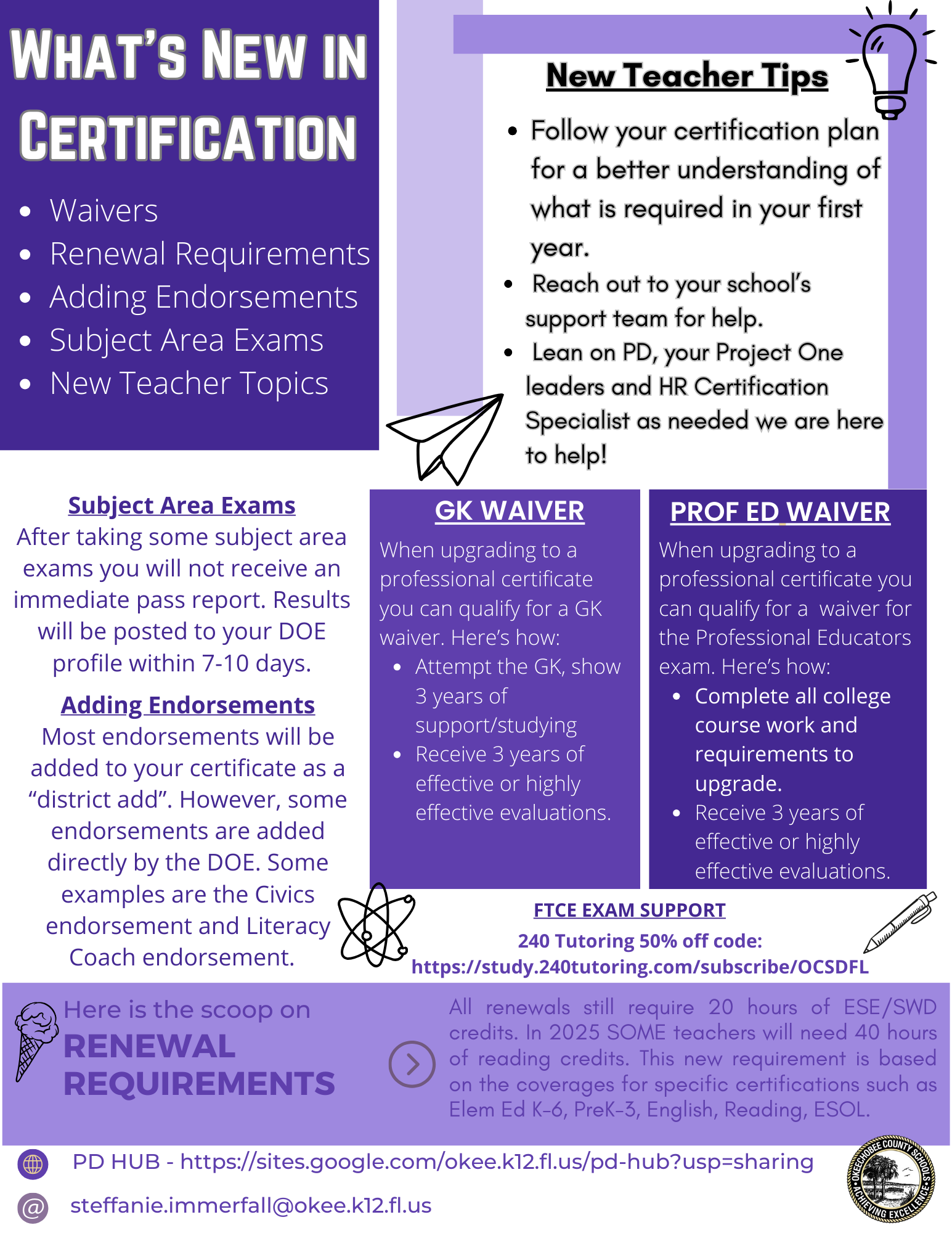
Endorsements are added to a Florida teacher’s certificate to indicate specific areas of expertise beyond their primary certification. For example, a teacher certified in elementary education might add an endorsement in English as a Second Language (ESL) or Reading. Endorsements can expand a teacher’s employability and allow them to teach a wider range of subjects or student populations. To obtain an endorsement, candidates typically need to complete a specific course of study or pass a related FTCE subject area exam.
Maintaining and Renewing Your Florida Teaching Certificate
Once you have successfully obtained your Florida teacher certification, the process doesn’t entirely end. Ongoing professional development and adherence to renewal requirements are essential to maintain your teaching license and continue your career in Florida’s education system.
In-Service Requirements
To renew a Professional Certificate, Florida law requires teachers to complete a specified number of inservice points or college credits within each renewal cycle. These inservice activities are designed to foster continuous learning and keep educators updated on the latest pedagogical practices, curriculum changes, and educational technologies. Acceptable inservice activities often include professional development courses, workshops, conferences, and relevant graduate-level coursework. It is crucial to keep accurate records of all completed inservice activities, as you will need to submit this documentation during the renewal process.
Renewal Application Process
The renewal of a Florida teaching certificate is an online process managed through the Department of Education’s Educator Certification website. Approximately six months before your certificate’s expiration date, you will typically receive notification that you are eligible to begin the renewal process. This involves submitting an application, providing proof of completed inservice requirements, and paying the renewal fee. Ensuring that your contact information on file with the Department of Education is current is vital to receive these important notifications.

Reciprocity with Other States
For teachers moving to Florida from other states, Florida offers a reciprocity agreement. This means that individuals holding a valid, comparable teaching certificate from another U.S. state may be eligible for Florida certification without having to completely restart the process. The Florida Department of Education will evaluate your out-of-state credentials to determine if they meet Florida’s requirements. This often involves reviewing your degree, teacher preparation program, and any examinations you have passed. While reciprocity can simplify the process, specific subject area examinations or additional coursework may still be required depending on the alignment of requirements.
Embarking on the journey to Florida teacher certification is a commitment to a rewarding profession. By understanding the requirements, diligently following the application process, and staying informed about renewal procedures, aspiring educators can confidently navigate their path to becoming a certified teacher in Florida and contribute to the educational growth of the state’s students.
LifeOutOfTheBox is a participant in the Amazon Services LLC Associates Program, an affiliate advertising program designed to provide a means for sites to earn advertising fees by advertising and linking to Amazon.com. Amazon, the Amazon logo, AmazonSupply, and the AmazonSupply logo are trademarks of Amazon.com, Inc. or its affiliates. As an Amazon Associate we earn affiliate commissions from qualifying purchases.