
Navigating the process of establishing a Limited Liability Company (LLC) in Florida is a crucial step for entrepreneurs and business owners looking to protect their personal assets and enhance the credibility of their ventures. This guide will provide a comprehensive, step-by-step overview of how to successfully form an LLC in the Sunshine State, ensuring a smooth and efficient experience. Understanding the legal and operational requirements is paramount, and this article aims to demystify the entire procedure, from initial planning to the final filing.
Understanding the Benefits and Requirements of an LLC
Before diving into the procedural aspects, it’s essential to grasp why an LLC is a favored business structure and what fundamental prerequisites are in place. An LLC offers a unique blend of pass-through taxation, like a sole proprietorship or partnership, and limited liability protection, akin to a corporation. This dual advantage shields the personal assets of the owners from business debts and lawsuits, a critical consideration for anyone venturing into the business landscape of Florida.
Advantages of Forming an LLC
The primary allure of an LLC lies in its liability protection. This means that if the business incurs debts or faces litigation, the owner’s personal property—such as their home, car, or savings—is generally not at risk. This separation between personal and business finances is a cornerstone of responsible business ownership. Furthermore, LLCs offer flexibility in management and taxation. Owners, known as members, can choose how their business is taxed, whether as a sole proprietorship (if one member), a partnership (if multiple members), or even as a corporation, providing a level of adaptability that can benefit businesses as they grow and evolve. This flexibility extends to operational management, allowing for straightforward operational structures without the complexities of corporate bylaws or shareholder meetings. The relative simplicity of formation and ongoing compliance compared to a corporation also makes it an attractive option for small to medium-sized businesses operating in Florida‘s dynamic economy.
Key Requirements for LLC Formation
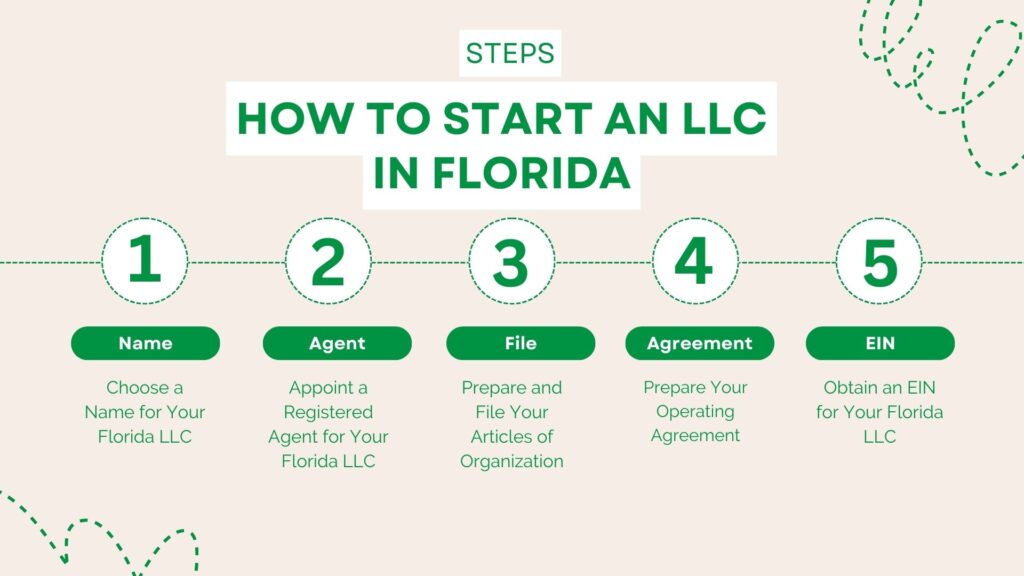
To establish an LLC in Florida, several core requirements must be met. First, you must choose a unique name for your business that is not already in use by another registered entity in the state. This name must also comply with Florida‘s naming conventions, typically requiring it to include an indicator like “LLC” or “Limited Liability Company.” Second, you will need to designate a registered agent. This is a person or business entity responsible for receiving official legal and government correspondence on behalf of the LLC. The registered agent must have a physical street address in Florida and be available during normal business hours. Finally, you must file the Articles of Organization with the Florida Department of State. This document is the formal application to create your LLC and contains essential information about your business.
The Step-by-Step Process of Forming Your Florida LLC
Embarking on the journey to create your LLC in Florida involves a series of distinct, yet manageable, steps. Each stage is designed to ensure that your business is legally recognized and compliant with state regulations.
Step 1: Choosing and Securing Your LLC Name
The initial and perhaps most creative step is selecting a name for your LLC. It should be distinctive, memorable, and reflective of your brand or service. Once you have a potential name, it’s crucial to verify its availability. The Florida Department of State provides an online business name search tool that allows you to check if your desired name is already in use. It’s also a good practice to consider securing a domain name for your website, even if it’s not immediately required for operation. To ensure that no one else can claim your chosen name while you prepare your filing, Florida offers the option to reserve a business name for a period of time. This reservation can prevent competitors from adopting a similar name, giving you peace of mind as you proceed with the formation process.
Step 2: Appointing a Registered Agent
As previously mentioned, a registered agent is a vital component of your LLC. This individual or entity serves as the official point of contact for your business, receiving critical legal documents, such as service of process, and tax notices. The registered agent must have a physical address within Florida (not a P.O. Box) and be accessible during standard business hours. You can choose to serve as your own registered agent if you meet these criteria and have a business address in Florida. Alternatively, you can hire a professional registered agent service, which is often a preferred option for businesses that operate remotely or wish to maintain a clear separation between their business and personal addresses. This ensures that important correspondence is always received and handled promptly, preventing potential legal oversights.
Step 3: Filing the Articles of Organization
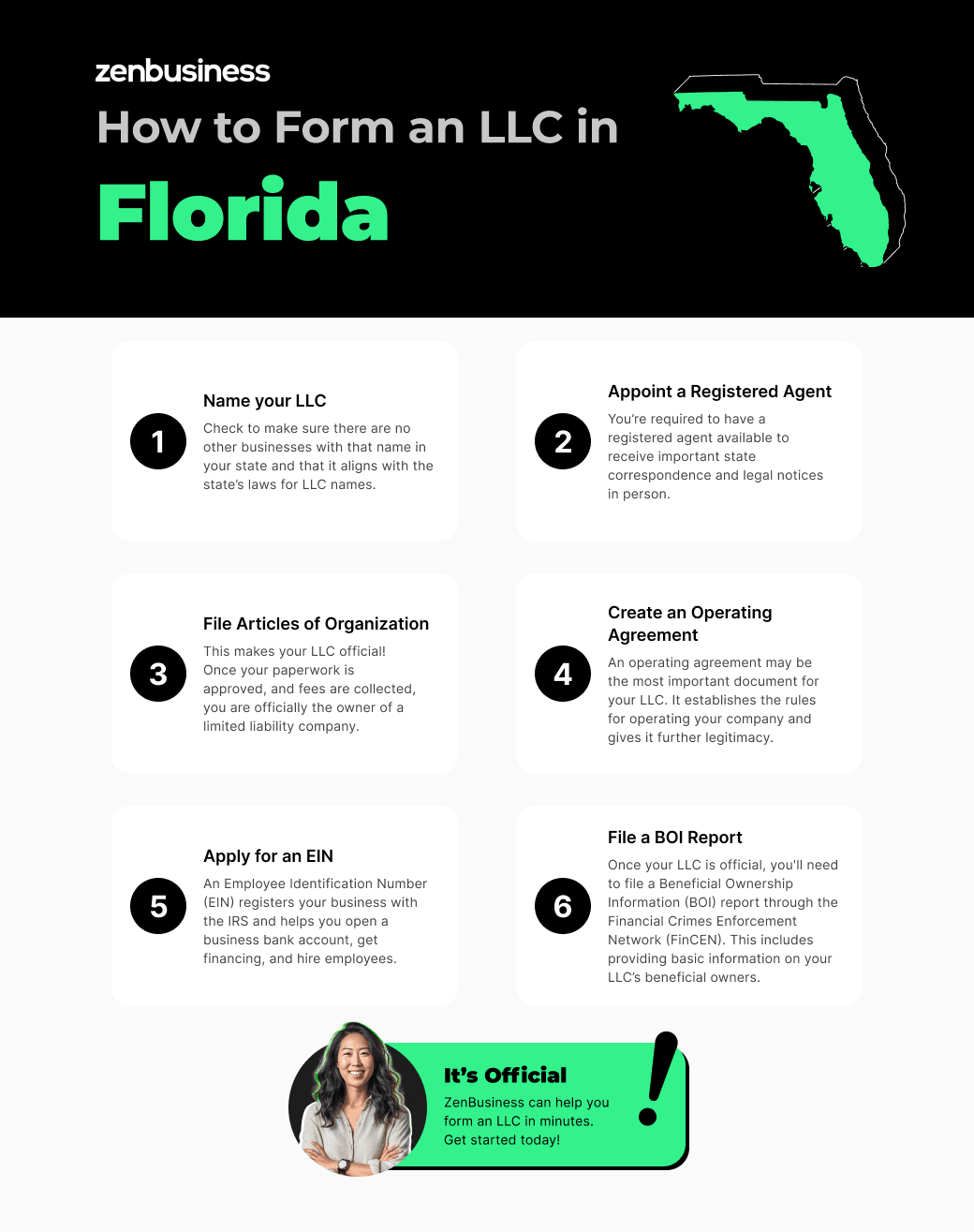
This is the pivotal moment where your LLC is officially created. The Articles of Organization, also known as the Certificate of Formation in some states, is the document filed with the Florida Department of State. This document typically requires key information such as the LLC’s name, the name and address of the registered agent, and the name and address of the organizer (the person filing the document). While not always mandatory for Florida LLCs, it is highly recommended to create an Operating Agreement. This internal document outlines the ownership structure, member responsibilities, profit and loss distribution, and operating procedures of the LLC. Although not filed with the state, it is a crucial internal governance document that clarifies roles and prevents future disputes among members, especially in multi-member LLCs.
Step 4: Obtaining an EIN (Employer Identification Number)
If your LLC plans to hire employees, open a business bank account, or operate as a corporation for tax purposes, you will need an Employer Identification Number (EIN) from the Internal Revenue Service (IRS). An EIN is essentially a Social Security number for your business. You can apply for an EIN online through the IRS website, and it is a free service. While some LLCs might not immediately require an EIN, it is generally a good idea to obtain one to establish a clear business identity and simplify future financial transactions. This step is particularly important if you anticipate needing to file specific tax forms or engage in financial activities that necessitate a federal identification number.
Maintaining Your Florida LLC
Forming an LLC is just the beginning; ongoing compliance and strategic management are essential for its continued success and legal standing. Florida has specific requirements that must be met to keep your LLC in good standing.
Annual Reports and Other Filings
Florida requires LLCs to file an annual report with the Department of State. This report provides an update on your business’s information and is due by May 1st each year. Failing to file the annual report can lead to the administrative dissolution of your LLC, meaning the state will revoke its legal status. In addition to the annual report, your LLC must also remain compliant with federal, state, and local tax obligations. This may involve obtaining necessary business licenses and permits specific to your industry and location within Florida. Staying organized and informed about these recurring responsibilities is key to maintaining a compliant and operational business.
Business Bank Account and Record Keeping
It is strongly recommended, and often legally necessary, to maintain a separate business bank account for your LLC. Mixing personal and business finances can undermine the liability protection that an LLC provides. By depositing all business income into a dedicated account and paying all business expenses from it, you create a clear distinction between your personal assets and those of the company. Furthermore, diligent record-keeping is crucial. This includes maintaining financial records, such as income statements, balance sheets, and expense reports, as well as operational records, like contracts, invoices, and meeting minutes. Accurate and organized records are vital for tax preparation, potential audits, and demonstrating the financial health and operational integrity of your business. This practice not only aids in financial management but also reinforces the legal separation of the LLC.
Considerations for Specific Business Types
While the general process of forming an LLC in Florida is consistent, certain industries or business models might have additional considerations or licensing requirements. Understanding these nuances can prevent unforeseen delays and ensure full compliance from the outset.
Professional Services and Licensing
Certain professions, such as doctors, lawyers, accountants, and engineers, may need to form Professional Limited Liability Companies (PLLCs) instead of standard LLCs. PLLCs have specific requirements set by their respective licensing boards and are designed to ensure that licensed professionals maintain professional responsibility for their services. These entities often have stricter rules regarding ownership and management to uphold professional standards and accountability. Researching the specific licensing requirements for your profession in Florida is a critical step to ensure you are forming the correct type of entity and meeting all regulatory obligations before you begin accepting clients or patients.

Online Businesses and E-commerce in Florida
For entrepreneurs launching online businesses or e-commerce ventures from Florida, the LLC formation process is largely the same. However, there are important considerations related to online operations. This includes understanding Florida‘s sales tax collection requirements for online sales, privacy policies for websites, and compliance with consumer protection laws. If your business operates nationally or internationally, you’ll also need to be aware of potential tax implications and regulations in other jurisdictions. While an LLC provides a strong legal foundation, the digital nature of some businesses necessitates additional attention to online compliance and data security to build trust and ensure a smooth operational flow for your Florida-based online enterprise.
LifeOutOfTheBox is a participant in the Amazon Services LLC Associates Program, an affiliate advertising program designed to provide a means for sites to earn advertising fees by advertising and linking to Amazon.com. Amazon, the Amazon logo, AmazonSupply, and the AmazonSupply logo are trademarks of Amazon.com, Inc. or its affiliates. As an Amazon Associate we earn affiliate commissions from qualifying purchases.