
Navigating the landscape of assistance programs can often feel like exploring an unfamiliar city without a map. While our usual focus at Life Out Of The Box revolves around uncovering the best travel destinations, hotels, and tourism experiences, we understand that life’s journey sometimes requires a different kind of guidance. For residents of Florida facing financial challenges, understanding how to access essential resources like food assistance is paramount. This guide aims to demystify the process of qualifying for food stamps in the Sunshine State, offering clear pathways to this vital support.
Food stamps, officially known as the Supplemental Nutrition Assistance Program (SNAP), are designed to help low-income individuals and families afford nutritious food. In Florida, this program is administered by the Department of Children and Families (DCF). The eligibility criteria are structured to ensure that assistance reaches those who need it most. Understanding these requirements is the first step towards securing this crucial support.
Understanding Eligibility Requirements for SNAP in Florida
Qualifying for SNAP in Florida hinges on several key factors, primarily revolving around household income, household size, and asset limits. The state adheres to federal guidelines, but there can be specific nuances in how these are applied. It’s essential to grasp these core components to determine your potential eligibility.
Income Limits
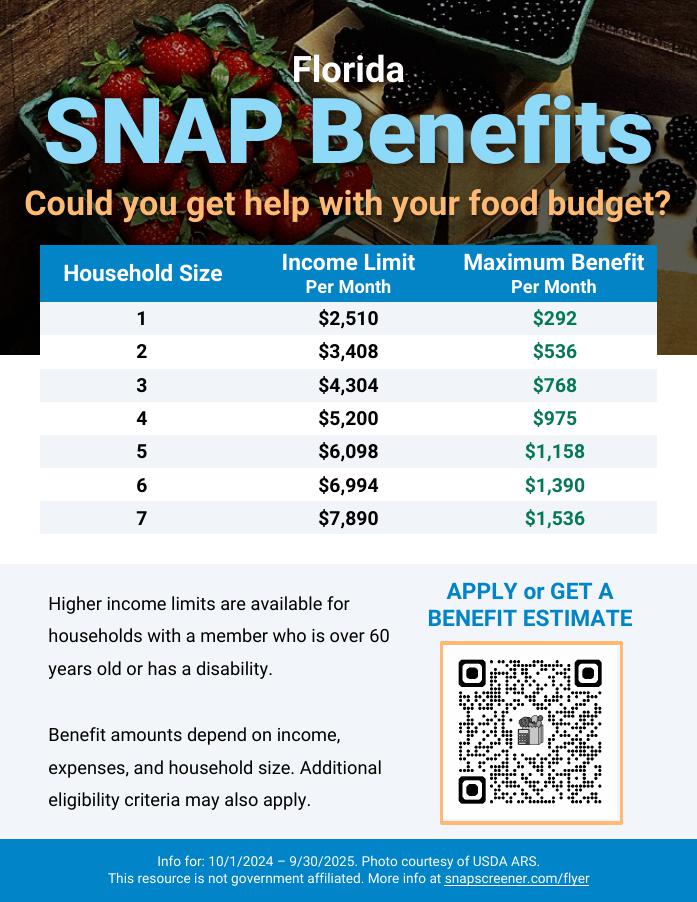
The most significant factor in determining SNAP eligibility is your household’s gross and net monthly income.
Gross Monthly Income
This refers to your total income before any deductions are taken out. For a household of one person, this limit is set by a percentage of the Federal Poverty Level (FPL). As the household size increases, the gross income limit also rises. For instance, a single individual might have a gross monthly income limit of around $1,700 (this figure can fluctuate annually, so it’s always best to check the latest official guidelines), while a family of four would have a higher limit.
Net Monthly Income
After certain deductions are applied to your gross income, you arrive at your net monthly income. These deductions can include a standard deduction, earned income deduction (if applicable), dependent care expenses, and shelter costs that exceed a certain percentage of your income. SNAP calculations prioritize net income, as it more accurately reflects the amount of money a household has available for basic necessities after essential expenses.
If your household’s net monthly income falls below a specific threshold, you may qualify for benefits. It’s important to note that the exact income limits are updated annually and are tied to the FPL. Therefore, checking the most current figures provided by the Florida DCF is crucial.
Household Size
The number of people in your household is a direct determinant of your eligibility and the amount of benefits you may receive. Larger households generally have higher income limits, acknowledging the increased cost of feeding more individuals. The application process will require you to list all members of your household, including dependents, children, and any other individuals who share meals and living expenses.
Asset Limits
Beyond income, SNAP also considers the assets your household possesses. Assets are resources that can be converted to cash. In Florida, there are specific limits on countable assets for most SNAP applicants.
Countable Assets
These typically include:
- Bank accounts: Checking and savings accounts.
- Cash on hand.
- Stocks and bonds.
- Other investments.
Non-Countable Assets
Certain assets are usually excluded from these limits. These commonly include:
- The home you live in.
- One vehicle (though some states have limits on the value of this vehicle).
- Retirement accounts (like 401(k)s or IRAs).
- Property essential for self-employment or business.
For a single individual or a couple without dependents, the asset limit might be around $2,750. For households with an elderly or disabled member, this limit is often higher, potentially around $4,250. Again, these figures are subject to change and should be verified with the latest official SNAP guidelines in Florida.
The Application Process: Steps to Securing Food Assistance
Applying for SNAP in Florida involves a clear, albeit detailed, process designed to gather necessary information accurately. Understanding each step can make the experience smoother and more efficient.

Step 1: Gathering Necessary Documentation
Before you begin your application, it’s advisable to collect all the required documents. Having these readily available will significantly speed up the process. Common documents include:
- Proof of identity: A driver’s license, state ID, or passport.
- Proof of residency: A utility bill or lease agreement.
- Proof of income: Pay stubs, Social Security benefit statements, unemployment records, or pension statements. If you are self-employed, you may need to provide income and expense records.
- Proof of household expenses: Rent receipts, mortgage statements, utility bills, and medical expenses (especially for elderly or disabled individuals).
- Social Security numbers for all household members.
- Information about assets: Bank statements, vehicle titles, etc.
Step 2: Submitting Your Application
Florida offers several convenient ways to submit your SNAP application:
- Online: The most common and often the quickest method is to apply through the ACCESS Florida portal, managed by the Florida Department of Children and Families. This portal allows you to create an account, fill out the application electronically, and upload supporting documents.
- In Person: You can visit a local Florida DCF service center to apply in person. This can be beneficial if you need assistance with the application or prefer face-to-face interaction. You can find a list of service centers on the DCF website.
- By Mail or Fax: You can download a paper application from the DCF website and submit it via mail or fax.
Step 3: The Interview
Once your application is submitted, a caseworker will review it. In most cases, you will be required to participate in an interview, usually conducted over the phone or in person. This interview is an opportunity for the caseworker to clarify information on your application, ask follow-up questions, and verify your eligibility. Be prepared to discuss your household’s income, expenses, and living situation in detail. It’s important to be honest and provide accurate information.
Step 4: Verification and Determination
After the interview, the caseworker will verify the information you’ve provided using the documents you submitted and by contacting relevant agencies. This verification process may involve checking your income with employers, confirming your residency, and verifying any claimed expenses. Once all information is verified, the DCF will make a final determination on your eligibility.
Step 5: Receiving Benefits
If you are approved for SNAP benefits, you will receive an Electronic Benefits Transfer (EBT) card, often referred to as a “Food for Florida” card. This card works like a debit card and can be used at most grocery stores and some farmers’ markets to purchase eligible food items. The amount of benefits you receive will be deposited onto the card monthly. The DCF will inform you of your benefit amount and the date your benefits will be deposited.
Special Considerations and Programs
Beyond the standard SNAP eligibility, Florida offers specific provisions and related programs that may be relevant to certain individuals or families. Understanding these can provide additional avenues of support.
Elderly or Disabled Households
Households that include a person who is elderly (aged 60 or older) or disabled may have different rules regarding asset limits, as mentioned earlier. They may also be exempt from certain work requirements that apply to other SNAP recipients. These exemptions are in place to acknowledge the unique challenges faced by these vulnerable populations.
Work Requirements
For most non-elderly, non-disabled adult SNAP recipients, there are work requirements. This generally means you must register for work, accept a job offer if one is suitable, and participate in work programs if assigned. There are exceptions and exemptions to these requirements, so it’s essential to discuss your specific situation with your caseworker. For example, individuals caring for young children or those who are physically or mentally unfit for work may be exempt.
Emergency SNAP Benefits
In times of disaster or widespread hardship, such as during a hurricane or economic downturn, Florida may offer emergency SNAP benefits. These are temporary provisions designed to help individuals and families cope with sudden food insecurity. Information about emergency benefits is typically disseminated through state news outlets and the DCF website.
Other Nutrition Assistance Programs
While SNAP is the primary food assistance program, Florida also participates in other nutrition programs, such as the Special Supplemental Nutrition Program for Women, Infants, and Children (WIC). WIC provides specific nutritional support for pregnant, breastfeeding, and postpartum women, as well as infants and children up to age five who are at nutritional risk. If your needs extend beyond general food assistance, exploring these other programs could be beneficial.
Resources for Assistance
Navigating the application process can sometimes be overwhelming. Fortunately, there are resources available to help:
- ACCESS Florida Portal: The official online portal for Florida DCF services.
- 2-1-1 Helpline: Dialing 2-1-1 connects you with community resources and social services, including help with SNAP applications.
- Local Food Banks and Pantries: While not directly related to SNAP qualification, these organizations can provide immediate food assistance while your application is being processed. Cities like Miami and Orlando have numerous such resources.
Understanding the eligibility criteria, diligently preparing your application, and utilizing available resources are key to successfully qualifying for food stamps in Florida. This program serves as a critical safety net, ensuring that individuals and families have access to the nutritious food they need to thrive, much like a well-planned itinerary ensures a fulfilling travel experience.
LifeOutOfTheBox is a participant in the Amazon Services LLC Associates Program, an affiliate advertising program designed to provide a means for sites to earn advertising fees by advertising and linking to Amazon.com. Amazon, the Amazon logo, AmazonSupply, and the AmazonSupply logo are trademarks of Amazon.com, Inc. or its affiliates. As an Amazon Associate we earn affiliate commissions from qualifying purchases.