
Florida, a state synonymous with sun-drenched beaches, vibrant theme parks, and a thriving business environment, offers an attractive landscape for entrepreneurs looking to establish their ventures. Whether you dream of opening a boutique hotel in Miami, a specialty tour operator in the Everglades, or a consulting firm catering to the burgeoning tech scene in Orlando, understanding the process of registering a company is a crucial first step. This guide will walk you through the essential procedures, ensuring a smooth and compliant launch for your Florida-based business.
The allure of Florida extends beyond its picturesque tourist destinations. Its favorable tax climate, diverse economy, and access to international markets make it a prime location for company registration. From the bustling streets of Tampa to the tranquil shores of the Florida Keys, opportunities abound. This guide aims to demystify the legal and administrative steps involved, empowering you to navigate the registration process with confidence.
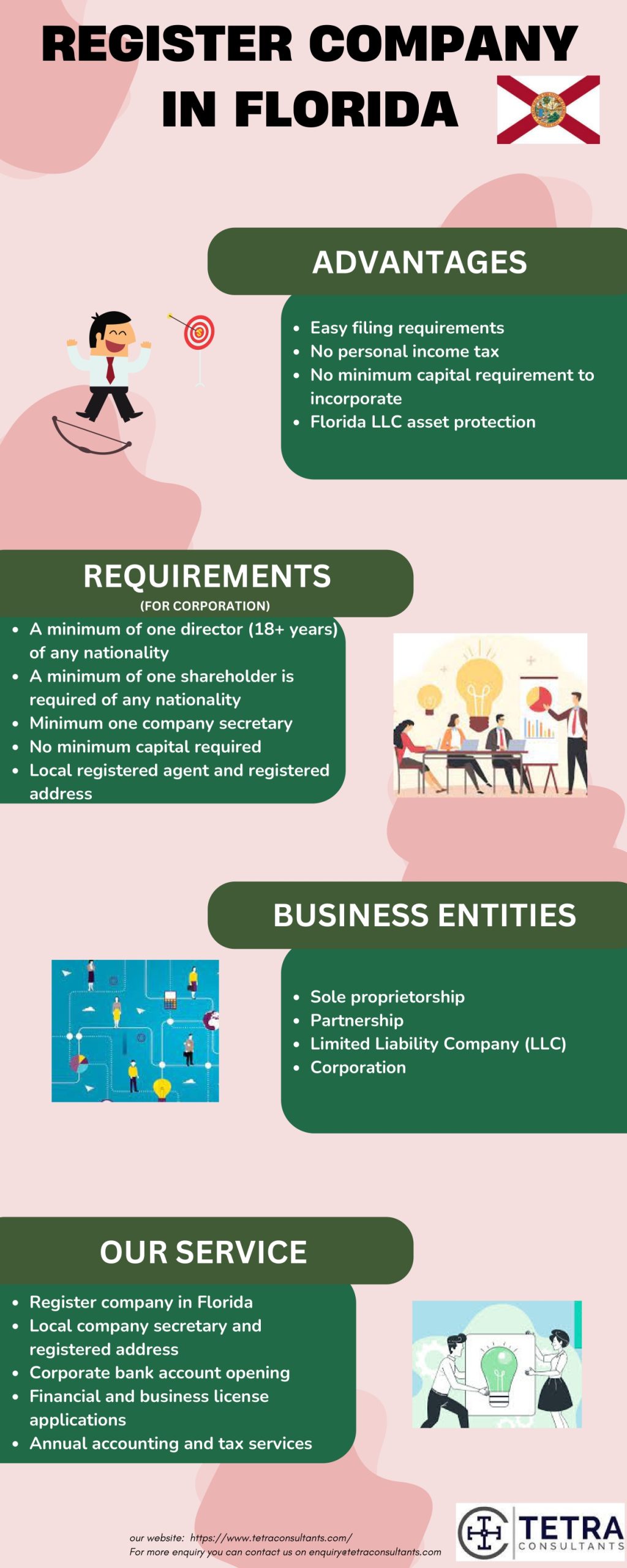
Laying the Foundation: Choosing Your Business Structure
Before diving into the specifics of registration, it’s vital to determine the legal structure of your company. This decision impacts your liability, taxation, and administrative requirements. Florida offers several common business structures, each with its own set of advantages and disadvantages. Understanding these options is the cornerstone of a successful company formation.
Sole Proprietorship
The simplest form of business, a sole proprietorship is owned and run by one individual, with no legal distinction between the owner and the business. This structure is easy to set up and offers direct control. However, it also means the owner is personally liable for all business debts and obligations. For instance, if you plan to run a small artisanal gift shop in St. Augustine, a sole proprietorship might be a good starting point.
Partnership
Similar to a sole proprietorship, a partnership involves two or more individuals agreeing to share in the profits or losses of a business. There are general partnerships, where all partners share in operations and liability, and limited partnerships, which have both general and limited partners. If you and a friend decide to launch a tour guiding service in Orlando, exploring the partnership route might be suitable. As with sole proprietorships, personal liability is a key consideration.
Limited Liability Company (LLC)
An LLC offers a blend of the pass-through taxation of a sole proprietorship or partnership with the limited liability of a corporation. This means the owners (members) are generally not personally liable for the company’s debts or lawsuits. This structure is increasingly popular for small to medium-sized businesses, from boutique hotels in Key West to specialized travel agencies. The flexibility and liability protection make it an attractive option for many entrepreneurs.
Corporation
Corporations are separate legal entities distinct from their owners (shareholders). They offer the strongest liability protection, but also involve more complex setup and ongoing compliance requirements, including corporate taxes. There are two main types: S-corporations and C-corporations. A C-corporation is the more traditional structure, while an S-corporation allows profits and losses to be passed through directly to the owners’ personal income without being subject to corporate tax rates. For larger ventures, such as a hotel resort chain planning to expand across Florida, a corporation might be the most appropriate structure.
Choosing the right structure often depends on your business goals, risk tolerance, and anticipated growth. Consulting with a legal or financial advisor is highly recommended to make an informed decision.
Navigating the Registration Process in Florida
Once you’ve selected your business structure, the next step is to officially register your company with the State of Florida. This typically involves filing specific documents with the Florida Department of State. The exact requirements will vary depending on your chosen business entity.
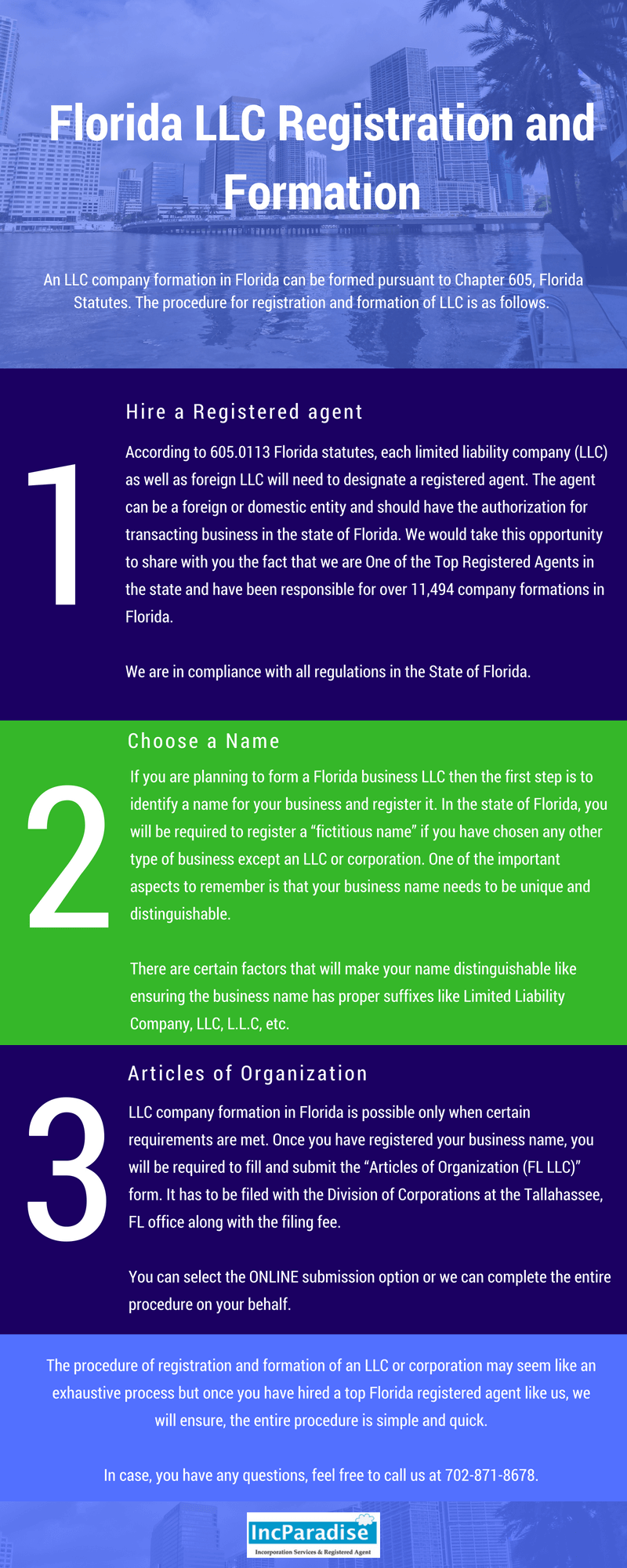
Step 1: Choose a Business Name
Your business name is your brand identity. It must be unique and not already in use by another registered business in Florida. The Florida Department of State maintains a database of registered business names, which you can search online. It’s also advisable to check for federal trademarks and domain name availability to ensure your chosen name is fully available for your brand.
For LLCs and corporations, the name must typically include a designator such as “LLC,” “Limited Liability Company,” “Inc.,” or “Corporation.” If you plan to operate under a name different from your legal business name (e.g., a sole proprietorship using a trade name), you may need to file a “Doing Business As” (DBA) or fictitious name registration with the county where your business is located. For example, if your personal name is Jane Doe and you want to operate your charming bed and breakfast in Savannah (just across the border in Georgia, though this guide focuses on Florida businesses) as “Coastal Breezes Inn,” you would likely need to register “Coastal Breezes Inn” as a fictitious name.
Step 2: Designate a Registered Agent
Every business registered in Florida must have a registered agent. This is a person or company designated to receive official legal and government correspondence on behalf of the business. The registered agent must have a physical street address in Florida (not a P.O. Box) and be available during normal business hours. This role is crucial for ensuring your business receives important notices, such as service of process in case of a lawsuit. You can serve as your own registered agent if you meet the criteria, or you can hire a professional registered agent service.
Step 3: File Formation Documents

The core of the registration process involves filing specific formation documents with the Florida Department of State, Division of Corporations.
- For LLCs: You will file Articles of Organization. This document typically includes the business name, the name and address of the registered agent, and the management structure (member-managed or manager-managed).
- For Corporations: You will file Articles of Incorporation. This document requires information such as the corporate name, the number of authorized shares, the name and address of the registered agent, and the names of the initial directors.
- For Partnerships: While general partnerships may not require state filing, limited partnerships and limited liability partnerships (LLPs) will need to file a Certificate of Limited Partnership or Certificate of Registration, respectively.
These documents can usually be filed online through the Florida Department of State’s Sunbiz website, by mail, or in person. There will be a filing fee associated with these submissions.
Step 4: Obtain an Employer Identification Number (EIN)
If your business plans to hire employees, operate as a corporation or partnership, or file certain tax returns, you will need an Employer Identification Number (EIN) from the Internal Revenue Service (IRS). This is a nine-digit number used to identify a business entity for tax purposes. You can apply for an EIN online for free on the IRS website. It’s a quick and straightforward process.
Step 5: Comply with State and Local Licenses and Permits
Beyond state registration, your business may need to obtain various licenses and permits to operate legally. These requirements can vary significantly based on your industry, the services you offer, and the specific city or county where you are located.
- State Licenses: Many professions and industries require state-level licensing. For example, if you plan to open a hotel in Florida, you will likely need a lodging establishment license from the Florida Department of Business and Professional Regulation (DBPR). Similarly, restaurants, contractors, and healthcare providers have specific licensing requirements.
- Local Licenses: Cities and counties also issue business tax receipts (formerly known as occupational licenses) that allow you to conduct business within their jurisdiction. You’ll need to research the requirements for the specific city and county where your business will be headquartered. For example, a tour operator based in Miami Beach might need a business tax receipt from the City of Miami Beach and Miami-Dade County.
- Federal Licenses: While less common for many small businesses, certain industries, such as those involving alcohol, firearms, or transportation, may require federal licenses.
Thorough research into all applicable licenses and permits is essential to avoid penalties and ensure your business operates compliantly.
Post-Registration Essentials and Ongoing Compliance
Registering your company is just the beginning. To maintain a healthy and compliant business in Florida, several ongoing tasks and considerations are vital. This includes setting up your business finances, understanding tax obligations, and adhering to annual reporting requirements.
Establishing Business Finances
Once your company is registered, it’s crucial to separate your personal and business finances. This typically involves opening a dedicated business bank account using your EIN. This not only simplifies accounting but also reinforces the legal separation between you and your business, especially for LLCs and corporations. For businesses that plan to accept credit card payments, you will also need to set up a merchant account with a payment processor.
Understanding Florida Tax Obligations
Florida is known for its favorable tax environment. Notably, it does not have a state individual income tax. However, businesses are subject to various taxes:
- Sales and Use Tax: If your business sells tangible personal property or provides taxable services, you will need to register with the Florida Department of Revenue to collect and remit sales tax. This applies to many businesses, including retail stores, restaurants, and service providers like those offering vacation rentals.
- Corporate Income Tax: While there is no individual state income tax, corporations and LLCs that elect to be taxed as corporations are subject to Florida’s corporate income tax.
- Employment Taxes: If you have employees, you will be responsible for withholding federal and state income taxes, as well as Social Security and Medicare taxes, and remitting them to the appropriate agencies. You’ll also need to consider unemployment taxes.
It’s advisable to consult with a tax professional to ensure you are meeting all your state and federal tax obligations accurately and on time.
Annual Reporting and Compliance
To maintain your company’s active status with the State of Florida, you will generally need to file an annual report.
- LLCs: Must file an annual report with the Florida Department of State to update information about the company and its registered agent.
- Corporations: Also file an annual report with the Florida Department of State.
Failure to file these reports can result in administrative dissolution of your company. Additionally, corporations must hold regular board and shareholder meetings and keep minutes, while LLCs should maintain operating agreements and keep records of member decisions. Adhering to these ongoing compliance measures is essential for the longevity and credibility of your business.
Registering a company in Florida is a multi-faceted process that requires careful planning and attention to detail. By understanding the different business structures, meticulously following the registration steps, and committing to ongoing compliance, you can lay a strong foundation for your entrepreneurial journey in the Sunshine State. Whether you envision a luxury resort on Amelia Island, a vibrant culinary tour in Tampa’s Ybor City, or a tech startup in Tallahassee, a well-executed company registration is your first step toward success.
LifeOutOfTheBox is a participant in the Amazon Services LLC Associates Program, an affiliate advertising program designed to provide a means for sites to earn advertising fees by advertising and linking to Amazon.com. Amazon, the Amazon logo, AmazonSupply, and the AmazonSupply logo are trademarks of Amazon.com, Inc. or its affiliates. As an Amazon Associate we earn affiliate commissions from qualifying purchases.