
Planning a trip to the Sunshine State often brings up practical questions, and understanding time zones is crucial for a smooth itinerary. For many travelers, a fundamental query emerges: Is Florida in the Central Time Zone? This question, while seemingly straightforward, touches upon the geographical nuances of a state renowned for its diverse attractions, from the bustling theme parks of Orlando to the vibrant nightlife of Miami and the serene beaches of the Panhandle.
Florida’s unique geographical position, stretching significantly from east to west, leads to a fascinating split in its timekeeping. While a large portion of the state adheres to Eastern Standard Time (EST), a significant western sliver observes Central Standard Time (CST). This division is not merely a geographical curiosity; it has practical implications for travelers booking flights, making reservations, and planning activities across the state. Navigating this temporal divide is key to ensuring your Florida adventure unfolds as seamlessly as possible, avoiding any last-minute dashes to catch a flight or a missed dinner reservation.
The Temporal Divide: Eastern vs. Central Time in Florida
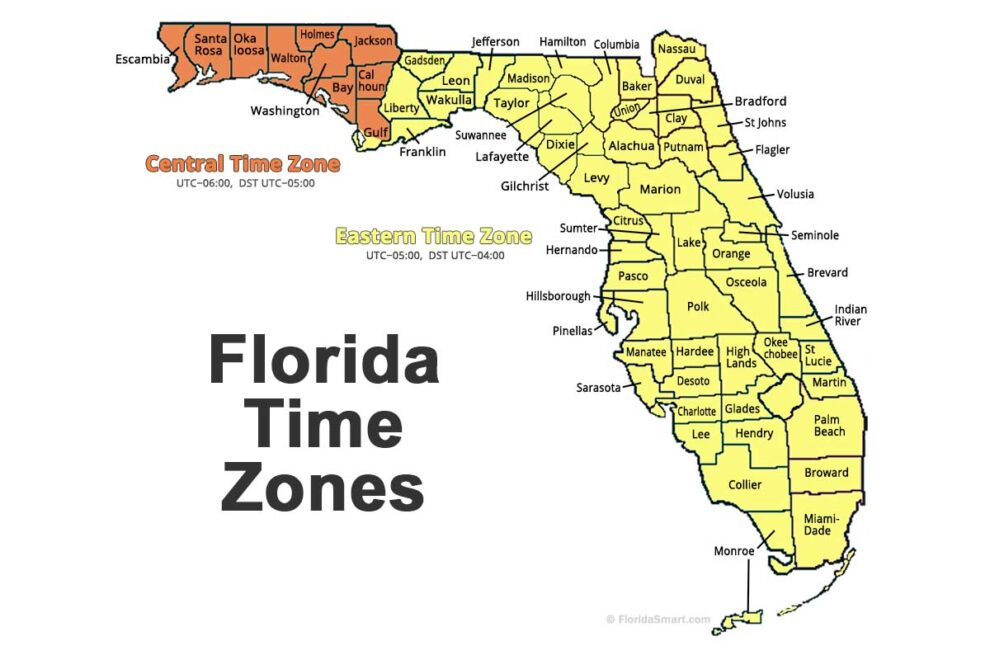
The primary answer to “Is Florida in the Central Time Zone?” is a nuanced “partially.” The state is divided by the Apalachicola River, which serves as a rough demarcation line for the time zones.
Eastern Time Zone Dominance
The vast majority of Florida, encompassing its most populous cities and iconic tourist destinations, observes Eastern Standard Time. This includes major hubs like Miami, Orlando, Tampa, Fort Lauderdale, Jacksonville, and the Florida Keys. If your travel plans involve exploring the magic of Walt Disney World, the thrills of Universal Orlando Resort, the sun-drenched shores of South Beach, or the historic charm of St. Augustine, you will be operating on Eastern Time.
When you book your accommodation in a luxurious resort like the Fontainebleau Miami Beach or a family-friendly hotel near the theme parks, these locations will all be within the Eastern Time Zone. This means that when it’s noon in New York City, it’s also noon in Miami. This consistency is often what travelers expect when visiting the eastern seaboard of the United States.
The Western Panhandle’s Central Time Commitment
However, a segment of Florida’s western Panhandle operates under Central Standard Time. This region primarily includes counties west of the Apalachicola River, stretching towards the Alabama border. Cities like Pensacola, Panama City, and Destin are part of this Central Time Zone.
If your vacation plans are centered around the pristine white sands and emerald waters of the Florida Panhandle, such as visiting Gulf Islands National Seashore or enjoying the family attractions in Destin, understanding this time difference is paramount. For example, if you’re planning a day trip that crosses the time zone boundary, perhaps from Tallahassee (which is in the Eastern Time Zone) towards Pensacola, you’ll need to adjust your internal clock. This temporal shift can affect arrival times for flights landing in Pensacola International Airport if the departure point was in the Eastern Time Zone.
The historical reasoning behind this division is rooted in the state’s development and its proximity to neighboring states with different time zone alignments. The Apalachicola River has long served as a natural boundary, and aligning with adjacent Central Time Zone communities in Alabama made logistical and economic sense for the western parts of the Panhandle.
Navigating Time Zones for a Seamless Florida Experience
Understanding Florida’s dual time zones is not just an academic exercise; it has tangible impacts on your travel plans. From booking flights to scheduling activities and even dining out, awareness of the temporal divide can prevent confusion and ensure you make the most of your time.
Travel Planning and Logistics
When booking flights to or from Florida, pay close attention to the time zone of both your departure and arrival airports. An early morning flight from, say, Chicago (Central Time) to Miami (Eastern Time) will arrive at an earlier local time than you might expect if you only consider the flight duration. Conversely, a flight departing from Miami to Dallas (Central Time) will mean your arrival time in Dallas will be an hour earlier than if you were flying to a city within the Eastern Time Zone.
Similarly, when booking rental cars or arranging airport transfers, ensure you’re aware of the time zone at your destination. If you are arriving at Northwest Florida Beaches International Airport in Panama City (Central Time) and your onward journey is towards Orlando (Eastern Time), you’ll need to factor in that hour difference when calculating your travel time.
Accommodation bookings also require attention. While most booking platforms clearly indicate the city and state, it’s always a good practice to confirm the time zone of your hotel, especially if you’re staying in the western Panhandle. A reservation for a resort in Sandestin will be under Central Time, while a booking in Clearwater will be under Eastern Time.
Maximizing Your Florida Adventures
Beyond logistical concerns, understanding the time zones can help you optimize your schedule and experiences.

Eastern Time Zone Itinerary Examples:
For those exploring the heart of Florida’s tourism, such as Orlando, a typical day might start early to beat the crowds at Magic Kingdom or EPCOT. A reservation at a popular restaurant in Disney Springs might be for 7:00 PM Eastern Time, meaning it’s a standard evening mealtime. If you’re attending a concert at the Hard Rock Live Orlando, the showtime will be in Eastern Time.
In Miami, the vibrant nightlife kicks off later. A reservation at a trendy restaurant in Wynwood at 9:00 PM Eastern Time is a typical start to an evening. The sunset on the Atlantic coast will be dictated by Eastern Time.
Central Time Zone Itinerary Examples:
In the western Panhandle, while the days might start similarly, the evenings can feel an hour “earlier” from an Eastern Time perspective. If you’re enjoying the beaches near Pensacola, a sunset dinner at a beachfront restaurant might be scheduled for 7:00 PM Central Time. This is equivalent to 8:00 PM Eastern Time.
Activities like dolphin watching tours in Destin or exploring the historic downtown of Pensacola will all operate on Central Time. If you’re planning a fishing charter, ensure you confirm the departure time in the local Central Time.
This temporal awareness allows for more precise planning, especially when coordinating with friends or family who might be in different time zones. It ensures that when you say you’ll meet at noon, you both understand whether that’s noon Eastern Time or noon Central Time.
Exploring Florida’s Diverse Attractions Across Time Zones
Florida’s appeal lies in its sheer variety, offering something for every type of traveler. From world-class theme parks and pristine beaches to rich historical sites and vibrant culinary scenes, the state is a treasure trove of experiences. Understanding the time zone that governs your chosen destination ensures that these experiences align perfectly with your expectations.
Theme Park Thrills and Family Fun
The undisputed theme park capital of the world, Orlando, resides firmly within the Eastern Time Zone. Families flock to Walt Disney World Resort, Universal Orlando Resort, and SeaWorld Orlando for an immersive entertainment experience. Daily parades, spectacular fireworks displays, and meticulously timed shows are all scheduled according to Eastern Time. Booking park tickets, dining reservations at iconic restaurants like Be Our Guest Restaurant, and planning your park-hopper strategies are all done with EST in mind. The magical atmosphere of Gatorland and the interactive exhibits at WonderWorks also adhere to this time zone.
For families visiting the western Panhandle, the focus shifts to beach activities and water parks. Splash Lagoon Water Park in Panama City Beach operates on Central Time. Enjoying the lively atmosphere of the Pier Park shopping and entertainment complex in Panama City Beach also means operating within CST.
Coastal Escapes and Natural Wonders
Florida’s extensive coastline offers a diverse array of beach experiences. On the Atlantic coast, cities like Miami, Fort Lauderdale, and Palm Beach are in the Eastern Time Zone. Sunrises over the Atlantic are a hallmark of these regions. The historic lighthouse at St. Augustine, the oldest continuously inhabited European-established settlement in the United States, also falls within EST.
Along the Gulf Coast, the time zone division becomes apparent. Cities from Tampa southward to the Florida Keys, including Clearwater with its famous beaches and Key West with its unique island charm, are in the Eastern Time Zone. However, as you move north along the Panhandle, the time zone shifts. Destin, Panama City Beach, and Pensacola are all in the Central Time Zone. This means that while a sunset in Miami might be around 7:30 PM Eastern Time, a sunset in Pensacola will be at 7:30 PM Central Time, which is an hour later by Eastern Time.
Nature enthusiasts will find numerous attractions in both time zones. The Everglades National Park, a vast subtropical wilderness, is primarily in the Eastern Time Zone. Visitors can experience airboat tours, spot alligators, and hike through unique ecosystems. In the western Panhandle, the Blackwater River State Forest offers opportunities for hiking, camping, and canoeing, all within the Central Time Zone.

Cultural Immersion and Culinary Delights
Florida’s cultural tapestry is as rich and varied as its landscapes. Miami is a global hub for art, music, and Latin American culture, with its Art Deco Historic District and vibrant culinary scene. Tampa boasts a thriving arts community and a rich Cuban heritage, evident in its Ybor City district. These major cultural centers operate under Eastern Time.
The western Panhandle also has its own unique charm. Pensacola offers a deep dive into maritime history with its National Naval Aviation Museum and a historic downtown area. The local cuisine in this region often reflects its proximity to Alabama and Mississippi, with influences from Southern cooking. All these experiences are framed by Central Time.
When exploring Florida’s food scene, whether it’s savoring fresh seafood in Key Largo (Eastern Time) or enjoying barbecue in Pensacola (Central Time), understanding the local time can influence your dining plans, especially if you’re trying to catch an early bird special or a late-night happy hour.
In conclusion, while the question “Is Florida in Central Time Zone?” may seem simple, the answer reveals a state of fascinating temporal duality. The majority of Florida operates on Eastern Standard Time, catering to its most populous areas and major tourist hubs. However, a significant portion of the western Panhandle adheres to Central Standard Time, offering a different temporal rhythm for those exploring its beautiful coastlines. For any traveler, a little awareness of this time zone division can go a long way in ensuring a smooth, enjoyable, and perfectly timed adventure through the diverse landscapes and attractions of the Sunshine State.
LifeOutOfTheBox is a participant in the Amazon Services LLC Associates Program, an affiliate advertising program designed to provide a means for sites to earn advertising fees by advertising and linking to Amazon.com. Amazon, the Amazon logo, AmazonSupply, and the AmazonSupply logo are trademarks of Amazon.com, Inc. or its affiliates. As an Amazon Associate we earn affiliate commissions from qualifying purchases.