
For many travelers planning an escape to the breathtaking landscapes of the American Southwest, the question “What time is it currently in Arizona?” might seem straightforward. However, this seemingly simple query unveils one of the state’s most distinctive quirks, a unique time zone policy that sets it apart from nearly every other state in the United States. Understanding Arizona’s approach to time is not just a matter of setting your watch; it’s an essential aspect of planning an itinerary that seamlessly blends adventure, relaxation, and cultural immersion. From coordinating flights and hotel check-ins to catching the perfect sunset over the Grand Canyon National Park or timing your reservations at a top-tier Scottsdale restaurant, the state’s unique timekeeping can significantly impact your travel experience.
This article delves into the fascinating world of Arizona’s time zone, exploring its historical context, practical implications for visitors, and how it shapes the rhythms of life and tourism across this vibrant destination. Whether you’re a first-time visitor eager to explore iconic landmarks or a seasoned traveler seeking the ultimate lifestyle experience, a grasp of Arizona’s time zone is your first step towards an unforgettable journey. We’ll navigate the intricacies of Mountain Standard Time (MST), discuss how it affects everything from flight arrivals to daily excursions, and provide valuable insights into maximizing your stay in a state that truly marches to the beat of its own drum.

Arizona’s Peculiar Position in the World of Time
The concept of time zones, designed to standardize timekeeping across vast geographical regions, usually involves a simple annual adjustment for Daylight Saving. However, Arizona largely opts out of this tradition, creating a fascinating temporal island within the contiguous United States. This decision has profound implications for how travel and tourism are experienced in the state, offering both minor challenges and distinct advantages for visitors.
Understanding Mountain Standard Time (MST)
Most of Arizona observes Mountain Standard Time (MST) year-round. This means that, unlike most other states, it does not switch to Daylight Saving Time (DST) in the spring and fall. MST is seven hours behind Coordinated Universal Time (UTC-7). While this might seem like a small detail, its implications for travelers are significant. When other states, such as neighboring California (Pacific Time) or Colorado (Mountain Time), spring forward for Daylight Saving Time, Arizona remains on MST.
This creates a dynamic where Arizona’s time relative to other regions shifts throughout the year. For instance, from early March to early November, Arizona is on the same time as Pacific Daylight Time (PDT) and an hour behind Mountain Daylight Time (MDT). During the winter months, when other regions revert to standard time, Arizona is then one hour ahead of Pacific Standard Time (PST) and on the same time as MST observed in states like Colorado or Utah. This consistency in not observing DST stems from the state’s intense summer heat; extending daylight hours into the evening would simply mean more hours of scorching sun, making outdoor activities less appealing and increasing energy consumption for air conditioning.

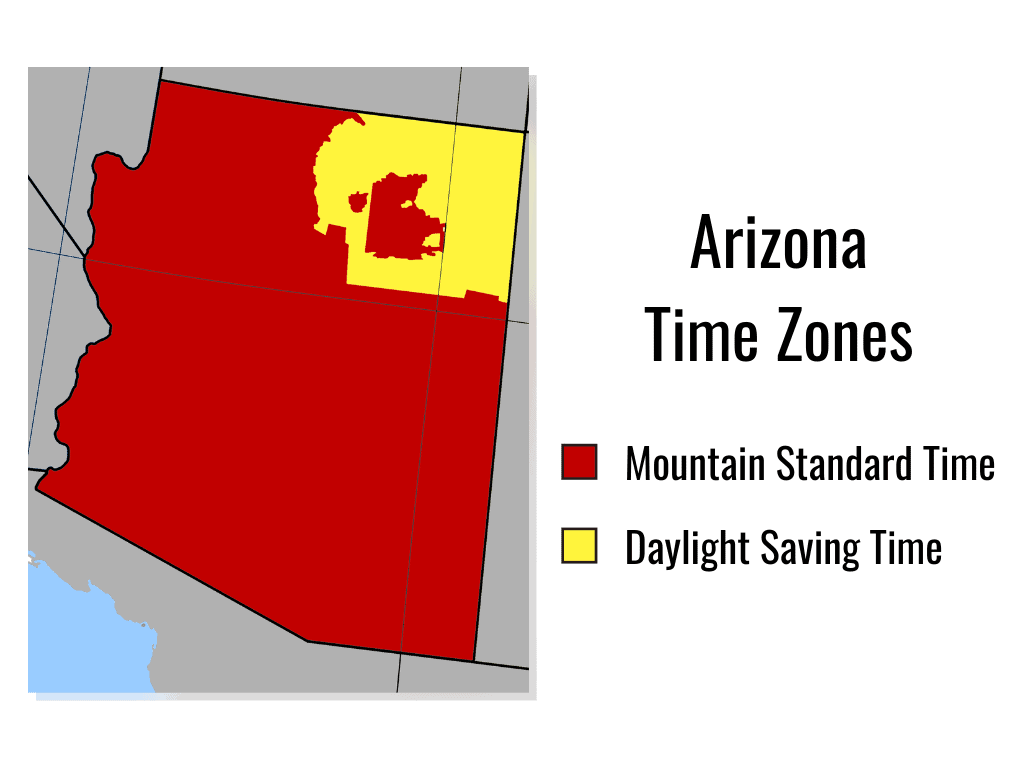
The sole exception to this rule within Arizona is the Navajo Nation, a vast reservation that spans parts of Arizona, Utah, and New Mexico. To maintain consistency across its tribal lands, the Navajo Nation does observe Daylight Saving Time. This means that if you’re traveling through areas like Monument Valley or Antelope Canyon, both of which are within the Navajo Nation, you’ll need to remember that the local time will be one hour ahead of the rest of Arizona during DST. This can be crucial for guided tours and timed entries. The Hopi Reservation, which is completely surrounded by the Navajo Nation, does not observe DST, creating a unique time “donut hole” within a time zone that observes DST.
Navigating Time Zones for a Seamless Arizona Adventure
For travelers, the key to a stress-free trip lies in diligent planning and awareness. The time difference, or lack thereof, can affect numerous aspects of your visit. When booking flights into major hubs like Phoenix Sky Harbor International Airport or Tucson International Airport, remember to account for the time difference from your origin city. A flight arriving from the East Coast, for example, might land at what feels like a much earlier hour local time, potentially extending your first day of exploration. Conversely, a flight leaving Arizona might feel like an earlier departure than anticipated when you compare it to your destination’s time zone.
Hotel check-in and check-out times are also critical. While most hotels operate on local time, being aware of the shift can prevent missed connections or unnecessary delays. Tour operators, especially those offering popular excursions to the Grand Canyon National Park, Sedona, or activities along the Colorado River, will always refer to local Arizona time. However, if your tour involves crossing into the Navajo Nation, confirm with your guide whether their stated times account for the tribal lands’ DST observance. The consistency of Arizona’s time, once understood, can simplify planning. There’s no need to constantly adjust for DST, making it easier to stick to a schedule without the annual disruption. Travelers coming from states that do observe DST will simply need to remember that for roughly half the year, Arizona will effectively be “out of sync” by an hour compared to their home time zone’s standard practice.
Maximizing Your Arizona Experience: Time, Travel, and Landmarks
Arizona’s unique time zone isn’t just a logistical detail; it influences the very rhythm of life and the optimal timing for experiencing its world-renowned attractions. From sunrise hikes to starlit desert dinners, understanding the local clock is key to unlocking the full potential of your trip.
Planning Your Day: Sunrise to Sunset in the Grand Canyon State
The constant Mountain Standard Time in most of Arizona means consistent sunrise and sunset times relative to the clock, regardless of the season’s DST changes elsewhere. This stability is particularly beneficial when planning outdoor activities, which are often best enjoyed during the cooler parts of the day. Early mornings are ideal for exploring trails around Sedona’s red rock formations like Bell Rock or Camelback Mountain in Phoenix, before the desert heat peaks. Many guided tours for hot air balloon rides over Phoenix or Sedona, or jeep tours through Canyon de Chelly National Monument, often start at the crack of dawn to capture the golden light and cooler temperatures. Knowing that the time won’t suddenly shift an hour can provide a calming predictability to your morning schedule.
Conversely, evenings in Arizona are equally spectacular. The relatively consistent sunset times (again, relative to the clock) throughout the year mean that planning for those iconic golden hour views at places like Horseshoe Bend near Page, or the multiple overlooks within the Grand Canyon National Park, becomes straightforward. Many resorts and hotels, such as The Phoenician, a Luxury Collection Resort, Scottsdale or L’Auberge de Sedona, offer sunset yoga sessions or evening dining experiences designed to perfectly coincide with these breathtaking moments. Stargazing is another popular evening activity, with places like Flagstaff being recognized as an International Dark Sky City. The predictable timing makes it easier to schedule observatory visits or simply find a quiet spot away from city lights to marvel at the desert sky. From historical sites like Tombstone to architectural wonders such as the Chapel of the Holy Cross in Sedona, timing your visits with optimal lighting for photography or simply to avoid crowds can enhance the experience significantly. Other notable landmarks, like the Hoover Dam or the repurposed London Bridge in Lake Havasu City, benefit from pre-planned visits to align with guided tours or less crowded periods.
Culinary Delights and Cultural Immersion: Timing Your Taste of Arizona
The consistent time zone in most of Arizona also simplifies the planning of your culinary and cultural explorations. Dining reservations in cities like Phoenix, Scottsdale, and Tucson are much easier to manage without the annual DST shift. Scottsdale’s vibrant Old Town Scottsdale, for instance, comes alive in the evenings with a plethora of restaurants and bars. Knowing the precise local time ensures you won’t miss your table at a renowned Southwestern restaurant or a lively happy hour. From the authentic Sonoran hot dogs in Tucson to the upscale farm-to-table experiences in Phoenix, every culinary adventure can be meticulously timed.
Beyond food, Arizona offers a rich tapestry of cultural experiences. Museums such as the Heard Museum and the Musical Instrument Museum in Phoenix typically operate on fixed schedules, and understanding Arizona’s time ensures you arrive promptly for tours or special exhibitions. Art walks in Scottsdale and Sedona often begin at specific hours, and local festivals, concerts, and farmers’ markets across cities like Mesa, Chandler, Gilbert, Glendale, and Peoria adhere strictly to local time. The benefit of a stable time zone means fewer calendar confusions, allowing visitors to fully immerse themselves in the local culture without worrying about whether events are scheduled in “standard” or “daylight” time. Even for natural attractions, such as the Desert Botanical Garden or South Mountain Park and Preserve, both in Phoenix, knowing opening and closing times relative to your internal clock simplifies planning your visit.
Accommodation and Lifestyle: Where Time Meets Comfort
The consistent timekeeping in Arizona also plays a subtle yet significant role in the overall accommodation and lifestyle experience, especially for those seeking relaxation, long-term stays, or efficient business trips.
Choosing Your Stay: Hotels, Resorts, and Arizona’s Unique Offerings
When it comes to accommodation, Arizona boasts an incredible range, from luxurious resorts to quaint boutique hotels and practical extended-stay options. The stable time zone simplifies booking and arrival logistics. Imagine flying into Phoenix after a long journey; the last thing you want is confusion over check-in times due to time zone shifts. With Arizona on a fixed Mountain Standard Time year-round, confirming your reservation time for establishments like the opulent Arizona Biltmore, A Waldorf Astoria Resort, the retro-chic Hotel Valley Ho in Scottsdale, or the serene Amara Resort and Spa in Sedona, becomes wonderfully straightforward.
This consistency also extends to enjoying resort amenities. Whether you’re planning an early morning tee time at a golf resort like the Fairmont Scottsdale Princess, a relaxing spa treatment at Sanctuary Camelback Mountain, A Gurney’s Resort & Spa, or a poolside lounge session at the Hyatt Regency Scottsdale Resort & Spa at Gainey Ranch, the stability of the clock allows for precise scheduling. Family-friendly resorts such as the JW Marriott Scottsdale Camelback Inn Resort & Spa and historical gems like The Wigwam in Litchfield Park offer a multitude of activities, and not having to adjust for DST helps guests maximize their leisure time. From the urban sophistication of Tempe to the high desert charm of Prescott or the border town experiences of Yuma, every type of accommodation adheres to this predictable schedule, ensuring a smoother stay for every visitor.
Lifestyle Implications for Long-Term Stays and Business Travelers
For those considering Arizona for a longer stay, whether as “snowbirds” escaping colder climates or remote workers drawn to its sunny disposition, the absence of Daylight Saving Time can be a significant lifestyle advantage. The consistent time means no annual disruption to sleep patterns or daily routines, contributing to a more relaxed and stable living environment. For remote workers, this also means predictable work hours relative to clients or colleagues in other time zones, without the added complexity of a bi-annual shift.
Business travelers also benefit from Arizona’s time zone. Scheduling meetings, particularly with clients or partners in California (Pacific Time) or other Mountain Time states, becomes clearer. During DST, Arizona is aligned with Pacific Daylight Time, simplifying communication with the West Coast. During standard time, it’s one hour ahead of Pacific Standard Time. This consistency helps in managing conference calls, travel itineraries, and overall business operations without the hassle of checking for DST status. The state’s appeal as a hub for conventions and corporate events, supported by excellent facilities and a strong tourism infrastructure, is subtly enhanced by this predictable timekeeping. From exploring natural wonders like Saguaro National Park and Petrified Forest National Park to simply enjoying the vibrant city life, the state’s approach to time contributes to an overall sense of ease and reliability that is highly valued by both leisure and business travelers.
In conclusion, Arizona’s unique relationship with time, characterized by its year-round adherence to Mountain Standard Time (with the notable exception of the Navajo Nation), is more than just a chronological curiosity. It’s a foundational element that shapes the travel, tourism, and lifestyle experiences within the state. From the moment you plan your journey to the final sunset you witness, understanding this temporal distinction ensures a smoother, more enjoyable, and truly immersive adventure. So, when you ask, “What time is it currently in Arizona?”, remember that you’re tapping into a unique rhythm that contributes to the enduring charm and unparalleled appeal of the Grand Canyon State. Embrace its timeless consistency, and prepare for an unforgettable journey where every moment counts.
LifeOutOfTheBox is a participant in the Amazon Services LLC Associates Program, an affiliate advertising program designed to provide a means for sites to earn advertising fees by advertising and linking to Amazon.com. Amazon, the Amazon logo, AmazonSupply, and the AmazonSupply logo are trademarks of Amazon.com, Inc. or its affiliates. As an Amazon Associate we earn affiliate commissions from qualifying purchases.