
The sheer power of Hurricane Irma left an indelible mark on Florida, forcing residents and visitors alike to grapple with its ferocity. As the storm churned through the Atlantic and made landfall, a critical question on many minds was its intensity. Understanding the category of a hurricane is paramount for preparedness, evacuation orders, and ultimately, recovery efforts. This article delves into the classification of Hurricane Irma as it impacted the Sunshine State, exploring the meteorological factors that defined its strength and the implications for the affected regions.
Understanding Hurricane Intensity: The Saffir-Simpson Scale
To accurately address the question of Irma’s category, it’s essential to first understand the system used to classify hurricanes: the Saffir-Simpson Hurricane Wind Scale. Developed by Herbert Saffir, a consulting engineer, and Robert Simpson, a meteorologist and director of the National Hurricane Center, this scale categorizes hurricanes based on their sustained wind speed. It’s a crucial tool for communicating the potential damage a storm could inflict.
The Five Categories and Their Impact
The Saffir-Simpson scale features five categories, with Category 1 being the weakest and Category 5 being the most devastating. Each category represents a range of sustained wind speeds and is associated with specific levels of potential damage:
- Category 1: Sustained winds of 74-95 miles per hour (119-153 kilometers per hour). Minimal damage is expected, primarily to poorly constructed buildings, with potential for damage to trees, power lines, and signage.
- Category 2: Sustained winds of 96-110 miles per hour (154-177 kilometers per hour). Moderate damage is likely. Homes and other structures may experience significant damage, with extensive power outages and uprooted trees.
- Category 3: Sustained winds of 111-129 miles per hour (178-208 kilometers per hour). Extensive damage is expected. Many well-built homes could suffer severe damage, with widespread power outages and destruction of trees and vegetation. This category marks a “major hurricane.”
- Category 4: Sustained winds of 130-156 miles per hour (209-251 kilometers per hour). Catastrophic damage is likely. Complete roof failure on many homes, widespread power outages lasting weeks, and significant destruction of infrastructure are common. This is also considered a “major hurricane.”
- Category 5: Sustained winds of 157 miles per hour or higher (252 kilometers per hour or higher). Catastrophic devastation is expected. Complete destruction of homes and businesses, prolonged power outages, and uninhabitable conditions are probable.
The category assigned to a hurricane is not static; it can fluctuate as the storm moves over different ocean temperatures, interacts with landmasses, or encounters varying atmospheric conditions. This dynamic nature means that a hurricane’s intensity at one point in its track can be significantly different from its intensity at another.
Hurricane Irma’s Journey and Landfall in Florida
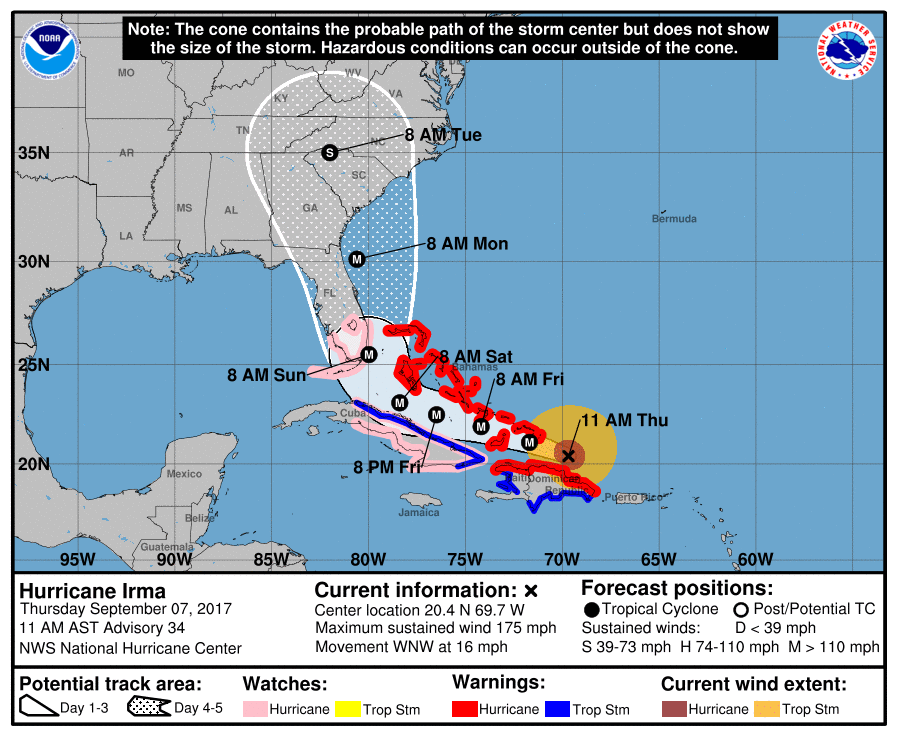
Hurricane Irma’s path was a long and formidable one, beginning as a tropical wave off the coast of Africa in late August 2017. It rapidly intensified into a powerful hurricane, reaching its peak intensity over the Atlantic Ocean as a Category 5 storm. Its trajectory then brought it into the Caribbean, where it caused widespread destruction across islands like Puerto Rico, St. Martin, and Cuba.

As Irma approached the southeastern United States, forecasters closely monitored its progress. The storm’s immense size and sustained high winds posed a significant threat to the entire state of Florida. Evacuation orders were issued for millions of residents, particularly in coastal areas, as the potential for devastating storm surge and wind damage loomed large.
Landfall and Intensities in Florida
Hurricane Irma made its first landfall in the Florida Keys on September 10, 2017. At this point, it was classified as a Category 4 hurricane. The sustained winds were estimated to be around 130 miles per hour, accompanied by a dangerous storm surge. The Keys, a chain of islands with relatively low elevation, are particularly vulnerable to the impacts of strong hurricanes. The intense winds tore through structures, and the surge inundated coastal communities.
Following its passage through the Keys, Irma continued its northward track up the western coast of Florida. Its second landfall occurred near Naples, Florida, later that same day. While the storm had weakened slightly due to its interaction with the landmass and cooler waters, it still maintained its Category 4 status upon striking the southwestern coast. The immense size of the storm meant that even with a slight decrease in wind speed, the destructive potential remained incredibly high.
As Irma moved inland, its wind speeds gradually decreased. However, the significant threat of storm surge continued along the coastlines, and the heavy rainfall associated with the hurricane brought widespread flooding to inland areas, including major cities like Miami and Tampa. The sheer volume of rain, combined with the storm surge pushing water inland, created a multifaceted disaster for many Floridians.
The Aftermath and Lingering Impact
The passage of Hurricane Irma left a trail of destruction across Florida. Millions of residents experienced power outages, some for weeks. Homes and businesses suffered extensive damage, from minor roof leaks to complete structural collapse. The Florida Keys, in particular, bore the brunt of the storm’s initial fury, with significant damage to infrastructure and residential areas. Iconic landmarks and tourist attractions faced the difficult task of recovery and repair.

Recovery and Resilience in Tourism and Hospitality
The impact on Florida’s vital tourism industry was substantial. Many hotels, resorts, and vacation rental properties along the coast sustained damage, leading to temporary closures and cancellations of bookings. Attractions, from theme parks in Orlando to the beaches of Clearwater, had to assess and address the damage before welcoming visitors back.
The resilience of the tourism and hospitality sector in Florida, however, became evident in the months that followed. Communities rallied together, and significant efforts were made to rebuild and restore the infrastructure that draws millions of travelers each year. Businesses, including renowned establishments like the Fontainebleau Miami Beach and smaller boutique hotels, worked diligently to reopen their doors. This recovery process underscored the importance of preparedness, robust emergency management, and the collective spirit of rebuilding. The lessons learned from Hurricane Irma continue to inform disaster preparedness strategies across the state, ensuring that Florida remains a vibrant destination for travelers while prioritizing the safety and well-being of its residents.
LifeOutOfTheBox is a participant in the Amazon Services LLC Associates Program, an affiliate advertising program designed to provide a means for sites to earn advertising fees by advertising and linking to Amazon.com. Amazon, the Amazon logo, AmazonSupply, and the AmazonSupply logo are trademarks of Amazon.com, Inc. or its affiliates. As an Amazon Associate we earn affiliate commissions from qualifying purchases.