
The esteemed institution, Florida A&M University, often shortened to FAMU, is a cornerstone of higher education and a significant landmark within the vibrant landscape of Florida. For many, the acronym “A&M” in its name might evoke a sense of tradition, but its precise meaning can sometimes be a point of curiosity. This article delves into the historical significance of “A&M” within the context of FAMU, exploring its roots and the broader implications for land-grant institutions across the United States.
The Genesis of “A&M”: A Legacy of Agricultural and Mechanical Pursuits
The “A&M” in Florida A&M University is not merely an arbitrary abbreviation; it represents a foundational commitment to specific fields of study that were paramount during the university’s inception. The designation “Agricultural and Mechanical” signifies the university’s origins as a land-grant institution. These institutions were established under the Morrill Acts of 1862 and 1890, federal legislation designed to provide public land and federal funds to states for the establishment of colleges that would focus on practical education, particularly in agriculture and the mechanical arts.
The first Morrill Act, signed into law by President Abraham Lincoln, aimed to make higher education more accessible and relevant to the needs of a growing nation. It encouraged the development of colleges that would provide training in fields that were essential for economic development and technological advancement. Agriculture was the backbone of the American economy at the time, and the mechanical arts, encompassing engineering, manufacturing, and trades, were crucial for industrial progress.
The second Morrill Act, enacted in 1890, further expanded this vision by specifically providing for the establishment of colleges for African Americans in states where segregation prevented their attendance at existing land-grant institutions. Florida A&M University, originally founded as the State Normal College for Colored Students in 1887, became a beneficiary of this act, solidifying its role as a vital institution dedicated to providing quality education in agriculture and the mechanical arts to Black students.
Therefore, the “A&M” in Florida A&M University is a direct historical echo of its land-grant mission. It signifies a dedication to fostering innovation, practical skills, and scientific inquiry in fields that were, and remain, vital to the progress of society. This legacy continues to shape the university’s curriculum, research initiatives, and its role in serving the broader community, extending its influence far beyond the academic realm and impacting the very fabric of Florida’s educational and economic landscape.
The Land-Grant Imperative: Cultivating Progress Through Practical Education
The concept of the land-grant university was a revolutionary one, born out of a recognition that traditional classical education, while valuable, was not adequately preparing students for the practical demands of a rapidly industrializing nation. The Morrill Acts were designed to democratize higher education, making it accessible to a wider segment of the population and focusing its purpose on the tangible needs of society.
- Agricultural Innovation: The emphasis on agriculture was critical. In the late 19th century, farming was not just a livelihood for many Americans; it was the bedrock of the nation’s economy. Land-grant universities were tasked with conducting research to improve crop yields, develop better farming techniques, and educate farmers on scientific advancements. This not only benefited individual farmers but also contributed to food security and economic prosperity for the entire nation. For FAMU, this meant establishing robust programs in agronomy, animal science, and related fields, contributing to the development of agricultural practices in the Southeastern United States.
- Mechanical Arts and Engineering: The “M” represented a parallel commitment to the burgeoning industrial sector. The mechanical arts encompassed a range of disciplines that were essential for building and maintaining the infrastructure of a modern nation. This included training in engineering, manufacturing, mechanics, and other technical fields. As the country moved from an agrarian society to an industrial powerhouse, the demand for skilled engineers and technicians grew exponentially. Land-grant universities played a crucial role in meeting this demand, fostering innovation in areas like bridge construction, railway development, and factory production. FAMU’s programs in engineering and technology directly stem from this historical imperative.
- Extending Knowledge: A key component of the land-grant mission was the principle of “extension.” This meant that universities were not just to educate students within their walls but also to extend their knowledge and research findings to the wider public, particularly to farmers and laborers. This led to the development of agricultural extension services, which provided practical advice, demonstrations, and educational programs to communities across the country. These services have had a profound and lasting impact on rural development, public health, and community engagement.
The “A&M” designation, therefore, is more than just an academic descriptor; it is a historical marker of FAMU’s commitment to pragmatic education, scientific advancement, and the upliftment of its community, mirroring the foundational principles of land-grant institutions nationwide. This commitment continues to resonate in the university’s diverse academic offerings and its active role in research and public service, making it a vital destination for students seeking a rigorous and relevant education in Florida.

FAMU Today: A Modern University Rooted in Tradition
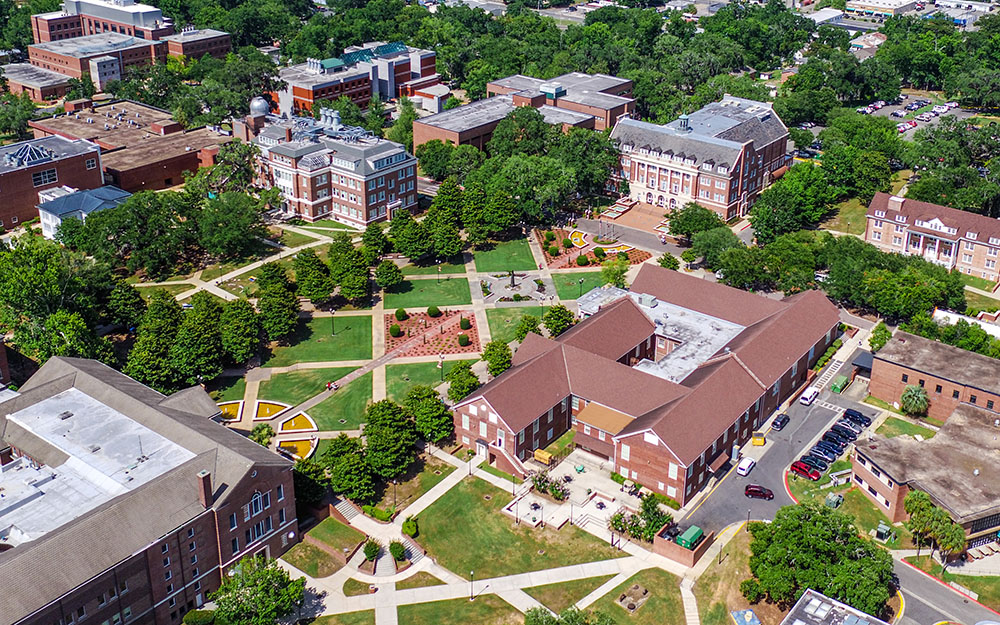
While the “A&M” in Florida A&M University firmly anchors it in its historical land-grant mission, the university has evolved significantly since its founding. Today, FAMU is a comprehensive public historically black university (HBCU) offering a wide array of undergraduate, graduate, and professional programs across numerous disciplines. Its campus in Tallahassee, the capital of Florida, is a vibrant hub of academic excellence, cultural activity, and community engagement.
Despite its expansion into broader fields of study, the spirit of the “A&M” legacy endures. The university continues to place a strong emphasis on STEM education, research, and the application of knowledge to solve real-world problems. This commitment is evident in its state-of-the-art facilities, its distinguished faculty, and its innovative research centers. Students at FAMU are encouraged to engage in hands-on learning, research opportunities, and community outreach, reflecting the practical ethos of its land-grant origins.
Beyond its academic prowess, FAMU is renowned for its rich cultural heritage and its significant contributions to African American history and advancement. Its iconic marching band, the Marching 100, is celebrated nationwide for its precision, artistry, and electrifying performances, often gracing major sporting events and parades, including the legendary Rose Parade in Pasadena, California. The university’s alumni network is extensive and influential, with graduates making significant contributions in fields ranging from politics and law to medicine and the arts.
For those planning a visit to Tallahassee, a tour of the Florida A&M University campus offers a glimpse into the history and dynamism of this influential institution. Visitors can explore its beautiful grounds, architectural landmarks, and learn more about the educational journey it provides. Whether you are a prospective student, a curious traveler, or an alumnus returning to reconnect with your alma mater, understanding the “A&M” designation provides a deeper appreciation for the enduring legacy of FAMU as a beacon of education, innovation, and cultural pride. The university’s story is intricately woven into the tapestry of Florida’s educational landscape, a testament to its foundational principles and its continuous adaptation to the needs of the future.
The presence of Florida A&M University also enriches the travel experience in Tallahassee. The university often hosts public events, lectures, and cultural festivals that are open to the community, offering visitors unique opportunities to engage with local culture and history. Its location in the heart of Tallahassee makes it an accessible and integral part of any exploration of the city. Many hotels in Tallahassee are conveniently located to provide easy access to the campus and its surrounding attractions, making it an excellent base for travelers interested in both education and leisure. This convergence of academic tradition and vibrant student life makes FAMU a landmark worth experiencing.
LifeOutOfTheBox is a participant in the Amazon Services LLC Associates Program, an affiliate advertising program designed to provide a means for sites to earn advertising fees by advertising and linking to Amazon.com. Amazon, the Amazon logo, AmazonSupply, and the AmazonSupply logo are trademarks of Amazon.com, Inc. or its affiliates. As an Amazon Associate we earn affiliate commissions from qualifying purchases.