
The Florida flag is more than just a piece of cloth; it’s a vibrant emblem steeped in history, reflecting the Sunshine State’s unique identity. For any traveler, understanding the state flag can offer a deeper appreciation for the places they visit, the culture they experience, and the very essence of Florida. Whether you’re planning a luxurious getaway to Miami, a family adventure in Orlando, or a quiet retreat in the Florida Keys, the Florida flag serves as a constant, though perhaps subtle, reminder of the state’s rich heritage and spirit.
A Deeper Dive into the Emblem of the Sunshine State
The Florida flag, officially adopted in 1905 and last modified in 1913, is characterized by its distinctive design featuring a prominent red saltire overlaid on a white field. At the center of this cross, a bold crimson St. Andrew’s cross, or saltire, divides the white background into four equal quadrants. Encircling this powerful symbol is the state seal, a complex and detailed emblem in itself. Understanding these elements is key to unraveling the visual narrative of the Florida flag.

The Red Saltire: A Symbol of Unity and Sacrifice
The red saltire, or St. Andrew’s Cross, is a central and striking feature of the Florida flag. Its presence is not merely decorative; it carries significant historical and symbolic weight. The saltire, a diagonal cross, is a motif found in many flags and coats of arms, often representing a saint or a historical event. In the context of Florida, its exact meaning has been subject to some interpretation, but it is widely understood to symbolize unity and a shared heritage. Some theories suggest it was inspired by the Confederate battle flag, a nod to Florida‘s participation in the Civil War, while others propose it represents a connection to Spain, given Florida‘s early colonial history under Spanish rule, where the saltire was a common heraldic symbol. Regardless of the precise origin, its bold presence on the white field creates a powerful visual contrast, making the flag instantly recognizable. The white background, often associated with peace and purity, further accentuates the vivid red of the saltire. This stark yet harmonious combination is a hallmark of the Florida flag, contributing to its enduring appeal and recognizability. When you see this flag flying, perhaps over the steps of the Florida State Capitol building in Tallahassee, or adorning a building in St. Augustine, it’s a visual anchor to the state’s past and present.
The State Seal: A Window into Florida‘s Natural and Historical Riches
The most intricate and arguably the most informative element of the Florida flag is the state seal, which sits at the intersection of the red saltire. This seal is a detailed tableau that offers a glimpse into the natural beauty, historical significance, and economic prowess of Florida. The seal is circular, and its design has evolved over time, but its core elements have remained consistent.
The Central Imagery: A Majestic Indian Chieftain and a Steamboat
At the heart of the Florida state seal is a depiction of a Seminole Indian chieftain. This figure represents the state’s indigenous heritage, honoring the history and resilience of the Native American tribes who have inhabited this land for centuries. The Seminole people, in particular, have a deep and enduring connection to the Florida landscape. The chieftain is often depicted with a headdress and a stern, watchful gaze, symbolizing their strength and sovereignty.
Alongside the chieftain, a steamboat is prominently featured. This element speaks to Florida‘s history of transportation and commerce. Steamboats played a crucial role in the development of the state, facilitating trade and travel along its waterways, rivers, and coastlines, connecting communities and opening up new frontiers. The presence of the steamboat signifies Florida‘s progress and its economic development.
The Natural Bounty: Palm Trees, Mountains, and Water
The Florida state seal also showcases the state’s abundant natural resources. Majestic palm trees, a quintessential symbol of tropical and subtropical climes, are depicted, representing the lush vegetation and the state’s famous beaches. While Florida is not known for towering mountain ranges, the seal often includes rolling hills or mountains in the background, acknowledging the varied terrain and the natural beauty that draws millions of visitors each year.
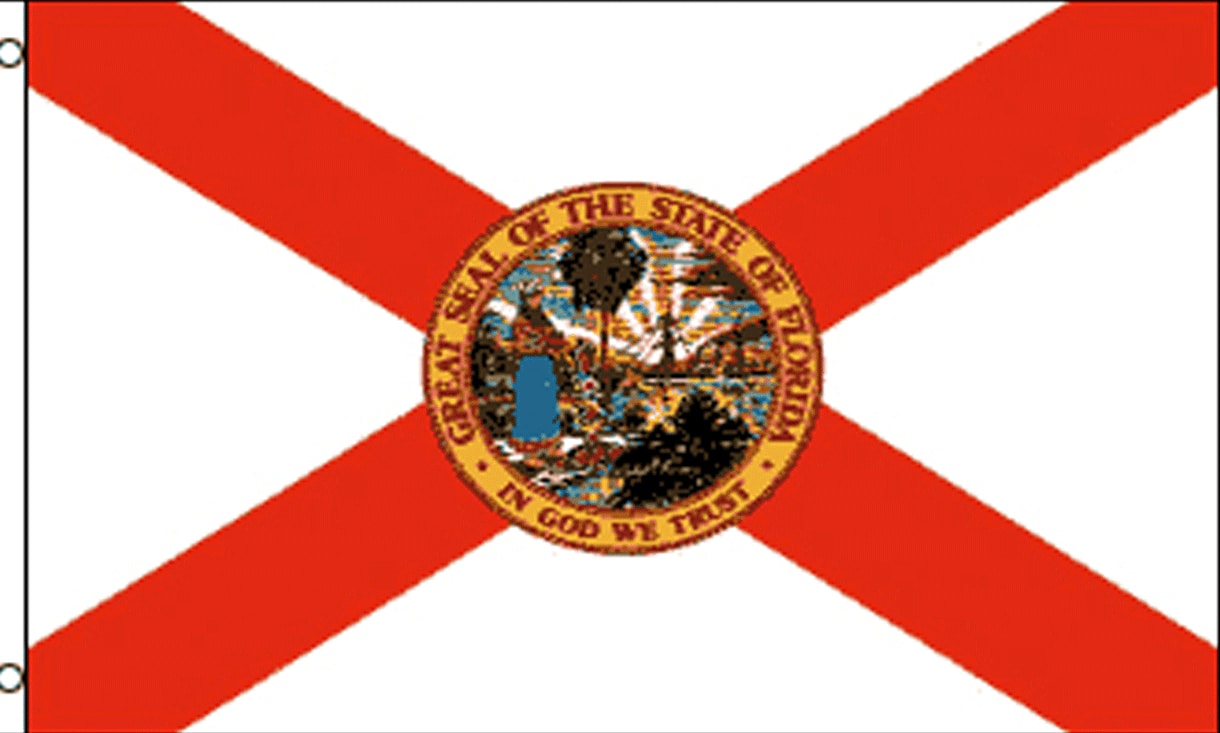
Crucially, the seal prominently features water. This can be represented by the ocean, lakes, or rivers, all vital components of the Florida ecosystem and economy. The extensive coastline, with its beautiful beaches like those in Clearwater and South Beach, and the numerous inland waterways are central to Florida‘s appeal for tourism and recreation.
The Motto: “In God We Trust”
Encircling the central imagery and natural elements is the official motto of Florida: “In God We Trust.” This motto, also found on U.S. currency, reflects a foundational belief and is a significant part of the state’s identity. The words are typically inscribed in a circle around the edge of the seal, completing the visual narrative.
The combination of these elements – the indigenous chieftain, the steamboat, the natural landscape, and the motto – within the state seal makes the Florida flag a rich tapestry of history, culture, and natural splendor. When you’re enjoying the attractions in Tampa, or exploring the Everglades, the flag serves as a subtle reminder of the deep roots and vibrant spirit of the state.
Why Understanding the Florida Flag Matters to Travelers
For travelers, recognizing and understanding the Florida flag can enrich their experience in several ways. It’s not just about identifying a flag; it’s about connecting with the place on a deeper level.
A Symbol of Local Identity and Pride
The Florida flag is a powerful symbol of state identity and pride for its residents. Seeing it flown prominently at state parks, government buildings, and even private residences signifies a sense of belonging and shared heritage. As a visitor, acknowledging and appreciating the flag can foster a greater connection with the local community. It’s a small gesture that shows respect for the state’s history and culture. Whether you’re attending a festival in Key West or visiting a museum in Jacksonville, the flag is a constant presence, a visual representation of the state you are exploring.
Connecting with History and Heritage
The historical significance embedded within the Florida flag, from the potential nods to Spanish influence to the representation of indigenous peoples and early commerce, offers a direct link to the state’s past. For those interested in history, understanding these elements can provide a new perspective on historical sites and landmarks. For instance, when visiting St. Augustine, the oldest continuously inhabited European-established settlement in the contiguous United States, the flag’s imagery resonates with the city’s layered history. Similarly, understanding the representation of the Seminole people on the seal deepens appreciation for their enduring legacy within the state.

A Visual Cue for Destinations and Experiences
The Florida flag can also act as a visual cue, guiding travelers toward authentic experiences. When you see the flag flying at a state park, it signals an opportunity to explore Florida‘s natural beauty. Its presence at a historic site or museum points towards opportunities for cultural immersion. Even when choosing accommodations, from luxury resorts in Boca Raton to charming bed and breakfasts in historic towns, the flag serves as a reminder of the unique character of Florida that these establishments aim to embody. It can inspire you to seek out local cuisine, engage with cultural events, and explore destinations that truly showcase the Sunshine State’s spirit. Imagine driving down the coast, seeing a string of flags fluttering in the breeze, each one a promise of a new adventure, a new discovery, and a deeper understanding of Florida.
The Florida flag is more than just a visual emblem; it’s a storytelling device, a historical artifact, and a symbol of a vibrant state. As you travel through Florida, from the bustling theme parks of Orlando to the tranquil beaches of the Gulf Coast, take a moment to appreciate the flag. It’s a simple yet profound way to connect with the heart and soul of the Sunshine State.
LifeOutOfTheBox is a participant in the Amazon Services LLC Associates Program, an affiliate advertising program designed to provide a means for sites to earn advertising fees by advertising and linking to Amazon.com. Amazon, the Amazon logo, AmazonSupply, and the AmazonSupply logo are trademarks of Amazon.com, Inc. or its affiliates. As an Amazon Associate we earn affiliate commissions from qualifying purchases.