
The allure of Fort Lauderdale, Florida is undeniable. Known affectionately as the “Venice of America” for its intricate network of canals, this vibrant South Florida city beckons travelers with its sun-drenched beaches, bustling nightlife, and a captivating blend of upscale resorts and laid-back beach town charm. Whether you’re planning a luxurious getaway, a family adventure, or a relaxed exploration of local culture, understanding the prevailing weather conditions is paramount to crafting the perfect itinerary. The climate in Fort Lauderdale is a significant draw for many, offering a tropical experience year-round, but with distinct seasons that influence outdoor activities and the overall ambiance of your visit.

The weather in Fort Lauderdale is a defining characteristic of its appeal. It’s a city where sunshine is a frequent companion, and the gentle ocean breeze often provides a refreshing counterpoint to the warmth. This subtropical climate means that while you can expect pleasant temperatures for much of the year, there are nuances to consider. From the balmy days of winter to the more humid and active hurricane season, knowing what to expect will help you pack accordingly, choose the best time to visit for your preferred activities, and make the most of your stay, whether you’re lounging on Fort Lauderdale Beach, exploring the shops and restaurants along Las Olas Boulevard, or taking a scenic boat tour through the city’s waterways.
Understanding Fort Lauderdale’s Tropical Climate Patterns
Fort Lauderdale experiences a humid subtropical climate, characterized by hot, humid summers and mild, pleasant winters. This means that the weather plays a crucial role in shaping the experiences available to visitors throughout the year. The city’s proximity to the Atlantic Ocean significantly influences its temperature and humidity levels, creating a consistently warm environment that supports a wide range of outdoor activities.
Seasonal Weather Trends and Their Impact on Travel
The distinct seasons in Fort Lauderdale each offer a unique travel experience, influenced heavily by the prevailing weather. Understanding these seasonal shifts can help you tailor your visit to align with your interests, whether you’re seeking active adventures, relaxed beach days, or cultural immersion.
Winter (December – February): The Ideal Escape
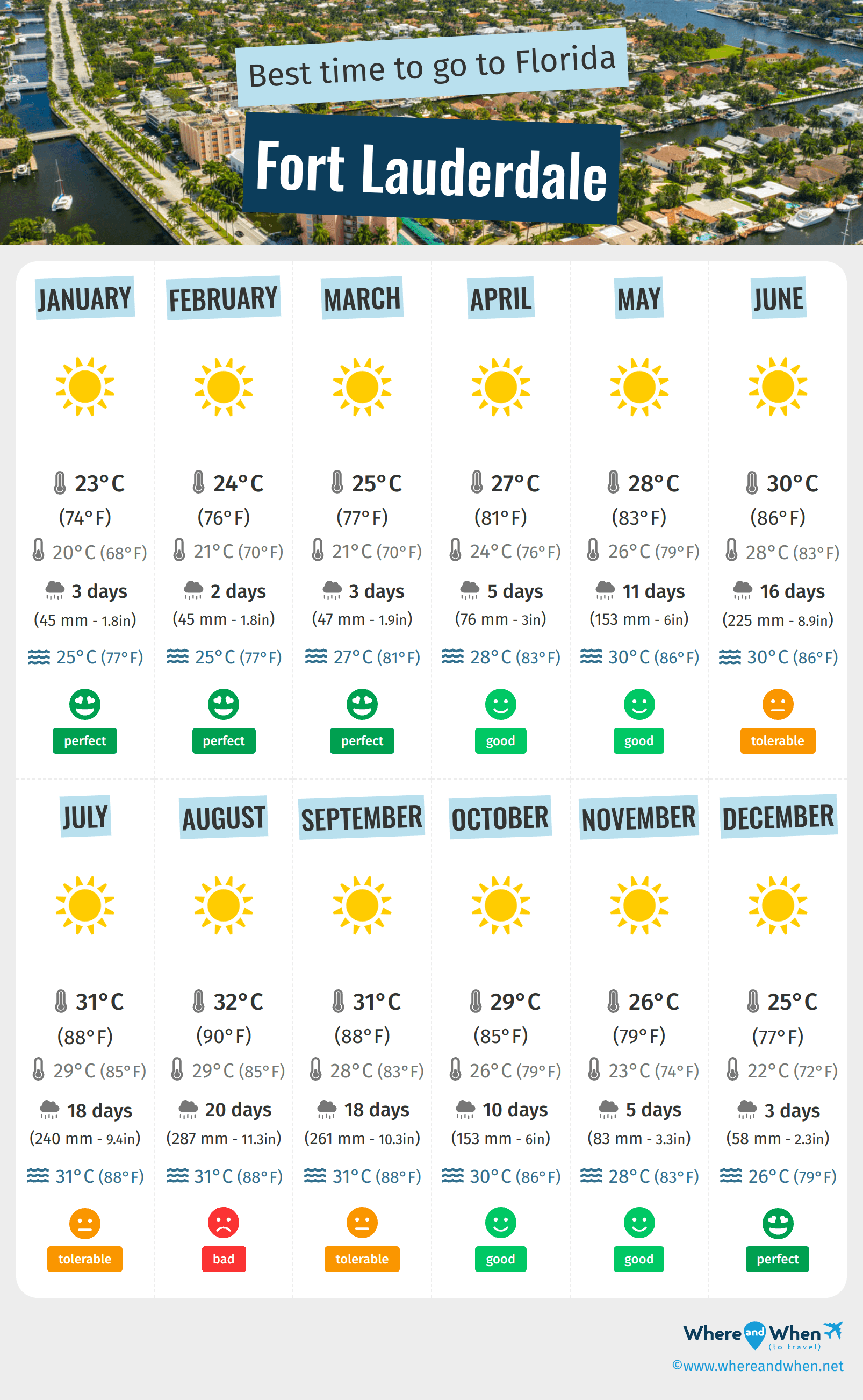
The winter months in Fort Lauderdale are often considered the most idyllic for tourism. Temperatures are comfortably warm, typically ranging from the mid-60s to the low 70s Fahrenheit (around 18-23 degrees Celsius). Humidity levels are lower, and there is less rainfall, making it a perfect time for outdoor exploration. This period is ideal for those looking to escape colder climates and enjoy the sunshine.
- Activities: During winter, visitors can indulge in a variety of activities without the discomfort of extreme heat or heavy rain. Beach days are plentiful, with gentle waves and plenty of sunshine. Water sports like swimming, paddleboarding, and kayaking are popular. The pleasant temperatures also make it an excellent time for exploring Las Olas Boulevard, visiting the Fort Lauderdale Museum of Discovery and Science, or taking a scenic cruise along the Intracoastal Waterway. The Fort Lauderdale International Boat Show, typically held in late October or early November, often coincides with the tail end of this favorable weather, marking a significant event on the city’s calendar.
- What to Pack: Light layers are recommended. Pack short-sleeved shirts, shorts, sundresses, and swimwear. A light jacket or sweater might be useful for cooler evenings, especially in December and January. Don’t forget sunscreen, a hat, and sunglasses for protection against the strong Florida sun. Comfortable walking shoes are essential for exploring the city’s attractions.
Spring (March – May): Transitioning to Warmth
As spring arrives, Fort Lauderdale experiences a gradual increase in temperature and humidity. March and April still offer very pleasant weather, with average temperatures in the 70s Fahrenheit (21-26 degrees Celsius). May sees a noticeable rise, with temperatures often reaching the upper 70s and low 80s Fahrenheit (26-28 degrees Celsius), and humidity begins to climb. Rainfall also starts to increase, though it often comes in the form of brief, localized afternoon showers.
- Activities: Spring is a fantastic time for an array of activities. The waters are warm enough for comfortable swimming and water sports, and the beaches remain a prime attraction. This season is also excellent for enjoying outdoor dining and exploring the vibrant local scene. Events like Tortuga Music Festival, a popular country music festival held on the beach, often take place in April, drawing large crowds. The city’s numerous parks and nature trails are also at their best during this time. Families might enjoy a visit to Hugh Taylor Birch State Park or a day trip to the nearby Everglades National Park.
- What to Pack: Similar to winter, light clothing is key. Bring shorts, t-shirts, swimwear, and sundresses. As humidity increases and afternoon showers become more common, a light, waterproof jacket or umbrella can be beneficial. Sun protection remains a top priority.
Summer (June – August): Heat, Humidity, and Thunderstorms
The summer months in Fort Lauderdale are characterized by high temperatures, significant humidity, and a higher likelihood of afternoon thunderstorms. Daytime temperatures frequently reach the high 80s and low 90s Fahrenheit (31-34 degrees Celsius), with the heat index often pushing into the triple digits due to the humidity. Thunderstorms are a daily occurrence, typically forming in the late afternoon and bringing heavy rain and lightning for a short period before clearing.
- Activities: Despite the heat, summer is still a popular time for visitors, especially families on school breaks. The beaches offer a respite from the heat, with the ocean providing a cooling sensation. Many attractions are air-conditioned, making indoor activities a good option during the hottest parts of the day. Museums like the NSU Art Museum Fort Lauderdale are great escapes. Water parks and boat tours remain popular. It’s essential to stay hydrated and seek shade during peak sun hours. Early morning or late evening activities are often more comfortable.
- What to Pack: Lightweight, breathable fabrics are a must. Cotton and linen are excellent choices. Pack plenty of shorts, t-shirts, tank tops, and swimwear. A light rain jacket or poncho is highly recommended for the afternoon showers. Sunscreen, hats, and sunglasses are non-negotiable. For those planning longer stays, consider packing quick-drying clothing.
Fall (September – November): Transitioning to Cooler, Drier Weather
Fall in Fort Lauderdale marks a transition back towards more comfortable weather. September and October are still very warm and humid, and this period falls within the Atlantic hurricane season, which officially runs from June 1st to November 30th. While the risk of hurricanes is present, it is important to note that direct hits are infrequent. By November, temperatures begin to cool noticeably, dropping into the 70s Fahrenheit (21-26 degrees Celsius), and humidity decreases. Rainfall also becomes less frequent.
- Activities: Early fall still requires managing the heat and humidity. However, as the season progresses into late October and November, the weather becomes increasingly pleasant for outdoor pursuits. This is an excellent time for exploring the city’s many parks, enjoying outdoor cafes, and taking advantage of the less crowded beaches. The city often hosts various festivals and events during the fall, taking advantage of the improving weather. For those interested in exploring beyond the immediate coastline, a visit to the nearby Morikami Museum and Japanese Gardens is a tranquil experience.
- What to Pack: Similar to spring, bring light clothing for warmer days. As the weather cools in November, a light jacket or sweater becomes more useful for evenings. Sun protection is still vital. If traveling in September or October, staying informed about weather forecasts is prudent due to the ongoing hurricane season.
Navigating Hurricane Season and Tropical Storms
The Atlantic hurricane season, from June 1st to November 30th, is a critical factor for anyone planning a trip to Fort Lauderdale during these months. While the peak of the season is typically from August to October, tropical storms and hurricanes can form at any point within this window.
- Preparation and Planning: Travelers visiting during hurricane season should remain informed about weather forecasts from reliable sources such as the National Hurricane Center. Purchasing travel insurance that covers weather-related cancellations or interruptions is highly recommended. It’s also wise to have a flexible itinerary that can accommodate potential weather changes. Many hotels, such as the Boutique Hotel Fort Lauderdale, offer hurricane preparedness information and policies.
- Impact on Travel: While a direct hit from a major hurricane is statistically rare, tropical storms can bring heavy rains, strong winds, and localized flooding, which can disrupt travel plans, cause attraction closures, and affect transportation. Even without a direct impact, the threat of a storm can lead to flight cancellations and travel advisories. The best approach is to stay aware, have a plan, and be prepared to adjust your schedule if necessary. The safety and well-being of visitors are always the top priority, and local authorities will issue advisories and evacuation orders if a significant threat is present.
Planning Your Fort Lauderdale Adventure Based on Weather
The weather in Fort Lauderdale, Florida is a key element in unlocking the full potential of your visit. By understanding the seasonal patterns, you can optimize your packing, select activities that best suit the conditions, and even choose the ideal time of year to visit for your specific interests. Whether you’re dreaming of sun-drenched beach days, exploring vibrant cityscapes, or immersing yourself in the natural beauty of South Florida, a little weather awareness goes a long way.
Maximizing Your Experience: Activities Aligned with the Climate
The diverse climate of Fort Lauderdale allows for a year-round array of activities, each enhanced by the prevailing weather. From the active adventures of cooler months to the water-centric fun of warmer periods, there’s something for every traveler.
- Water Activities: Fort Lauderdale Beach is, of course, a prime destination. Swimming, sunbathing, jet skiing, and parasailing are popular year-round, though more comfortable during the milder months. For those seeking to explore the city’s aquatic charm, boat tours, paddleboarding along the canals, and kayaking are excellent options. Consider a scenic cruise from the Bahia Mar Yachting Center for stunning views of waterfront mansions and the coastline.
- Outdoor Exploration: Parks like Hugh Taylor Birch State Park offer opportunities for cycling, picnicking, and wildlife viewing. The nearby Bonnet House Museum & Gardens provides a beautiful and historic setting to explore outdoors. For a more adventurous outing, day trips to the Everglades National Park for airboat tours and wildlife spotting are a must, though best enjoyed during the cooler, drier months.
- Cultural and Urban Attractions: Las Olas Boulevard is a hub for shopping, dining, and art galleries, perfect for a stroll any time of year, with indoor options available for respite from the heat or rain. The Fort Lauderdale Museum of Discovery and Science and the NSU Art Museum Fort Lauderdale offer engaging indoor experiences. The Broward Center for the Performing Arts is a great option for evening entertainment.
Accommodation and Lifestyle Considerations for Every Season
Choosing the right accommodation and planning your lifestyle around the weather can significantly enhance your Fort Lauderdale experience. From luxury resorts to budget-friendly stays, the city offers options to suit every preference and season.
- Luxury & Resorts: For those seeking an upscale experience, numerous luxury hotels and resorts line the coast. Properties like the Ritz-Carlton Fort Lauderdale offer stunning ocean views and world-class amenities, perfect for relaxing and enjoying the tropical ambiance. During warmer months, air-conditioned suites and poolside service become particularly valuable.
- Family-Friendly Stays: Fort Lauderdale is a fantastic destination for family trips. Many hotels offer family suites and kid-friendly amenities. Consider options that provide easy access to the beach or attractions like Galleria Mall, where indoor shopping can be a welcome break from the summer sun.
- Budget Travel: Even on a budget, Fort Lauderdale can be an enjoyable destination. Look for apartment rentals or hotels slightly off the main beach strip. The favorable weather during the shoulder seasons (spring and fall) can sometimes offer better rates. Public transportation options, including the Sun Trolley, can help manage costs for getting around.
- Long-Term Stays: For extended visits, consider serviced apartments or vacation rentals. These options provide more space and amenities, allowing you to live like a local. The consistent warmth throughout the year makes Fort Lauderdale an attractive destination for snowbirds or those seeking a longer escape from colder climates.
By carefully considering the weather in Fort Lauderdale, Florida, you can transform a good trip into an unforgettable one. The city’s climate is a vital part of its identity, influencing everything from the activities you choose to the pace of your vacation. Embrace the sunshine, prepare for the occasional shower, and let the tropical beauty of Fort Lauderdale captivate you.
LifeOutOfTheBox is a participant in the Amazon Services LLC Associates Program, an affiliate advertising program designed to provide a means for sites to earn advertising fees by advertising and linking to Amazon.com. Amazon, the Amazon logo, AmazonSupply, and the AmazonSupply logo are trademarks of Amazon.com, Inc. or its affiliates. As an Amazon Associate we earn affiliate commissions from qualifying purchases.