
As a premier destination within the vibrant landscape of Southwest Florida, Fort Myers beckons travelers with its sun-drenched beaches, rich historical tapestry, and a burgeoning culinary scene. Understanding the weather in this idyllic city is paramount for anyone planning a visit, whether it’s for a relaxing beach escape, an exploration of its natural wonders, or a deep dive into its cultural offerings. The climate of Fort Myers is characterized by its subtropical nature, offering warm temperatures year-round, but with distinct seasons that influence the experience of its visitors. This guide delves into the nuances of Fort Myers weather, providing insights to help you pack appropriately, plan your activities, and maximize your enjoyment of this captivating Floridian gem.
From the bustling downtown area with its historic Edison and Ford Winter Estates to the serene natural beauty of Lover’s Key State Park, Fort Myers offers a diverse range of attractions. This climatic overview is designed to complement your travel planning, whether you’re considering accommodations at a luxurious resort like the Hyatt Regency Coconut Point Resort and Spa, exploring budget-friendly apartments, or seeking the perfect villa for a long-term stay. The weather directly impacts outdoor activities, from kayaking along the Caloosahatchee River to enjoying the vibrant nightlife and local cuisine.
Understanding Fort Myers’ Subtropical Climate
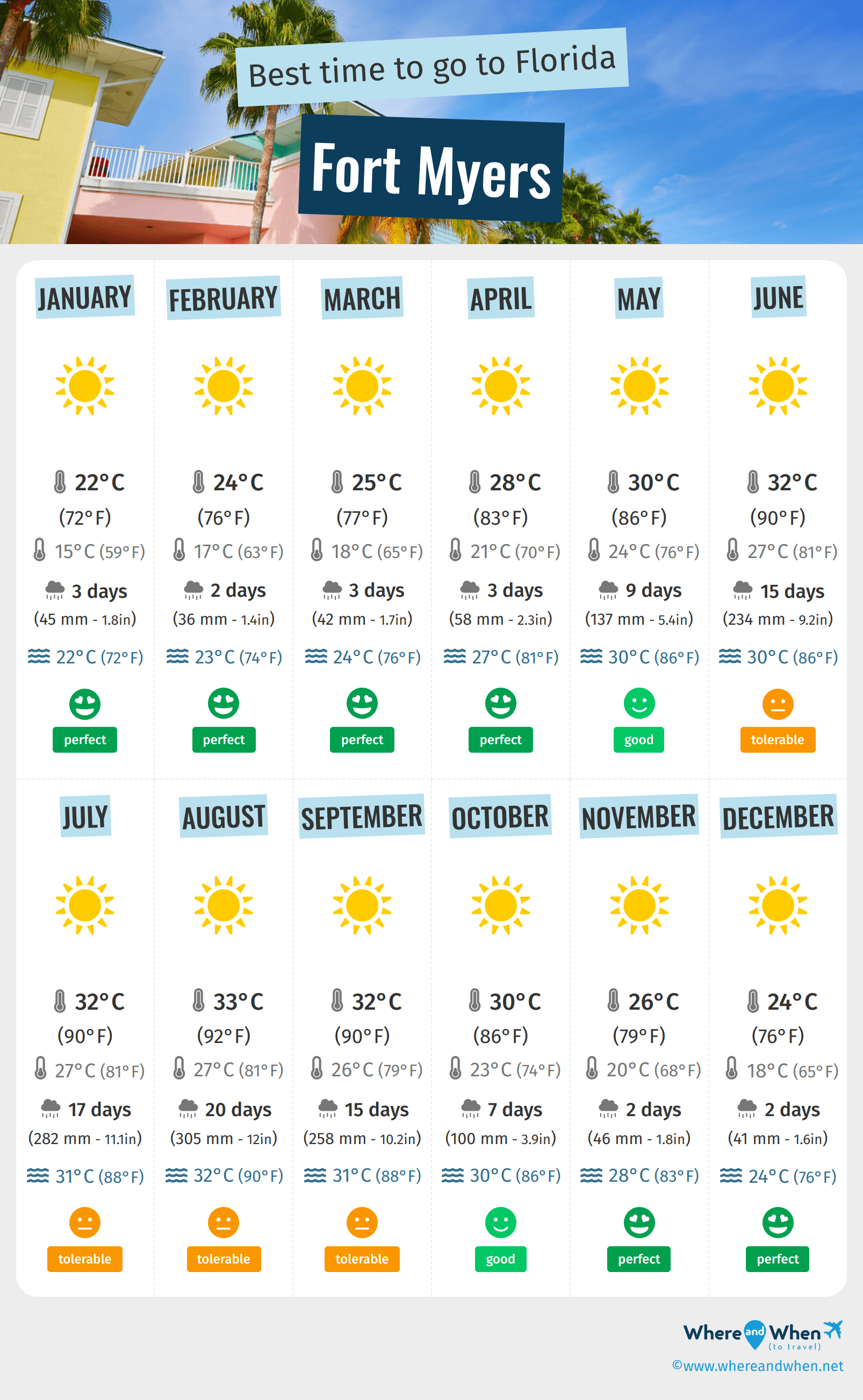
Fort Myers experiences a subtropical climate, which means it enjoys a long, hot, and humid summer, and a mild, pleasant winter. This type of climate is influenced by its proximity to the Gulf of Mexico, which moderates temperatures and contributes to the high humidity levels, particularly during the warmer months. The annual average temperature hovers around a comfortable 74°F (23°C), making it a year-round destination. However, the devil is in the details, and understanding the seasonal variations will help you tailor your visit to your preferences.
The Distinct Seasons of Fort Myers
While the temperatures may not drastically fluctuate as they do in more temperate regions, Fort Myers does experience discernible seasons. These seasons are primarily defined by temperature, humidity, and rainfall patterns, each offering a unique ambiance and a different set of potential activities.
Summer in Fort Myers (June – September)
Summer in Fort Myers is synonymous with heat and humidity. The temperatures typically range from the mid-80s to the low 90s Fahrenheit (around 29-33°C), with the heat index often feeling even higher due to the abundant moisture in the air. Humidity levels can consistently be in the 70-80% range. This period is also characterized by frequent afternoon thunderstorms. These are usually short-lived but can be intense, bringing heavy downpours and lightning. They often break the heat for a few hours, offering a brief respite.
Despite the heat, summer is a popular time for families on vacation, taking advantage of school breaks. The beaches, like the famous Fort Myers Beach, offer a refreshing escape, and water activities are plentiful. It’s essential to stay hydrated, seek shade during the peak sun hours, and be prepared for sudden weather changes. Many indoor attractions, such as the IMAG History & Science Center or exploring the diverse retail offerings, provide excellent alternatives during brief downpours or for those seeking a break from the sun.
Autumn in Fort Myers (October – November)
As summer transitions into autumn, Fort Myers begins to experience a welcome shift. The oppressive humidity gradually recedes, and temperatures become significantly more pleasant. Daytime highs often settle in the comfortable 70s and low 80s Fahrenheit (around 24-28°C), while evenings can bring cooler, more inviting air. Rainfall also decreases during these months, making it an ideal time for outdoor exploration and activities.
This season is perfect for exploring the natural landscapes surrounding Fort Myers, such as the Six Mile Cypress Slough Preserve. It’s also a prime time for enjoying al fresco dining at the numerous restaurants in downtown Fort Myers or exploring historical sites without the intense summer heat. The transition into fall is subtle but offers a delightful change of pace for visitors.
Winter in Fort Myers (December – February)
Winter is often considered the peak season for Fort Myers, and for good reason. The weather is remarkably mild and comfortable, with average daytime temperatures ranging from the high 60s to the mid-70s Fahrenheit (around 20-24°C). Humidity levels are at their lowest, and rainfall is minimal. These are the “snowbird” months, when visitors from colder climates flock to Florida to escape the chill.
This season is perfect for any type of outdoor activity imaginable. From golfing on championship courses to fishing charters, exploring the nearby Sanibel Island and Captiva Island for shelling, or simply relaxing on the beach, winter offers ideal conditions. The cultural scene also thrives, with various festivals and events taking place, taking advantage of the favorable weather. Accommodations can be in high demand, so booking in advance is highly recommended, especially for popular resorts like the Pink Shell Beach Resort & Marina.
Spring in Fort Myers (March – May)
Spring in Fort Myers marks a gradual return to warmer temperatures and increasing humidity. March and April still offer a lovely transition from winter, with pleasant highs in the 70s and low 80s Fahrenheit (around 24-28°C). As May approaches, the heat and humidity begin to build, signaling the imminent arrival of summer. Rainfall also starts to increase during this period.
This season is excellent for enjoying the beaches and outdoor attractions before the peak summer heat sets in. It’s a good time for boat tours to see dolphins or manatees, exploring the Everglades National Park (though this is a bit of a drive from Fort Myers), or attending local events. Spring can be a delightful time to visit, offering a balance of comfortable weather and vibrant outdoor life.
Planning Your Visit: Weather-Wise Tips for Fort Myers
When planning your trip to Fort Myers, considering the weather is crucial for a seamless and enjoyable experience. Whether you’re looking for a quiet getaway in a luxury villa or a family adventure, aligning your visit with the weather patterns can significantly enhance your itinerary.
Packing Essentials for Fort Myers Weather
Your packing list should be tailored to the season you plan to visit.
- Summer (June-September): Lightweight, breathable clothing is a must. Think cotton t-shirts, shorts, sundresses, and swimwear. Don’t forget a hat, sunglasses, and high SPF sunscreen to protect against the strong sun. An umbrella or light rain jacket is advisable for those afternoon showers. Comfortable walking shoes are essential for exploring.
- Autumn (October-November) & Spring (March-May): Layers are key during these transitional months. Pack a mix of light clothing for warmer days and a light sweater or jacket for cooler evenings. Swimwear is still a good idea, as is sun protection.
- Winter (December-February): While generally warm, evenings can be cooler. Pack light to medium layers, including long pants, long-sleeved shirts, and a light jacket or sweater. You’ll still need swimwear for sunny days, but perhaps also a pair of closed-toe shoes for exploring.
Regardless of the season, it’s always a good idea to have comfortable walking shoes, insect repellent (especially if you plan to visit nature preserves), and a reusable water bottle to stay hydrated.

Activities and Weather Considerations
The weather in Fort Myers directly influences the types of activities that are most enjoyable.
- Beach and Water Activities: Beaches like Fort Myers Beach and nearby islands are prime attractions. These are best enjoyed during the dry, sunny periods of winter and early spring, or during the less humid parts of fall. Summer can still be great, but be mindful of the heat and potential for afternoon storms.
- Outdoor Exploration and Nature: Hiking in preserves like Six Mile Cypress Slough Preserve or exploring the unique ecosystems of the Everglades are most comfortable during the cooler, drier months of winter and fall. Spring can also be pleasant before the intense summer heat.
- Historical and Cultural Sightseeing: The Edison and Ford Winter Estates and downtown Fort Myers attractions can be visited year-round, but are particularly pleasant during the milder seasons. Indoor museums like the IMAG History & Science Center are great anytime, offering a cool respite during hot summer afternoons.
- Dining and Entertainment: Fort Myers boasts a vibrant dining scene, from upscale resorts to casual seafood shacks. Many restaurants offer outdoor seating, making the pleasant weather of fall and winter ideal for enjoying al fresco meals.
By understanding the nuances of Fort Myers weather, you can better prepare for your trip, ensuring that every moment spent in this beautiful part of Florida is as enjoyable and memorable as possible. Whether you’re seeking a budget-friendly adventure or a luxurious escape, the weather will play a role in shaping your overall experience.
LifeOutOfTheBox is a participant in the Amazon Services LLC Associates Program, an affiliate advertising program designed to provide a means for sites to earn advertising fees by advertising and linking to Amazon.com. Amazon, the Amazon logo, AmazonSupply, and the AmazonSupply logo are trademarks of Amazon.com, Inc. or its affiliates. As an Amazon Associate we earn affiliate commissions from qualifying purchases.