
The very notion of snow gracing the Sunshine State, known for its balmy weather and year-round sunshine, is enough to spark curiosity and disbelief. Florida, a beloved destination for millions seeking an escape from winter’s chill, is synonymous with palm trees swaying in warm breezes, vibrant beaches, and the joyful sounds of theme parks. Yet, history has shown that even this seemingly idyllic paradise can be touched by winter’s frosty hand. So, why did it snow in Florida? This seemingly anomalous event is not a figment of imagination but a testament to the complex and sometimes surprising nature of weather patterns. To understand this rare occurrence, we must delve into the atmospheric conditions that can override Florida’s typical tropical climate.
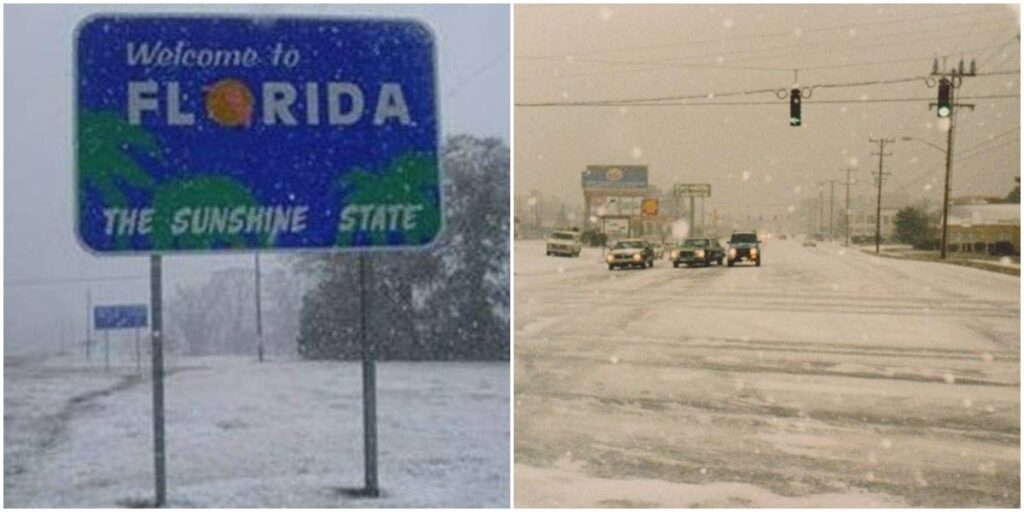
The Unlikely Visitor: Understanding Snowfall in Subtropical Climates
Snowfall in Florida is an exceptionally rare event, a phenomenon that captures headlines and ignites a sense of wonder. Typically, Florida’s geography and its position in the southeastern United States ensure that temperatures remain well above freezing for much of the year, fostering an environment conducive to lush vegetation and sun-drenched holidays. The state’s proximity to the warm waters of the Atlantic Ocean and the Gulf of Mexico acts as a moderating influence, preventing the extreme cold that often accompanies snowfall in more northern latitudes. However, meteorology is a science of nuances, and under specific circumstances, the predictable can become the extraordinary.
The Perfect Storm: Atmospheric Conditions for a Florida Snowfall
For snow to fall in Florida, a precise confluence of atmospheric ingredients must align. This usually involves a potent combination of an extremely cold air mass pushing south from the continental interior and sufficient moisture to precipitate.
Arctic Air Intrusion
The primary driver behind any significant cold snap in Florida is the southward surge of an arctic air mass. These frigid air masses originate in the high latitudes of North America, such as Canada and the Arctic regions, and are characterized by extremely low temperatures and low humidity. When a strong high-pressure system, often referred to as a “polar vortex” or “nor’easter” in certain contexts, establishes itself over the northeastern or central United States, it can act as a powerful engine, pushing this cold air mass southward. The geography of the eastern United States, with its open plains and lack of significant mountain ranges in the north, allows these cold air masses to travel unimpeded towards the Gulf Coast states.
In Florida, such an intrusion means temperatures plummet, often dropping below freezing across much of the state, including areas that rarely experience such conditions. This can impact everything from local agriculture to the daily lives of residents, who are typically ill-equipped for sustained freezing temperatures. The suddenness and severity of these cold snaps are often the most striking aspects of these events.
Moisture Source
Cold, dry air alone will not produce snow. For snowfall to occur, there must be a source of moisture in the atmosphere. In the case of Florida, this moisture can often come from the nearby warm ocean waters. When a cold air mass interacts with a source of latent heat and moisture, such as the Atlantic Ocean or the Gulf of Mexico, it can lead to the formation of precipitation.
If the air near the surface is cold enough (at or below freezing), and there is uplift within the atmosphere to create clouds and encourage precipitation, then snow can form. The specific temperature profile of the atmosphere, from the cloud base to the ground, is critical. If temperatures remain below freezing throughout this entire column, snowflakes will reach the ground. If the air near the surface warms even slightly above freezing, the snow will melt into rain before it reaches the ground.
The ideal scenario for snow in Florida involves a cold, dry air mass moving into the region, followed by the interaction with a weather system that can draw in moisture from the Gulf or Atlantic. This system could be a weak low-pressure area, a trough in the jet stream, or the trailing edge of a larger storm system. The timing and intensity of these elements are crucial. A slight shift in wind direction, a change in temperature by a degree or two, or a variation in the moisture content can mean the difference between a frosty morning and a significant snowfall.
Historical Snow Events in Florida
While rare, Florida has experienced snowfall on several notable occasions, providing tangible evidence of these atmospheric anomalies.
The Great Blizzard of 1977
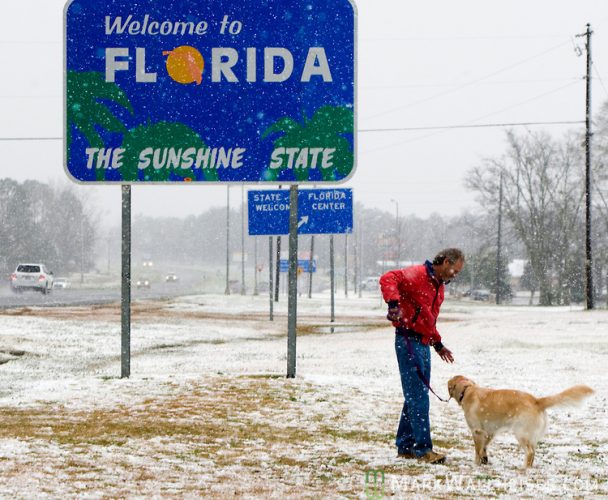
One of the most significant snow events in Florida’s recorded history occurred in January 1977. A powerful arctic cold front swept across the southeastern United States, bringing exceptionally cold air and moisture to the region. Snowfall was reported as far south as Miami, an event that was unprecedented for many residents. The snow, though light in accumulation in many areas, was a shocking sight, dusting beaches and causing widespread amazement. For many Floridians, this was a once-in-a-lifetime experience, disrupting daily life and becoming a cherished, albeit cold, memory. Attractions like Everglades National Park and cities like Orlando saw unusual white blankets.
January 2018 Snowfall
More recently, in January 2018, parts of Florida, particularly the panhandle and northern regions, experienced a significant winter weather event that included snow and sleet. This event was driven by a strong cold air mass that moved south, interacting with moisture originating from the Gulf of Mexico. Cities like Tallahassee and even areas closer to the coast received measurable snowfall, leading to school closures, traffic disruptions, and widespread excitement and disbelief. This event served as a potent reminder that Florida, despite its reputation, is not entirely immune to the whims of winter. Landmark St. Augustine also saw traces of snow.
Other Notable Occurrences
Beyond these major events, there have been other instances of light snow or sleet reported in various parts of Florida throughout the decades. These often occur in the northernmost sections of the state, closer to the border with Georgia, where conditions are more conducive to winter weather. Even a dusting can be a remarkable event, turning familiar landscapes into something alien and magical for a few hours.
The Impact of Snow on the Sunshine State
The occurrence of snow in Florida, however infrequent, has a tangible impact on the state and its inhabitants. This impact spans from the immediate logistical challenges to the broader implications for tourism and lifestyle.
Disruptions and Delights for Tourism and Travel
For a state whose economy is heavily reliant on tourism, especially during the winter months when visitors flock from colder climates, a snow event can be a double-edged sword. On one hand, the sheer novelty of snow in Florida can be a draw in itself, attracting local residents and even some adventurous travelers eager to witness or experience this rare phenomenon. Theme parks like Walt Disney World and Universal Orlando Resort might see a surge in visitors on days with snow, as people seek to capture unique photos or simply enjoy the unexpected winter wonderland. Hotels in popular destinations like Miami Beach or Key West might see last-minute bookings from those hoping to catch a glimpse of the snow before it melts.
However, the disruptions can be significant. Roads, bridges, and highways, not designed for icy conditions, can become hazardous. Local transportation services may be curtailed, and flights in and out of airports like Miami International Airport or Orlando International Airport can be delayed or canceled. This can lead to considerable inconvenience for travelers who have booked holidays, potentially impacting the tourism industry if the disruptions are prolonged or severe enough to deter visitors. Many popular attractions, from the beaches of Clearwater to the historic sites in St. Augustine, might face temporary closures due to safety concerns or operational challenges.
Local Reactions and Lifestyle Adaptations
For Floridians, a snowfall is an event that elicits a wide range of reactions, from sheer delight and wonder to practical concern. Many residents, particularly those who have lived in the state for years without witnessing snow, embrace the opportunity for a unique experience. Children revel in the chance to build snowmen or have snowball fights, activities usually confined to more northerly locales. Adults might take to social media to share their awe-inspiring photos and videos, turning the unusual weather into a shared community experience. It becomes a topic of conversation for weeks, a story to be passed down.
On the other hand, the practicalities of a cold snap and potential snow can be challenging. Many homes and buildings in Florida are not designed for freezing temperatures, leading to potential issues with plumbing and heating. The lack of proper winter clothing among the population can also be a factor, with many caught unprepared for the biting cold. Grocery stores might see a rush on essentials like milk, bread, and batteries, mirroring the behavior seen in regions more accustomed to winter storms. The impact on local businesses can also be varied, with some seeing increased patronage due to novelty seekers, while others may suffer from reduced foot traffic due to hazardous travel conditions or closures.

A Reminder of Nature’s Power and Florida’s Diverse Climate
Ultimately, the occurrence of snow in Florida serves as a powerful reminder of the dynamic and sometimes unpredictable nature of our planet’s climate. It highlights that even regions with firmly established weather patterns are susceptible to the broader atmospheric forces at play. While Florida is celebrated for its consistent warmth and sunshine, these rare snow events demonstrate that the state’s climate is not monolithic. It can, under the right circumstances, be influenced by arctic air masses, showcasing a diversity that often goes unnoticed.
These events also underscore the importance of preparedness and adaptability. For the tourism industry, it means having contingency plans for weather-related disruptions. For residents, it’s a cue to be aware of weather forecasts and to take necessary precautions when extreme cold or winter precipitation is predicted. The memory of snow falling on palm trees or dusting the beaches of Florida becomes a unique chapter in the state’s rich tapestry, a testament to the ever-surprising power of nature. It’s a story that locals and visitors alike will recount, a vivid anecdote of a time when the Sunshine State briefly embraced the chill of winter. Whether it’s a fleeting dusting or a more substantial accumulation, snow in Florida is always an event to remember, a stark contrast to the usual sun-drenched landscapes and a welcome, albeit rare, addition to the state’s diverse climatic experiences.
LifeOutOfTheBox is a participant in the Amazon Services LLC Associates Program, an affiliate advertising program designed to provide a means for sites to earn advertising fees by advertising and linking to Amazon.com. Amazon, the Amazon logo, AmazonSupply, and the AmazonSupply logo are trademarks of Amazon.com, Inc. or its affiliates. As an Amazon Associate we earn affiliate commissions from qualifying purchases.