
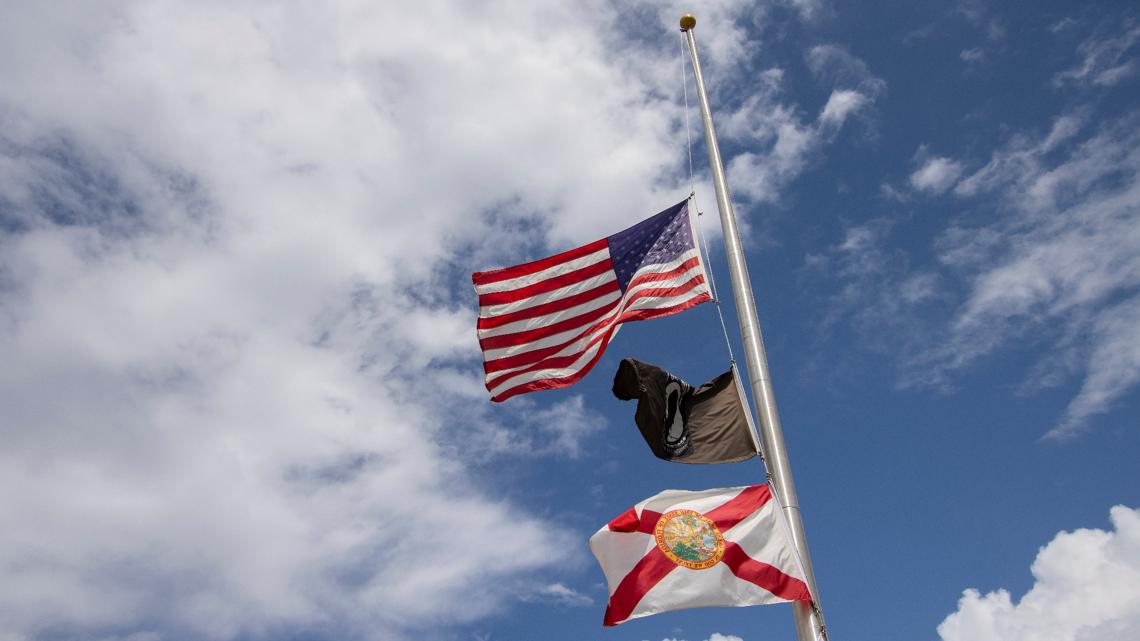
The sight of a flag flying at half-mast can evoke a sense of solemnity and national mourning. In Florida, as across the United States, this tradition carries significant meaning, typically signifying respect and remembrance for a fallen leader, hero, or a period of national tragedy. While the reasons can vary, understanding the protocols and historical context behind lowering the flag provides a deeper appreciation for this important practice.
The practice of flying a flag at half-mast, or half-staff, is a universally recognized symbol of grief, mourning, or solemn respect. It is a visible and public demonstration of shared sorrow or homage. This tradition is deeply rooted in maritime customs, where a ship would lower its flag to signal peaceful intentions and to show respect to a passing vessel or to mourn a fallen comrade. Over time, this practice transitioned to land and became a formal protocol for national and state observances.
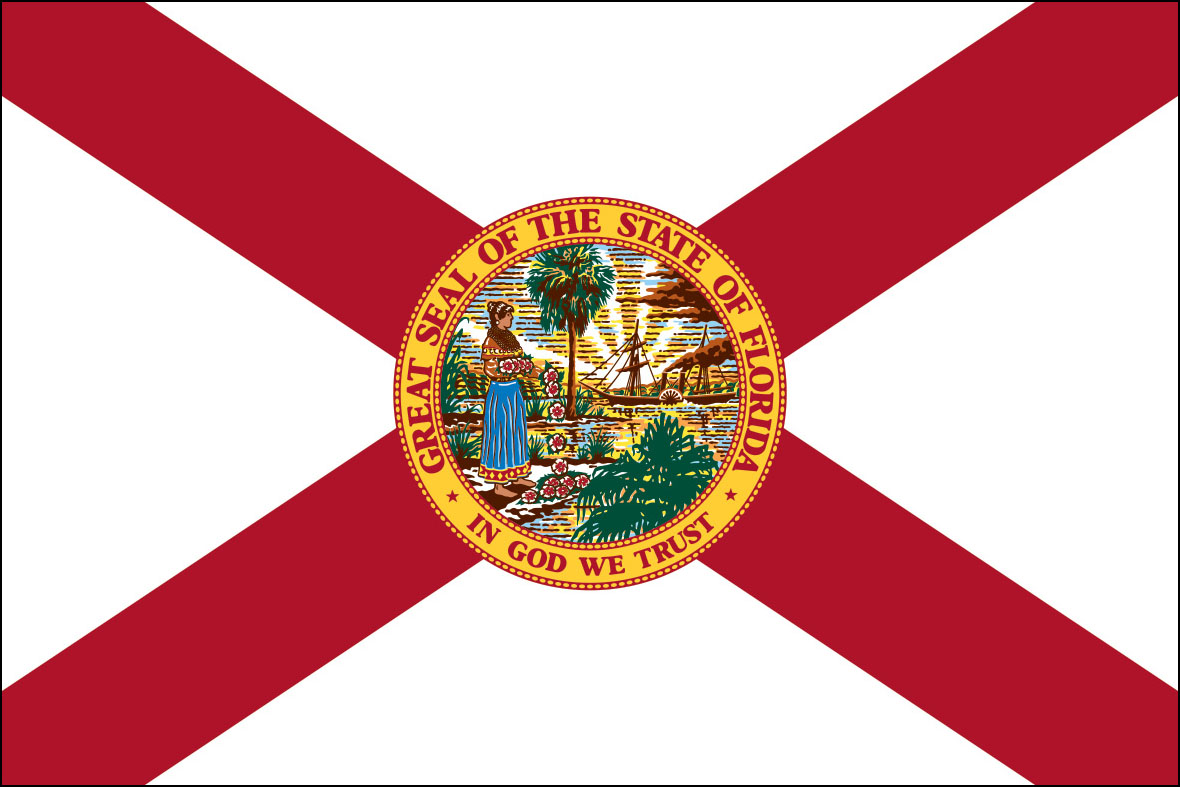
The specific reasons for lowering the flag in Florida are governed by federal and state proclamations. These proclamations are often issued by the President of the United States for national events or by the Governor of Florida for matters pertaining to the state. Understanding these protocols is crucial for public institutions and citizens alike to ensure that the proper respects are paid when these observances are called for.
Understanding the Protocols of Half-Mast Observances
The decision to lower the flag to half-mast is not taken lightly. It is a deliberate act, typically initiated by a proclamation from an authorized official. For federal flag-raising ceremonies, the United States Flag Code provides guidelines. When a national flag is flown at half-staff, it is lowered to a position halfway between the top and bottom of the staff. Before lowering, the flag is usually raised to the peak for an instant and then lowered to the half-staff position. The flag is then raised to the peak before it is lowered for the day. This procedure is meant to signify that the flag has been at the peak, but it is now at half-staff due to mourning.
Federal Proclamations and National Mourning
When the President of the United States issues a proclamation for national mourning, this directive applies to all federal buildings and installations across the country, including those in Florida. Such proclamations are often made in response to the death of a prominent national figure, such as a former President, a distinguished member of Congress, or a fallen service member in a significant conflict.
For instance, upon the death of a former President of the United States, the flag is typically directed to be flown at half-staff for 30 days following the date of death. In the event of the death of the current Vice President, the Chief Justice of the United States, or the Speaker of the House of Representatives, the flag is flown at half-staff for 10 days. The death of an Associate Justice of the Supreme Court, a Cabinet secretary, a former Vice President, a Senate Majority Leader, a Senate Minority Leader, the Speaker Emeritus of the House, or a governor of a state or territory is also cause for a 30-day period of mourning, though the proclamation might specify a shorter duration.
These federal proclamations create a unified message of respect and remembrance across the nation. State and local authorities in Florida will also adhere to these directives, ensuring that federal installations within the state, such as post offices, federal courthouses, and military bases, observe the period of mourning.
State-Level Decrees and Gubernatorial Authority
Beyond federal mandates, the Governor of Florida holds the authority to order flags to be flown at half-staff within the state for reasons of particular significance to Florida. These reasons can include:
- The death of a Florida dignitary: This might involve a former Governor of Florida, a prominent state legislator, a respected judge, or a distinguished public servant.
- In remembrance of victims of tragic events: The Governor may order flags lowered to honor those lost in significant local tragedies, such as natural disasters, acts of violence, or major accidents that have deeply affected the state.
- Honoring fallen service members: While federal directives often cover national military casualties, a Governor may issue separate proclamations to specifically honor service members from Florida who have died in the line of duty, especially during periods of heightened military engagement or in specific remembrance days.
- Special observances: In some cases, the Governor might order flags to be flown at half-staff for specific days of remembrance or solemn observance that hold particular importance within the state, even if not mandated federally.
These state-level decrees ensure that Florida can appropriately acknowledge events and individuals of local importance, fostering a sense of shared community and respect within its borders. When the Governor of Florida issues such an order, it typically applies to all state buildings, including state offices, courthouses, and public schools.
Historical Context and Significance of the Half-Mast Tradition
The tradition of flying the flag at half-mast is steeped in history and carries profound symbolic weight. Its origins are often traced back to naval practices, evolving into a codified protocol that signifies solemnity and respect.

Maritime Roots and the Evolution of Protocol
The earliest known origins of the half-staff practice are believed to be maritime. Ships at sea, when mourning a lost captain or crew member, would lower their flag to half-staff. This was a way to convey respect to the deceased and to signal a state of distress or mourning to other ships. The custom was also used to signify that the ship was in mourning for a great leader or hero. The practice was adopted by various navies and eventually found its way into national protocols.
The idea was that the flag, when at its full height, represents the living spirit and sovereignty of a nation. When lowered, it is seen as bowing in grief or deference. The practice of first raising the flag to the peak before lowering it to the half-staff position is also a custom with roots in maritime tradition, symbolizing that the flag has been at its fullest height but is now lowered in mourning.
The United States Flag Code and Modern Observance
In the United States, the United States Flag Code (Title 4 of the United States Code) provides guidelines for the display and respect of the flag. While the Flag Code is advisory rather than mandatory for private citizens, it sets the standard for how federal agencies and military installations should behave.
The Flag Code outlines specific occasions when the flag should be flown at half-staff. These include:
- Peace Officers Memorial Day: On May 15th, unless it falls on Armed Forces Day.
- Memorial Day: From sunrise until noon only.
- Flag Day: This is not a day for half-staff observance.
- Independence Day: Not a day for half-staff observance.
- National Korean War Veterans Armistice Day: July 27th.
- National POW/MIA Recognition Day: The third Friday in September.
- Pearl Harbor Remembrance Day: December 7th.
In addition to these established dates, the Flag Code empowers the President to order the flag flown at half-staff on occasions of national mourning. Governors can also issue similar orders for their respective states. These directives ensure a consistent and respectful national observance of significant events and individuals.
When to Expect Flags at Half-Mast in Florida
The most common reasons for seeing the flag at half-mast in Florida will fall into the categories of national mourning, state-specific tributes, and remembrance of fallen heroes. Staying informed about current events and official proclamations is key to understanding why the flag might be lowered.
National Mourning and Commemorations
As discussed, federal directives from the President are a primary driver for flags flying at half-mast. This means that whenever a former President passes away, or in response to a significant national tragedy, Florida will join the rest of the United States in observing this period of respect. Events like the anniversary of the September 11th attacks can also prompt specific observances, though not always at half-mast.
Honoring Florida’s Own
Florida has a rich history and has produced many notable figures. When these individuals pass away, the Governor will often issue a proclamation to honor their legacy. This could range from a long-serving state senator to a celebrated artist or a sports icon deeply connected to the state. Furthermore, Florida is home to numerous military installations and has a significant population of veterans. Consequently, the state frequently participates in honoring fallen service members from Florida through flag-lowering ceremonies.
Local Tragedies and Acts of Remembrance
While less common than national or state-level mourning, the Governor of Florida might also order flags to be lowered in response to a particularly devastating local tragedy. This could be in remembrance of victims of a mass shooting, a major natural disaster like a hurricane that has caused widespread loss of life, or a significant accident. These acts of remembrance help communities come together in shared grief and solidarity.
In conclusion, the flag flying at half-mast in Florida is a visual cue that carries significant historical and emotional weight. It serves as a public declaration of respect, mourning, and remembrance. Whether prompted by a presidential proclamation or a gubernatorial decree, this solemn tradition unites the state and the nation in acknowledging loss and honoring those who have made a profound impact. By understanding the protocols and the historical context, citizens can better appreciate the meaning behind this enduring symbol of respect.
LifeOutOfTheBox is a participant in the Amazon Services LLC Associates Program, an affiliate advertising program designed to provide a means for sites to earn advertising fees by advertising and linking to Amazon.com. Amazon, the Amazon logo, AmazonSupply, and the AmazonSupply logo are trademarks of Amazon.com, Inc. or its affiliates. As an Amazon Associate we earn affiliate commissions from qualifying purchases.