
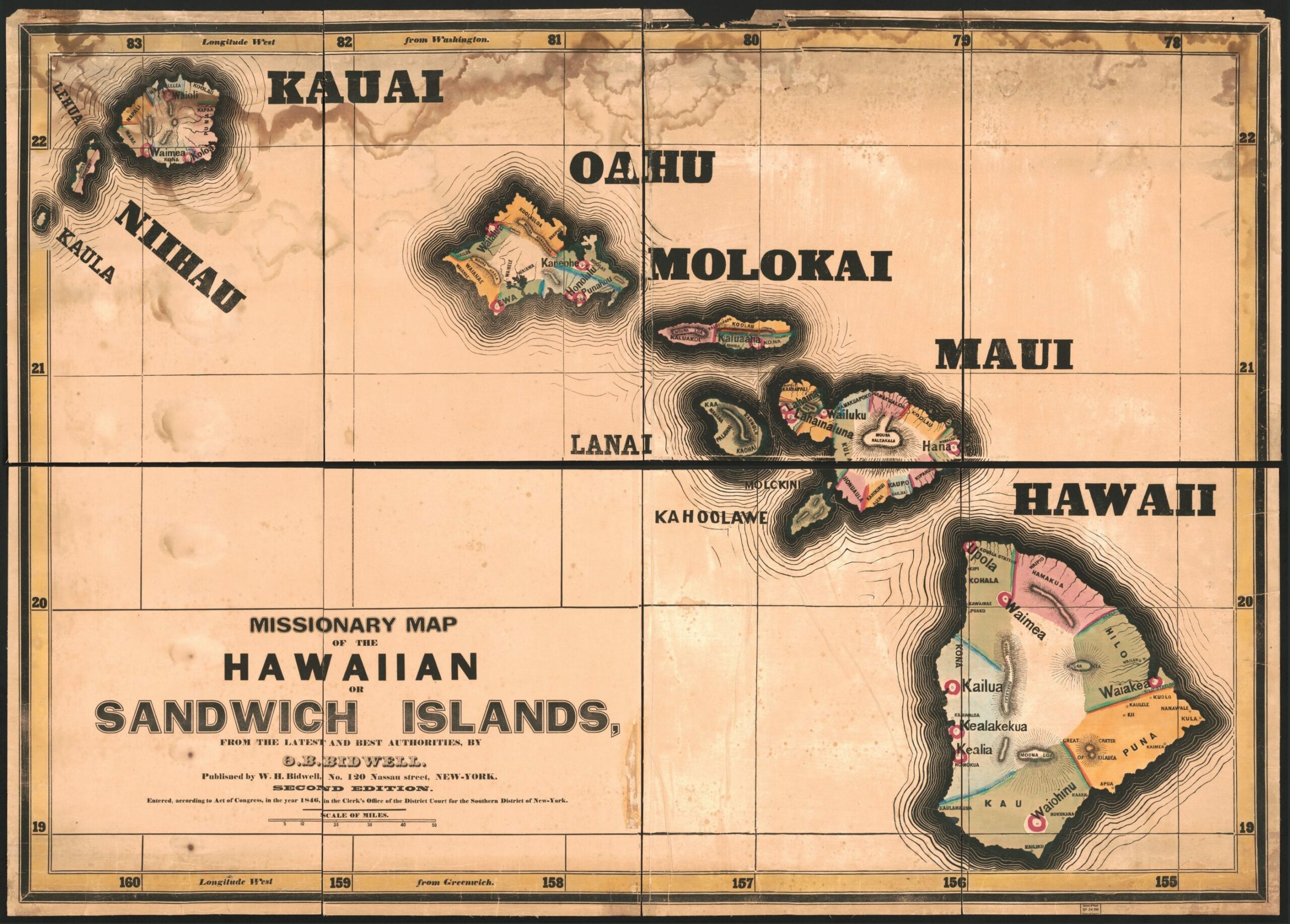
The story of how the Hawaiian Islands became a part of the United States is a complex and often controversial chapter in American history, deeply intertwined with the ambitions of American businessmen, missionaries, and the changing geopolitical landscape of the late 19th century. While often presented as a straightforward annexation, the reality involves the overthrow of a sovereign monarchy and the subsequent incorporation of these Pacific jewels into the U.S. territory. Understanding this acquisition requires delving into the economic interests, political machinations, and the perspectives of both the colonizers and the indigenous Hawaiian people.
The Seeds of Annexation: Economic and Religious Influence
Long before the idea of annexation took root, American influence in the Hawaiian Islands was steadily growing, primarily through two powerful forces: missionary work and economic investment.
The Missionary Wave and Its Impact
In the early 19th century, American Protestant missionaries, driven by a desire to spread Christianity, began arriving in Hawaii. While their stated intentions were religious, their presence had profound societal and political consequences. They introduced Western education, legal systems, and agricultural practices, fundamentally altering the traditional Hawaiian way of life. The missionaries and their descendants became influential figures, acquiring land and establishing businesses, thereby consolidating economic power. They also learned the Hawaiian language and became deeply embedded in the islands’ social fabric. This laid the groundwork for future American commercial interests.
The Rise of Sugar and Economic Dominance
The true catalyst for annexation, however, was the booming sugar industry. American businessmen recognized the immense agricultural potential of Hawaii for sugar cultivation, particularly with the favorable climate and fertile volcanic soil. By the mid-19th century, American-owned sugar plantations dominated the Hawaiian economy. This economic dominance translated into significant political leverage. The Hawaiian monarchs, while still sovereign, found themselves increasingly reliant on the goodwill and investment of these American entrepreneurs.
The United States government, in turn, saw strategic and economic advantages in a closer relationship with Hawaii. The islands’ location in the Pacific made them a crucial coaling station and naval base for American trade and military interests. The Reciprocity Treaty of 1875, which allowed Hawaiian sugar to enter the U.S. duty-free in exchange for certain trade concessions, further cemented Hawaii‘s economic dependence on the United States and increased American investment. This treaty, however, also led to a devaluation of the Hawaiian currency and further benefited the American planters at the expense of native Hawaiian farmers. The Bayonet Constitution of 1887, imposed upon King Kalākaua under duress from the Hawaiian League (a group of wealthy American businessmen and residents), significantly curtailed the powers of the monarchy and disenfranchised many native Hawaiians, ensuring that American economic interests remained paramount.
The Overthrow of the Monarchy: A Coup d’état
The growing power of American interests and the perceived instability of the Hawaiian monarchy culminated in a pivotal moment in 1893: the overthrow of Queen Liliʻuokalani, the last reigning monarch of Hawaii.
The Reign of Queen Liliʻuokalani

Queen Liliʻuokalani ascended to the throne in 1891 with a clear mandate to restore the political power of the native Hawaiian people and to regain control over their land. She proposed a new constitution that would restore voting rights to many native Hawaiians who had been disenfranchised by the Bayonet Constitution. This move was seen as a direct threat by the American business elite and their allies in Hawaii, who feared losing their economic and political dominance.
The Role of the Committee of Safety and U.S. Minister Stevens
A group known as the Committee of Safety, composed primarily of American businessmen and their supporters, saw Queen Liliʻuokalani‘s reforms as an existential threat to their interests. They conspired to depose her and establish a republic that would pave the way for annexation by the United States. Crucially, they received the tacit support of John L. Stevens, the U.S. Minister to Hawaii. Stevens, acting beyond his diplomatic authority and with the implicit backing of the U.S. Navy, deployed troops from the USS Boston to the shores of Honolulu. These troops, ostensibly present to protect American lives and property, effectively surrounded Iolani Palace and created an environment of intimidation and coercion.
The Abrogation of the Monarchy
On January 17, 1893, under immense pressure and facing the threat of further violence, Queen Liliʻuokalani formally yielded her authority to the U.S. government, stating that she did so under protest and with the hope that justice would be done. Her abrogation of power was not an abdication; it was a strategic move to appeal to the United States for a just resolution. The Committee of Safety then declared the establishment of a Provisional Government, with Sanford B. Dole, a prominent American lawyer and businessman, as its president. This government immediately began lobbying for annexation by the United States.
The Path to Statehood: Annexation and Beyond
The overthrow of the monarchy was not immediately followed by annexation. The issue proved to be politically contentious within the United States itself.
The Cleveland Administration’s Stance
Upon taking office in 1893, President Grover Cleveland was deeply disturbed by the events in Hawaii. He ordered an investigation into the overthrow, and his appointed commissioner, James H. Blount, concluded that the U.S. Minister Stevens had acted improperly and that the overthrow was an illegal act. President Cleveland, a staunch opponent of expansionism and interventionism, publicly condemned the actions of the Committee of Safety and the role of the U.S. government. He withdrew the annexation treaty that had been submitted to the Senate by the previous administration and attempted, unsuccessfully, to restore Queen Liliʻuokalani to her throne. However, the Provisional Government, backed by American economic power, refused to relinquish control.
The McKinley Administration and the Spanish-American War
The political climate shifted significantly with the election of President William McKinley in 1897. McKinley was a strong proponent of American expansionism, and the outbreak of the Spanish-American War in 1898 provided a powerful strategic impetus for annexation. The Hawaiian Islands were strategically vital for projecting American power in the Pacific, especially in the context of the war in the Philippines. The annexation of Hawaii was seen as essential for naval operations and for securing a significant Pacific stronghold.
The Newlands Resolution and Statehood
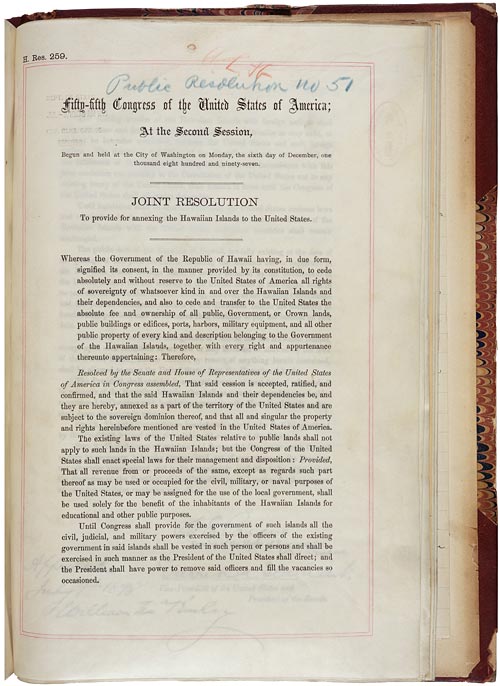
On July 7, 1898, President McKinley signed the Newlands Resolution, which annexed Hawaii to the United States. This resolution, passed by a joint resolution of Congress, bypassed the need for a treaty, which would have required a two-thirds majority in the Senate and likely would have faced significant opposition. Hawaii was initially organized as a U.S. territory. The path to full statehood was long and arduous, marked by continued struggles for self-determination by the Hawaiian people and debates within the U.S. Congress. Finally, on August 21, 1959, Hawaii was admitted as the 50th state of the United States, completing a process that began with economic influence and culminated in political union. The legacy of this acquisition continues to be debated, with ongoing discussions about sovereignty and historical injustices.
LifeOutOfTheBox is a participant in the Amazon Services LLC Associates Program, an affiliate advertising program designed to provide a means for sites to earn advertising fees by advertising and linking to Amazon.com. Amazon, the Amazon logo, AmazonSupply, and the AmazonSupply logo are trademarks of Amazon.com, Inc. or its affiliates. As an Amazon Associate we earn affiliate commissions from qualifying purchases.