
Hawaii, a breathtaking archipelago nestled in the heart of the Pacific Ocean, is renowned for its stunning natural beauty, vibrant culture, and diverse landscapes. From volcanic peaks to lush rainforests and pristine beaches, the islands offer an unparalleled experience for travelers seeking adventure, relaxation, and a deep connection with nature. Central to preserving and showcasing this extraordinary environment are the National Parks managed by the National Park Service. But for those planning a visit, a fundamental question often arises: How many national parks are in Hawaii? The answer, while seemingly straightforward, opens the door to exploring a rich tapestry of protected natural and historical treasures across the islands.
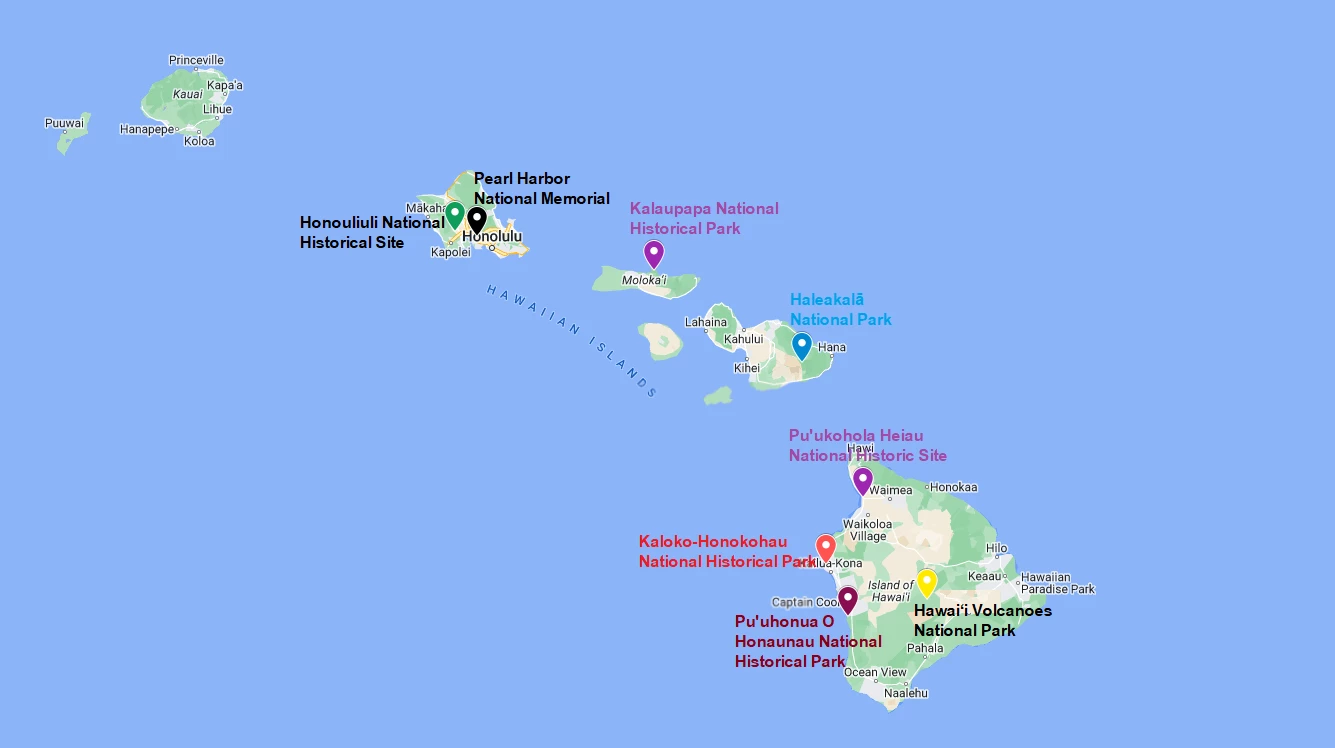
Hawaii is home to three distinct National Parks, each offering a unique window into the islands’ geological, ecological, and historical significance. These parks are not mere collections of scenic vistas; they are living laboratories, vital conservation areas, and profoundly important cultural sites. Understanding each of these parks is crucial for anyone looking to truly experience the spirit and natural wonders of the Aloha State.
Exploring Hawaii’s National Parks: A Diverse Trio
The National Park Service oversees a vast network of sites across the United States, and its presence in Hawaii is marked by parks that are as varied as the islands themselves. These parks protect everything from active volcanoes that shape the land to ancient battlefields that tell stories of the past. Let’s delve into each of these significant National Parks to understand what makes them so special.
Hawaii Volcanoes National Park: A Land Forged by Fire
Perhaps the most iconic of Hawaii’s National Parks is Hawaii Volcanoes National Park on the Big Island. This park is a testament to the raw, dynamic power of Earth’s geological processes. It is home to two of the world’s most active volcanoes: Kilauea and Mauna Loa. The very landscape here is in a constant state of creation and transformation, driven by the relentless forces of volcanism.
Established in 1916, Hawaii Volcanoes National Park encompasses over 333,000 acres of land, stretching from the coast to the summit of Mauna Loa, the largest volcano on Earth by volume. Visitors are drawn to the park for the unparalleled opportunity to witness volcanic activity up close, albeit from safe viewing areas. The park offers a dramatic display of volcanic features, including vast lava fields, steaming vents, craters, and lava tubes.
One of the most popular attractions within the park is the Jaggar Museum, which offers panoramic views of the Kilauea Caldera and its active crater, Halemaʻumaʻu. While current eruption status and viewing opportunities can vary, the park service diligently provides information on safe viewing locations. Driving the scenic Crater Rim Drive provides access to numerous viewpoints and trailheads. The Chain of Craters Road descends towards the coast, revealing the stark beauty of ancient lava flows that have poured into the sea, creating new land and dramatic sea cliffs.
Beyond the dramatic volcanic landscapes, Hawaii Volcanoes National Park is also a sanctuary for unique flora and fauna that have adapted to this harsh yet fertile environment. The park protects rare plants, such as the ʻōhiʻa lehua tree, which often flourishes in recent lava flows, and endemic bird species, including the nēnē, Hawaii’s state bird, a fascinating descendant of the Canada goose. Hiking trails abound, ranging from easy walks along the crater rim to more challenging treks through lava tubes and across caldera floors. The park’s significance extends beyond its geology; it is also a sacred place for Native Hawaiians, with numerous cultural sites and historical significance. Exploring Hawaii Volcanoes National Park is an immersive experience that connects visitors to the primal forces that shape our planet and the enduring spirit of Hawaii.
Haleakalā National Park: The House of the Sun
Venturing to the island of Maui, we encounter Haleakalā National Park. This park is dominated by the dormant volcano Haleakalā, whose name translates to “House of the Sun.” Rising to an elevation of 10,023 feet, Haleakalā is a geological marvel and a cultural icon, deeply revered in Hawaiian mythology. The park protects not only the majestic summit and its expansive crater but also a significant portion of the surrounding ʻāhihi-kīnau natural area reserve and the Kīpahulu District, known for its lush coastal rainforests and waterfalls.
The Haleakalā Crater itself is a colossal depression, often described as resembling the surface of the moon, with its stark, colorful volcanic rock formations and cinder cones. Sunrise and sunset at the summit are legendary experiences, drawing visitors from around the globe. Watching the sun ascend or descend from above the clouds, painting the sky with an ethereal display of colors, is a truly transformative moment. It’s recommended to book reservations for sunrise viewing well in advance, as demand is high.
Beyond the summit experience, the Kīpahulu District in Haleakalā National Park offers a contrasting yet equally captivating environment. Here, at a much lower elevation, visitors can explore the verdant Kipahulu Valley, a tropical rainforest teeming with life. The famous ʻOheʻo Gulch, also known as the Seven Sacred Pools, features a series of stunning natural freshwater pools cascading down the hillside, offering a refreshing opportunity for a dip on a warm day. The Pipiwai Trail is another must-do, leading visitors through a spectacular bamboo forest and past towering waterfalls, including the impressive Waimoku Falls.
Haleakalā National Park is also a vital habitat for endemic species. The silversword plant, a unique and striking succulent that only grows at high elevations in Hawaii, can be found within the park. Birdwatching is also a popular activity, with opportunities to spot the ʻiʻiwi and other native forest birds. The park’s high elevation means that temperatures can be significantly cooler than at sea level, and conditions can change rapidly, so visitors should come prepared with layers of clothing, water, and sun protection. Haleakalā National Park offers a profound sense of awe, a connection to ancient volcanic forces, and a vibrant display of unique Hawaiian ecosystems.
Puʻuhonua O Hōnaunau National Historical Park: A Sanctuary of Refuge

The third National Park in Hawaii is Puʻuhonua O Hōnaunau National Historical Park on the Big Island. This park offers a different kind of historical and cultural immersion, focusing on the ancient Hawaiian concept of puʻuhonua, or place of refuge. For centuries, Puʻuhonua O Hōnaunau served as a sacred sanctuary where those who broke kapu (sacred laws) could seek forgiveness and safety. Fleeing into this protected area meant absolution from death and a chance to begin anew.
The park preserves the Great Wall, carved wooden kiʻi (images of gods), a royal palace, and reconstructed temples (heiau). Walking through the grounds, visitors can imagine the lives of ancient Hawaiians and the significance of this sacred site. The carefully reconstructed structures and the explanations provided by the park service offer a tangible connection to Hawaii’s rich pre-contact history and its complex social and religious systems.
The site is located on a beautiful, sheltered bay, with clear waters perfect for snorkeling. While swimming and snorkeling are permitted, visitors are reminded to be respectful of the historical significance of the area and to avoid disturbing any artifacts or structures. The coastal area also offers stunning views of the Pacific and a glimpse into the traditional Hawaiian way of life.
Puʻuhonua O Hōnaunau National Historical Park is a UNESCO World Heritage Site and an essential stop for anyone interested in understanding the deep cultural roots of Hawaii. It provides a peaceful and contemplative space to learn about ancient Hawaiian traditions, laws, and the spiritual importance of sacred sites. It stands as a powerful reminder of the resilience of Hawaiian culture and the enduring significance of places that offer peace and sanctuary.
Beyond the “Big Three”: Other National Park Sites in Hawaii
While Hawaii officially has three National Parks, it’s worth noting that the National Park Service also manages other significant sites across the islands that hold historical, cultural, or natural importance. These sites, while not designated as full National Parks, are still managed and protected by the service and offer valuable insights into Hawaii’s heritage and environment.
One such site is the Pearl Harbor National Memorial on Oʻahu. This solemn memorial commemorates the events of December 7, 1941, and the profound impact of the attack on Pearl Harbor on World War II. Visitors can pay their respects at the USS Arizona Memorial, explore the museums and exhibits, and learn about the historical significance of this pivotal moment in history. The memorial is a crucial destination for understanding America’s entry into the war and the bravery of those who served.
Additionally, the National Park Service is involved in the preservation and management of various historical sites and cultural landscapes throughout Hawaii, often in partnership with state agencies and local communities. These efforts ensure that the unique stories and natural wonders of the islands are protected for future generations. Understanding the distinction between full National Parks and other NPS-managed sites provides a more complete picture of the National Park Service’s commitment to safeguarding Hawaii’s treasures.

Planning Your National Park Adventure in Hawaii
When planning your visit to Hawaii’s National Parks, careful preparation will enhance your experience. Each park has its unique climate, accessibility, and activities, so researching specific park requirements is essential.
For Hawaii Volcanoes National Park, be prepared for fluctuating weather conditions, from warm and humid at sea level to cool and windy at the summit. Sturdy footwear is a must for exploring lava fields and trails. Always check the park’s official website for current volcanic activity updates, safety advisories, and any road or trail closures.
At Haleakalā National Park, the summit can be extremely cold, especially during sunrise and sunset. Bring warm clothing, including hats and gloves. If you plan to hike into the crater, be aware of the high altitude and strenuous nature of the trails. Reservations are required for sunrise viewing.
Puʻuhonua O Hōnaunau National Historical Park is generally more accessible, but protective sun gear is advisable due to its coastal location. Comfortable walking shoes are recommended for exploring the historical grounds.
Regardless of which park you choose to visit, remember that these are protected natural and cultural resources. Practice Leave No Trace principles by packing out everything you pack in, staying on marked trails, and respecting wildlife and historical artifacts. Consider purchasing a National Parks pass if you plan to visit multiple parks across the United States, as it can offer significant savings.
Accommodation options near these parks vary. On the Big Island, options range from hotels in Hilo or Kona to vacation rentals closer to Hawaii Volcanoes National Park. For Maui, staying in towns like Lahaina, Kihei, or Paʻia provides convenient access to Haleakalā National Park. For those interested in longer stays or a more immersive experience, exploring apartment or villa rentals can be an excellent choice. Many resorts offer packages that can include excursions to these natural wonders.
Finally, embracing the local culture is an integral part of any Hawaiian journey. Learn a few basic Hawaiian phrases, be respectful of local customs, and sample the delicious local cuisine. By immersing yourself in the spirit of Aloha, your visit to Hawaii’s National Parks will be not just a sightseeing trip, but a truly enriching and unforgettable experience.
LifeOutOfTheBox is a participant in the Amazon Services LLC Associates Program, an affiliate advertising program designed to provide a means for sites to earn advertising fees by advertising and linking to Amazon.com. Amazon, the Amazon logo, AmazonSupply, and the AmazonSupply logo are trademarks of Amazon.com, Inc. or its affiliates. As an Amazon Associate we earn affiliate commissions from qualifying purchases.