
The allure of Hawaii, a tropical paradise known for its pristine beaches, vibrant culture, and breathtaking natural beauty, often sparks curiosity about its geographical classification. When planning a dream vacation, understanding the context of a destination is essential, whether it’s about the type of accommodation available, the local tourism scene, or the very continent it belongs to. This exploration delves into the geographical standing of Hawaii, examining its relationship to the North American continent and the broader geological and political contexts that define it.
The question of whether Hawaii is part of North America is fascinating because it touches upon different interpretations of “continent” – geological, geographical, and political. While Hawaii is a state of the United States of America, a country firmly rooted in North America, its physical location is far from the continental mainland. Understanding this distinction requires a closer look at plate tectonics, oceanography, and historical context.
The Geological Perspective: A Volcanic Archipelago
From a purely geological standpoint, the concept of a continent is often defined by large, continuous landmasses of continental crust. Hawaii does not fit this definition. Instead, it is a prime example of an oceanic archipelago.
The Formation of the Hawaiian Islands
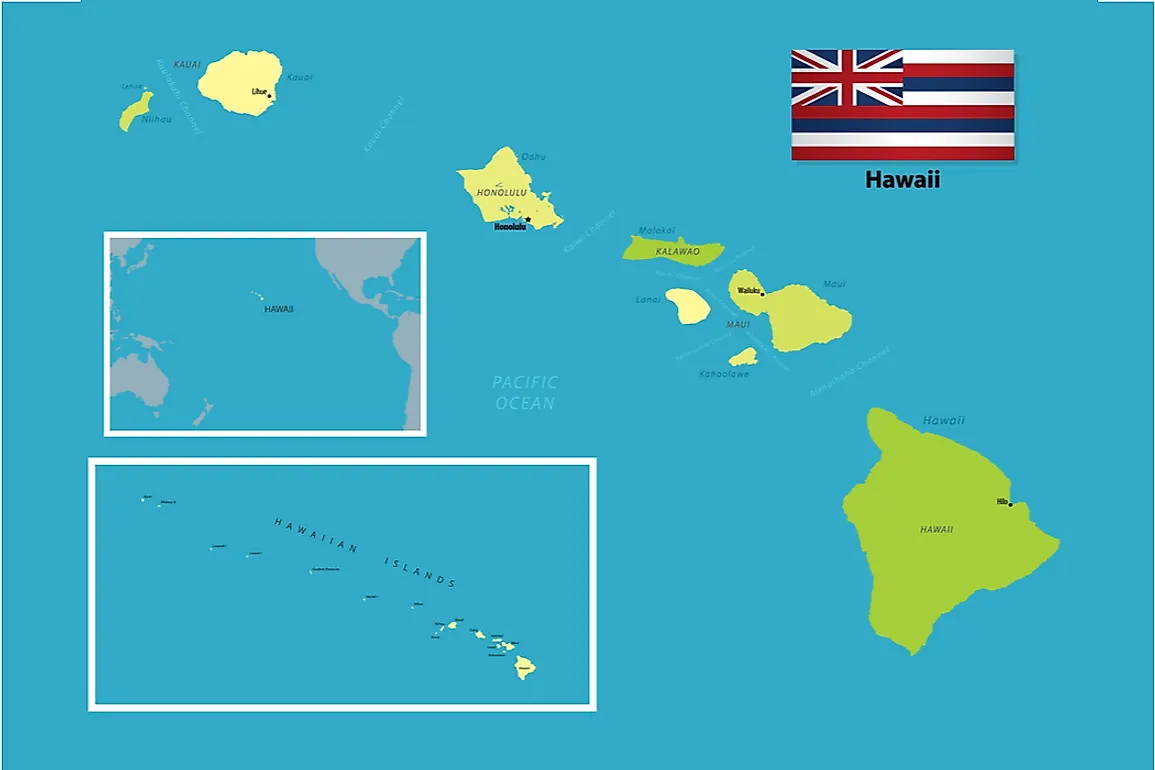
The Hawaiian Islands are volcanic in origin, formed by a geological phenomenon known as a “hotspot.” Millions of years ago, a plume of molten rock, or magma, deep within the Earth’s mantle, began to rise towards the surface. As the Pacific Tectonic Plate, the largest oceanic plate on Earth, moved slowly over this stationary hotspot, volcanic activity occurred. Each eruption built up layer upon layer of lava, eventually forming seamounts and, over time, rising above sea level to create islands.
This process is precisely why the Hawaiian Islands are arranged in a chain, with the oldest islands in the northwest (Kauai and Niihau) and the youngest, most active volcanoes in the southeast (Island of Hawaii, often called the Big Island). The Pacific Plate continues its relentless movement, carrying the older islands away from the hotspot and eventually leading to their erosion and submergence, while new islands form over the hotspot.
Therefore, geologically, Hawaii is part of the oceanic crust of the Pacific Ocean, not the continental crust that makes up North America. The closest continental landmass is the western edge of North America, thousands of miles to the east.
The Emperor Seamount Chain
The Hawaiian Islands are just the youngest, most visible portion of a much larger underwater mountain range called the Emperor Seamount Chain. This chain stretches over 4,000 miles northwest from Hawaii across the Pacific Ocean. The older, submerged portions of this chain are the seamounts, ancient volcanoes that have long since subsided and eroded. This vast geological feature underscores Hawaii’s origin as a product of oceanic volcanism, distinct from continental formation.
The Emperor Seamount Chain is a testament to the dynamic nature of our planet and the powerful forces at play beneath the surface. It serves as a chronological record of the Pacific Plate‘s movement over the Hawaiian hotspot, solidifying Hawaii’s identity as a feature of the ocean floor, not a continental extension.
The Geographical and Political Context: A State of the Union
While geologically distinct, the question of Hawaii’s connection to North America also involves geographical and political considerations, particularly in how we categorize and interact with destinations for travel and tourism.
Defining “Continent” in Modern Usage
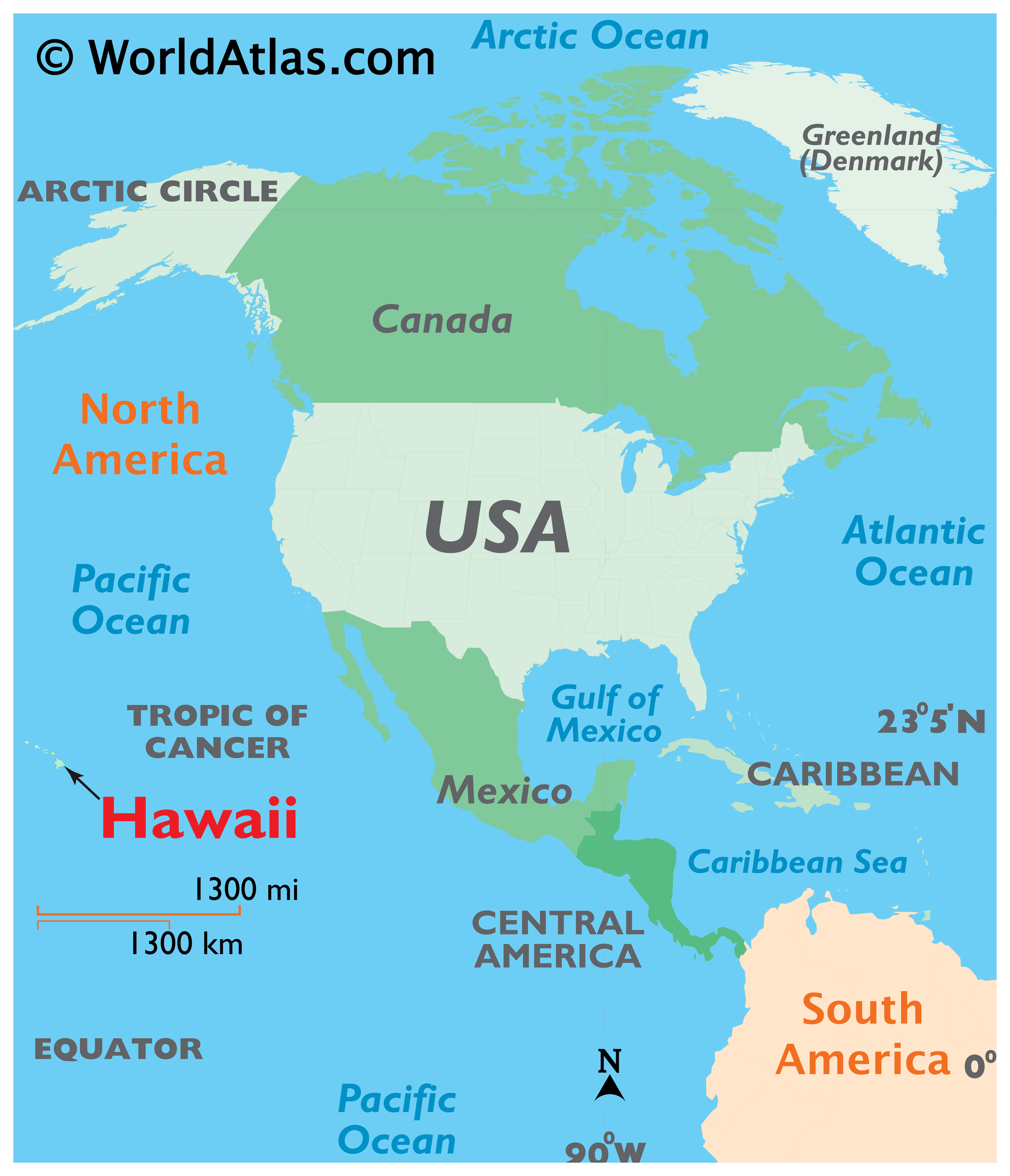
The term “continent” can be interpreted in various ways. While the geological definition focuses on crustal types, geographical definitions often consider large, contiguous landmasses separated by oceans. In this sense, Hawaii is an island territory located in the middle of the Pacific Ocean, making it geographically remote from any continent.
However, in broader, more inclusive contexts, political and cultural affiliations can influence how regions are grouped. Hawaii is a state of the United States of America, and the United States is overwhelmingly considered part of the North American continent. This political designation is significant for international relations, trade, and, importantly for many travelers, visa requirements and travel logistics.
The United States’ Inclusion of Hawaii
When discussing the United States, Hawaii is officially recognized as one of its fifty states. This means that the laws, governance, and citizenship of Hawaii are inextricably linked to the United States. For tourism purposes, this often means that when people refer to North America as a travel destination, they may implicitly include Hawaii due to its political affiliation. This is especially true for residents of the United States looking for island experiences without the need for international passports for domestic travel.
The lifestyle associated with Hawaii – from its unique local culture and cuisine to its outdoor activities and resort experiences – is deeply intertwined with its status as an American state. While distinct in many ways, the administrative and cultural ties bind it to the broader United States.
Travel and Tourism Perspectives: Bridging the Distance
From the perspective of travel and tourism, the geographical distance of Hawaii from the North American mainland is a key factor, yet its political connection simplifies many aspects of planning a trip.
Planning Your Hawaiian Getaway
For travelers from the United States, planning a trip to Hawaii is akin to planning a domestic journey. Flights from major North American cities like Los Angeles, San Francisco, or New York are common, though they are long-haul flights covering significant distances across the Pacific Ocean. The attractions and experiences available are diverse, ranging from exploring volcanic landscapes like Hawaii Volcanoes National Park on the Big Island to surfing legendary waves on the north shore of Oahu or relaxing on the famous beaches of Maui.
Choosing accommodation in Hawaii offers a wide spectrum of options, from luxurious resorts and private villas to charming boutique hotels and convenient apartments. Whether seeking a budget-friendly family trip or a high-end luxury travel experience, Hawaii caters to all. Hotels on islands like Oahu, Maui, Kauai, and the Island of Hawaii provide world-class amenities and stunning views, making the long journey worthwhile.
Cultural Immersion and Local Insights
Tourism in Hawaii is not just about the beaches and scenery; it’s also about immersing oneself in the unique local culture. The Hawaiian people have a rich heritage, evident in their traditions, music, dance, and language. Visitors can engage in activities like attending a luau, learning to play the ukulele, or exploring historical landmarks such as Pearl Harbor.
Food is another significant aspect of the Hawaiian experience, with influences from indigenous Hawaiian cuisine, as well as Asian and Polynesian traditions. From poke bowls to kalua pig, the culinary experiences are as diverse as the islands themselves. Tips for travelers often include respecting local customs, understanding the importance of ‘aina (land), and embracing the spirit of aloha.
Comparing Accommodation and Stays
When comparing accommodation options for a long-term stay or a brief vacation, Hawaii offers a remarkable array of choices. Resorts in areas like Wailea on Maui provide unparalleled luxury, while villas in Kauai offer privacy and scenic beauty. Apartments and hotels in Honolulu cater to those looking for city amenities and access to historical sites like Iolani Palace. Reviews and comparison websites are invaluable tools for finding the perfect lodging that fits a lifestyle and budget.
While Hawaii’s geological classification places it firmly in the Pacific Ocean, its political and cultural ties to the United States mean it is often discussed and experienced within the context of North America. For travelers, this means a world-class island destination that is both exotic and, in many ways, familiar, offering a unique blend of natural wonder, vibrant local culture, and American accessibility. Whether you are planning a budget travel adventure or a lavish escape, Hawaii awaits with its unforgettable charm.
LifeOutOfTheBox is a participant in the Amazon Services LLC Associates Program, an affiliate advertising program designed to provide a means for sites to earn advertising fees by advertising and linking to Amazon.com. Amazon, the Amazon logo, AmazonSupply, and the AmazonSupply logo are trademarks of Amazon.com, Inc. or its affiliates. As an Amazon Associate we earn affiliate commissions from qualifying purchases.