
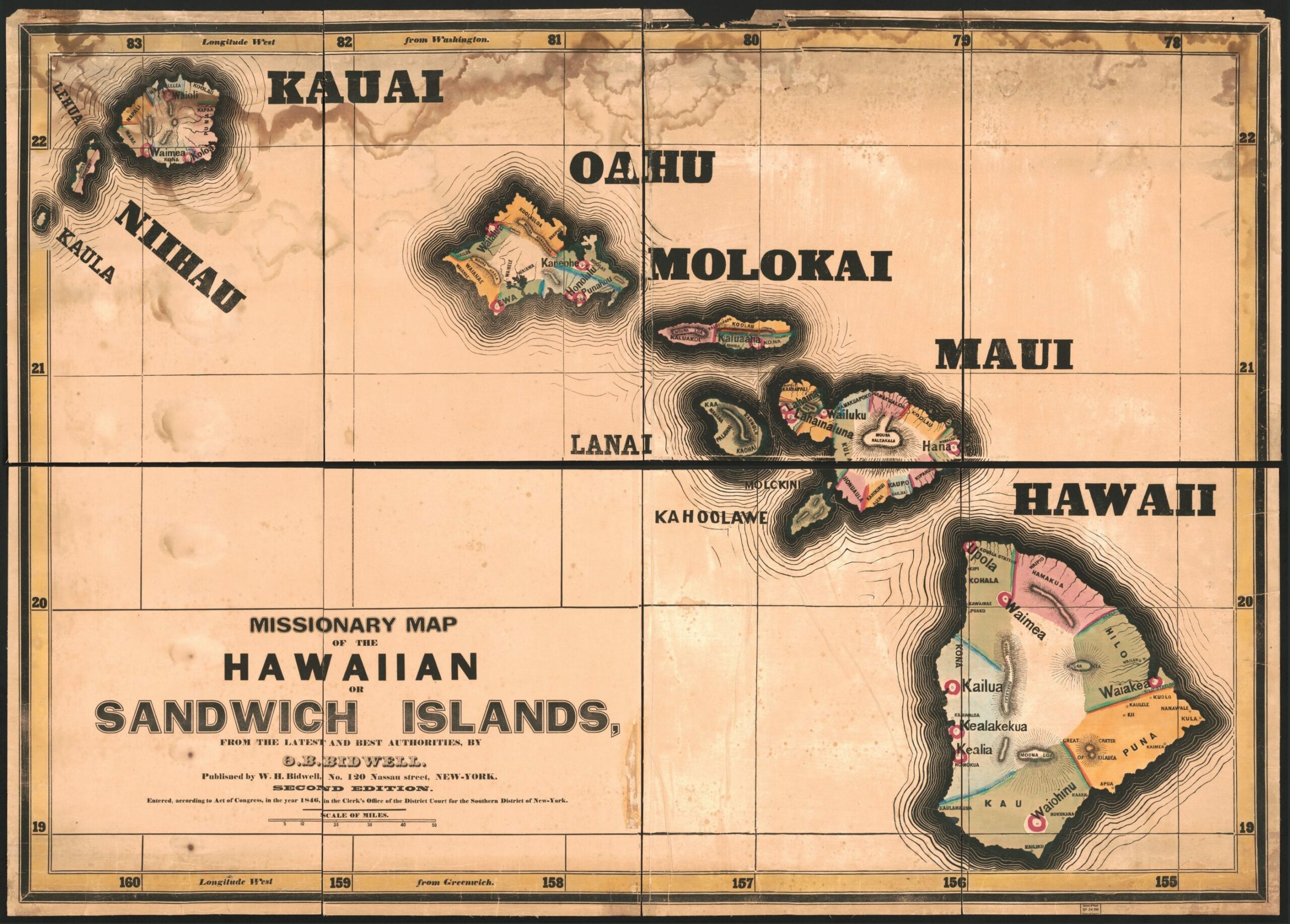
Hawaii, a tropical paradise renowned for its breathtaking beaches, lush landscapes, and vibrant culture, is a dream destination for travelers worldwide. From the iconic surf breaks of the North Shore to the majestic volcanic wonders of Hawaii Volcanoes National Park, its allure is undeniable. Visitors flock to its shores, seeking luxurious stays in world-class resorts like the Halekulani or charming villas nestled amidst verdant hillsides. Whether embarking on a family trip, a romantic getaway, or a solo adventure, Hawaii offers an unparalleled experience, steeped in history and natural beauty. Yet, beneath the idyllic surface lies a complex past, including a significant event known as the Annexation of Hawaii. This pivotal moment in the islands’ history shaped its trajectory, influencing its political status and its relationship with the United States. Understanding this period is crucial for appreciating the full narrative of this captivating destination.

The Road to Annexation: A Shifting Power Dynamic
The story of Hawaii’s annexation is not a sudden event but rather the culmination of decades of increasing influence and intervention by foreign powers, primarily the United States. Before the arrival of Europeans in the late 18th century, Hawaii was a unified kingdom, ruled by monarchs who governed sovereign islands. This indigenous Polynesian society possessed a rich cultural heritage, intricate social structures, and a deep connection to the land.
However, with the arrival of Captain James Cook in 1778, and subsequent waves of missionaries, traders, and whalers, the islands began to experience profound changes. American missionaries, in particular, played a significant role in shaping Hawaiian society, introducing Western education, religion, and agriculture. Alongside them came American businessmen, who invested heavily in the sugar industry, which quickly became the dominant economic force in the islands. This economic power often translated into political influence.
By the mid-19th century, American businessmen and their descendants had become a powerful lobby within the Hawaiian Kingdom. They sought to protect their investments, which were increasingly threatened by fluctuating global sugar prices and the perceived instability of the Hawaiian monarchy. This led to calls for closer ties with the United States and, eventually, for annexation.
The Bayonet Constitution of 1887, forced upon King Kalākaua under duress, is a critical turning point. This constitution stripped the monarchy of much of its power and disenfranchised a large portion of the native Hawaiian population, while granting voting rights to wealthy foreign residents, primarily Americans. This document, a clear manifestation of foreign economic and political pressure, significantly weakened Hawaiian sovereignty and paved the way for further American encroachment. The ruling elite, largely composed of descendants of American missionaries and businessmen, now had more direct control over the government, prioritizing their economic interests above the will of the native Hawaiian people.
The Overthrow of Queen Liliʻuokalani
The most direct precursor to annexation was the overthrow of Queen Liliʻuokalani in 1893. Queen Liliʻuokalani, who ascended to the throne in 1891, was determined to restore power to the Hawaiian people and strengthen the monarchy. She sought to draft a new constitution that would reverse the disenfranchisement caused by the Bayonet Constitution and reassert Hawaiian sovereignty.
Her reformist agenda was met with fierce opposition from the Committee of Safety, a group of American and European businessmen who feared losing their economic and political dominance. This committee, with the clandestine support of the United States Minister to Hawaii, John L. Stevens, and the presence of U.S. Marines from the USS Boston, orchestrated a coup. On January 17, 1893, the Queen was forced to abdicate her throne to avoid bloodshed, a decision she made under the belief that the United States government would investigate the illegitimacy of the overthrow and restore her to power.
The provisional government, led by Sanford B. Dole, a prominent American businessman and lawyer, was established in the wake of the coup. While initially intending to seek annexation by the United States, the provisional government also operated independently, effectively ruling Hawaii without the consent of its indigenous population. The subsequent investigation by the United States president, Grover Cleveland, concluded that the overthrow was an illegal act, and he recommended the restoration of Queen Liliʻuokalani. However, his successor, President William McKinley, with the support of expansionist forces in Congress, pursued annexation.
The Annexation and its Aftermath
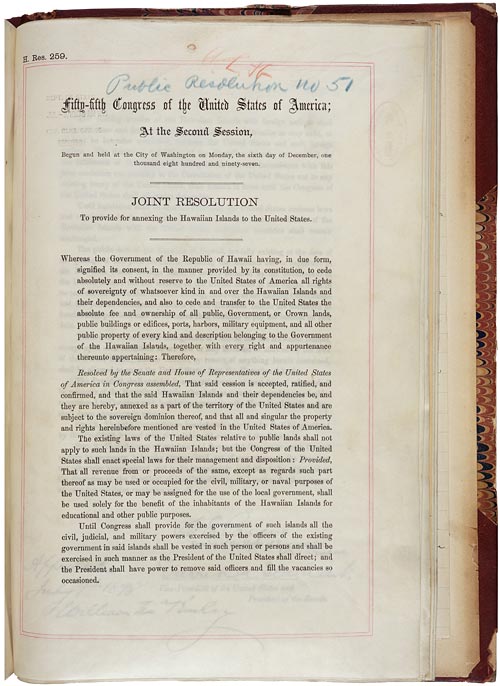
Despite significant opposition from native Hawaiians, who presented petitions with over 38,000 signatures against annexation, the U.S. Congress passed the Newlands Resolution in 1898, formally annexing Hawaii. This resolution, essentially a joint congressional act rather than a treaty (which would have required a two-thirds Senate vote and would likely have failed due to opposition), was controversial and bypassed the democratic will of the Hawaiian people.
The annexation transformed Hawaii from a sovereign nation into an unincorporated territory of the United States. This meant that Hawaii was subject to U.S. federal laws but its citizens did not have full rights of U.S. citizenship, nor did it have representation in Congress. The economic interests that had driven the annexation continued to thrive, with sugar plantations remaining the dominant industry.
The consequences of the annexation were profound for the native Hawaiian population. Their land base was further diminished, their cultural practices were suppressed, and their political autonomy was extinguished. The concept of Aloha ʻĀina, or love of the land, became a central tenet of resistance and cultural preservation for native Hawaiians.
Hawaii’s Path to Statehood
For over six decades, Hawaii remained a U.S. territory. Throughout this period, there were ongoing movements advocating for greater self-governance and eventual statehood. The unique geopolitical position of Hawaii, particularly during World War II with the attack on Pearl Harbor, highlighted its strategic importance to the United States.
Finally, on August 21, 1959, Hawaii was admitted to the United States as the 50th state. This marked a new chapter in Hawaii’s history, granting its residents full U.S. citizenship and representation. However, the legacy of the annexation continues to be a significant part of Hawaii’s identity and political discourse. The push for Hawaiian sovereignty remains an active movement, advocating for a re-evaluation of the historical injustices and a greater recognition of the rights of native Hawaiians.
Today, Hawaii is a vibrant melting pot of cultures, a testament to the resilience of its people and the allure of its natural beauty. While visitors arrive to experience its world-renowned attractions, from the beaches of Waikīkī to the scenic beauty of the Road to Hana, understanding the complex history of the annexation provides a deeper appreciation for the spirit and enduring heritage of the Hawaiian Islands. The story of annexation serves as a crucial reminder of the interplay between economic ambition, political power, and the rights of indigenous populations, a narrative that continues to resonate in the modern era. The island’s rich history, intertwined with its stunning geography, makes it a destination that offers not just relaxation and adventure, but also a compelling historical journey.
LifeOutOfTheBox is a participant in the Amazon Services LLC Associates Program, an affiliate advertising program designed to provide a means for sites to earn advertising fees by advertising and linking to Amazon.com. Amazon, the Amazon logo, AmazonSupply, and the AmazonSupply logo are trademarks of Amazon.com, Inc. or its affiliates. As an Amazon Associate we earn affiliate commissions from qualifying purchases.