
Florida, often affectionately known as the Sunshine State, beckons millions each year with its pristine beaches, vibrant cities, and world-renowned attractions. Whether you’re dreaming of a permanent relocation to embrace the relaxed coastal lifestyle, planning an extended stay as a snowbird, or simply renting a car for a memorable road trip through Miami, Orlando, and Key West, understanding the financial practicalities of vehicle ownership and operation is paramount. Car registration, while often overlooked in the excitement of travel planning or a new move, represents a significant initial and recurring expense. This comprehensive guide will demystify the costs associated with car registration in Florida, providing clarity for both new residents and long-term visitors, and illustrating how these expenses weave into the broader tapestry of travel, tourism, and lifestyle decisions in this dynamic state. From the bustling avenues of Tampa to the serene shores of Naples, having your vehicle properly registered is not just a legal requirement but a fundamental aspect of enjoying all that Florida has to offer. Navigating the process can seem daunting at first, but with a clear understanding of the fees, requirements, and procedures, you can budget effectively and ensure a smooth transition into the Florida way of life, or simply enjoy your extended stay without unexpected financial hurdles.

Understanding Florida’s Vehicle Registration System
Before delving into the exact figures, it’s crucial to grasp the two main scenarios for vehicle registration in Florida: initial registration and annual renewal. The costs and processes differ significantly, with the initial registration typically involving higher fees, especially for new residents bringing vehicles from out of state. This distinction is vital for anyone planning a move or an extended stay that might necessitate switching their vehicle’s registration. Understanding these foundational elements will help set realistic expectations for your budget, whether you’re considering a move to a lively metropolitan area like Jacksonville or a charming historic city such as St. Augustine.
Initial Registration vs. Annual Renewal
For those establishing residency in Florida, the initial registration process for an out-of-state vehicle carries a distinct, one-time fee of $225. This “new resident fee” is a significant component of your upfront costs and is levied in addition to other standard registration fees. This fee helps offset administrative costs and is a common practice across various states in the United States. It’s an important consideration for snowbirds who decide to make Florida their permanent home or families relocating for work or leisure. Annual renewals, by contrast, are generally much lower, consisting primarily of the weight-based registration fee and any applicable plate fees. This cost structure encourages long-term residency while ensuring new vehicles brought into the state contribute to its infrastructure and services. The simplicity of online renewal options also makes subsequent years considerably easier for established residents, freeing up more time for leisure activities, perhaps a visit to the Kennedy Space Center Visitor Complex or a tranquil afternoon on the Gulf Coast.
Factors Influencing Your Registration Cost
Several key factors determine the exact amount you’ll pay for car registration in Florida. These variables ensure a fair assessment based on the vehicle type and its usage, reflecting the state’s approach to vehicle taxation and regulation. Being aware of these elements can help you anticipate costs more accurately, particularly if you’re considering purchasing a new vehicle or bringing a specialized one to the state.
The primary determinant is the weight of the vehicle. Florida’s registration fees are typically tiered based on weight classes, with heavier vehicles incurring higher fees. This system reflects the greater wear and tear heavier vehicles may inflict on roads and infrastructure. For example, a compact sedan will have a lower registration cost than a large SUV or a heavy-duty truck.
The type of vehicle also plays a role; while cars and light trucks fall into standard categories, fees for motorcycles, recreational vehicles (RVs), or commercial vehicles can vary.
Another factor is your choice of license plate. While a standard Florida license plate is included in the base fee, the state offers a vast array of specialty plates that support various causes, universities, or sports teams. These specialty plates come with an additional annual fee, ranging from $15 to $25 or more, on top of the standard registration costs. While these additional fees contribute to worthy causes, they are an optional expense to consider.
For new residents, as mentioned, the $225 initial registration fee is a critical factor. This fee does not apply to existing Florida residents who purchase a vehicle within the state or transfer ownership.
Lastly, while most registration fees are state-mandated, some county-specific surcharges may apply, though they are generally minor. For instance, residents of Miami-Dade County or Orange County might encounter slight variations in total fees due to local administrative charges or specific initiatives.
Breaking Down the Fees
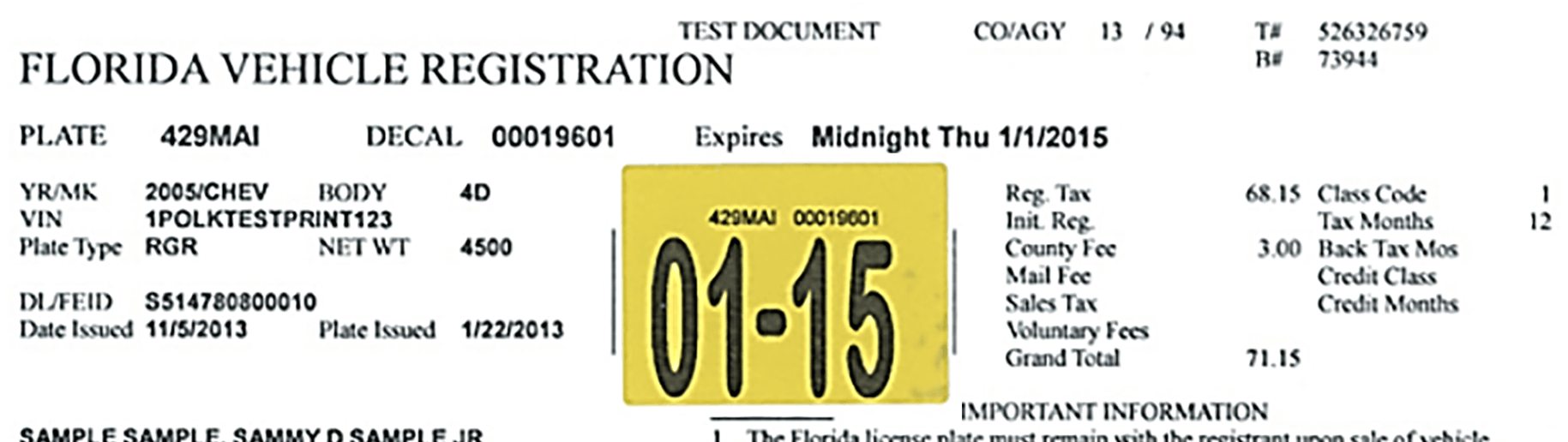
To provide a clearer picture, let’s itemize the common fees you might encounter when registering a vehicle in Florida.
The most substantial single charge for new residents is the Initial Registration Fee (first-time registration fee), which stands at $225. This non-refundable fee applies to any vehicle not previously registered in Florida.
For license plates, the standard plate fee is typically incorporated into the overall registration cost. However, if you opt for a specialty plate, you will pay an additional fee, usually $25, which goes towards the specific cause or organization represented on the plate. These range from environmental protection and state university support to professional sports teams and charitable foundations. Many residents choose these to express their interests and contribute to community causes.
Title Fees are another component if you are transferring ownership of a vehicle or obtaining a Florida title for the first time. A standard electronic title is typically around $77.25, while a paper title costs $72.25. If a lien is recorded on the title, an additional fee of about $2.00 is charged.
The core annual Weight-Based Registration Fees are structured as follows:
- Vehicles weighing under 2,500 pounds: Approximately $27.60
- Vehicles weighing between 2,500 and 3,499 pounds: Approximately $35.60
- Vehicles weighing 3,500 pounds or more: Approximately $45.60
These figures are base rates and can vary slightly with additional statutory fees. For instance, a common family sedan falling into the 2,500-3,499 pound category would have an annual registration fee around $35.60. When you factor in a potential $25 specialty plate, the annual cost would be around $60.60.
For new residents, a typical scenario for registering an average sedan might look like this: - Initial Registration Fee: $225.00
- Florida Title Fee (electronic): $77.25
- Weight-Based Registration (e.g., 2,500-3,499 lbs): $35.60
- Total initial cost (excluding specialty plates): Approximately $337.85.
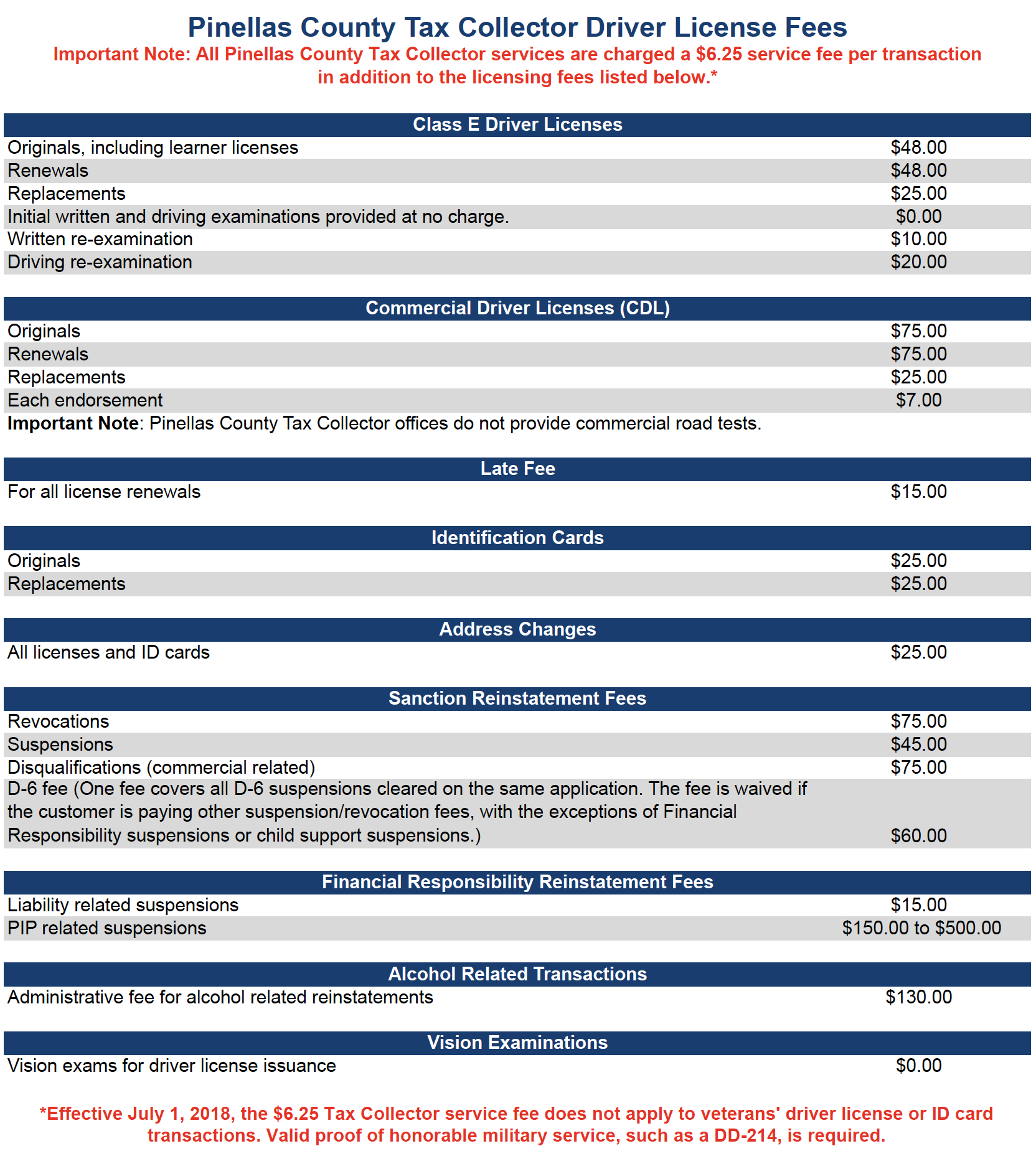
Annual renewals after the first year would then drop significantly, often falling into the $35-$70 range, depending on vehicle weight and license plate choice. It’s crucial to consult the Florida Department of Highway Safety and Motor Vehicles (DHSMV) or your local County Tax Collector’s office for the most current and precise figures, as fees are subject to change.
The Registration Process: A Guide for Newcomers and Travelers
Understanding the costs is only half the battle; knowing the process and having the right documentation is equally important. Whether you’re settling down in Sarasota or planning a lengthy stay near the theme parks of Orlando, navigating Florida’s vehicle registration requirements efficiently will save you time and potential headaches. This section outlines the necessary steps and documents to ensure a seamless registration experience, allowing you to quickly get back to enjoying the Sunshine State.
Essential Documents Required
To register a vehicle in Florida, you’ll need to present a specific set of documents to prove ownership, residency, and compliance with state regulations. Preparing these in advance will expedite your visit to the tax collector’s office.
- Proof of Ownership: For new vehicles, this will be the Manufacturer’s Certificate of Origin (MCO). For used vehicles, you’ll need the vehicle’s original title (not a copy), properly endorsed by the seller. If the vehicle has an out-of-state title, ensure it’s free of any liens, or have the lienholder’s information readily available.
- Proof of Florida Insurance: Florida law mandates minimum coverage for Personal Injury Protection (PIP) and Property Damage Liability (PDL). You must present proof of active Florida insurance coverage at the time of registration. Your out-of-state policy will likely need to be converted to a Florida policy by a licensed Florida insurer.
- Driver’s License or Florida Identification Card: A valid driver’s license from the United States (or international driver’s permit with your foreign license) is required. If you are a new Florida resident, you will generally need to obtain a Florida driver’s license before or at the time of registration.
- Proof of Identity and Residency: This typically involves a combination of documents such as your driver’s license, utility bills, a lease agreement, or a bank statement showing a Florida address. The specific requirements can vary, so it’s wise to check the DHSMV website.
- Vehicle Identification Number (VIN) Verification: For vehicles previously titled out-of-state, a VIN verification is required. This confirms that the vehicle identification number on your vehicle matches the one on your title documents. This can be performed by a Florida law enforcement officer, a licensed dealer, or an inspector or verifier employed by the DHSMV or County Tax Collector. Many offices have staff on site to perform this check.
Where to Register Your Vehicle
The registration process primarily takes place at two types of locations within Florida:
- Florida Department of Highway Safety and Motor Vehicles (DHSMV) Service Centers: These state-run offices handle a variety of motor vehicle services, including initial registrations and renewals.
- County Tax Collector’s Offices: Most vehicle registrations and renewals in Florida are processed through your local County Tax Collector’s office. These offices are distributed throughout the state, making it convenient for residents of areas like Fort Lauderdale or the Panhandle to complete their transactions. You can usually find the nearest office and their specific hours and requirements on their respective county websites.
For annual renewals, once your vehicle is initially registered, you can often renew online through the DHSMV website or your County Tax Collector’s website, or via mail. This convenience significantly simplifies subsequent years’ tasks, allowing you more time to enjoy Florida’s attractions, such as Walt Disney World Resort or Universal Orlando Resort.
Timelines and Penalties
Florida provides a grace period for new residents to register their vehicles. Generally, you have 10 days from the date you establish residency or accept employment in Florida to register your vehicle. While this seems straightforward, “establishing residency” can be interpreted in various ways, so it’s always best to complete the process as soon as possible.
Penalties for late registration can include fines. Driving an unregistered vehicle or a vehicle with an expired registration can result in traffic tickets, fines, and even potentially impoundment. For new residents, failing to register within the stipulated timeframe might incur penalties related to the initial registration fee. Additionally, if you wait too long to register an out-of-state vehicle, you might face fines from your previous state of residence if their registration expires. Staying compliant ensures you avoid unnecessary costs and enjoy seamless travel throughout the state, from the bustling nightlife of South Beach to the tranquil beauty of the Everglades National Park.
Car Registration and the Florida Lifestyle: Beyond the Numbers
While the financial aspects and procedural details of car registration are important, their implications extend far beyond simple compliance. For travelers, new residents, and those seeking to immerse themselves in the unique Florida lifestyle, vehicle registration costs and requirements play a role in broader financial planning and travel decisions. Owning a car in Florida offers unparalleled freedom to explore its vast landscapes, vibrant cities, and hidden gems, but it comes with responsibilities that should be integrated into any budget for a prolonged stay or permanent relocation.
How Registration Costs Impact Your Travel Budget
For long-term travelers, snowbirds spending several months in the Sunshine State, or individuals considering relocation, the initial $225 new resident registration fee is a critical budgeting item. This one-time cost, coupled with title and annual weight-based fees, can add up, especially if you’re bringing multiple vehicles. For short-term visits or vacations lasting a few weeks, renting a car might be more cost-effective. Many visitors choose to fly into Orlando International Airport or Miami International Airport and pick up a rental car, bypassing registration concerns entirely. However, for stays exceeding a month or two, the cumulative cost of rental fees can quickly surpass the expense of driving your own vehicle and getting it registered.
Consider a family planning an extended vacation to explore Florida’s diverse attractions—from the beaches of the Atlantic Coast to the natural wonders of Everglades National Park. The freedom of having your own car allows for spontaneous detours and access to areas not easily reached by public transport. However, factoring in registration, insurance, fuel, and maintenance into your overall travel budget is essential. For those debating between a rental and owning, a careful cost-benefit analysis based on the length of stay, mileage, and personal preference for vehicle comfort is highly recommended.
The Role of Vehicle Ownership in Exploring Florida
Vehicle ownership in Florida isn’t just a convenience; it’s often a gateway to experiencing the state’s full potential. The sprawling nature of many Florida cities and the distance between iconic destinations make personal transportation almost a necessity for comprehensive exploration. Imagine cruising down scenic coastal highways, exploring charming small towns, or visiting national and state parks off the beaten path. This freedom is integral to many Florida lifestyles, whether it’s the retired couple enjoying leisurely drives, the family embarking on weekend adventures to theme parks, or the business professional needing reliable transport between cities like Tampa and Fort Lauderdale.
The ability to drive your own registered vehicle allows you to connect with local culture, explore diverse culinary scenes, and discover unique attractions that guidebooks might overlook. From boutique shopping districts in Miami to fishing charters in Key West, personal mobility enhances the travel and tourism experience, allowing for a more authentic and unhurried immersion into the local environment. This autonomy contributes significantly to a higher quality of life for residents and a richer, more flexible experience for long-term visitors.
Smart Planning for Vehicle-Related Expenses in the Sunshine State
Effective budgeting for vehicle-related expenses goes beyond just the registration fee. It encompasses a holistic view of ownership costs within the context of your Florida lifestyle.
Budgeting for initial costs and annual renewals is paramount. Set aside funds not only for the registration and title fees but also for potential unforeseen maintenance or higher insurance premiums that can sometimes accompany a move to a new state. Remember that Florida insurance rates can vary significantly based on your location, driving record, and the type of vehicle.
Considering specialty plates is a delightful way to personalize your vehicle while supporting causes you care about. While it adds a nominal fee, it’s a small price for a unique plate that often contributes to environmental protection, wildlife conservation, or educational programs. Many Florida residents proudly display plates supporting local universities or marine life.
Tips for finding insurance are crucial. Research multiple insurance providers before your move to Florida. Obtain quotes well in advance, as insurance is a mandatory requirement for registration. Factors like your Florida zip code (e.g., Miami-Dade County areas often have higher rates than rural areas), your vehicle’s make and model, and your driving history will all impact your premiums. Bundling auto insurance with home or renter’s insurance can often lead to discounts.
Ultimately, being prepared for vehicle registration costs and ongoing expenses ensures that your time in Florida is as smooth and enjoyable as possible, allowing you to focus on the sun, sand, and unforgettable experiences that define this incredible destination.
In conclusion, understanding “How Much Is Car Registration In Florida?” involves more than just a quick glance at a fee schedule. It requires an awareness of initial vs. renewal costs, the various factors influencing fees, and the necessary documentation for a smooth process. For anyone looking to travel extensively, relocate, or simply enjoy a prolonged stay in the Sunshine State, factoring these vehicle-related expenses into your overall budget is critical. By doing so, you ensure seamless legal compliance, avoid penalties, and gain the freedom and flexibility to truly immerse yourself in the vibrant lifestyle and diverse attractions that make Florida a world-class destination. From its bustling cities to its tranquil natural landscapes, your properly registered vehicle will be your key to unlocking endless adventures across this captivating state.
LifeOutOfTheBox is a participant in the Amazon Services LLC Associates Program, an affiliate advertising program designed to provide a means for sites to earn advertising fees by advertising and linking to Amazon.com. Amazon, the Amazon logo, AmazonSupply, and the AmazonSupply logo are trademarks of Amazon.com, Inc. or its affiliates. As an Amazon Associate we earn affiliate commissions from qualifying purchases.