
The picturesque archipelago of Hawaii, a string of volcanic islands in the heart of the Pacific Ocean, is now a beloved destination for travelers seeking sun-drenched beaches, lush rainforests, and vibrant local culture. Yet, beyond the allure of world-class resorts and breathtaking natural landmarks, Hawaii holds a complex and often debated history. The question of “Why Did the United States Annex Hawaii?” delves into a fascinating period of geopolitical maneuvering, economic ambition, and cultural upheaval that ultimately led to the Kingdom of Hawaii becoming the 50th state of the United States. This pivotal event, which occurred on August 12, 1898, didn’t happen in a vacuum; it was the culmination of decades of increasing American influence and a significant shift in the balance of power in the region.
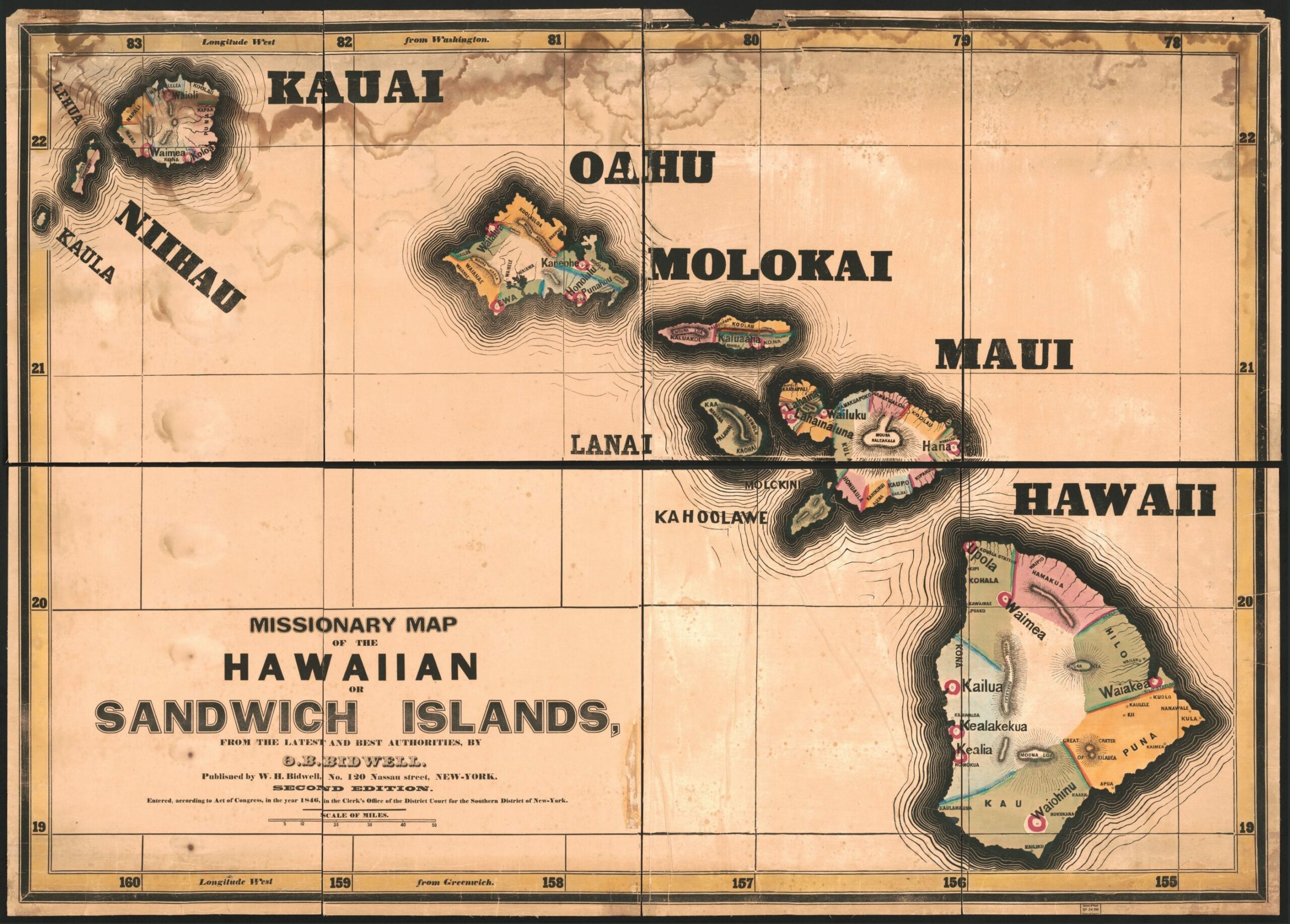
The story of Hawaii’s annexation is intricately woven with its strategic importance, economic potential, and the changing political landscape of the late 19th century. Understanding these factors is crucial to grasping the motivations behind this momentous decision. From the perspective of American policymakers and businessmen, Hawaii represented more than just an exotic paradise; it was a vital outpost, a burgeoning market, and a symbol of growing American power on the global stage.
The Shifting Sands of Power: Early American Influence in Hawaii
Long before the concept of annexation took firm hold, American involvement in Hawaii had been steadily growing. The first American missionaries arrived in 1820, seeking to spread Christianity and establish schools. While their initial intentions were spiritual, their presence laid the groundwork for a deeper entanglement with Hawaiian society and its governance. As American missionaries and their descendants integrated into Hawaiian life, they often acquired land and became influential figures in business and politics.
Economic Ties and the Rise of Sugar
One of the most significant drivers of American interest in Hawaii was its burgeoning sugar industry. By the mid-19th century, Hawaiian sugar had become a valuable commodity in the United States, particularly after the Reciprocity Treaty of 1875. This treaty granted Hawaiian sugar duty-free access to the American market, a move that significantly boosted the industry and the fortunes of American planters who had established vast sugar plantations across the islands.
The economic boom fueled by the sugar trade led to an increasing demand for labor, which in turn prompted large-scale immigration from countries like China, Japan, and the Philippines. This demographic shift began to alter the cultural fabric of Hawaii, while the economic power concentrated in the hands of a few American businessmen and their Hawaiian-born descendants created a new elite. These individuals, often referred to as the “haole” (foreigners) elite, began to exert considerable influence over the Hawaiian monarchy.
The Reciprocity Treaty, while beneficial for sugar planters, also had a subtle but significant political implication. It fostered a growing dependency on the United States for Hawaii’s economic prosperity, making the islands increasingly susceptible to American political pressure. As the United States grew as an industrial power, its appetite for foreign markets and strategic locations intensified, and Hawaii was perfectly situated to fulfill both. The sugar barons, whose wealth was tied to American trade, began to see their economic interests aligning with the political ambitions of some in the United States. They were increasingly looking for a more stable and secure future for their investments, and annexation offered just that.
Military and Strategic Importance

Beyond economics, Hawaii’s geographical location made it an indispensable strategic asset for the United States, especially as its naval power began to expand. Situated in the mid-Pacific, Hawaii offered a perfect coaling station and naval base for American ships operating in the vast ocean. This was particularly crucial during a time of growing colonial ambitions and increased competition with other global powers like Great Britain and Germany.
The United States recognized the immense value of Pearl Harbor, a naturally sheltered deep-water harbor on the island of Oahu. Control of Pearl Harbor would provide the U.S. Navy with a secure and strategically vital base for its operations in the Pacific. This military consideration became increasingly prominent in American foreign policy discussions, as the United States began to envision itself as a major player on the world stage. The idea of a trans-Pacific cable also underscored Hawaii’s importance as a communication hub. Owning Hawaii would secure a crucial link in American communication networks, allowing for swift dissemination of information and command. This strategic foresight was a key motivator for those advocating for annexation, seeing Hawaii not just as a trading partner but as a critical linchpin in America’s growing global reach.
The Overthrow of the Monarchy and the Road to Annexation
The late 19th century witnessed a growing tension between the increasingly powerful American business interests and the Hawaiian monarchy, which sought to maintain its sovereignty and the cultural heritage of its people. Queen Liliuokalani, who ascended to the throne in 1891, attempted to enact a new constitution that would restore the monarchy’s power and disenfranchise many of the foreign-born residents, particularly the American business elite. This move was seen as a direct threat by those who had benefited from the existing power structure.
The Coup of 1893
On January 17, 1893, a group of American and European businessmen, supported by the United States military, staged a coup d’état that overthrew Queen Liliuokalani. The coup was orchestrated by the Committee of Safety, a group of influential American residents, and was aided by the presence of U.S. Marines from the USS Boston, who landed in Honolulu under the pretext of protecting American lives and property. While the troops did not directly participate in the overthrow, their presence provided a clear show of force that intimidated the Hawaiian government and effectively sealed the monarchy’s fate.
The provisional government, led by Sanford B. Dole, a prominent American lawyer and businessman, immediately sought annexation by the United States. However, the initial annexation treaty, negotiated by the provisional government, failed to be ratified by the U.S. Senate during the presidency of Grover Cleveland, who viewed the overthrow as an illegal act. Cleveland’s successor, William McKinley, however, was more amenable to the idea of expansionism and the strategic advantages Hawaii offered.
Annexation as Manifest Destiny
The concept of Manifest Destiny, the 19th-century belief that the expansion of the United States across the North American continent was divinely ordained, had begun to extend its reach beyond the continental borders. In the late 19th century, this idea morphed into a justification for overseas expansion and the acquisition of territories that could serve American economic and military interests.
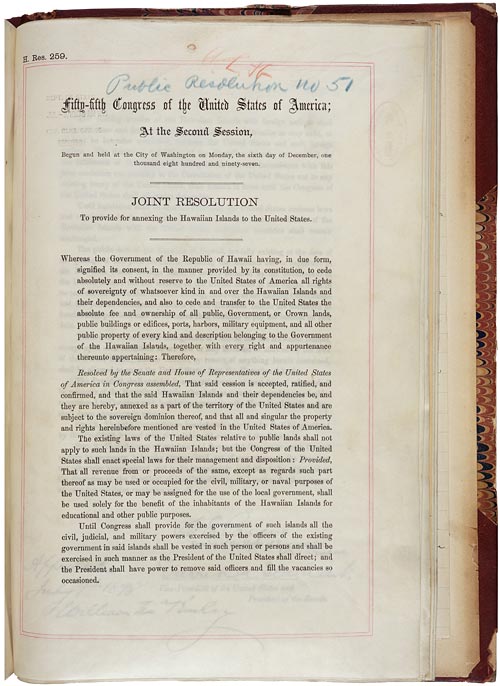
Hawaii became a focal point for this evolving ideology. Proponents of annexation argued that it was America’s duty to bring its civilization, governance, and economic system to the Hawaiian people. This paternalistic view often disregarded the existing Hawaiian governance and culture, framing annexation as a benevolent act of progress. The Spanish-American War in 1898 further amplified the strategic importance of Hawaii. With the United States now actively engaged in the Pacific, Hawaii’s role as a naval coaling station and refueling point became indispensable for projecting American power. This wartime necessity provided a crucial impetus for the final push for annexation. The strategic advantages that Pearl Harbor offered were no longer a matter of future planning but of immediate operational necessity. The war created a climate where the geopolitical considerations of Hawaii could no longer be ignored or postponed. The islands were formally annexed as a territory of the United States on August 12, 1898, through the Newlands Resolution, bypassing the need for a treaty ratification.
The annexation of Hawaii was a complex event, driven by a confluence of economic aspirations, military strategy, and expansionist ideologies. While the American business elite and political figures saw it as a logical step towards securing their interests and expanding America’s influence, for many Native Hawaiians, it represented a tragic loss of sovereignty and a profound disruption of their ancestral homeland. Today, the legacy of this period continues to be a subject of discussion and reflection, as Hawaii navigates its identity as a state within the United States while honoring its rich and independent past. The story of Hawaii’s annexation serves as a powerful reminder of how national ambitions can shape the destiny of entire peoples and the intricate interplay between economics, power, and national identity. The ongoing exploration of Hawaiian culture, history, and natural beauty by visitors underscores the enduring allure of these islands, even as their historical journey remains a significant chapter in American history. From the vibrant streets of Honolulu to the serene beauty of Waikiki, Hawaii offers a unique blend of natural wonder and cultural depth, a testament to its enduring spirit.
LifeOutOfTheBox is a participant in the Amazon Services LLC Associates Program, an affiliate advertising program designed to provide a means for sites to earn advertising fees by advertising and linking to Amazon.com. Amazon, the Amazon logo, AmazonSupply, and the AmazonSupply logo are trademarks of Amazon.com, Inc. or its affiliates. As an Amazon Associate we earn affiliate commissions from qualifying purchases.