
Hilton Worldwide Holdings Inc., commonly known as Hilton, stands as a titan in the global hospitality industry, boasting an expansive portfolio of world-renowned brands. Far beyond merely owning a few buildings, Hilton’s ownership model is a complex tapestry of brand management, franchising, and strategic property acquisition that underpins its dominant presence across the globe. Understanding “what Hilton Hotels owns” means delving into its diverse family of brands, its operational strategies, and its profound impact on the landscape of hotel accommodation. This article explores the breadth and depth of Hilton’s impressive holdings, illustrating how it caters to virtually every segment of the traveler market.

A Legacy of Hospitality and Innovation
The story of Hilton is one of ambition, vision, and relentless expansion, beginning with a singular idea that blossomed into a global powerhouse. Its ownership structure reflects decades of strategic growth and adaptation within the dynamic hospitality sector.
From a Single Hotel to a Global Powerhouse
The genesis of Hilton dates back to 1919 when Conrad Hilton purchased his first hotel, the Mobley Hotel, in Cisco, Texas. Initially a small operation, Hilton’s vision quickly expanded, leading to the acquisition and development of numerous properties. He famously opened the first hotel to bear the Hilton name in Dallas in 1925. From these humble beginnings, the company grew steadily, establishing a reputation for quality and innovation. Over the decades, Hilton pioneered many hotel industry standards, from air-conditioned lobbies to multi-property reservations systems. This historical trajectory underscores Hilton’s foundational ownership of its brand and its continuous drive to evolve the guest experience. Today, Hilton owns not just a vast collection of hotels, but an unparalleled legacy of service and innovation that defines its corporate identity.
The Core Business Model: Franchising and Management
While the question “What does Hilton Hotels own?” might suggest direct real estate ownership of every single property, Hilton’s primary ownership model is more nuanced. Hilton primarily owns and manages a vast portfolio of hotel brands, rather than directly owning the physical buildings of every hotel. The company operates through two main strategies:
- Franchising: The vast majority of Hilton properties are independently owned and operated by third-party franchisees. These franchisees license a Hilton brand name (e.g., Hampton by Hilton, DoubleTree by Hilton) and adhere to Hilton’s strict brand standards, operational guidelines, and marketing initiatives. In return, Hilton receives franchise fees and royalties. This model allows for rapid expansion and reduced capital expenditure.
- Management Agreements: Hilton also enters into management agreements with property owners. In this scenario, Hilton directly manages the hotel operations on behalf of the owner, providing its expertise in staffing, marketing, revenue management, and guest services. This approach allows Hilton to maintain closer control over the guest experience at key properties and generate fees based on revenue and profitability.
- Direct Ownership: While less common for the entire portfolio, Hilton does directly own a select number of strategic properties, often flagship hotels or those used for innovation and brand development. These directly owned assets represent a smaller, but significant, portion of its overall portfolio, allowing for direct control over every aspect of operations and guest experience.
Essentially, Hilton’s ownership lies predominantly in its intellectual property – its brand names, operational systems, loyalty programs (like Hilton Honors), and global distribution channels – which are then leveraged through franchising and management agreements to expand its physical footprint worldwide.
The Extensive Brand Portfolio: A Spectrum of Experiences
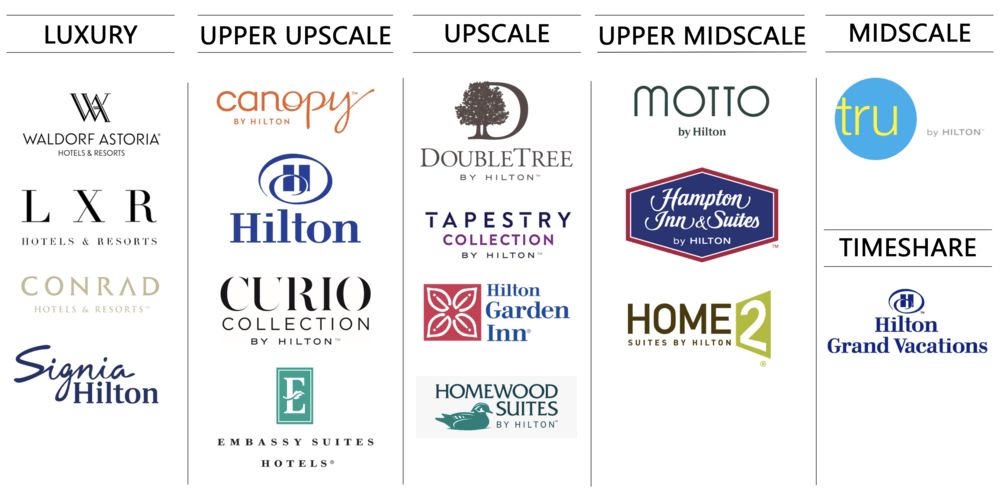
Hilton’s most significant asset is its diverse collection of 22 distinct brands, each meticulously crafted to cater to specific traveler preferences, price points, and travel occasions. This breadth allows Hilton to capture a significant share of the global accommodation market, from budget-conscious travelers to those seeking ultimate luxury.
Luxury and Lifestyle Brands
At the pinnacle of Hilton’s portfolio are its luxury and lifestyle brands, designed to deliver unparalleled experiences, bespoke services, and sophisticated aesthetics.
- Waldorf Astoria Hotels & Resorts: Synonymous with timeless luxury, iconic properties, and personalized service, Waldorf Astoria offers legendary experiences in world-class destinations.
- LXR Hotels & Resorts: A collection of independent, distinctive luxury hotels, LXR offers unique, immersive experiences rooted in the local culture and character of their destinations. Each property is one-of-a-kind.
- Conrad Hotels & Resorts: Focused on smart luxury for the modern traveler, Conrad combines sophisticated design, innovative technology, and a service culture designed to inspire.
- Canopy by Hilton: Hilton’s vibrant, upscale lifestyle brand, Canopy emphasizes local art, food, and culture, offering thoughtful extras and a positive stay experience in trendy neighborhoods.
- Tempo by Hilton: Designed for modern, ambitious travelers, Tempo focuses on wellness, productivity, and thoughtful design, providing a balanced and uplifting hotel experience.
- Motto by Hilton: An urban, micro-hotel concept, Motto offers flexible and affordable accommodations in prime city locations, perfect for group travel and solo adventurers seeking authentic local experiences.
Full-Service Brands
These brands represent the core of Hilton’s offerings, providing a comprehensive range of amenities and services tailored for both business and leisure travelers.
- Hilton Hotels & Resorts: The flagship brand, providing a consistent, full-service experience with modern amenities, extensive dining options, and versatile meeting spaces in major cities and resort destinations worldwide.
- Signia by Hilton: An upscale, meetings-focused brand offering premium amenities, state-of-the-art technology, and sophisticated design tailored for conventions and large-scale events.
- DoubleTree by Hilton: Known for its warm chocolate chip cookie welcome, DoubleTree offers a comfortable, full-service experience with a friendly atmosphere, appealing to a broad range of travelers.
- Embassy Suites by Hilton: All-suite hotels offering spacious accommodations, complimentary made-to-order breakfast, and evening receptions, ideal for families and extended stays.
- Curio Collection by Hilton: A global portfolio of distinctive, upscale hotels that retain their unique identity while benefiting from Hilton’s powerful distribution and loyalty programs. Each hotel tells its own story.
- Tapestry Collection by Hilton: Another collection of independent, upscale hotels, Tapestry focuses on unique style, vibrant personalities, and local connections, offering a less formal but equally authentic experience as Curio.
Focused-Service and Extended Stay Brands
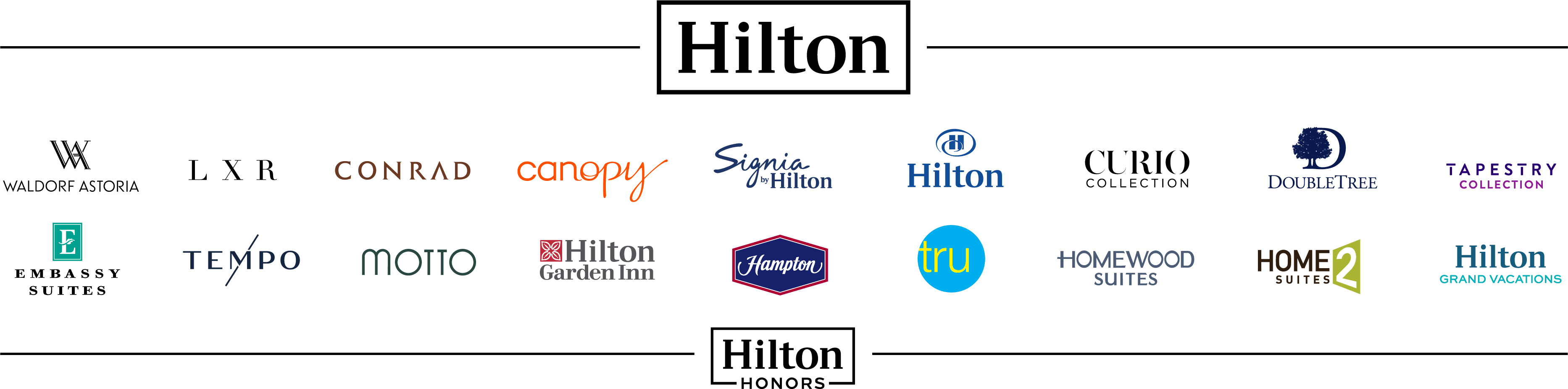
Catering to travelers seeking value, convenience, and functionality, these brands provide essential amenities without compromising on quality or service.
- Hilton Garden Inn: An upscale, focused-service brand offering comfortable rooms, complimentary Wi-Fi, and cooked-to-order breakfast, perfect for business and leisure travelers.
- Hampton by Hilton: A leading global brand in the upper-midscale segment, known for its consistent quality, complimentary hot breakfast, and “Hamptonality” service culture.
- Tru by Hilton: A midscale brand designed for younger, value-conscious travelers, offering efficient and energetic spaces with vibrant lobbies and playful design.
- Spark by Hilton: Hilton’s newest economy brand, focusing on reliability, friendly service, and a consistent, clean stay at an accessible price point.
- Homewood Suites by Hilton: All-suite hotels providing spacious accommodations with full kitchens, complimentary breakfast, and evening socials, ideal for extended stays.
- Home2 Suites by Hilton: A pet-friendly, all-suite extended-stay brand offering flexible guest room configurations, in-suite kitchens, and communal areas with modern amenities.
Timeshare and All-Inclusive
Beyond traditional hotels, Hilton also owns ventures that tap into other growing segments of the hospitality market.
- Hilton Grand Vacations: While operating as a separate publicly traded company, Hilton retains a strong relationship and brand recognition with HGV, offering vacation ownership properties in desirable destinations, providing resort-style accommodations for owners.
- All-Inclusive Resorts: Hilton has also expanded its ownership footprint into the all-inclusive segment, partnering with property owners to bring various Hilton brands to popular all-inclusive destinations, offering a seamless, worry-free vacation experience.
Global Footprint and Strategic Presence
Hilton’s portfolio isn’t just about the number of brands; it’s also about its unparalleled global reach. With properties spanning over 120 countries and territories, Hilton strategically positions its brands to meet diverse demands across different cultures and economies.
Reaching Every Corner of the Globe
From bustling metropolitan centers to serene resort islands, Hilton’s properties are strategically located to serve a vast global clientele. Its presence in key markets across North America, Europe, Asia-Pacific, Latin America, the Middle East, and Africa allows it to capitalize on various travel trends, from booming business tourism to expanding leisure travel. The ability to deploy a suitable brand, whether it’s a Conrad in a luxury market like Tokyo or a Hampton Inn in an emerging economy, showcases Hilton’s adaptable and comprehensive ownership strategy. This global distribution is a significant asset, reinforcing brand recognition and customer loyalty worldwide.
Tailoring Offerings to Diverse Markets
Hilton’s ownership of such a wide array of brands enables it to tailor its offerings precisely to the nuances of local markets. In a vibrant city like London, one might find a historic Waldorf Astoria property alongside a trendy Canopy and a business-friendly Hilton Garden Inn, each attracting a different demographic. In resort destinations such as the Maldives or Mexico, LXR or Conrad resorts offer exclusive experiences, while DoubleTree might cater to families seeking comfort and value. This strategic deployment demonstrates Hilton’s deep understanding of global consumer behavior and its capability to provide fitting accommodation solutions irrespective of location or purpose of travel.
Beyond Bricks and Mortar: Innovation and Guest Experience
Hilton’s ownership extends beyond its physical properties and brand names to encompass its commitment to innovation, technology, and sustainability, all aimed at enhancing the guest experience. These intangible assets are crucial to its continued leadership in the hospitality industry.
Technological Advancements
Hilton continually invests in technology to streamline operations and elevate the guest journey. Innovations like the Hilton Digital Key, which allows guests to use their smartphone as a room key, and the “Connected Room,” enabling guests to control room features from a single device, exemplify this commitment. The award-winning Hilton Honors loyalty program, with its robust mobile app and personalized offers, is another powerful asset that fosters deep guest relationships and encourages repeat stays. These technological properties are integral to what Hilton “owns” in terms of competitive advantage and future-proofing its business model.
Commitment to Sustainability
Recognizing its global responsibility, Hilton also “owns” a strong commitment to sustainable practices through initiatives like Travel with Purpose. This program focuses on reducing its environmental footprint, empowering local communities, and promoting responsible tourism across its entire portfolio. From implementing energy-efficient systems in new builds to reducing food waste and supporting local sourcing, Hilton aims to be a leader in sustainable hospitality. This commitment not only contributes to global well-being but also resonates with an increasingly environmentally conscious traveler base, further strengthening its brand value and ethical ownership.
In conclusion, “what Hilton Hotels owns” is a sophisticated and dynamic ecosystem. It encompasses a rich historical legacy, a vast portfolio of 22 distinct and powerful brands, an intelligent business model based predominantly on franchising and management, and a forward-thinking commitment to technology and sustainability. Through this multifaceted ownership, Hilton continues to shape the global hospitality landscape, providing diverse, high-quality accommodation experiences to millions of travelers worldwide.
LifeOutOfTheBox is a participant in the Amazon Services LLC Associates Program, an affiliate advertising program designed to provide a means for sites to earn advertising fees by advertising and linking to Amazon.com. Amazon, the Amazon logo, AmazonSupply, and the AmazonSupply logo are trademarks of Amazon.com, Inc. or its affiliates. As an Amazon Associate we earn affiliate commissions from qualifying purchases.