
Planning a trip often involves meticulous attention to detail, from booking flights and accommodation to mapping out your itinerary. Yet, one crucial factor often overlooked, especially when traveling to states spanning multiple time zones, is the actual time. Idaho, a gem in the Pacific Northwest, presents a unique temporal landscape that astute travelers must understand to ensure a seamless and enjoyable experience. More than just a simple clock adjustment, knowing the precise time in Idaho right now – and understanding its temporal divisions – is fundamental to effective travel planning, preventing missed connections, optimizing activity schedules, and ensuring smooth communication with your travel companions and loved ones. This guide delves into the nuances of Idaho’s time zones, offering insights and practical advice for navigating this magnificent state without missing a beat.
Understanding Idaho’s Unique Time Zones
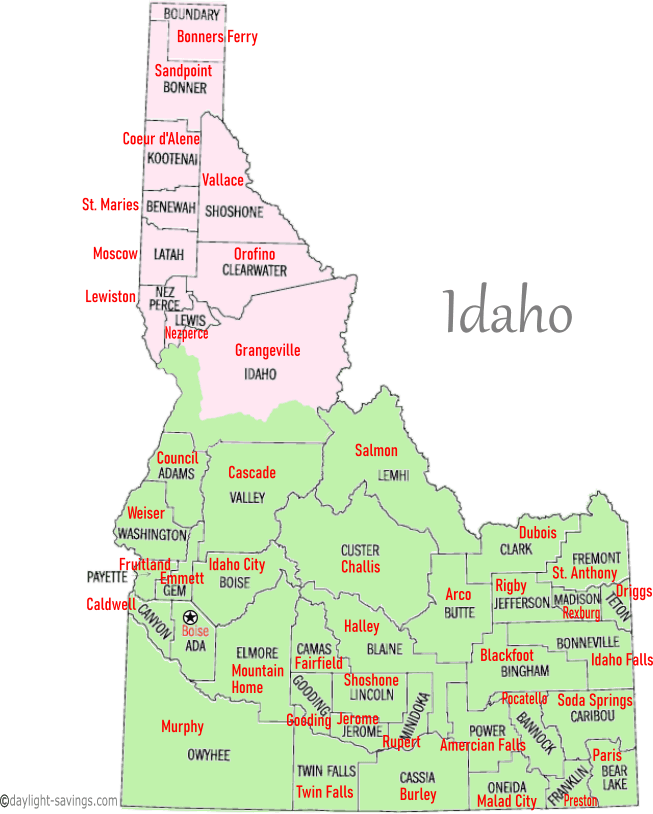
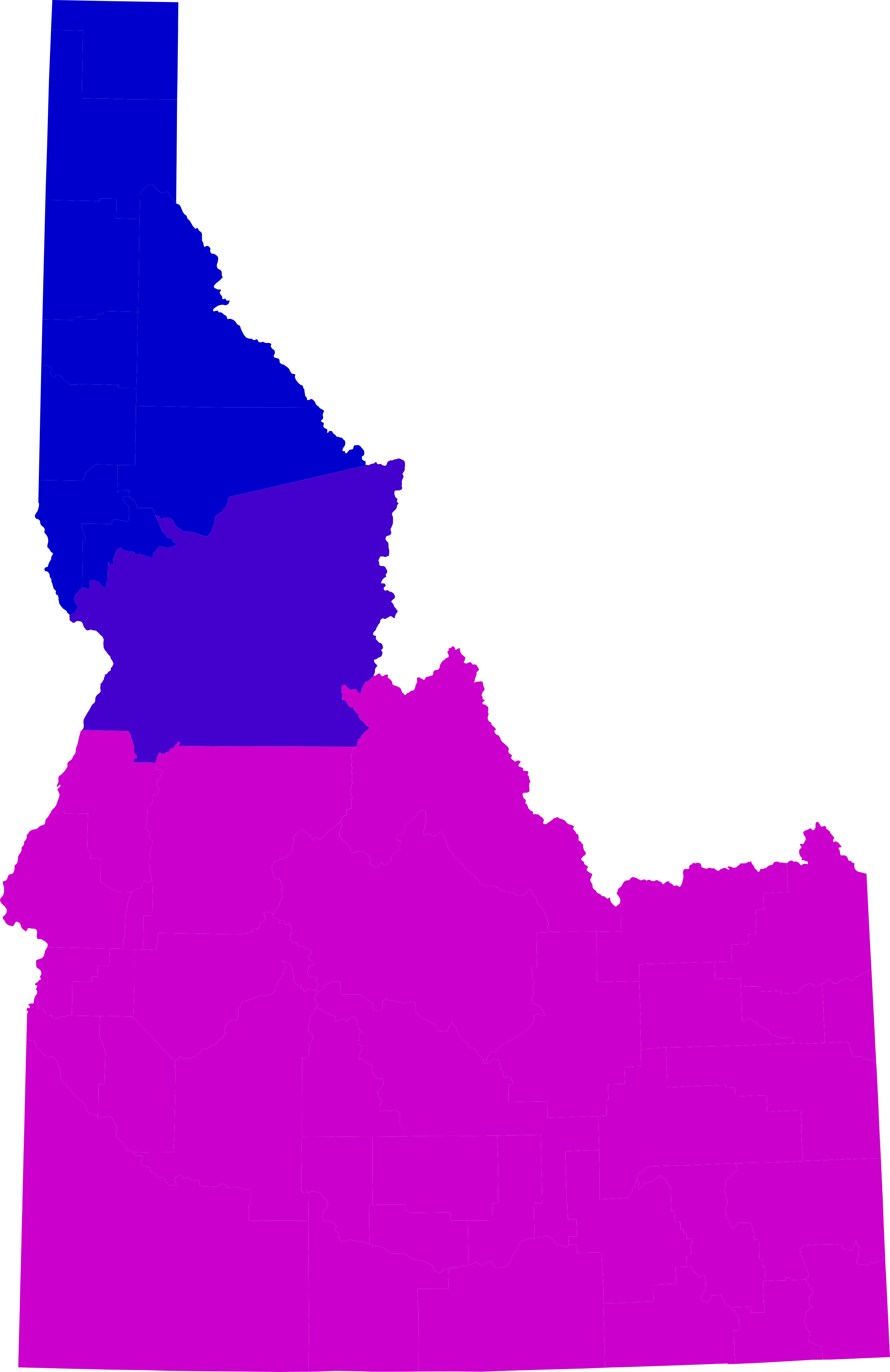
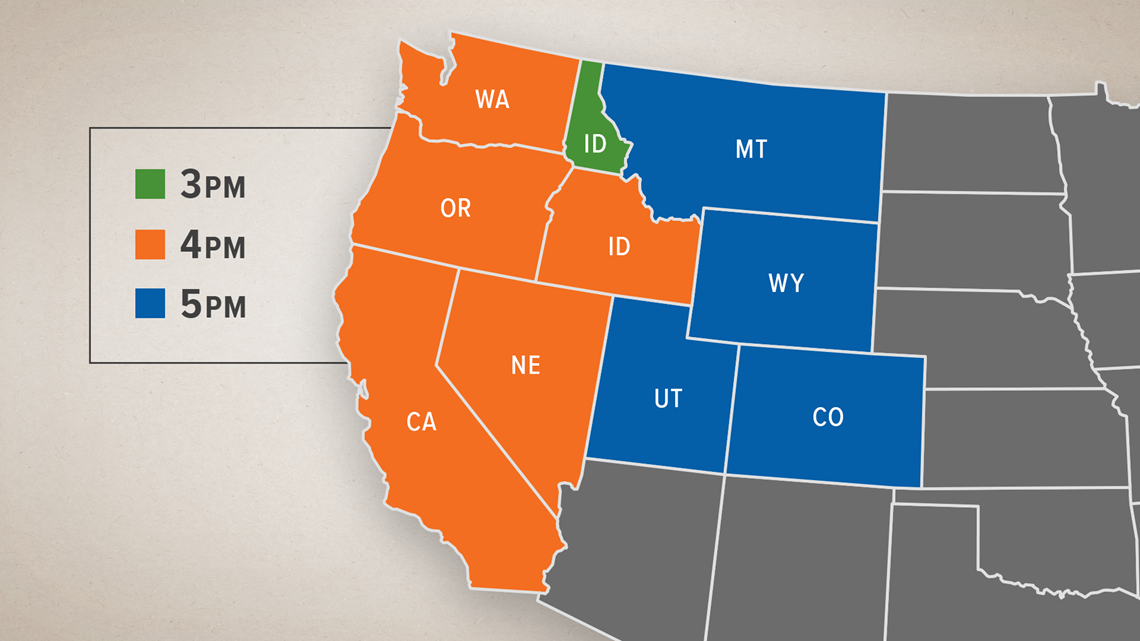
Unlike many states that adhere uniformly to a single time zone, Idaho straddles two distinct temporal boundaries: Mountain Time (MT) and Pacific Time (PT). This geographical quirk is a direct result of its sprawling shape and its position relative to neighboring states like Washington, Oregon, Montana, Utah, Wyoming, and Nevada. For the traveler, this means that depending on where you are in the state, the clock can be an hour ahead or behind what you might expect.
The Dominance of Mountain Time Zone (MT)
The vast majority of Idaho observes Mountain Time, which is UTC-7 during standard time and UTC-6 during Daylight Saving Time. This includes the capital city of Boise and most of the state’s major population centers and popular tourist destinations in the southern and central regions. Cities such as Pocatello, Idaho Falls, Twin Falls, Sun Valley, McCall, Salmon, and Coeur d’Alene all operate on Mountain Time. When considering the “time in Idaho,” most people are implicitly referring to Mountain Time due to its prevalence across the state. This consistency across a large swath of Idaho simplifies planning for those exploring its rugged mountains, pristine lakes, and vibrant cities.
The Pacific Time Zone (PT) in the Panhandle
The exception to Idaho’s Mountain Time rule lies in its narrow northern sliver, often referred to as the Idaho Panhandle. Specifically, the counties of Benewah, Bonner, Boundary, Kootenai, and Shoshone – and the northern part of Latah County including Moscow – observe Pacific Time. This zone is UTC-8 during standard time and UTC-7 during Daylight Saving Time, meaning it is consistently one hour behind Mountain Time. This temporal split is largely due to the region’s historical and economic ties to Spokane, Washington, which is firmly in the Pacific Time Zone. Travelers heading to popular destinations in this region, such as Lewiston (which confusingly is also often considered part of the Pacific Time area despite officially being in Nez Perce County which is technically MT but borders Washington and often aligns with PT for practical purposes), Moscow, or venturing into the forests near the Canadian border, must be mindful of this difference.
Why Time Zones Matter for Idaho Travelers
Understanding Idaho’s time zones goes beyond mere curiosity; it’s a practical necessity for any well-organized trip. Miscalculating the time can lead to a cascade of inconveniences, from logistical nightmares to missed opportunities. For the savvy traveler, an awareness of the clock is a powerful tool for optimizing every aspect of their journey.
Impact on Flight Schedules and Connections
One of the most critical areas affected by time zones is air travel. If you’re flying into or out of Idaho, particularly with connecting flights, knowing the local time at your departure, layover, and arrival airports is paramount. A flight landing in Boise (Mountain Time) from, say, Seattle (Pacific Time) might seem to take less actual time than reported on your ticket due to the one-hour jump forward. Conversely, flying from Boise to Lewiston (often aligned with Pacific Time) means gaining an hour, which could be a blessing for a tight connection or a source of confusion if not anticipated. Always confirm flight times in the local time of each airport involved in your itinerary.
Accommodation Check-ins and Check-outs
Arriving at your hotel, vacation rental, or resort can be stressful enough without the added confusion of time differences. Most accommodations have strict check-in and check-out times, which are always stated in the local time zone of the property. Imagine arriving at your Coeur d’Alene hotel (Mountain Time) expecting to check in at 3 PM, only to realize you’re still an hour behind if you’ve been traveling from the Pacific Time Zone section of Idaho or Washington. A missed check-out can also incur additional fees. Double-check all booking confirmations against the local time to avoid unnecessary delays or charges.
Coordinating Tours, Activities, and Dining
Idaho offers an incredible array of activities, from whitewater rafting on the Salmon River to skiing at Schweitzer Mountain Resort or wine tasting in the Snake River Valley. Many of these require advance booking and adherence to specific start times. Imagine missing your scheduled rafting trip because you showed up an hour late due to a time zone miscalculation. Similarly, dinner reservations, museum visits, or concert tickets are all time-sensitive. When planning your itinerary, convert all listed times to the local time zone of the specific activity’s location. This is especially crucial if your travel involves moving between the Mountain and Pacific Time parts of the state within the same day.
Communication and Business Travel
For those traveling for business or simply needing to stay connected with family and friends back home, time zones are critical. If your colleagues are in New York (Eastern Time), a 9 AM meeting in Boise is already 11 AM for them. Conversely, if you’re trying to call someone in Los Angeles (Pacific Time) from Idaho Falls (Mountain Time), you’ll be two hours ahead of them. For business travelers, this is vital for scheduling conference calls and deadlines. For leisure travelers, it ensures you’re not calling loved ones at inconvenient hours. Always factor in the time difference when scheduling communication.
Navigating Travel Plans Across Idaho’s Time Divide
Strategic planning is key when your Idaho adventure takes you across its invisible time zone line. A little foresight can prevent a lot of headaches and allow you to fully immerse yourself in the journey without constantly fretting about the clock.
Planning Multi-Region Itineraries
If your trip includes both the Mountain Time and Pacific Time sections of Idaho, map out your itinerary with a clear understanding of the temporal shifts. For instance, a drive from Coeur d’Alene (Mountain Time) to Lewiston (Pacific Time) means “gaining” an hour. You leave Coeur d’Alene at 9 AM and arrive in Lewiston after a 2-hour drive, and your clock will say 10 AM, not 11 AM. Conversely, traveling eastbound from Moscow (Pacific Time) to Grangeville (Mountain Time) will mean “losing” an hour. Be sure to manually adjust your watch or check your phone’s automatic time updates as you cross these boundaries, or better yet, plan your day using only the local time of your current destination.
Utilizing Technology for Time Management
Modern technology is your best friend when dealing with time zones. Most smartphones automatically update to the local time when you enter a new time zone, provided you have location services enabled. However, it’s always wise to double-check. Consider setting up a world clock on your phone or computer that displays the time in both relevant Idaho time zones, as well as your home time zone. This provides an at-a-glance reference that can prevent confusion. Many online travel tools and GPS systems also display local times, but a quick manual verification never hurts, especially when you’re making reservations or scheduling important events.
Regional Spotlights: Time Zone Considerations for Popular Idaho Destinations
To further illustrate the practical implications, let’s look at some popular Idaho travel destinations and their respective time zone considerations.
Boise and Southern Idaho (Mountain Time)
The vibrant capital city of Boise and the entire southern region of Idaho (including destinations like Sun Valley, Twin Falls, Pocatello, and Idaho Falls) are firmly in the Mountain Time Zone. When planning activities here, from exploring the Boise River Greenbelt to hiking in the Sawtooth Mountains, all schedules will adhere to MT. If you’re coming from states further east, you’ll “gain” time, which can be beneficial for hitting the ground running. Coming from the Pacific Coast, be prepared to “lose” an hour upon arrival. This region also serves as a gateway to Yellowstone National Park and Grand Teton National Park, both of which are also on Mountain Time, simplifying planning for multi-state adventures.
The Idaho Panhandle: Lewiston, Moscow, and Coeur d’Alene (Mixed Zones)
This region is where the temporal dance becomes most intricate. While Coeur d’Alene (a major draw with Lake Coeur d’Alene and Schweitzer Mountain Resort nearby) is on Mountain Time, cities like Lewiston and Moscow are typically considered Pacific Time. This creates a situation where a short drive can change your time zone. For example, traveling from Coeur d’Alene to Moscow means setting your clock back an hour. If you’re flying into Spokane International Airport (GEG), which is in Pacific Time, and then driving to Coeur d’Alene, remember to adjust your clock forward an hour upon crossing into Idaho’s Mountain Time zone. Always confirm the local time of your specific destination within the Panhandle.
Beyond the Clock: Maximizing Your Idaho Travel Experience
While understanding time zones is crucial, a truly successful Idaho trip involves embracing the spirit of the destination itself.
Embracing the Pace of Life
Idaho offers a diverse range of experiences, from the bustling urban energy of Boise to the tranquil solitude of its wilderness areas. In many rural parts of the state, the pace of life tends to be slower, more relaxed. Even with time zone changes, remember to factor in this local rhythm. Don’t overschedule yourself, especially when traversing vast distances or engaging in outdoor activities that require travel time to trailheads or launch points. Allow for flexibility and spontaneous detours; some of Idaho’s greatest treasures are found off the beaten path.
Staying Connected and Informed
Beyond just time, keep abreast of local conditions. Weather in Idaho can change rapidly, particularly in mountainous regions. Road closures due to snow or construction can impact travel times significantly. Utilize local news sources, state travel websites, and visitor centers for the most up-to-date information. Having a reliable means of communication is also advisable, especially when exploring remote areas. While “what time is in Idaho right now?” might seem like a simple question, its implications for travel are far-reaching. By understanding its dual time zones and incorporating this knowledge into your planning, you’re not just setting your watch correctly; you’re setting yourself up for an unforgettable and smoothly executed adventure in the Gem State.
LifeOutOfTheBox is a participant in the Amazon Services LLC Associates Program, an affiliate advertising program designed to provide a means for sites to earn advertising fees by advertising and linking to Amazon.com. Amazon, the Amazon logo, AmazonSupply, and the AmazonSupply logo are trademarks of Amazon.com, Inc. or its affiliates. As an Amazon Associate we earn affiliate commissions from qualifying purchases.