
The Louisiana Purchase stands as a monumental turning point in the history of the United States, effectively doubling its size overnight. This vast acquisition of territory, stretching from the Mississippi River to the Rocky Mountains, remains one of the most significant land deals ever struck. But to truly understand this pivotal event, we must delve into the minds and motivations of the key figures who initiated and finalized this extraordinary transaction. While the question of “who started” it might seem straightforward, the reality is a complex interplay of strategic foresight, shifting international dynamics, and a significant dose of American ambition.
The genesis of the Louisiana Purchase wasn’t a sudden impulse but rather a culmination of evolving American needs and European political maneuvers. The young United States, still finding its footing on the global stage, harbored a growing desire for westward expansion. Access to the crucial port of New Orleans was paramount for the economic prosperity of its burgeoning western territories, particularly for farmers and merchants who relied on the Mississippi River for trade. Control over this gateway to the Gulf of Mexico was not merely an economic consideration; it was a matter of national security and future growth.
The American Visionaries: Jefferson and His Diplomatic Envoys
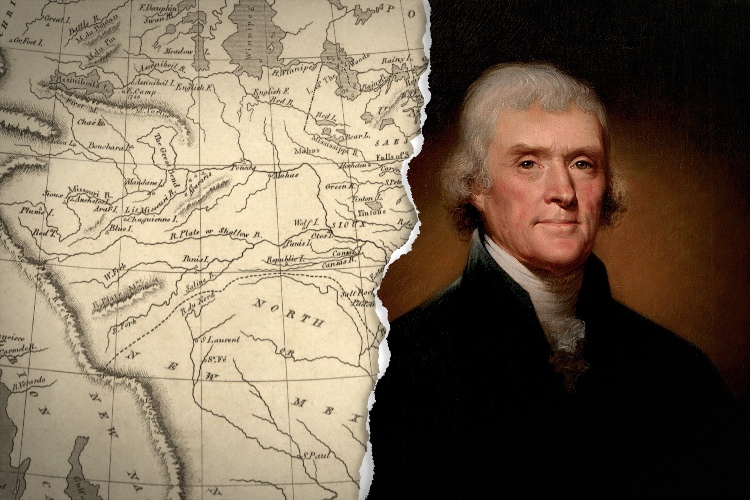
At the heart of the American initiative was President Thomas Jefferson. A fervent believer in agrarianism and westward expansion, Jefferson recognized the strategic imperative of securing New Orleans and the surrounding territories. His initial plan was relatively modest: to purchase New Orleans and West Florida from France. He understood that without this control, the economic vitality of the western states would be severely hampered, and potential conflicts with France or Spain over access to the river were a constant threat.
To achieve this goal, Jefferson dispatched two trusted diplomats to Paris: James Monroe and Robert Livingston. Livingston, the American minister to France, had been actively engaged in negotiations for some time, primarily focused on acquiring New Orleans. Monroe, a former governor of Virginia, was sent to bolster the American negotiating team and provide additional weight to their demands. Their instructions were clear: secure access to New Orleans and West Florida by any means necessary, including the possibility of a more extensive land purchase if circumstances allowed. They were armed with a budget of around $10 million, a substantial sum for the era, to facilitate this acquisition.
However, the diplomatic landscape in Europe was far from static. France, under the ambitious leadership of Napoleon Bonaparte, was in a precarious position. Fresh from a costly war in the Caribbean and facing renewed threats of conflict with Great Britain, Napoleon found himself in need of significant financial resources and was reconsidering his colonial ambitions in the Americas. The vastness of Louisiana, a territory he had only recently reacquired from Spain, suddenly seemed more of a liability than an asset.
Napoleon’s Strategic Shift and the Unexpected Offer

Napoleon Bonaparte had grand designs for a renewed French empire in the Americas. He envisioned Louisiana as a breadbasket for French colonies in the Caribbean, particularly Saint-Domingue (modern-day Haiti), where a brutal slave revolt had just achieved independence. However, the French forces sent to quell the rebellion in Saint-Domingue were decimated by disease and fierce resistance. This crushing defeat, coupled with the looming specter of war with Great Britain, forced Napoleon to re-evaluate his strategy. Maintaining control over Louisiana became increasingly difficult and financially draining.
It was within this context of French strategic reassessment that the opportunity for the Louisiana Purchase truly emerged. Rather than simply negotiating for New Orleans, the American envoys found themselves presented with an offer far exceeding their initial mandate. François Barbé-Marbois, the French minister of finance, approached Livingston and Monroe with a proposal to sell the entirety of the Louisiana territory. This was a seismic development. The Americans were astounded. The original mission was to secure a vital port; they were now being offered an entire continent.
The sheer scale of the offer was both exhilarating and daunting. Napoleon was not just looking to offload a troublesome colony; he was seeking a substantial sum to fund his European campaigns. The price he proposed was $15 million, a significant increase from the $10 million initially allocated for just New Orleans and West Florida. This presented a dilemma for Livingston and Monroe. They were authorized to spend a certain amount, but the opportunity was too momentous to ignore. Their decision to proceed with such a bold expansion, without explicit prior authorization from Washington, speaks volumes about their understanding of the geopolitical landscape and the immense potential of the territory.

The Deal of the Century: Negotiation and Ratification
The negotiations, though swift given the magnitude of the deal, were intense. Livingston and Monroe worked diligently to secure the best possible terms for the United States. They were acutely aware of the historical significance of the moment and the potential ramifications of their actions. The final agreement, signed on April 30, 1803, saw the United States acquire approximately 828,000 square miles of territory for the sum of $15 million. This price averaged out to roughly three cents per acre, a virtually unheard-of bargain for such a vast and resource-rich expanse.
Upon their return to the United States, the treaty faced its own set of hurdles. President Jefferson, despite initiating the purchase, harbored constitutional doubts about the executive branch’s authority to acquire territory without explicit congressional approval. He believed an amendment might be necessary. However, the overwhelming strategic and economic benefits, coupled with the enthusiastic public support that quickly emerged, persuaded him to proceed. The Senate ratified the treaty in October 1803, solidifying the acquisition.
The Louisiana Purchase was not merely a real estate transaction; it was a bold gamble that paid off handsomely. It secured the future economic growth of the United States, removed a major foreign power from its borders, and opened the door for westward expansion that would shape the nation’s destiny for centuries to come. While Thomas Jefferson is often credited as the mastermind, it was the astute diplomacy of Robert Livingston and James Monroe, coupled with Napoleon Bonaparte‘s strategic recalibration, that truly brought this transformative event to fruition. The “start” of the Louisiana Purchase was therefore a confluence of American vision, diplomatic prowess, and European geopolitical necessity, culminating in a deal that would redefine a continent.
This immense land acquisition not only doubled the size of the United States but also ushered in a new era of exploration and settlement. Iconic expeditions, such as the Lewis and Clark Expedition, were soon launched to survey and map the newly acquired territories, uncovering the incredible natural beauty and resources that lay within. From the majestic peaks of the Rocky Mountains to the fertile plains that would become the breadbasket of America, the Louisiana Purchase provided the raw materials for future growth and prosperity.
The impact of the Louisiana Purchase resonates deeply in the modern-day landscape. Many of the states that now form the heartland of the United States owe their very existence to this landmark deal. Cities like New Orleans, St. Louis, and Kansas City owe their prominence to the strategic access and economic opportunities unlocked by this acquisition. The cultural tapestry of the United States is also richer for the diverse peoples and traditions that were integrated, both willingly and unwillingly, into the expanding nation as a result of the purchase. Understanding who “started” the Louisiana Purchase is not just about identifying individuals; it’s about appreciating the complex interplay of forces that led to one of history’s most consequential decisions, a decision that continues to shape the United States and its place in the world.
LifeOutOfTheBox is a participant in the Amazon Services LLC Associates Program, an affiliate advertising program designed to provide a means for sites to earn advertising fees by advertising and linking to Amazon.com. Amazon, the Amazon logo, AmazonSupply, and the AmazonSupply logo are trademarks of Amazon.com, Inc. or its affiliates. As an Amazon Associate we earn affiliate commissions from qualifying purchases.