
While the name might conjure images of lazy riverboats drifting down the Mississippi River or the vibrant energy of New Orleans, Mississippi Stud is, in fact, a captivating card game played in casinos around the world. It’s a thrilling alternative to traditional poker, offering a unique blend of strategy, luck, and escalating bets that keeps players on the edge of their seats. This article will guide you through the ins and outs of playing Mississippi Stud, from understanding the objective to mastering the betting structure, making it a must-know for any casino enthusiast looking to explore beyond the slot machines or the blackjack table.
The Objective and Core Mechanics
At its heart, Mississippi Stud is a casino banking game played against the dealer, not other players. The primary objective is to create the best possible five-card poker hand from your cards and the community cards dealt face-up on the table. Unlike many other casino card games, there’s no hand comparison against a dealer’s hand; your success depends solely on the quality of your own hand. This distinction is crucial and contributes to the game’s unique appeal.
The Deal and Initial Bets
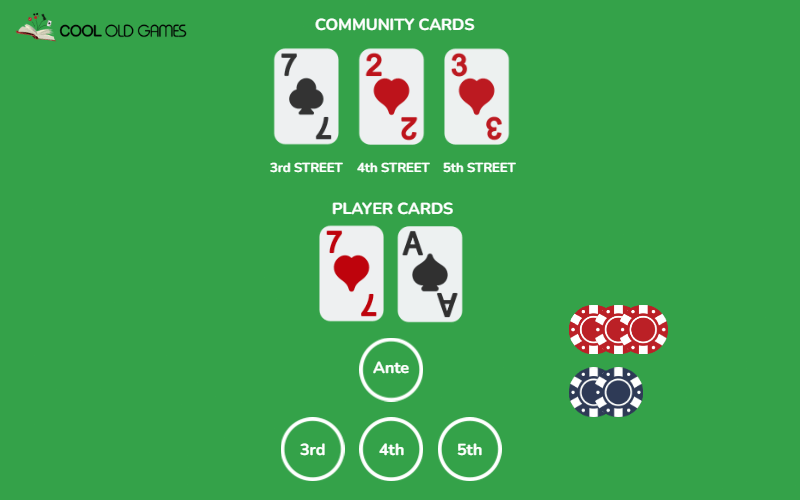
The game begins with each player placing an initial mandatory bet, known as the “ante,” into the designated betting area. This ante is the foundation of your wager for the round. Once all antes are in, the dealer will deal each player three cards face down. These are your initial cards, the foundation upon which you’ll build your hand.
Following the deal of the three down cards, the dealer will then deal three community cards face up in the center of the table. These community cards are crucial, as they can be used by all players to improve their hands. They are often referred to as the “street” or “dealer cards.”
The Betting Rounds: A Strategic Dance
This is where Mississippi Stud truly distinguishes itself. After you see your initial three cards and the first three community cards, you have a decision to make:
- Fold: If your three cards are particularly poor and offer little to no chance of improving with the community cards, you can choose to fold. By folding, you forfeit your ante and are out of the hand.
- Bet (Wager): If you believe your hand has potential, you can place an additional bet. This bet must be equal to one, two, or three times your initial ante. This is where the strategic element comes into play. You are essentially betting on the potential of your hand to improve with the remaining community cards.
After your first betting decision, the dealer will reveal the fourth community card, placing it face up next to the previous three. Again, you have another opportunity to make a betting decision:
- Fold: If the fourth community card doesn’t significantly improve your hand, or if your hand remains weak, you can still fold and lose your previous bets.
- Bet (Wager): If the fourth card improves your hand, or you believe the final card has the potential to create a winning hand, you can place another bet. This bet, like the previous one, can be one, two, or three times your initial ante.
Finally, the dealer reveals the fifth and final community card. At this point, your hand is complete, and there are no further betting decisions. Your final hand is formed using the best possible five-card combination from your initial three cards and the five community cards.
Understanding the Payouts
The beauty of Mississippi Stud lies in its straightforward, yet potentially lucrative, payout structure. Unlike games where you’re playing against the dealer’s hand strength, here you’re solely reliant on the rank of your final five-card hand. The payouts are determined by a paytable that is clearly displayed on the table felt. This paytable outlines the odds for various poker hands, from a losing hand to a royal flush.
The Paytable: Your Guide to Winnings
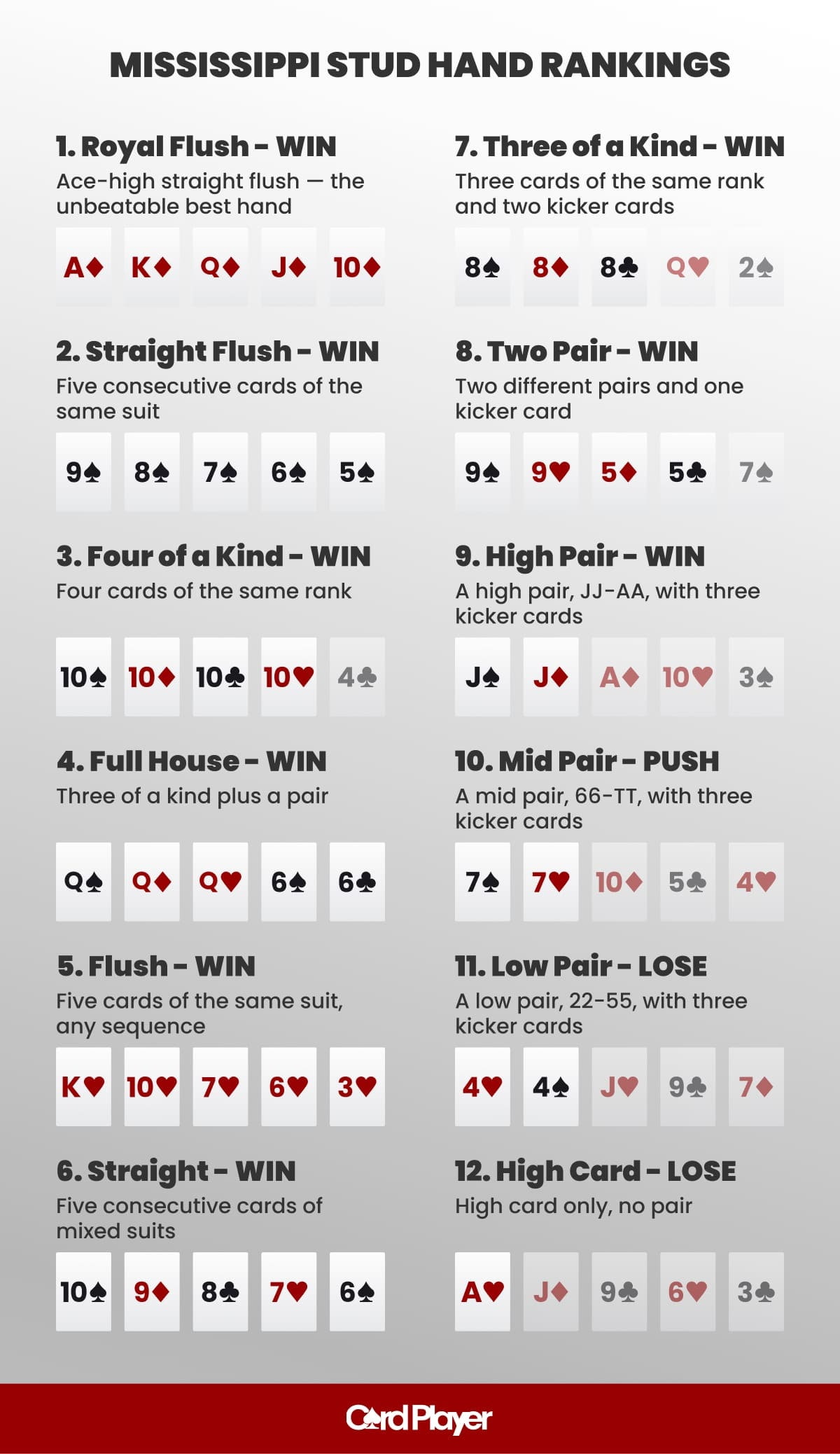
The specific payouts can vary slightly between casinos, but a typical paytable for Mississippi Stud might look something like this:
- Royal Flush: Often pays 500 to 1
- Straight Flush: Often pays 100 to 1
- Four of a Kind: Often pays 25 to 1
- Full House: Often pays 5 to 1
- Flush: Often pays 3 to 1
- Straight: Often pays 1 to 1
- Three of a Kind: Often pays 2 to 1 (This is a significant payout compared to some other games)
- Two Pair: Often pays 2 to 1
- Pair of Jacks or Better: Often pays 1 to 1
- Anything else (including a pair of tens or lower): Push (your bet is returned).
It’s crucial to note that the payout for “Pair of Jacks or Better” is what makes this game so engaging. Even a relatively common hand like a pair of jacks can win you money, giving you a chance to recoup your wagers and potentially profit, even if you don’t hit one of the higher-ranking hands.
How Your Hand is Evaluated
Your final hand is the best possible five-card poker hand you can form using any combination of your three dealt cards and the five community cards. For example, if you are dealt a 5 of hearts and a 6 of hearts, and the community cards include a 7 of hearts, an 8 of hearts, and a 9 of hearts, you would have a straight flush.
It’s important to remember that you are not obligated to use all your initial cards. You can use one, two, or all three of your hole cards, combined with the community cards, to make the best five-card hand.
Strategic Considerations for Mississippi Stud
While luck certainly plays a significant role in any card game, Mississippi Stud offers more strategic depth than meets the eye. Your betting decisions at each stage are critical to maximizing your potential winnings and minimizing your losses.
When to Bet and When to Fold
The decision to bet or fold hinges on the strength of your initial three cards and how they interact with the community cards.
- Starting Hand Strength: Hands with high cards or suited connectors have more potential. For instance, holding a pair of Kings or Queens, or having two cards of the same suit that are close in rank (like a 7 and 8 of spades), gives you a better starting point.
- Community Card Impact: Each community card can dramatically change the landscape of your hand. A card that completes a straight or a flush, or significantly improves a pair, might warrant further betting. Conversely, a card that offers no improvement or seems to work against your potential can lead to a fold.
- Betting Multiples: The decision to bet one, two, or three times your ante is also strategic. If you have a strong hand with high potential, you might consider larger bets to capitalize on potential big wins. If your hand is decent but not outstanding, smaller bets might be a more prudent approach.
Understanding the Odds and House Edge
Like all casino games, Mississippi Stud has a built-in house edge. However, understanding the typical payouts and the betting structure allows players to make more informed decisions. The game’s design encourages players to continue betting as long as their hand shows promise, which is how the casino ensures its edge over time.
A common strategy is to bet aggressively on hands that have a high probability of improving to at least a pair of jacks or better. For example, if you have a pair of queens and the community cards are starting to form potential straight or flush possibilities, it’s often advisable to increase your bet. Conversely, if your initial three cards are very low and unsuited, and the community cards offer no improvement, folding early is the soundest strategy.

Optional Side Bets
Many Mississippi Stud tables offer optional side bets, such as the “3 Card Bonus” or “Bad Beat Bonus.” These side bets provide additional ways to win but typically come with a higher house edge. The 3 Card Bonus bet, for example, pays based on your initial three cards, regardless of the community cards. It often offers payouts for hands like a pair, straight, flush, or three of a kind. While these can add excitement, they are often best approached with caution and a clear understanding of their specific payouts and house advantage.
For those looking to immerse themselves in the casino experience beyond the gameplay itself, many resorts offer luxurious accommodations and world-class dining, transforming a gaming session into a complete getaway. Imagine finishing a thrilling game of Mississippi Stud and then retiring to a lavish suite at a top-tier resort, or exploring the local cuisine of the city where you’re playing. This game, while simple to learn, offers enough strategic depth to keep seasoned players engaged, making it a popular choice in casinos from Las Vegas to Macau. Whether you’re a budget traveler or seeking a luxury travel experience, understanding how to play Mississippi Stud adds another layer of enjoyment to your casino adventures.
LifeOutOfTheBox is a participant in the Amazon Services LLC Associates Program, an affiliate advertising program designed to provide a means for sites to earn advertising fees by advertising and linking to Amazon.com. Amazon, the Amazon logo, AmazonSupply, and the AmazonSupply logo are trademarks of Amazon.com, Inc. or its affiliates. As an Amazon Associate we earn affiliate commissions from qualifying purchases.