
The mighty Mississippi River, a lifeblood of the United States, is more than just a geographical feature; it’s a historical artery, a vibrant ecosystem, and a cornerstone of American culture. Its serpentine path across the heartland has shaped economies, influenced settlements, and inspired countless stories. As travelers, we often marvel at its sheer scale and the diverse landscapes it traverses. This fascination naturally leads to a fundamental question for anyone planning a journey along its banks or simply curious about its vastness: how many states does the Mississippi River actually run through?

The answer, surprisingly, is not a simple one-size-fits-all figure, as it depends on how you define “running through.” However, for the purposes of major geographical and hydrological significance, the Mississippi River system, including its primary channel and key tributaries, touches upon a substantial number of states. The main stem of the Mississippi River itself flows through or borders ten United States. This is the figure most commonly cited and the one that best captures the river’s direct geographical footprint.
These ten states represent a remarkable cross-section of American geography, history, and culture. From the rugged, forested terrain of the north to the fertile plains of the Midwest and the subtropical delta of the south, the river’s journey is a microcosm of the nation itself. Each state offers unique experiences, from bustling metropolises to serene natural preserves, all touched by the presence of this iconic waterway.
The Ten States of the Mississippi
The Mississippi River begins its epic journey as a humble stream in the pristine wilderness of northern Minnesota. It then carves its way south, forming natural boundaries, feeding diverse ecosystems, and passing through a tapestry of cities and towns that owe their very existence to its presence. Let’s explore the ten states that the main stem of the Mississippi River either flows through or forms a border for.
The Upper Mississippi: From Source to the Midwest
The initial stretches of the Mississippi River are characterized by cooler climates, abundant forests, and a sense of burgeoning wilderness. As the river gains momentum, it encounters landscapes that are both breathtaking and historically significant.
Minnesota: The Headwaters
Our journey begins in the state of Minnesota, where the Mississippi River emerges from its humble beginnings at Lake Itasca. This is a place of serene beauty, surrounded by pine forests and clear lakes. The initial miles are a stark contrast to the river’s later grandeur, but they hold immense symbolic importance as the source of one of the world’s great rivers. Visitors to Itasca State Park can walk across the very spot where the Mississippi River begins its 2,320-mile voyage to the Gulf of Mexico. The experience is often described as profound, connecting one to the vastness of the continent.
Wisconsin: Bordering the Great River
As the Mississippi River flows south, it forms a significant portion of the border between Minnesota and Wisconsin. This stretch is known for its dramatic bluffs and charming riverside towns. Wisconsin plays a crucial role in shaping the early character of the river, contributing its own unique geological features and a rich history of early settlements and fur trading. Cities like La Crosse and Pepin in Wisconsin offer visitors a chance to experience the Upper Mississippi at its most picturesque. The Great River Road runs through both states, offering unparalleled scenic drives and access to numerous historical sites and natural attractions.
Iowa: The Corn Belt’s Waterway
Continuing its southward course, the Mississippi River becomes the eastern border of Iowa. This is the heart of America’s agricultural bounty, and the river is a vital component of this fertile landscape. Iowa‘s contribution to the Mississippi experience includes rolling farmland, vibrant riverfront communities like Dubuque and Davenport, and a deep connection to the agricultural heritage of the United States. The river here is wider and more powerful, reflecting the vastness of the plains it serves.
Illinois: Gateway to the Midwest Metropolis
The Mississippi River then turns to form the western border of Illinois. This state is home to St. Louis, a major gateway city situated on the western bank of the river in Missouri, but the river itself forms a significant portion of the border for Illinois. Cities like Rock Island and Alton in Illinois are steeped in history, from Native American civilizations to the era of steamboat travel. The confluence with the Illinois River near Grafton is a significant hydrological event, adding to the Mississippi’s might. Illinois offers a blend of historical sites, natural beauty, and access to the industrial and cultural significance of the river.
Missouri: The Show-Me State’s River City
The Mississippi River forms the eastern border of Missouri for a substantial stretch. This is where the river truly enters its powerful phase, with the Missouri River – the longest river in North America – merging with it just north of St. Louis. This confluence dramatically increases the Mississippi’s volume and sediment load. Missouri is home to iconic landmarks like the Gateway Arch in St. Louis, a testament to the river’s role as a westward expansion highway. The state offers a rich cultural tapestry, from the blues music heritage of St. Louis to the charming river towns that dot its eastern edge.
The Lower Mississippi: Delta Rhythms and Southern Charm
As the Mississippi River moves further south, the landscape transforms. The climate becomes warmer, the vegetation more lush, and the cultural influences shift towards the unique heritage of the American South.
Kentucky: A Brief Encounter
The Mississippi River briefly forms the western border of Kentucky before continuing its journey. While this border is relatively short compared to other states, it still marks the river’s passage through the culturally rich landscape of the Bluegrass State. The river’s influence here is subtle but significant, contributing to the historical trade routes and the development of early settlements in the western parts of the state.
Tennessee: The River’s Western Frontier
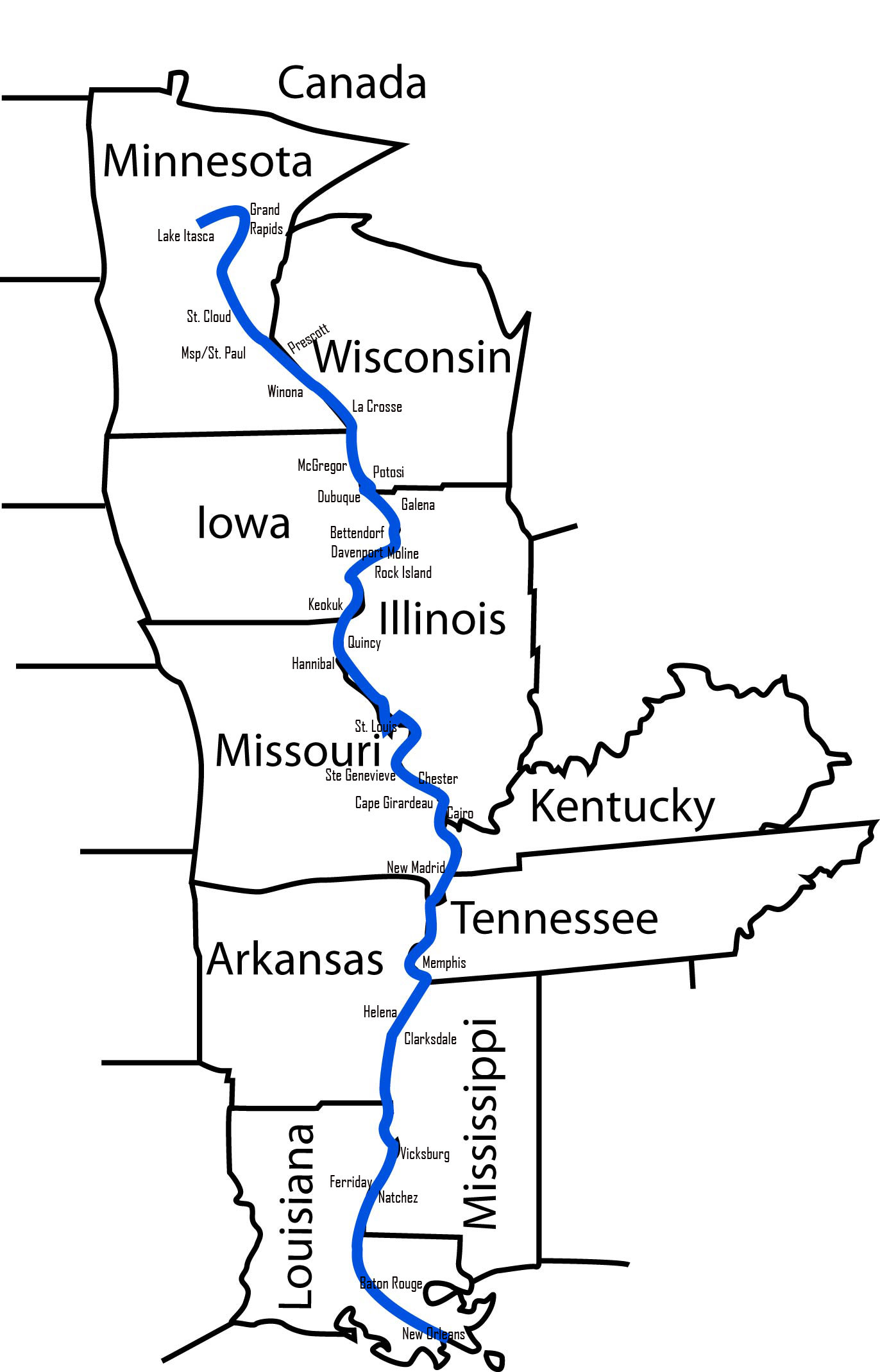
The Mississippi River forms the western border of Tennessee, separating it from Arkansas and Missouri. This stretch is characterized by the fertile Mississippi Alluvial Plain, also known as the Mississippi Delta. Tennessee‘s connection to the river is deeply ingrained in its history, particularly its role in the Civil War and its influence on the development of Memphis. Memphis, a vibrant city on the river, is renowned for its music scene, particularly blues and rock and roll, and its iconic Graceland estate.
Arkansas: The Delta’s Heart
Arkansas is a state profoundly shaped by the Mississippi River, which forms its entire eastern border. The Mississippi Delta region of Arkansas is known for its agricultural productivity, rich history, and distinctive culture. Towns like Helena-West Helena and Osceola are deeply connected to the river, reflecting its historical importance for transportation, commerce, and sustenance. The river’s presence dictates much of the landscape and livelihood in eastern Arkansas.
Mississippi: The River’s Namesake
It might seem obvious, but the state of Mississippi is inextricably linked to the great river that bears its name. The Mississippi River forms the state’s western border, separating it from Louisiana and Arkansas. This is the heart of the Mississippi Delta region, a land of legendary music, soulful cuisine, and a history deeply entwined with the river. Cities like Vicksburg, a strategic Civil War stronghold, and the capital city, Jackson (though not directly on the river, its economy and identity are tied to it), are central to the Mississippi experience. The state offers a profound immersion into the culture and history associated with the Lower Mississippi.
Louisiana: The Delta’s Embrace and the Path to the Sea
Finally, the Mississippi River flows through the state of Louisiana before emptying into the Gulf of Mexico. This is where the river truly comes into its own, widening into a vast expanse and creating the complex delta system that defines southern Louisiana. New Orleans, the jewel of Louisiana, is built on the east bank of the Mississippi, its vibrant culture and unique architecture intrinsically linked to the river’s presence. The Mississippi River is the lifeblood of Louisiana, dictating its geography, its economy, and its very way of life. The French Quarter, the Garden District, and the vibrant festivals of New Orleans all echo the river’s enduring influence. From Baton Rouge to the southernmost reaches, the Mississippi is the defining feature of this captivating state.
Beyond the Main Stem: The River’s Influence
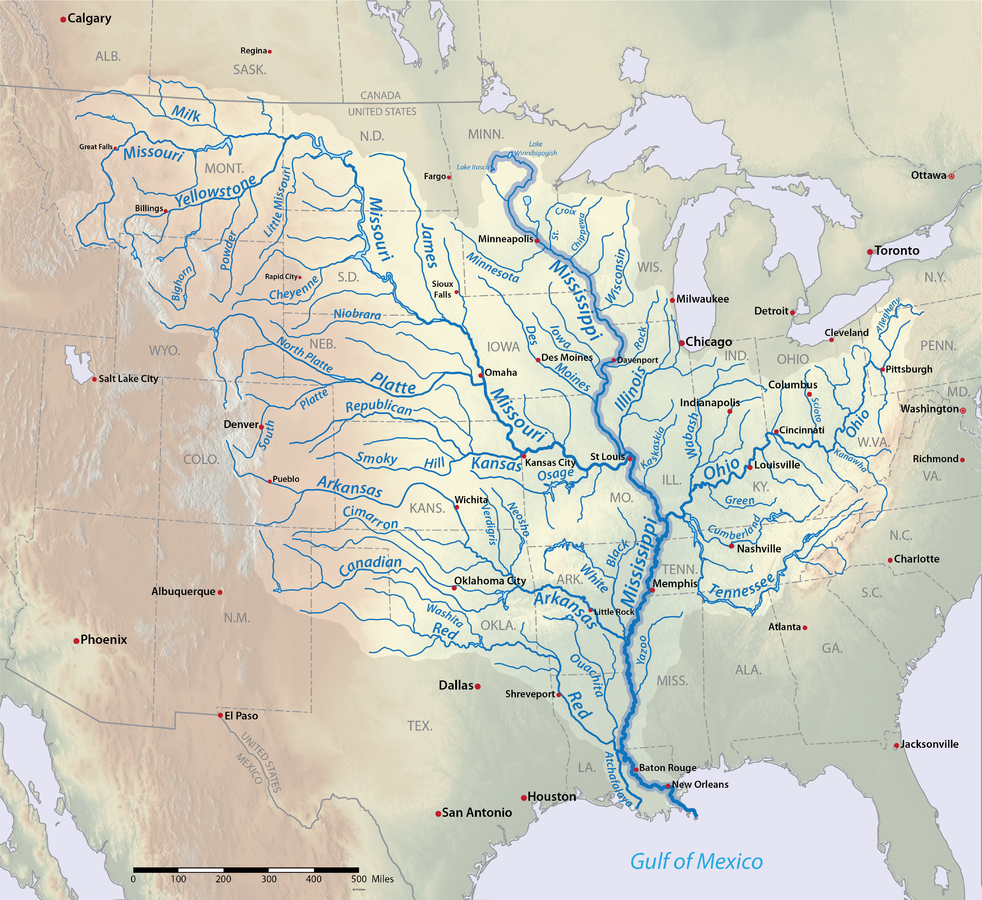
While the main stem of the Mississippi River flows through or borders ten states, the Mississippi River System is far more extensive. Its vast network of tributaries, including the Ohio River, the Missouri River, and the Arkansas River, drains a significant portion of the United States, touching upon many more states indirectly.
For example, the Ohio River itself flows through or borders Pennsylvania, West Virginia, Ohio, Indiana, Kentucky, and Illinois before joining the Mississippi. The Missouri River‘s headwaters are in Montana, and it flows through or borders North Dakota, South Dakota, Nebraska, Iowa, Kansas, and Missouri. This interconnectedness means that the Mississippi River System impacts the lives and landscapes of nearly half the states in the Union.
The question of “how many states” the Mississippi River runs through can thus be approached from different perspectives. If we consider only the main channel’s direct path or border, the answer is ten. However, if we consider the entire hydrological system and the states whose rivers ultimately feed into the Mississippi, the number expands significantly.
Experiencing the Mississippi: Travel and Tourism
For travelers, the Mississippi River offers an unparalleled journey through American history, culture, and natural beauty. Whether you’re exploring the historic riverfronts of St. Louis, soaking in the musical heritage of Memphis, or experiencing the unique charm of New Orleans, the river is an ever-present and defining element of the travel experience.
Riverboat Cruises and Scenic Drives
One of the most iconic ways to experience the Mississippi River is by taking a riverboat cruise. These journeys, often on historic paddlewheelers, offer a leisurely and immersive way to see the river and its surrounding landscapes. Cities like New Orleans, Memphis, and St. Louis serve as popular departure and arrival points for these excursions.
Alternatively, the Great River Road, a designated scenic byway, follows the course of the Mississippi River through many of the ten states. This offers road trippers the chance to stop at charming towns, historical markers, and scenic overlooks, providing a more independent and flexible way to explore the river’s path. From the wilderness of Minnesota to the delta of Louisiana, the Great River Road is a quintessential American road trip.
Landmarks and Attractions Along the River
The Mississippi River is lined with a wealth of landmarks and attractions that tell the story of its importance. In Minnesota, Itasca State Park is a must-visit for its natural beauty and the symbolic beginning of the river. As you travel south, you’ll encounter historical sites related to Native American tribes, early European explorers, and the significant role the river played in westward expansion and the Civil War.
Illinois boasts attractions like the Cahokia Mounds State Historic Site, a UNESCO World Heritage Site that offers a glimpse into a sophisticated pre-Columbian civilization. In Missouri, the majestic Gateway Arch National Park in St. Louis is an enduring symbol of American ambition and the river’s role in exploration. Further south, the Vicksburg National Military Park in Mississippi preserves the site of a pivotal Civil War battle, highlighting the river’s strategic importance.
In Louisiana, New Orleans is a treasure trove of attractions, from the historic French Quarter with its distinctive architecture and vibrant music scene to the Audubon Aquarium of the Americas. The river itself is a constant presence, whether you’re enjoying a leisurely stroll along the Woldenberg Riverfront Park or taking a ferry across to the West Bank.
Accommodation and Lifestyle
The range of accommodation options along the Mississippi River caters to every traveler’s needs and preferences. From luxury resorts overlooking the water in New Orleans to charming bed and breakfasts in historic river towns, and budget-friendly hotels in bustling cities like Memphis, there’s something for everyone. Many hotels offer rooms with stunning river views, allowing guests to wake up to the grandeur of this iconic waterway.
The lifestyle along the Mississippi River is as diverse as the states it touches. It’s a region where history, music, food, and nature converge. Whether you’re seeking a family-friendly vacation filled with educational experiences, a romantic getaway with breathtaking views, or an adventurous exploration of natural landscapes, the Mississippi River provides a rich and rewarding backdrop for a memorable travel experience. The journey along its banks is not just about reaching a destination; it’s about immersing yourself in the heart and soul of America.
LifeOutOfTheBox is a participant in the Amazon Services LLC Associates Program, an affiliate advertising program designed to provide a means for sites to earn advertising fees by advertising and linking to Amazon.com. Amazon, the Amazon logo, AmazonSupply, and the AmazonSupply logo are trademarks of Amazon.com, Inc. or its affiliates. As an Amazon Associate we earn affiliate commissions from qualifying purchases.