
The mighty Mississippi, a name that evokes images of steamboats, Southern charm, and sprawling American landscapes, is more than just a geographical feature; it’s a linguistic and historical tapestry woven from the indigenous peoples who first called these lands home. When we ask “Why is the Mississippi River called the Mississippi?”, we’re not just inquiring about a name, but delving into the very soul of this iconic waterway, its origins, and the profound impact it has had on the history and culture of the United States. This exploration will take us beyond the surface, uncovering the etymology, the cultural significance, and the enduring legacy of the river that is so central to American identity.

Unearthing the Roots: The Indigenous Origins of “Mississippi”
The answer to “Why is the Mississippi River called the Mississippi?” lies deep within the languages of the Native American tribes who inhabited the vast territories through which the river flows. Long before European explorers arrived, these peoples understood and named this colossal natural wonder. The name “Mississippi” is not a singular, monolithic term but rather a derivative, a blend of words from different Algonquin languages, primarily the Ojibwe (also known as Chippewa).
The “Great River” Explained
The most widely accepted etymology points to the Ojibwe words “misi” meaning “great” or “big,” and “ziibi” meaning “river.” Combined, these elements form “Misi-ziibi,” which translates directly to “Great River.” This simple yet profound description perfectly captures the awe-inspiring scale of the Mississippi. It’s a fitting moniker for a river that, at its widest points, can stretch for over a mile, and whose drainage basin encompasses all or parts of 32 U.S. states and two Canadian provinces, making it the fourth-largest river system in the world by discharge volume.
This indigenous nomenclature highlights a deep respect for and understanding of the natural world. For the Ojibwe and other tribes like the Dakota, the Mississippi was not merely a body of water but a vital artery for transportation, sustenance, and spiritual connection. The “Great River” was a source of life, a provider of fish, a pathway for trade, and a sacred entity in their cosmologies. The enduring power of this name, passed down through generations and adopted by subsequent cultures, speaks volumes about its accuracy and resonance.
Other interpretations and related names also exist, showcasing the linguistic richness of the region. For instance, some scholars suggest influences from other Algonquin dialects or even Siouan languages. However, the “Great River” interpretation remains the most prevalent and widely accepted explanation for the origin of the name Mississippi. When European explorers, most notably the French, began their expeditions into the interior of North America, they encountered these indigenous communities and learned the names they used for the prominent geographical features. The French, in particular, played a crucial role in transliterating and popularizing the name, adapting the indigenous sounds into a form that would become recognizable across the globe.
The Mississippi River: A Journey Through History and Culture
The Mississippi River’s influence extends far beyond its etymological origins. Its presence has shaped American history, economic development, and cultural identity in indelible ways. Understanding “Why is the Mississippi River called the Mississippi?” also involves appreciating what this “Great River” has meant and continues to mean to the millions who live along its banks and the nation as a whole.
A Lifeline for Exploration and Commerce
From the earliest days of exploration, the Mississippi River served as a critical highway. French explorer Jacques Marquette and Louis Jolliet are credited with being among the first Europeans to navigate much of its length in the late 17th century, opening up the interior of the continent to further European settlement and trade. The river provided access to a vast network of waterways, connecting the interior of North America to the Gulf of Mexico and, by extension, the wider world.
The port of New Orleans, situated at the mouth of the Mississippi, quickly became a crucial hub for trade. Goods from the American heartland, such as furs, timber, and agricultural products, flowed down the river to be shipped overseas. Conversely, manufactured goods and other imports arrived in New Orleans and were distributed inland. This economic engine was fundamental to the growth and prosperity of the burgeoning United States.
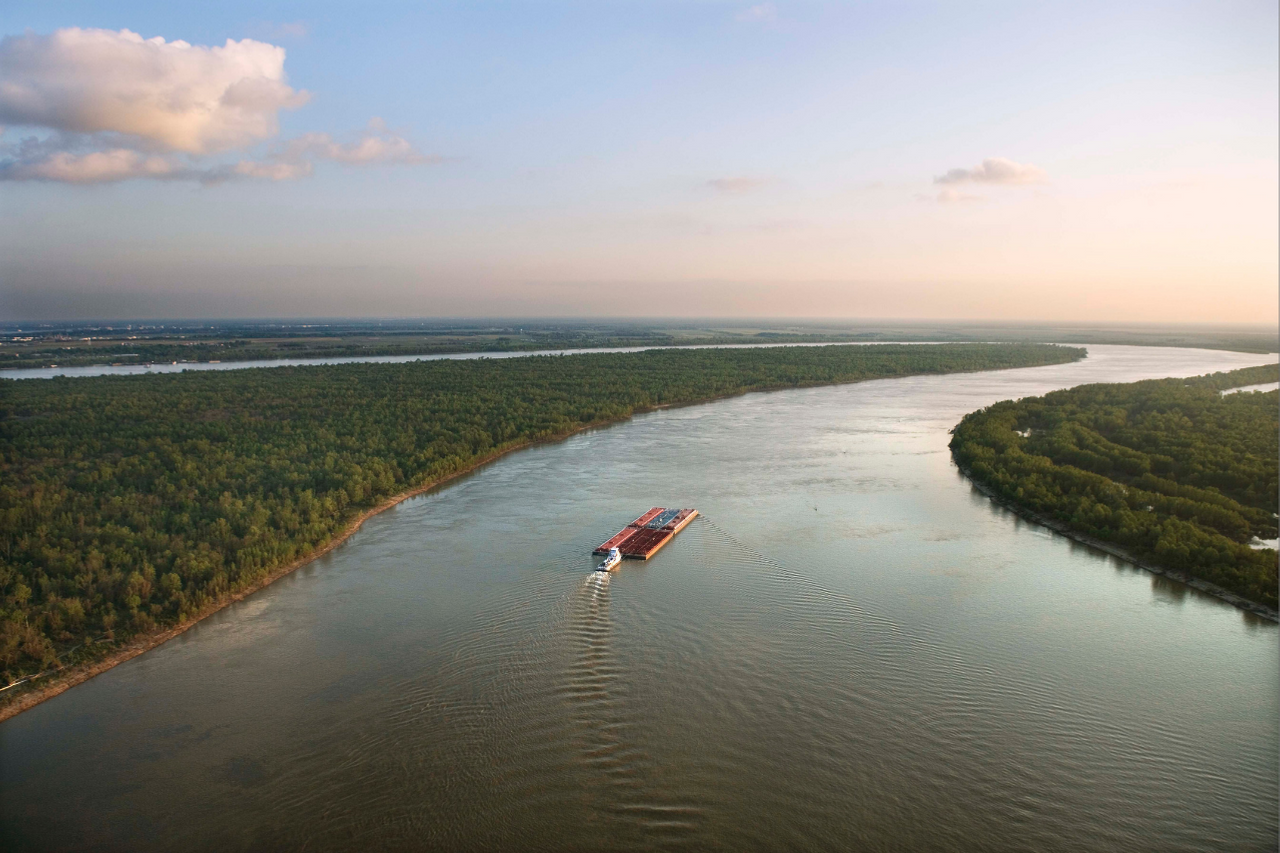
The development of steamboat technology in the 19th century revolutionized river travel and commerce, making the Mississippi an even more vital artery. Towns and cities like St. Louis, Memphis, and Vicksburg flourished as major river ports. The iconic images of grand steamboats navigating the muddy waters of the Mississippi are deeply embedded in American popular culture, symbolizing an era of expansion, opportunity, and romance.
Shaping American Identity: From Mark Twain to Music
The Mississippi River is more than just a conduit for trade; it’s a profound cultural symbol. Its allure has captivated writers, musicians, and artists for generations. Mark Twain, perhaps the most famous literary chronicler of the Mississippi, immortalized the river in his classic novels, most notably The Adventures of Huckleberry Finn and The Adventures of Tom Sawyer. Through the eyes of his characters, Twain captured the romance, the danger, and the everyday life along the “Father of Waters.” His vivid descriptions not only entertained but also offered a nuanced social commentary on America during his time.
The river’s influence is also deeply woven into the fabric of American music, particularly blues and jazz. The fertile delta region of Mississippi and Louisiana, fed by the river’s alluvial deposits, became the birthplace of these genres. Musicians drew inspiration from the rhythms of the river, the stories of the people who lived and worked along its banks, and the unique cultural blend that emerged in these vibrant communities. Cities like Memphis and New Orleans remain world-renowned centers for music, with the Mississippi River often serving as a backdrop or a thematic element in their artistic expressions.
The river also played a significant role in the Great Migration, as African Americans moved from the rural South to industrial cities in the North, many following the routes of the Mississippi River. This migration had a profound impact on American culture, spreading Southern traditions, including music and cuisine, to new regions.
Experiencing the Mississippi: Landmarks, Travel, and Lifestyle
Today, the Mississippi River continues to be a source of fascination and a destination for travelers seeking authentic American experiences. Its journey from its humble beginnings in Minnesota to its grand delta in Louisiana offers a diverse range of attractions, accommodations, and activities, appealing to a wide spectrum of lifestyles.
Landmarks and Natural Wonders
The Mississippi River is a landmark in itself, a ribbon of water that defines the landscape of a continent. Its journey is dotted with numerous points of interest that showcase its natural beauty and historical significance.
-
Lake Itasca State Park in Minnesota marks the official headwaters of the Mississippi, a serene and picturesque spot where visitors can walk across the nascent river. It’s a popular destination for those seeking to connect with the river’s origins.
-
Further south, cities like St. Louis are home to iconic landmarks such as the Gateway Arch, a towering monument symbolizing westward expansion, offering breathtaking views of the river and the surrounding city.
-
Along its course, visitors can explore charming river towns, each with its own unique history and character. Galena, Illinois, with its preserved 19th-century architecture, transports visitors back in time. Hannibal, Missouri, Twain’s boyhood home, offers a glimpse into the settings that inspired his beloved stories.
-
The Mississippi Delta region, with its rich musical heritage and unique cultural traditions, is a must-visit for music enthusiasts and those interested in American history.
Travel and Accommodation Along the River
The Mississippi River corridor offers a diverse range of travel experiences and accommodation options. Whether you’re planning a luxury getaway, a budget-friendly adventure, or a family vacation, there’s something for everyone.
-
Travel: Riverboat cruises are a quintessential Mississippi experience, offering a nostalgic journey through the heart of America. Companies like the American Queen Steamboat Company provide luxurious voyages that stop at historic ports, allowing passengers to immerse themselves in local culture and history. For those who prefer to explore on land, scenic drives along the Great River Road offer stunning vistas and access to charming towns. Exploring the river by kayak or canoe is also a popular option for adventurers seeking a more intimate connection with the waterway.
-
Accommodation: From grand historic hotels in cities like New Orleans and Memphis to cozy bed and breakfasts in small river towns, the accommodation options are as varied as the landscape itself. Luxury resorts offer unparalleled comfort and amenities, while charming apartments and villas provide a home-away-from-home feel for longer stays. Families might opt for hotels with kid-friendly amenities, while business travelers can find sophisticated suites and serviced apartments.
Lifestyle: Embracing the Mississippi Spirit
The lifestyle associated with the Mississippi River is one of rich history, vibrant culture, and a deep connection to the land and its waterways. It’s a lifestyle that embraces the soulful rhythms of blues music, the delicious flavors of Southern cuisine, and the spirit of adventure that comes with exploring this legendary river.
-
Local Culture and Food: Indulging in the local cuisine is an essential part of any trip along the Mississippi. From the Creole and Cajun flavors of Louisiana to the barbecue traditions of Memphis and the hearty Midwestern fare further north, the food scene is a reflection of the diverse cultural influences. Exploring local markets, trying regional specialties, and experiencing live music are all integral to embracing the Mississippi lifestyle.
-
Activities and Tips: Visitors can enjoy a wide array of activities, including fishing, birdwatching, visiting historical sites, exploring museums, and attending local festivals. Tips for a memorable trip include planning your itinerary in advance, especially during peak travel seasons, and being open to spontaneous discoveries. Engaging with the local communities, learning about their history, and respecting the natural environment will undoubtedly enhance the experience.
The Mississippi River, a name born from the indigenous understanding of its immense grandeur, continues to be a vital force in the American narrative. It’s a river that carries stories, dreams, and the very essence of a nation. Understanding why it’s called the Mississippi is to understand the deep roots of a land, its people, and the enduring power of its “Great River.”
LifeOutOfTheBox is a participant in the Amazon Services LLC Associates Program, an affiliate advertising program designed to provide a means for sites to earn advertising fees by advertising and linking to Amazon.com. Amazon, the Amazon logo, AmazonSupply, and the AmazonSupply logo are trademarks of Amazon.com, Inc. or its affiliates. As an Amazon Associate we earn affiliate commissions from qualifying purchases.