
Montana, often hailed as “Big Sky Country,” beckons travelers with its unparalleled natural beauty, from the majestic peaks of the Rocky Mountains to the vast, open plains. It’s a destination that promises adventure, tranquility, and a genuine connection with the great outdoors. For those who dream of not just visiting but investing in or operating a business within this remarkable state, understanding the legal framework is crucial. While the allure of Montana might be its sprawling landscapes and charming towns like Bozeman or Whitefish, setting up a business, specifically a Limited Liability Company (LLC), requires a structured approach. This guide will navigate you through the process of establishing an LLC in Montana, ensuring your entrepreneurial venture is built on a solid legal foundation, allowing you to fully embrace the Montana lifestyle, whether you’re planning luxury travel experiences or a more budget-conscious exploration.

Understanding the Benefits of an LLC in Montana
Before diving into the procedural steps, it’s essential to grasp why forming an LLC in Montana is a strategic choice for many entrepreneurs, especially those drawn to the state for its unique lifestyle and tourism potential. An LLC offers a hybrid structure, blending the pass-through taxation of a partnership or sole proprietorship with the limited liability protection of a corporation. This means that the personal assets of the owners are generally protected from business debts and lawsuits.
Limited Liability Protection
One of the primary advantages of an LLC is the shield it provides for your personal assets. If your business incurs debts or faces legal action, your personal savings, home, and other assets are typically safe. This separation is vital, particularly for businesses operating in sectors with inherent risks, such as hospitality or adventure tourism, which are prevalent in Montana. Imagine owning a boutique hotel near Glacier National Park or offering guided fly-fishing tours on the Madison River; the LLC structure safeguards your personal wealth from potential liabilities associated with these ventures.
Tax Flexibility
Montana LLCs benefit from pass-through taxation by default. This means the LLC itself doesn’t pay federal income taxes. Instead, the profits and losses are passed through to the owners and reported on their individual tax returns. This avoids the “double taxation” that can occur with C-corporations, where profits are taxed at the corporate level and again when distributed to shareholders. Owners of a Montana LLC can also elect to be taxed as an S-corporation or a C-corporation, offering flexibility to optimize tax strategies based on their specific financial situation and business growth. This flexibility is particularly advantageous for businesses catering to tourists, where income streams might fluctuate seasonally.
Operational Simplicity
Compared to corporations, LLCs generally have simpler administrative and compliance requirements. There are fewer formalities, such as mandatory annual board meetings or complex record-keeping. This simplicity allows entrepreneurs to focus more on their business operations, customer experiences, and exploring the diverse attractions Montana has to offer, from the historic streets of Virginia City to the vibrant arts scene in Missoula.
Montana’s Favorable Business Environment
Montana is known for its business-friendly approach and offers certain advantages for LLC formation, particularly concerning privacy and taxes. While Montana has a sales tax, it doesn’t have a state income tax for individuals or corporations, making it an attractive location for businesses and their owners. This can significantly impact the profitability of a venture, whether it’s a burgeoning resort development or a unique lodging experience.
Steps to Create an LLC in Montana
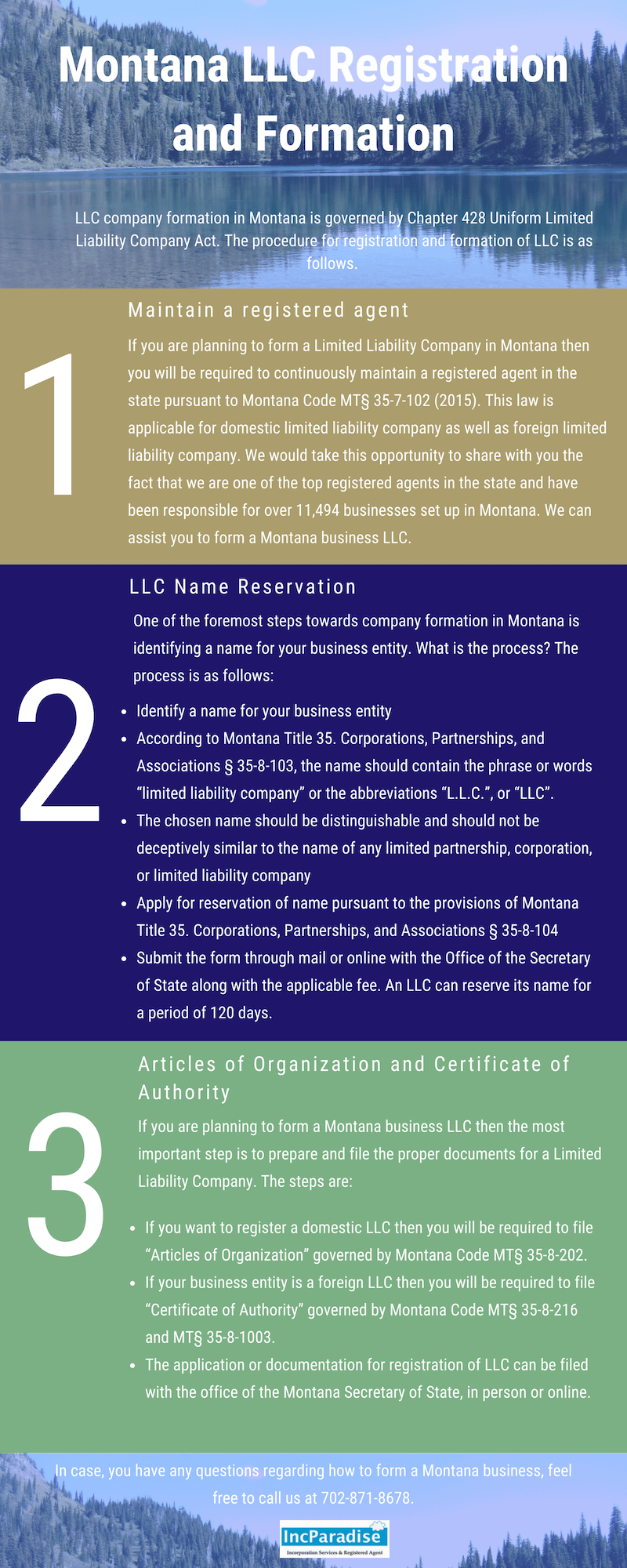
Forming an LLC in Montana involves a series of distinct steps. While the process is generally straightforward, meticulous attention to detail is key to ensuring compliance and a smooth setup.
1. Choose a Business Name
Your LLC’s name is its first public identity. It must be unique and distinguishable from other registered business names in Montana. The name must also contain a designator indicating it’s an LLC, such as “Limited Liability Company,” “LLC,” or “L.L.C.” It’s advisable to conduct a thorough name search with the Montana Secretary of State to ensure your chosen name is available. This initial step is crucial for branding and avoiding potential conflicts as you develop your business, whether it’s a cozy bed and breakfast in the Flathead Valley or a guided tour service exploring the Lewis and Clark National Historic Trail.
2. Appoint a Registered Agent
Every LLC in Montana must designate a registered agent. This individual or business entity is responsible for receiving official legal and tax documents on behalf of the LLC. The registered agent must have a physical street address in Montana (not a P.O. Box) and be available during normal business hours. You can act as your own registered agent if you meet these requirements, or you can hire a professional registered agent service. This role is critical for maintaining legal compliance, especially if your business attracts tourists and operates from various locations or if you are managing properties remotely.
3. File the Articles of Organization
The core document for establishing an LLC is the Articles of Organization. This document is filed with the Montana Secretary of State and officially creates your LLC. The Articles of Organization typically include:
- The name of the LLC: As chosen and verified in step one.
- The name and address of the registered agent: As appointed in step two.
- The principal office address: This is the main business address.
- The name and address of the organizer(s): The person or entity filing the document.
There is a filing fee associated with submitting the Articles of Organization. This fee can vary, so it’s best to check the current fee schedule on the Montana Secretary of State’s website. Once approved, your LLC legally exists in Montana.
4. Create an Operating Agreement
While not legally required by the state of Montana, an Operating Agreement is a crucial internal document for an LLC. It outlines the ownership structure, member responsibilities, profit and loss distribution, and operating procedures of the LLC. For single-member LLCs, it helps establish the separation between business and personal affairs. For multi-member LLCs, it’s indispensable for defining roles, decision-making processes, and dispute resolution. A well-drafted Operating Agreement can prevent future misunderstandings and disputes among members, ensuring smooth operations whether your business is managing vacation rentals in Big Sky or planning a luxury lodge experience in the Absaroka-Beartooth Wilderness.
5. Obtain an EIN (Employer Identification Number)
If your LLC will have employees, operate as a corporation for tax purposes, or file excise taxes, you will need an Employer Identification Number (EIN) from the Internal Revenue Service (IRS). This number is like a Social Security number for your business and is used for tax filing and identification purposes. You can apply for an EIN for free on the IRS website. Even if not strictly required, obtaining an EIN can be beneficial for opening a business bank account and establishing your business’s financial identity, which is vital for any venture, from a small souvenir shop in Helena to a larger hospitality group.
Ongoing Compliance and Business Operations
Once your LLC is formed, there are ongoing responsibilities to maintain its legal standing and ensure its continued success, especially within the dynamic tourism and lifestyle sectors of Montana.
Annual Reports and Fees
Montana requires LLCs to file an annual report and pay an annual fee to the Secretary of State. This report provides an update on the LLC’s information, such as its registered agent and principal office address. Failing to file the annual report and pay the associated fees can lead to the dissolution of your LLC. Keeping track of these deadlines is essential for maintaining good standing.
Business Licenses and Permits
Depending on the nature of your business and its location within Montana, you may need to obtain specific business licenses and permits at the federal, state, or local level. For example, a hospitality business might require health permits, liquor licenses, or tourism-specific operating permits. Researching the requirements for your particular industry and geographic area is a critical step in operating legally and efficiently, ensuring you can offer services like guided tours of Yellowstone National Park or manage accommodations without interruption.
Maintaining Records
While LLCs have less stringent record-keeping requirements than corporations, it’s still important to maintain accurate financial records, including income statements, balance sheets, and bank statements. This is crucial for tax purposes, for making informed business decisions, and for demonstrating the separation between personal and business finances, which reinforces the limited liability protection.
Adapting to the Montana Lifestyle
The beauty of Montana lies in its ability to support a diverse range of lifestyles and businesses. Whether you envision a rustic ranch stay, a luxury resort, an adventure outfitter, or a unique culinary experience, an LLC provides the legal framework to make that vision a reality. By understanding and correctly implementing the steps to create an LLC in Montana, you can confidently embark on your entrepreneurial journey, ready to share the wonders of “Big Sky Country” with others while enjoying the benefits of responsible business ownership. This foundational step allows you to focus on creating memorable experiences for your guests, whether they are exploring the historic charm of Butte or the serene landscapes surrounding Lake McDonald.
LifeOutOfTheBox is a participant in the Amazon Services LLC Associates Program, an affiliate advertising program designed to provide a means for sites to earn advertising fees by advertising and linking to Amazon.com. Amazon, the Amazon logo, AmazonSupply, and the AmazonSupply logo are trademarks of Amazon.com, Inc. or its affiliates. As an Amazon Associate we earn affiliate commissions from qualifying purchases.