
When planning a trip to the vibrant city of Albuquerque, New Mexico, understanding the local weather is a crucial step in ensuring a comfortable and enjoyable experience. The “Land of Enchantment” boasts a unique high-desert climate, characterized by its sunny days, moderate temperatures, and distinct seasons. Whether you’re drawn by the allure of its rich cultural heritage, the promise of outdoor adventures, or the tantalizing flavors of its distinctive cuisine, knowing what to expect from the skies above will allow you to pack wisely and make the most of your visit.
Albuquerque’s geographical location plays a significant role in shaping its climate. Nestled in the Rio Grande Valley at an elevation of over 5,000 feet, the city experiences a semi-arid climate with four very distinct seasons. This elevation moderates temperatures, leading to less extreme heat in the summer and colder but generally manageable winters compared to other desert locales. The city also benefits from an abundance of sunshine throughout the year, with an average of 278 sunny days annually, making it an attractive destination regardless of the season.
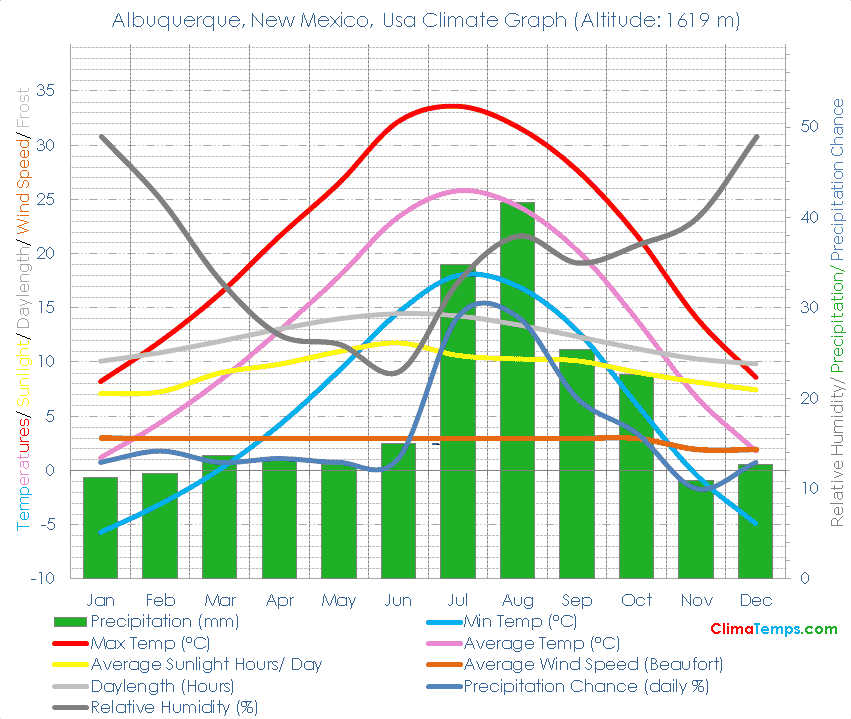
Understanding Albuquerque’s Seasonal Climate Patterns
The key to a successful trip to Albuquerque lies in appreciating the nuances of its seasonal weather. Each period offers a different facet of the city’s charm, from the blooming desert flora in spring to the crisp, clear skies of autumn. By understanding these patterns, travelers can better tailor their activities and attire to fully immerse themselves in the Albuquerque experience.
Spring: A Gentle Awakening
Spring in Albuquerque, typically spanning from March to May, brings a welcome transition from the cooler winter months. The air begins to warm, and the desert landscape awakens with vibrant colors. Average high temperatures gradually climb from the mid-50s Fahrenheit in March to the mid-70s by May. While evenings can still be cool, requiring a light jacket, daytime conditions are generally pleasant for exploring the city’s numerous attractions.
However, spring can also bring unpredictable weather. Dust storms, known locally as “haboobs,” are not uncommon, especially in the early spring months, as the dry desert floor becomes agitated by winds. Rainfall is typically light during this period, but sudden afternoon showers are possible. It’s advisable to pack layers, including a light waterproof jacket, and to stay informed about weather alerts, especially if planning outdoor activities like hiking in the nearby Sandia Mountains. The burgeoning beauty of the New Mexico Botanic Garden is a particular delight during this season.
Summer: Warm Days and Thunderstorms
Summer in Albuquerque, from June to August, is characterized by warm to hot temperatures and the arrival of the monsoon season. July and August are typically the warmest months, with average high temperatures in the high 80s and low 90s Fahrenheit. While the heat can be intense, the high elevation often provides some relief, and the evenings cool down considerably, making for comfortable nights.
The hallmark of an Albuquerque summer is the afternoon thunderstorm. Fueled by moisture moving north from the Gulf of California, these storms can bring dramatic lightning displays, heavy downpours, and gusty winds. While they provide a much-needed cooling effect and replenish the desert’s water sources, they can also cause flash floods in low-lying areas. Travelers should be prepared for these occasional disruptions and plan their activities accordingly, perhaps opting for indoor attractions like the Indian Pueblo Cultural Center or the National Museum of Nuclear Science & History during periods of inclement weather. Despite the heat and potential for storms, summer is a popular time for outdoor festivals and events, such as the world-renowned Albuquerque International Balloon Fiesta (though this actually takes place in the fall).
Autumn: The Golden Season
Autumn in Albuquerque, from September to November, is often considered the most idyllic season. The intense heat of summer subsides, replaced by crisp, clear air and comfortably mild temperatures. September can still feel like summer, with highs in the 80s, but by November, average highs hover in the 50s and 60s Fahrenheit. The skies are typically a brilliant blue, and the changing foliage in the surrounding hills adds a picturesque touch to the landscape.
This is a prime time for outdoor exploration. Hiking, biking, and visiting landmarks like Old Town Albuquerque are particularly enjoyable. The Albuquerque International Balloon Fiesta, held in early October, is a spectacular event that showcases the city’s beautiful autumn skies, with hundreds of colorful balloons taking to the air. The pleasant weather makes it an ideal time to enjoy outdoor dining and explore the city’s vibrant arts scene. Pack layers, as mornings and evenings can be chilly, but you’ll likely spend most of your days in light clothing.
Winter: Crisp Air and Occasional Snow
Winter in Albuquerque, from December to February, is generally mild and sunny, though cold snaps do occur. Average high temperatures range from the high 40s to low 50s Fahrenheit, with nighttime lows often dipping below freezing. Snowfall is infrequent and usually light, often melting within a day or two. The snow that does fall often adds a beautiful dusting to the Sandia Mountains, creating a stunning contrast with the desert landscape.

Despite the cooler temperatures, winter offers its own unique charm. The skies remain clear and bright, offering excellent visibility for stargazing. Activities like exploring Petroglyph National Monument are still feasible, provided you dress warmly. The holiday season brings a festive atmosphere to the city, with events and decorations that add a magical touch. Warm clothing, including a heavy coat, hat, and gloves, is essential for navigating the colder months, especially if you plan to venture into the higher elevations of the Sandia Mountains. Consider a stay at a cozy resort or hotel that offers indoor amenities to complement your winter exploration.
Packing for Albuquerque’s Diverse Climate
Given the significant temperature fluctuations between day and night and the distinct seasonal variations, packing for Albuquerque requires a strategic approach. The key is to embrace layering, allowing you to adapt to changing conditions throughout the day and across the seasons.
Essential Clothing and Gear
Regardless of the season, comfortable walking shoes are a must for exploring Albuquerque’s many attractions, from the historic streets of Old Town to the scenic trails around the Petroglyph National Monument. Sunscreen, sunglasses, and a hat are indispensable year-round due to the high altitude and intense sunshine.
- Spring & Autumn: Pack a mix of lightweight layers. T-shirts, long-sleeved shirts, a sweater or fleece jacket, and a medium-weight jacket or windbreaker should suffice. A light rain jacket can be useful for unexpected showers.
- Summer: Lightweight, breathable clothing is essential. Cotton or moisture-wicking fabrics are ideal. Bring shorts, T-shirts, and a light jacket for cooler evenings or air-conditioned interiors. An umbrella might be handy for those afternoon thunderstorms.
- Winter: Warm layers are paramount. Think thermal base layers, sweaters, fleece jackets, and a heavy, insulated coat. Include a warm hat, gloves, and a scarf. Waterproof or water-resistant outerwear is advisable in case of any winter precipitation.
Considerations for Specific Activities
If your itinerary includes outdoor adventures, such as hiking in the Sandia Mountains or exploring the Rio Grande Valley State Park, ensure you have appropriate gear. This might include sturdy hiking boots, moisture-wicking socks, and possibly a backpack for carrying water and snacks. For those interested in experiencing the hot air balloon rides often associated with the Albuquerque International Balloon Fiesta, be prepared for early morning starts and potentially chilly conditions before the sun fully warms the air. If you’re considering a longer stay, looking into apartment or villa rentals might offer more space and amenities, such as laundry facilities, which can be incredibly convenient for managing clothing throughout your trip. Regardless of your accommodation choice, from boutique hotels in Old Town to modern resorts, being prepared for the weather will enhance your overall experience in this captivating New Mexico city.
Leveraging Weather Information for a Seamless Trip
Proactive weather monitoring is an invaluable tool for any traveler heading to Albuquerque. By staying informed about current conditions and forecasts, you can make informed decisions that optimize your itinerary and ensure a comfortable journey.
Utilizing Real-Time Forecasts and Alerts
Before and during your trip, make it a habit to check reliable weather sources for Albuquerque. This includes official meteorological websites, popular weather apps, and local news channels. These resources will provide detailed information on temperature highs and lows, precipitation chances, wind speeds, and potential severe weather events.
Many weather services offer real-time alerts for significant weather changes. Signing up for these notifications can provide early warnings of approaching dust storms in the spring or thunderstorms in the summer, allowing you to adjust your plans accordingly. For instance, if a severe thunderstorm is predicted for the afternoon, you might prioritize an outdoor activity in the morning and schedule a visit to an indoor attraction like the ABQ BioPark for later in the day.

Adapting Your Itinerary Based on Conditions
The beauty of Albuquerque lies in its diverse range of activities, many of which are weather-dependent. Understanding the forecast empowers you to be flexible and adaptable.
- Sunny Days: Ideal for exploring Old Town Albuquerque, visiting Indian Pueblo Cultural Center, or taking a scenic drive along the Turquoise Trail Scenic Byway. A hike in the Sandia Mountains or a visit to Petroglyph National Monument would also be perfect.
- Warm but Breezy Days: Excellent for activities like hot air ballooning (especially during the Albuquerque International Balloon Fiesta), cycling along the Rio Grande or exploring the open spaces around the Elena Gallegos Open Space.
- Rainy or Stormy Days: Perfect for delving into Albuquerque’s rich history and culture at the National Museum of Nuclear Science & History, exploring the exhibits at the New Mexico Museum of Natural History and Science, or enjoying a meal at one of the city’s many renowned restaurants, perhaps trying some authentic New Mexican cuisine. A visit to the KiMo Theatre for a show or movie can also be a great indoor option.
- Cold but Clear Days: Suitable for visiting the ABQ BioPark (many exhibits are indoors or have heated areas) or enjoying the crisp air on a shorter walk or drive to admire the winter landscape.
By actively engaging with weather information, you transform potential challenges into opportunities, ensuring that your visit to Albuquerque is filled with memorable experiences, no matter what the sky holds. Whether you’re seeking luxury travel experiences, budget-friendly adventures, family trips, or business stays, a well-prepared traveler is always the most satisfied. The city’s welcoming spirit, combined with its captivating natural beauty and cultural depth, makes it a destination that truly shines, regardless of the atmospheric conditions.
LifeOutOfTheBox is a participant in the Amazon Services LLC Associates Program, an affiliate advertising program designed to provide a means for sites to earn advertising fees by advertising and linking to Amazon.com. Amazon, the Amazon logo, AmazonSupply, and the AmazonSupply logo are trademarks of Amazon.com, Inc. or its affiliates. As an Amazon Associate we earn affiliate commissions from qualifying purchases.