
Navigating the complexities of traffic violations and their impact on your driving record can be a source of considerable stress, particularly when you’re planning trips, booking accommodations, or simply trying to maintain a smooth lifestyle. While the primary focus of this article is to demystify how long points remain on a New York State driver’s license, it’s important to contextualize this information within the broader sphere of travel, lifestyle, and the experiences that make life rich and fulfilling. Whether you’re dreaming of a luxurious resort in the Caribbean, exploring the historical landmarks of Europe, or finding the perfect apartment for a long-term stay, understanding the implications of traffic violations can help ensure your journeys are as seamless as your travel plans.
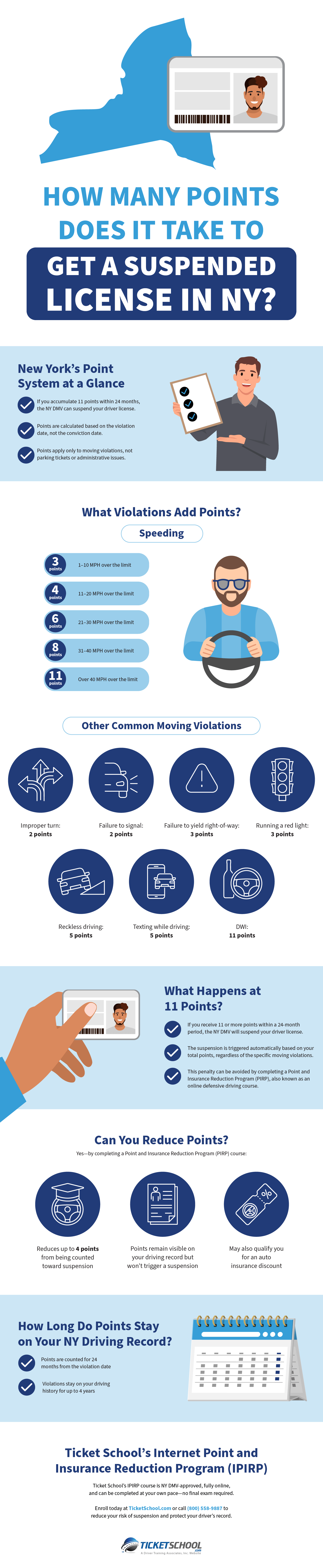
In New York, traffic violations, ranging from speeding tickets to more serious offenses like running a red light or following too closely, result in the accumulation of “points” on your driving record. These points are a punitive measure designed by the New York State Department of Motor Vehicles (DMV) to track and penalize habitual traffic offenders. The duration for which these points remain on your record is a crucial piece of information for any New York driver, as it can influence auto insurance premiums, the potential for license suspension, and even your eligibility for certain travel opportunities that might require a clean driving record.
The good news is that points on your New York license do not stay there indefinitely. The state has a defined system for how long these points are active. Generally, points remain on your driving record for a period of eighteen months from the date of the violation. This eighteen-month period is critical because it dictates when the points will eventually be removed. It’s important to note that the count of eighteen months is not from the date you are convicted or pay the fine, but rather from the date the offense occurred. This distinction is vital for accurately tracking the lifespan of any accumulated points.
Understanding the Point System and Its Implications
The New York State DMV assigns a specific number of points to each traffic violation. For instance, a common violation like speeding 21-30 miles per hour over the limit will result in six points. A conviction for texting while driving can also lead to six points. Less severe infractions, such as a faulty taillight, might carry fewer points, or in some cases, may not accrue points at all if they are considered non-moving violations that can be fixed with a repair.
The accumulation of points can have significant consequences. If you accumulate 11 or more points on your license within an 18-month period, you face a mandatory license suspension. The duration of this suspension can vary depending on the exact number of points, but it is a serious penalty that can disrupt your daily life, impacting your commute to work, your ability to run errands, and, of course, your travel plans. Beyond the threat of suspension, insurance companies in New York often use your driving record, including the points you’ve accumulated, to determine your insurance premiums. A driving record with recent points will likely lead to higher insurance costs, a financial strain that can affect your budget for leisure activities and travel.
The Eighteen-Month Clock: When Do Points Expire?
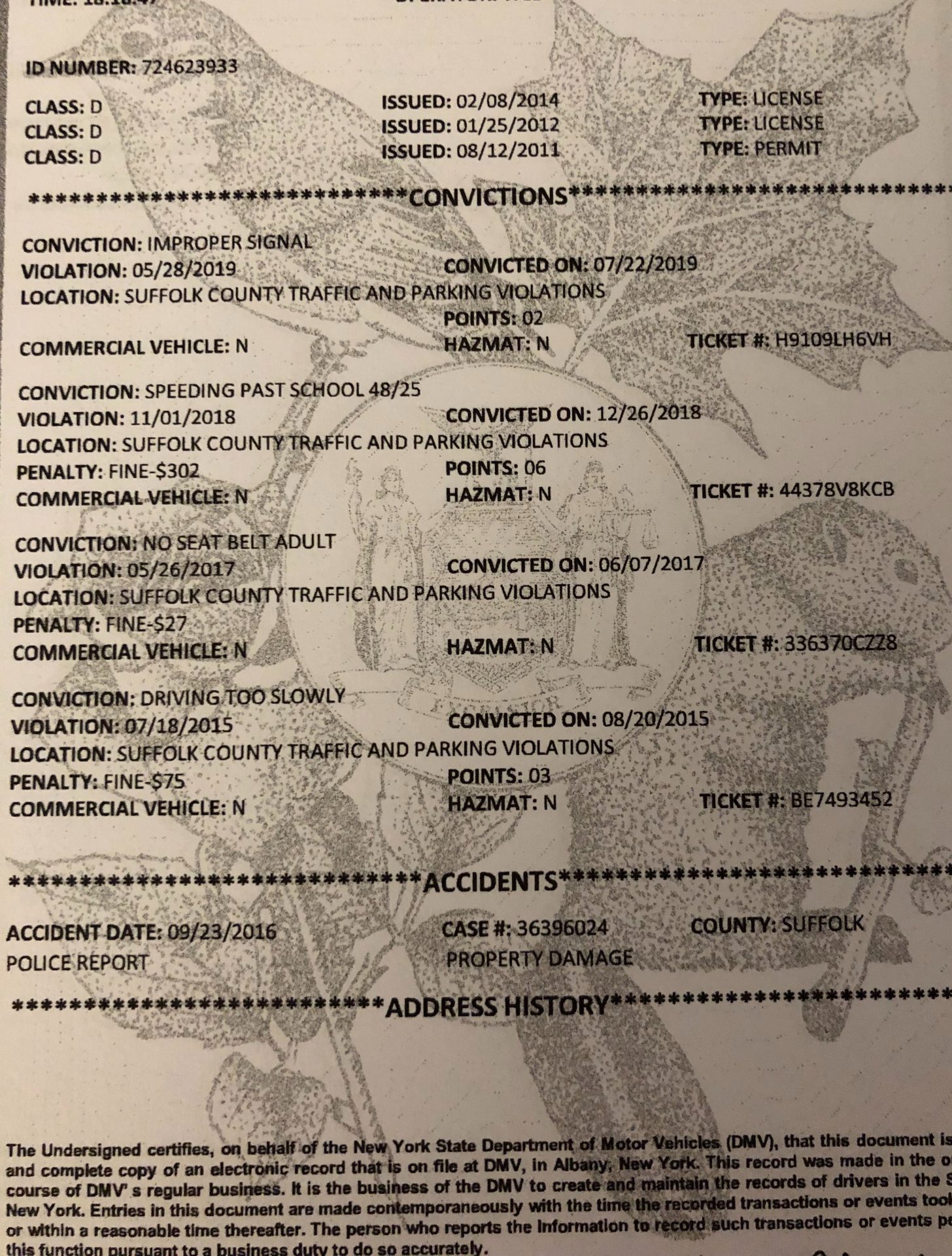
As previously mentioned, the crucial timeframe for points on a New York driver’s license is 18 months. This period begins on the date of the violation, not the date of conviction or payment. Once this 18-month period elapses from the date of the offense, the points associated with that specific violation are officially removed from your driving record. However, it is essential to understand that the conviction for the violation itself remains on your record for a longer period, typically four years, even after the points have expired. This distinction is important because while expired points won’t contribute to a license suspension due to point accumulation, older convictions can still be a factor for insurance companies when assessing risk.
Let’s consider an example. If you received a speeding ticket for an offense that occurred on January 1, 2023, and that ticket resulted in three points, those three points will be officially removed from your driving record on July 1, 2024 (18 months after January 1, 2023). However, the record of that speeding conviction will still be visible on your driving abstract for four years from the conviction date. This means that while you won’t be at risk of immediate suspension due to that specific ticket’s points after July 1, 2024, an insurance underwriter might still consider that past conviction when evaluating your policy.
Strategies for Mitigating Point Accumulation and Its Impact
Given the potential ramifications of accumulating points, it’s wise for New York drivers to adopt strategies to avoid violations and, if a ticket is unavoidable, to mitigate its impact. The most straightforward way to keep your record clean is to drive responsibly. Adhering to speed limits, obeying traffic signals, and maintaining safe driving practices are paramount. This not only prevents points from accumulating but also contributes to safer roads for everyone, whether you’re commuting in New York City or embarking on a scenic drive upstate.
If you do receive a traffic ticket, you have several options. You can plead guilty and pay the fine, which will result in the points being added to your record. Alternatively, you can plead not guilty and fight the ticket in court. This can be a complex process and may require hiring a traffic attorney. An attorney may be able to negotiate a plea bargain to a lesser offense that carries fewer or no points, or they may be able to get the ticket dismissed entirely if there are procedural errors or insufficient evidence.
Another avenue for reducing points, and consequently insurance premiums, is to complete a New York State-approved Defensive Driving Course. Successfully completing such a course can result in a reduction of up to four points from your driving record. Crucially, this point reduction can only be applied once every five years. This offers a proactive way to manage your driving record and can be a valuable tool, especially if you’ve accumulated points through a series of minor infractions. Enrolling in a defensive driving course can also sometimes lead to a discount on your auto insurance premiums, further offsetting the costs associated with traffic violations. Many such courses are now available online, allowing you to complete them conveniently from home, perhaps during a downtime in your travel itinerary or while planning your next getaway.

The Long-Term Perspective: Beyond Point Expiration
While the 18-month mark signifies the removal of points from your license for the purpose of suspension calculations, it’s important to have a long-term perspective on your driving record. As mentioned, convictions can remain on your record for up to four years. This longer record can still be viewed by insurance companies and potential employers who may conduct background checks. Therefore, maintaining a clean driving record is a continuous effort, not just a short-term concern.
For those who frequently travel, whether for business or leisure, a clean driving record can offer peace of mind. Imagine planning a dream vacation to a place like Walt Disney World or booking a stay at a luxury resort in Miami, only to encounter unexpected hurdles due to a suspended license or significantly increased insurance costs stemming from a poor driving history. By being mindful of traffic laws and proactively managing your driving record, you not only ensure your ability to travel freely but also contribute to a safer and more predictable driving environment for yourself and others. This proactive approach aligns perfectly with the spirit of enjoying life and making the most of every experience, from the mundane to the extraordinary. Whether you’re comparing different hotel options for a family trip to Orlando or seeking unique local culture in a new city, the freedom to drive when and where you need can significantly enhance your travel experiences. Keeping your license clean is a foundational element of that freedom.
LifeOutOfTheBox is a participant in the Amazon Services LLC Associates Program, an affiliate advertising program designed to provide a means for sites to earn advertising fees by advertising and linking to Amazon.com. Amazon, the Amazon logo, AmazonSupply, and the AmazonSupply logo are trademarks of Amazon.com, Inc. or its affiliates. As an Amazon Associate we earn affiliate commissions from qualifying purchases.