
Yes, Houston, Texas is indeed in the Central Time Zone (CT). This fact, while seemingly straightforward, plays a crucial role in daily life, business operations, and travel planning for anyone visiting or residing in this vibrant Texan metropolis. Understanding Houston’s time zone alignment is essential for coordinating flights, scheduling meetings, enjoying attractions, and simply navigating the rhythm of this sprawling city. As a major global hub for energy, healthcare, and aerospace, Houston’s adherence to Central Time impacts everything from international business dealings to the timing of a casual dinner out. For travelers, acknowledging and preparing for this time zone is a foundational step in ensuring a smooth and enjoyable experience, whether you’re embarking on a luxurious getaway, a budget-friendly adventure, or a family trip exploring the city’s diverse offerings.
Understanding Time Zones: The Heart of American Time
Time zones were established to standardize timekeeping across different longitudes, primarily to facilitate railway travel and improve communication across vast geographic areas. In the United States, there are nine standard time zones, with four primarily covering the contiguous states: Eastern, Central, Mountain, and Pacific. Central Time sits squarely in the middle, influencing a significant portion of the country’s heartland.
What is Central Time (CT)?
The Central Time Zone is observed by many states in the central part of the United States, as well as parts of Canada, Mexico, and Central America. Standard Central Time (CST) is six hours behind Coordinated Universal Time (UTC-6). This means that when it’s noon UTC, it’s 6:00 AM in areas observing CST.
However, the concept of Daylight Saving Time (DST) comes into play for much of the year. During DST, which typically runs from early March to early November, clocks are moved forward by one hour. For the Central Time Zone, this shifts it to Central Daylight Time (CDT), which is five hours behind Coordinated Universal Time (UTC-5). This adjustment is designed to make better use of daylight, providing more daylight hours in the evening during the warmer months. It’s crucial for travelers and residents alike to be aware of whether Houston is observing CST or CDT to avoid any confusion with schedules and appointments.
Beyond Texas, other notable U.S. states and major cities that fall within the Central Time Zone include Illinois (Chicago), Louisiana (New Orleans), Missouri (St. Louis, Kansas City), and parts of Florida and Alabama, among others. This widespread adoption of CT makes it a critical reference point for travel and business across a significant swathe of the United States.
Houston’s Place on the Time Map
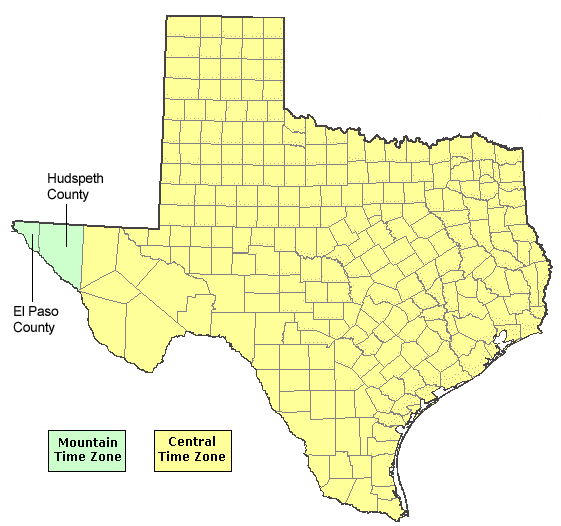
Houston’s geographical location within the state of Texas firmly places it within the Central Time Zone. Texas is one of the largest states geographically, but nearly all of it, including its major cities like Dallas, Austin, and San Antonio, consistently observes Central Time. Only a small western sliver of Texas, specifically El Paso and Hudspeth County, observes Mountain Time.
For Houston, this means it operates on CST during the winter months and switches to CDT when Daylight Saving Time is in effect. There are no special exemptions or unique time zone observations for Houston; it aligns perfectly with the standard Central Time practices of the region. This consistency simplifies planning but still requires awareness, especially for those accustomed to other time zones. The city’s adherence to Central Time is a constant, ensuring predictable scheduling across its vast urban landscape.
Navigating Houston’s Central Time as a Traveler
For any traveler, whether on a leisure trip or a business stay, understanding the local time zone is paramount. Houston’s adherence to Central Time has direct implications for arrival and departure logistics, as well as the timing of daily activities and attraction visits.
Planning Your Arrival and Departure
When flying into Houston, particularly from different time zones, the first challenge can be adjusting your internal clock. Houston is served by two major airports: George Bush Intercontinental Airport (IAH) and William P. Hobby Airport (HOU). All flight schedules for these airports are published in Central Time, making it crucial to account for the time difference from your origin city. For instance, travelers from the East Coast will typically gain an hour upon arrival, while those from the West Coast will lose two hours, which can contribute to jet lag.
To mitigate the effects of jet lag and ensure a smooth transition, it’s advisable to adjust your sleep schedule gradually before your trip. Hydration, light exercise, and exposure to natural light upon arrival can also aid in adaptation. Regarding hotel check-in/check-out times, these are always based on local Houston time. Most hotels have a standard check-in time around 3:00 PM or 4:00 PM and check-out by 11:00 AM or noon. Being mindful of these timings in relation to your flight schedule can prevent unnecessary waiting or late fees. Many hotels in Houston, from luxurious resorts to budget-friendly suites, offer amenities and services designed to help travelers settle in comfortably.

Daily Activities and Attraction Timings
Once you’ve settled into Houston’s rhythm, your daily activities will naturally conform to Central Time. From exploring world-class museums to enjoying the city’s renowned culinary scene, all opening and closing hours will be in CT or CDT.
For example, when planning a visit to iconic landmarks such as Space Center Houston, the Houston Museum of Natural Science, or the Houston Zoo, it’s crucial to consult their official websites for the most current operating hours. These hours can vary by season, day of the week, and even during holidays, and will always be listed in Central Time. Similarly, reservations at restaurants, tickets for shows in the Theater District, or simply planning your shopping hours at the Galleria must be done with the local time in mind.
Consider a traveler from New York (Eastern Time). If a Houston museum opens at 9:00 AM CT, that would be 10:00 AM ET. Miscalculating this can lead to arriving too early or missing out on valuable sightseeing time. For those interested in local culture and food tours, knowing the precise local time ensures you don’t miss any scheduled events or culinary experiences that are unique to Houston. Integrating into the local time zone seamlessly is a key part of any successful tourism experience.
Lifestyle and Business in Houston’s Central Time
Houston’s strategic position within the Central Time Zone has significant implications for its robust economy and the daily lives of its residents. The time zone shapes how businesses operate, how events are scheduled, and how the city connects with the rest of the world.
Business Operations and Connectivity
As one of the largest cities in the United States and a global economic powerhouse, Houston’s business landscape is incredibly diverse. It’s a leading center for the energy sector, a hub for healthcare and medical innovation (with the Texas Medical Center being the largest in the world), and a significant player in aerospace. Operating within Central Time provides a convenient bridge for businesses needing to coordinate with both the East Coast (one hour ahead) and the West Coast (two hours behind) of the United States.
For companies with international partners, especially those in Europe or Asia, the time difference requires careful planning of meetings and communications. For instance, a 9:00 AM meeting in Houston would be 10:00 AM in New York City and 7:00 AM in Los Angeles, allowing for substantial overlap in the typical workday. However, a similar meeting with London (six hours ahead of CST and five hours ahead of CDT) might require earlier mornings or later evenings for one party. This dynamic is a constant consideration for professionals engaged in business travel or managing global teams from Houston.

From the perspective of accommodation, many Houston hotels cater specifically to business travelers, offering amenities like 24-hour business centers, high-speed internet, and flexible check-in/check-out options to accommodate varying schedules and time zone adjustments. Understanding the local time is crucial for booking conference rooms, attending industry events, and even just scheduling calls with colleagues.
Local Life and Events
The rhythm of daily life in Houston is, naturally, dictated by Central Time. Most businesses open around 8:00 AM or 9:00 AM and close by 5:00 PM or 6:00 PM. Dining hours typically see lunch service from noon to 2:00 PM and dinner from 5:00 PM onwards, with popular restaurants often bustling well into the evening.
Local events and entertainment schedules are also set in CT. This includes everything from concerts at the Toyota Center to theater performances in the Theater District, and especially sports games. Houston is home to several major professional sports teams, including the Houston Rockets (NBA), Houston Astros (MLB), and Houston Texans (NFL). Kick-off or tip-off times are always given in Central Time. For fans traveling to catch a game, knowing the precise local time is non-negotiable.
Festivals, cultural celebrations, and community gatherings throughout the year also adhere to Houston’s time zone. Whether you’re planning to experience the annual Houston Livestock Show and Rodeo or explore the city’s vibrant nightlife in areas like Midtown or Washington Avenue, all schedules are synchronized with Central Time. This consistent timekeeping fosters a predictable and orderly urban environment, allowing both residents and visitors to seamlessly participate in all the city has to offer.
Maximizing Your Houston Experience Across Time Zones
For anyone planning a visit to Houston, particularly those coming from distant time zones, a few practical tips can make all the difference in ensuring a smooth and enjoyable travel experience. The goal is to minimize disruption and maximize your time exploring the city’s diverse attractions.
Practical Tips for Travelers
- Use a reliable time zone converter: Before and during your trip, utilize smartphone apps or online tools that automatically convert times between your home location and Houston. This is especially helpful for scheduling calls back home or confirming remote work obligations.
- Adjust your internal clock gradually: If possible, start shifting your sleep schedule by an hour or so each day in the days leading up to your departure. This pre-adjustment can significantly lessen the impact of jet lag.
- Prioritize rest upon arrival: After your flight, try to expose yourself to natural light during Houston’s daytime hours and avoid heavy meals or excessive alcohol. A comfortable night’s sleep in a well-chosen accommodation can do wonders.
- Confirm all bookings in local time: Double-check flight times, hotel check-in procedures, restaurant reservations, and tour start times, always confirming they are set for Central Time.
- Choose the right accommodation: Houston offers an array of hotels and accommodations to suit every lifestyle and budget. For those seeking luxury travel experiences, properties like The Post Oak Hotel at Uptown Houston or Hotel ZaZa Museum District offer opulent amenities and exceptional service. If you’re looking for budget travel options, there are numerous comfortable and affordable hotels, apartments, and suites across the city. Families might opt for resorts with extensive facilities, while business stays might prioritize locations near the Downtown business district or the Energy Corridor. For long-term stays, serviced apartments or villas offer a home-away-from-home experience, providing convenience and comfort.
Beyond the Clock: Enjoying Houston
While understanding Houston’s time zone is a practical necessity, it’s just the backdrop for an incredible journey. The city is a vibrant tapestry of experiences, offering something for every type of traveler. Explore the cultural richness of the Museum District, home to 19 world-class institutions. Indulge in retail therapy at the upscale Galleria. Relax in the urban green spaces like Discovery Green or Hermann Park, which also house the Houston Zoo and the Houston Museum of Natural Science.
The culinary scene in Houston is famously diverse, ranging from authentic Tex-Mex and BBQ to international gourmet dining. Don’t miss the opportunity to join a food tour to sample the best of what this gastronomic capital has to offer. Beyond the food, engage with Houston’s dynamic cultural experiences, from live music venues to art galleries and performing arts centers. Embrace the city’s friendly atmosphere and discover the countless attractions that make Houston a truly unique destination.
In conclusion, Houston, Texas, unequivocally operates on Central Time, observing Central Standard Time (CST) and Central Daylight Time (CDT) seasonally. This consistent time zone is an integral part of its identity, influencing everything from the bustle of its business districts to the leisurely pace of its parks and museums. For any traveler, resident, or business professional, understanding and accounting for Central Time is key to a seamless and enriching experience in this captivating city. With a little preparation, you can effortlessly align with Houston’s clock and fully immerse yourself in all the remarkable experiences it has to offer.
LifeOutOfTheBox is a participant in the Amazon Services LLC Associates Program, an affiliate advertising program designed to provide a means for sites to earn advertising fees by advertising and linking to Amazon.com. Amazon, the Amazon logo, AmazonSupply, and the AmazonSupply logo are trademarks of Amazon.com, Inc. or its affiliates. As an Amazon Associate we earn affiliate commissions from qualifying purchases.