
Navigating the intricate geography of a place as dynamic and multifaceted as New York can sometimes lead to intriguing questions, and one such query often surfaces: “What cities are in New York County?” This question, while seemingly straightforward, delves into the very essence of how administrative boundaries are defined and how they intersect with the vibrant urban tapestry we commonly associate with the region. Understanding New York County requires a shift in perspective, moving beyond the common perception of distinct cities and towns to embrace a more nuanced administrative structure.
At its core, New York County is synonymous with New York City, specifically the borough of Manhattan. This is the critical distinction that often causes confusion. Unlike many other counties across the United States, which are typically comprised of multiple incorporated cities, towns, and villages, New York County operates under a unique governmental structure. It is coterminous with Manhattan, one of the five boroughs that constitute New York City. This means that the geographical boundaries of New York County are identical to the geographical boundaries of the island of Manhattan. Therefore, when asking “What cities are in New York County?”, the most accurate answer is that New York County itself is not a collection of separate cities, but rather it is the borough of Manhattan, a world-renowned hub of commerce, culture, and iconic landmarks.
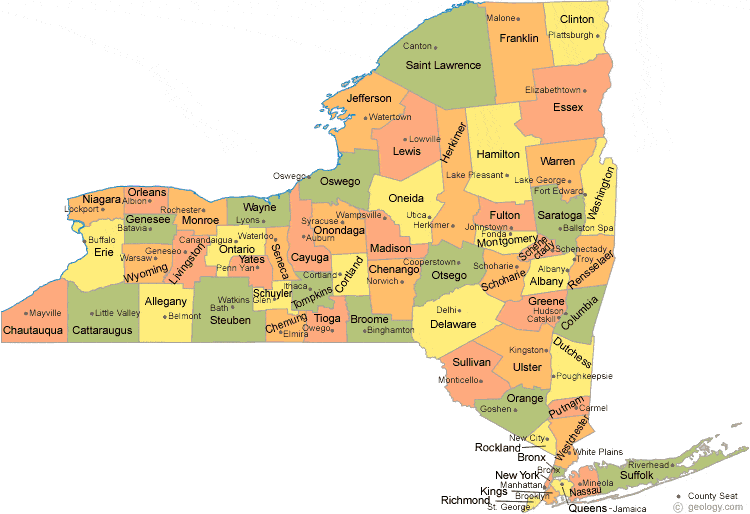
The term “city” can be interpreted in various ways, and this is where the distinction becomes important. While Manhattan is undeniably a global metropolis, a bustling urban center teeming with life, its administrative designation within New York County is as a single entity. There are no distinct incorporated “cities” within New York County in the same way that, for instance, Albany County contains the city of Albany alongside other towns and villages. Instead, Manhattan is a borough, and the county government for New York County is essentially integrated with the borough government of Manhattan.
Understanding County Structures in New York State
To truly grasp why New York County is unique in its composition, it’s helpful to briefly consider the broader context of county structures within New York State. Counties in New York are administrative divisions that predate New York City’s modern consolidation. Historically, counties were established to provide a framework for local government, law enforcement, and judicial services. Over time, the relationship between cities and counties has evolved significantly.
In many parts of New York State, cities operate as independent municipalities within a county. These cities have their own mayors, city councils, and distinct governmental functions. They are geographically located within a county, but they are not subdivisions of the county in the way that towns and villages often are. For example, in Erie County, you find the city of Buffalo, but also numerous towns and villages that fall under the county’s broader jurisdiction.
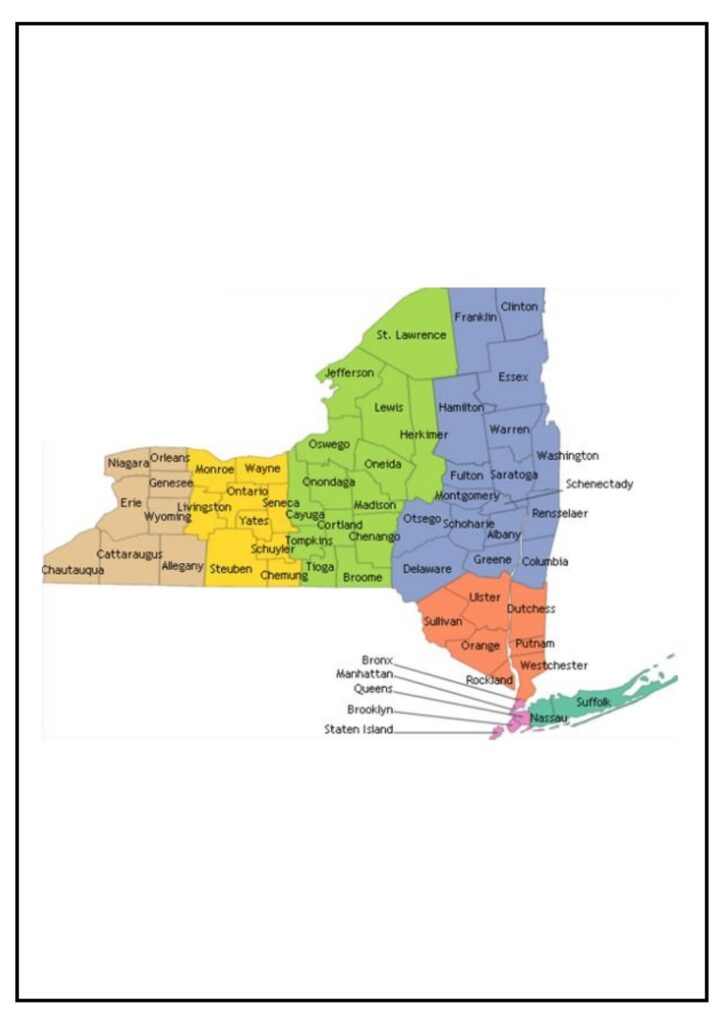
However, New York City presents a different model. New York City itself is comprised of five boroughs: Manhattan, the Bronx, Brooklyn, Queens, and Staten Island. Each of these boroughs corresponds to a historical county: New York County for Manhattan, Bronx County for the Bronx, Kings County for Brooklyn, Queens County for Queens, and Richmond County for Staten Island. The key difference is that the boroughs of New York City are not separate, independently incorporated cities within their respective counties. Instead, they are administrative divisions of New York City as a whole, and the county governments are largely absorbed by the city’s consolidated government.
So, when we ask about “cities” within New York County, we are encountering a semantic nuance. Manhattan is the principal “city” – the major urban and commercial heart – but it is governed as a borough of New York City, and its county, New York County, is coterminous with it. The surrounding areas that might be considered “cities” in other contexts are, within New York County, simply neighborhoods or districts of Manhattan.
The Borough of Manhattan: A World Within Itself
The borough of Manhattan is, without question, the most famous and geographically significant component of New York County. It is an island, a legendary landscape that has captured the imagination of people worldwide. From the towering skyscrapers of Midtown and the financial powerhouses of Lower Manhattan to the bohemian enclaves of Greenwich Village and the cultural institutions of the Upper East Side and Upper West Side, Manhattan is a microcosm of human endeavor and achievement.
Travelers flock to Manhattan for an endless array of experiences. The iconic Times Square, with its dazzling billboards and vibrant atmosphere, is a must-see for many. Further downtown, the Statue of Liberty and Ellis Island stand as powerful symbols of immigration and freedom, accessible via ferry from Battery Park. The architectural marvels, such as the Empire State Building and One World Trade Center, offer breathtaking views of the cityscape. For art and culture enthusiasts, The Metropolitan Museum of Art, the Museum of Modern Art (MoMA), and The Guggenheim Museum provide unparalleled collections. The Broadway theater district promises world-class entertainment, while Central Park offers a sprawling oasis of green in the heart of the urban jungle.
When it comes to accommodation, Manhattan offers an unparalleled range. From ultra-luxury hotels like The Plaza and The St. Regis New York to more budget-friendly options and serviced apartments for longer stays, there is something to suit every preference and budget. Boutique hotels dot the landscape, offering unique experiences, while international chains provide reliability and familiar amenities. The sheer volume of hotels means that booking in advance is often recommended, especially during peak travel seasons.
The tourism industry in Manhattan is colossal, catering to millions of visitors annually. Local culture is deeply ingrained in its diverse neighborhoods, each with its own distinct character and culinary offerings. From the historic charm of Chinatown and Little Italy to the trendy eateries of the Meatpacking District, Manhattan is a gastronomic delight. Activities range from walking tours that delve into the history and architecture of specific areas to boat tours offering unique perspectives of the skyline. Insider tips often include utilizing the extensive subway system for efficient travel and exploring beyond the most heavily touristed areas to discover hidden gems.
The lifestyle in Manhattan is as varied as its population. It’s a destination for luxury travel, with Michelin-starred restaurants and designer boutiques. Simultaneously, it’s a place where budget travel is possible through careful planning, utilizing public transport, and seeking out affordable eats. Family trips are well-catered to with attractions like the American Museum of Natural History and the Central Park Zoo. For those on business stays, Manhattan is a global hub, offering world-class convention centers and a vast array of business-friendly hotels and services.
Beyond the Obvious: Defining “Cities” Within New York County
Given that New York County is coterminous with Manhattan, the concept of “cities within New York County” requires a redefinition. Instead of looking for separate incorporated municipalities, we must consider the distinct neighborhoods, districts, and areas that collectively form the borough. These areas often possess unique identities, historical significance, and characteristics that, in other contexts, might be considered separate “cities” or towns.
For instance, the Financial District in Lower Manhattan is a self-contained world, a nexus of global finance where the New York Stock Exchange is located. It has its own rhythm, its own architecture, and a distinct atmosphere that sets it apart from, say, the artistic vibrancy of SoHo or the academic hum of East Harlem. Similarly, Harlem, with its rich African American history and cultural heritage, is a distinct entity within Manhattan, boasting its own iconic landmarks like the Apollo Theater and a vibrant community life.
The term “city” can also be understood in a more colloquial sense. When people refer to the “city” in New York City, they often mean Manhattan. This usage highlights the borough’s preeminence and its role as the symbolic heart of the larger metropolitan area. The districts within Manhattan are the building blocks of this singular urban experience.

Navigating the Administrative Landscape
The administrative structure of New York County is a testament to New York City’s unique history and its process of consolidation. The office of the District Attorney of New York County is a powerful judicial entity, responsible for prosecuting crimes within the county. The County Clerk of New York County also plays a vital role in maintaining public records and administering various legal processes. These offices operate within the confines of New York County, which, as established, is Manhattan.
The absence of separate incorporated cities within New York County means that the governance, services, and planning are all managed at the borough and city level. This consolidation simplifies some aspects of administration but also means that the individual character of Manhattan’s diverse neighborhoods is preserved through their distinct identities rather than through separate municipal governments.
In essence, the answer to “What cities are in New York County?” is that New York County is Manhattan, and the “cities” within it are the manifold, vibrant neighborhoods that make up this legendary island. Each neighborhood, from the bustling streets of Times Square to the historic lanes of Greenwich Village, contributes to the singular, inimitable identity of Manhattan and, by extension, New York County. It’s a concept that underscores the complexity and uniqueness of New York City’s governmental and geographical organization, offering a fascinating glimpse into how urban landscapes are defined and experienced.
LifeOutOfTheBox is a participant in the Amazon Services LLC Associates Program, an affiliate advertising program designed to provide a means for sites to earn advertising fees by advertising and linking to Amazon.com. Amazon, the Amazon logo, AmazonSupply, and the AmazonSupply logo are trademarks of Amazon.com, Inc. or its affiliates. As an Amazon Associate we earn affiliate commissions from qualifying purchases.