
New York. The very name conjures images of towering skyscrapers, bustling avenues, and an undeniable energy that permeates every corner of this iconic metropolis. And amidst the symphony of sights and sounds, there’s another sensory experience that defines the spirit of the city: its pizza. New York style pizza isn’t just a dish; it’s a cultural cornerstone, a culinary emblem, and a source of fierce local pride. But what exactly makes a pizza “New York style”? It’s a question that sparks passionate debates, from the sidewalks of Brooklyn to the online forums of pizza aficionados.
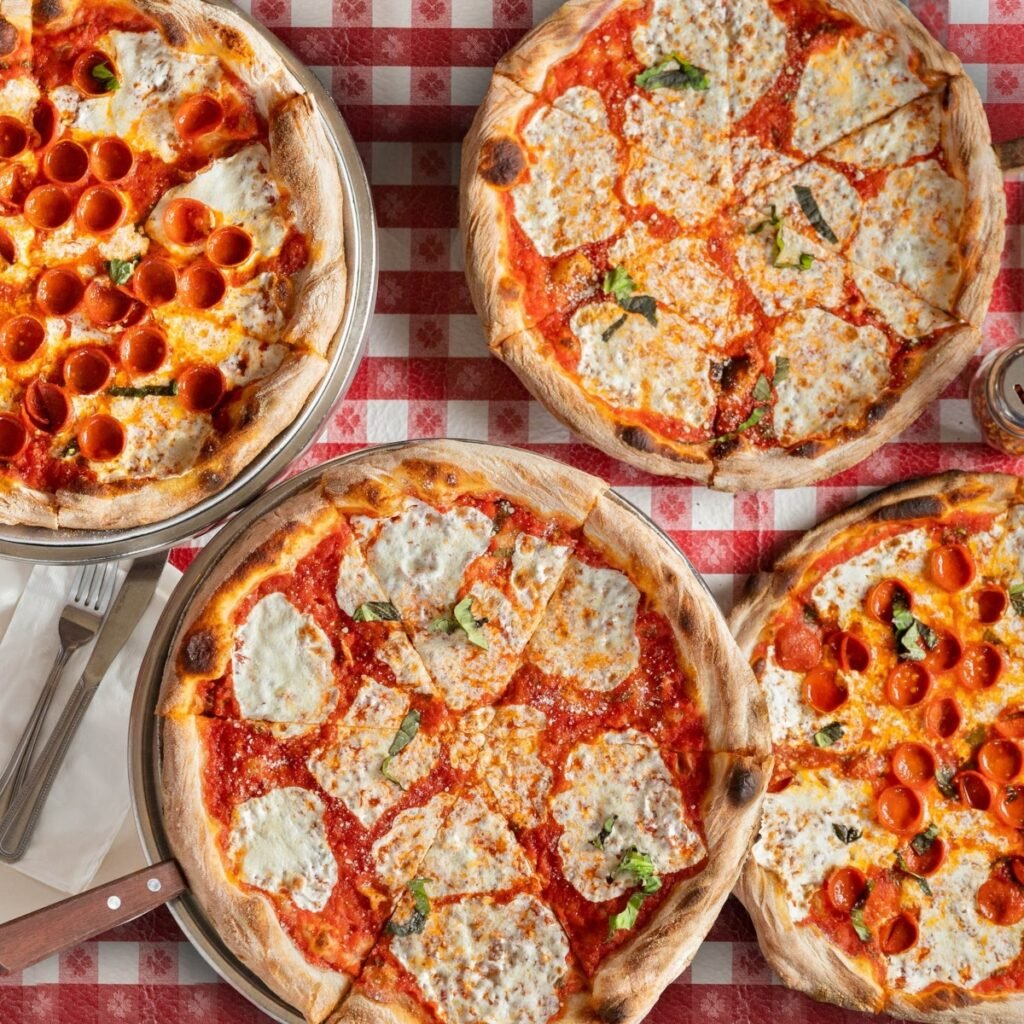
To understand the essence of New York style pizza, we must delve into its origins, its defining characteristics, and the almost ritualistic way it’s consumed. It’s a story woven from necessity, innovation, and the vibrant tapestry of the city itself.
The Genesis of a Culinary Icon
The story of New York style pizza begins with Italian immigrants who brought their culinary traditions to the burgeoning American landscape. While Naples is rightfully hailed as the birthplace of pizza, New York became its vibrant adopted home, evolving and adapting to the new environment and the palates of its residents.
The First Slice: Lombardi’s and Beyond
The recognized pioneer of pizza in America is Gennaro Lombardi, an Italian immigrant who opened his grocery store in 1897 and began selling coal-fired pizzas. He later obtained the first license to sell pizza in the United States in 1905, establishing what is now famously known as Lombardi’s on Spring Street in Manhattan. This marked the official beginning of the New York pizza tradition.
Lombardi’s establishment, and the pizzerias that followed, were instrumental in shaping the early New York style. The availability of different ingredients, the demand for a quick and affordable meal, and the sheer volume of people needing to be fed in a densely populated city all contributed to the evolution of pizza making. Early pizzerias were often humble, neighborhood establishments, serving as community hubs where families and friends gathered. The pizzas were made with simple, quality ingredients, and the focus was on delivering a delicious and satisfying product.
The characteristic thin crust, often attributed to the need to cook pizzas quickly in large, hot ovens, became a hallmark. This thinness, coupled with the specific charring from coal or wood-fired ovens, imparted a unique texture and flavor that set it apart. As more immigrants settled in New York and established their own eateries, the style began to spread, influencing generations of pizzaiolos and solidifying its place in the city’s culinary identity.
Deconstructing the Defining Elements
So, what are the tangible characteristics that distinguish a New York style pizza from its counterparts? It’s a combination of texture, flavor, and even the way it’s meant to be eaten.
The Crust: A Foundation of Flavor and Texture
The crust is arguably the most crucial element of New York style pizza. It’s a delicate balance of crispness and chewiness. The dough, typically made with high-gluten flour, water, yeast, and a bit of salt and sugar, is kneaded and allowed to rise. This process develops the gluten, which gives the crust its characteristic elasticity and structure.
The crust is then stretched by hand, often by tossing it in the air, creating a thin, wide base that’s larger than a typical pan pizza. The edges are left slightly thicker, forming a flavorful cornicione, or rim, that provides a delightful contrast in texture. When baked in a very hot oven (traditionally coal or wood-fired, though modern pizzerias often use gas deck ovens that mimic these conditions), the crust achieves a distinctive char on the bottom, giving it a slightly smoky flavor and a satisfying crispness. It’s sturdy enough to hold the toppings without collapsing but also pliable enough to be folded.
The Sauce: Simplicity is Key
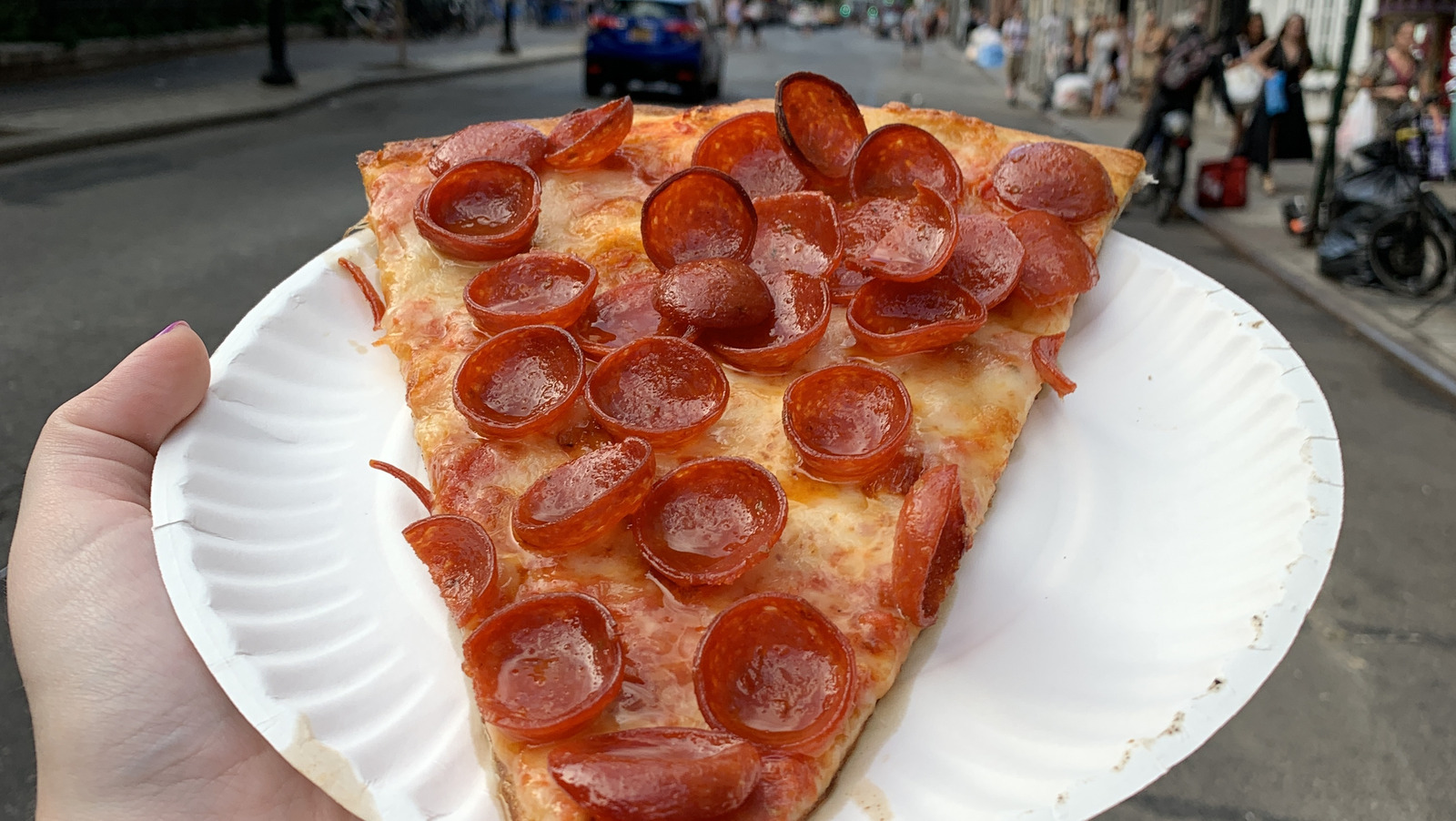
The tomato sauce used on New York style pizza is usually a simple, uncooked or lightly cooked purée of crushed San Marzano tomatoes. The emphasis is on the pure, bright flavor of the tomatoes, often seasoned with just a touch of salt, garlic, and oregano. There’s no need for complex simmering or heavy spice blends; the goal is to complement, not overpower, the other ingredients. The sauce is spread thinly across the dough, leaving a border for the crust.
The Cheese: A Melty Blanket of Deliciousness
Mozzarella is the undisputed cheese of choice for New York style pizza. Low-moisture, whole-milk mozzarella is preferred for its excellent melting properties and its ability to create that signature stringy pull when you take a bite. It’s generously applied, forming a gooey, golden-brown blanket over the sauce. Some pizzaiolos may add a sprinkle of grated Pecorino Romano cheese for an extra salty, nutty dimension.
The Toppings: Classic and Minimalist
While New York style pizzerias offer a wide array of toppings, the classic combinations remain the most popular. The iconic “slice” is often just cheese, or a pepperoni topping. When other ingredients are added, they are typically kept relatively sparse. The focus remains on the interplay between the crust, sauce, and cheese, with toppings serving as enhancements rather than the main event. This minimalist approach allows the quality of each component to shine through.
The New York Slice Experience: More Than Just Food
Eating New York style pizza is an experience that transcends mere sustenance. It’s deeply ingrained in the city’s culture and lifestyle.
The Fold: A Practical Necessity
One of the most recognizable aspects of consuming New York style pizza is the “fold.” Because the slices are large and thin, they are often folded in half lengthwise. This technique not only makes the slice easier to handle and eat on the go, but it also serves a practical purpose: it prevents the toppings from sliding off and allows for a more even distribution of flavor in each bite. This fold is an unspoken rule, a learned behavior passed down through generations of New Yorkers.
The Grab-and-Go Culture
New York style pizza is the quintessential fast food of the city. Pizzerias are often walk-in establishments, serving pizza by the slice. This accessibility makes it a perfect meal for busy New Yorkers on their lunch breaks or for a quick, satisfying dinner. The bustling atmosphere of a typical New York pizzeria, with its open kitchen, the aroma of baking dough, and the rapid-fire ordering, is part of the overall charm. You’ll find these beloved eateries in almost every neighborhood, from the trendy spots in the West Village to the family-owned gems in Queens.
Beyond the Slice: Whole Pies and Neighborhood Traditions
While the slice is iconic, New York style pizza is also enjoyed as a whole pie. Families and friends gather around these large, circular creations, sharing in the experience. Each neighborhood often has its own beloved pizzeria, a local institution that has been serving the community for decades. These neighborhood spots are more than just places to eat; they are part of the fabric of daily life, witnessing countless milestones and everyday moments. Visiting a renowned establishment like Joe’s Pizza in Manhattan or a lesser-known but equally cherished spot in Brooklyn offers a genuine taste of the city.

A Culinary Ambassador
New York style pizza has become a culinary ambassador for the city, spreading its influence far beyond the five boroughs. Pizzerias across the country and around the world often emulate its distinctive characteristics. Yet, for true enthusiasts, nothing compares to the authentic experience of enjoying a New York slice in its native habitat. The unique combination of historical significance, meticulous preparation, and the vibrant city that birthed it makes New York style pizza an enduring symbol of culinary excellence and a beloved part of global food culture. Whether you’re a seasoned traveler or a local resident, the quest for the perfect New York style pizza is a delicious adventure in itself, a journey that connects you to the heart and soul of the city.
LifeOutOfTheBox is a participant in the Amazon Services LLC Associates Program, an affiliate advertising program designed to provide a means for sites to earn advertising fees by advertising and linking to Amazon.com. Amazon, the Amazon logo, AmazonSupply, and the AmazonSupply logo are trademarks of Amazon.com, Inc. or its affiliates. As an Amazon Associate we earn affiliate commissions from qualifying purchases.