
When delving into the vibrant tapestry of American culture, certain phrases emerge that pique curiosity, hinting at unique traditions and regional specificities. “Oklahoma Drill” is one such phrase, often sparking questions about its origin, meaning, and significance. While its name might suggest a connection to the state of Oklahoma, the term’s primary association isn’t with geographical location in the way one might initially assume. Instead, the “Oklahoma Drill” is deeply rooted in the world of American football, a specific training exercise that has left an indelible mark on the sport’s development and coaching methodologies.
This rigorous drill, characterized by its physicality and emphasis on tackling, has been a cornerstone of football training for decades. It’s a testament to the sport’s evolution, reflecting a bygone era where raw aggression and brute force were paramount. Understanding the “Oklahoma Drill” offers a fascinating glimpse into the historical context of football, its pedagogical approaches, and the athletic prowess it demands. For those interested in the nuances of sports, the evolution of athletic training, or even the cultural underpinnings of American pastimes, exploring the “Oklahoma Drill” provides a rich and insightful journey. This article aims to unravel the origins, purpose, execution, and legacy of this iconic football exercise, illuminating its role in shaping both players and the sport itself.
The Genesis and Purpose of the Oklahoma Drill
The “Oklahoma Drill,” a foundational element in American football training, finds its origins deeply embedded in the history of coaching and player development. While its exact inception point is somewhat elusive, its widespread adoption and popularity are often attributed to the mid-20th century, a period when football coaches were actively seeking innovative and effective methods to prepare their teams for the demanding nature of the game. The drill’s very name, while seemingly pointing to the state of Oklahoma, is more likely a nod to its prominence or development within football programs associated with the region, rather than a literal geographical origin of the exercise itself. Some accounts suggest its early use and popularization at universities like the University of Oklahoma, although definitive proof remains somewhat anecdotal.
The primary objective of the “Oklahoma Drill” was, and remains, to simulate game-like conditions and instill crucial physical and mental attributes in players. It’s a high-intensity exercise designed to:
Enhancing Tackling and Blocking Proficiency
At its core, the “Oklahoma Drill” is a direct confrontation, a one-on-one or two-on-one battle of strength, technique, and will. Players are put in situations where they must execute precise blocking or tackling techniques under immense pressure.
- Tackling: For defensive players, the drill offers a controlled environment to practice wrapping up ball carriers, driving through tackles, and avoiding missed assignments. It hones their ability to break down an opponent, maintain leverage, and secure the tackle, all critical skills for preventing yardage and forcing turnovers.
- Blocking: Offensive players, on the other hand, use the drill to refine their blocking schemes. This includes maintaining a strong base, driving their feet, and delivering powerful blocks to create running lanes or protect the quarterback. It’s about establishing dominance at the point of attack and ensuring the offense can move the ball effectively.
Building Physical Toughness and Resilience
Football is a sport that demands extraordinary physical and mental fortitude. The “Oklahoma Drill” serves as a crucible, forging this toughness.
- Physical Conditioning: The drill is incredibly taxing, demanding explosive bursts of energy, sustained effort, and the ability to absorb impact. Repeatedly participating in it significantly enhances a player’s cardiovascular endurance, strength, and power. It’s a practical application of physical training, moving beyond the weight room to simulate the actual demands of competition.
- Mental Fortitude: Beyond the physical, the drill cultivates mental toughness. Players learn to push through fatigue, overcome the fear of contact, and maintain focus in a chaotic and aggressive environment. The ability to consistently perform under physical duress is a critical mental component that the “Oklahoma Drill” directly addresses. It teaches players to embrace contact, rather than shy away from it, a vital trait for success in football.
Simulating Game Situations
The drill is designed to be as close to actual game scenarios as possible without the complexity of a full team practice.
- Ball Carrier vs. Defender: Typically, the drill involves a ball carrier trying to advance a short distance against one or more defenders. This immediate, high-stakes confrontation mirrors critical moments in a game, such as short-yardage situations or goal-line stands.
- Situational Awareness: While basic, the drill can be adapted to incorporate elements of situational awareness. For instance, coaches might emphasize specific formations or play calls to mimic offensive or defensive strategies, forcing players to react accordingly. This helps translate individual execution into team effectiveness.
In essence, the “Oklahoma Drill” was conceived as a direct and no-nonsense method to develop the fundamental skills and inherent toughness required to excel in American football. It’s a testament to the belief that repetition of core actions, under controlled yet intense conditions, is the most effective way to prepare athletes for the rigors of the sport.
Executing the Oklahoma Drill: A Look at the Mechanics
The “Oklahoma Drill,” while seemingly straightforward in its concept, requires careful planning and precise execution to be effective and, crucially, safe. Coaches meticulously design the drill’s setup and progression to maximize its benefits while mitigating unnecessary risks. The core components involve positioning players, defining the objective, and initiating the action, all within a structured framework.
Setup and Personnel
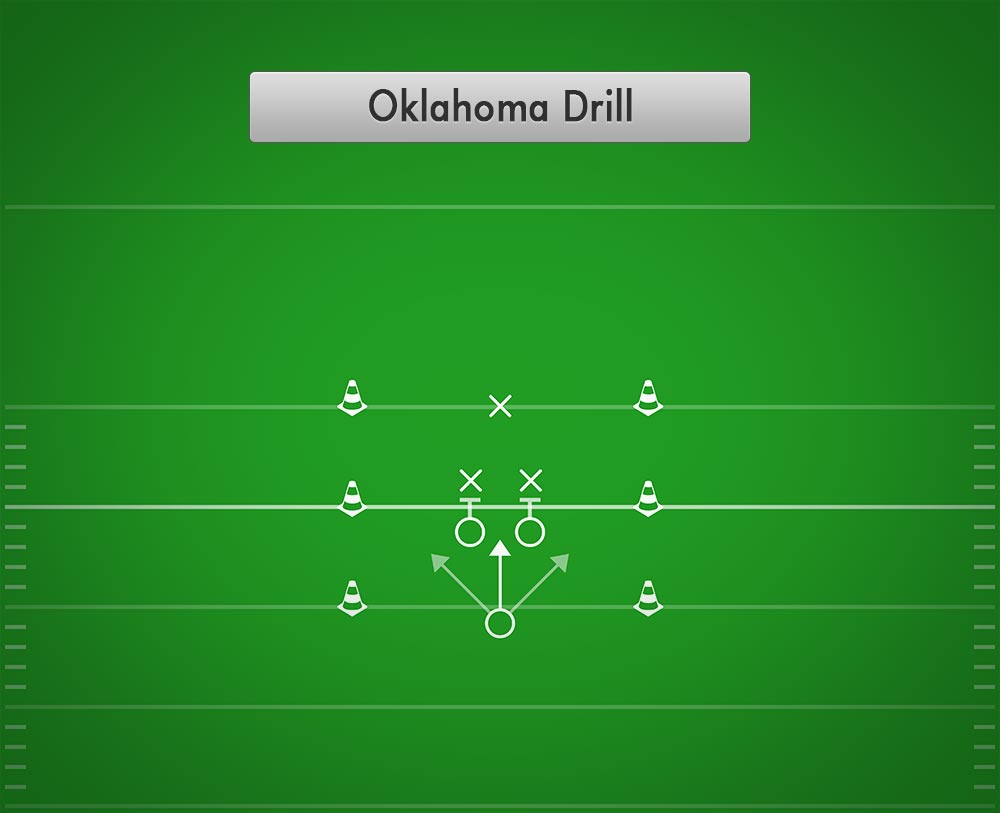
The typical “Oklahoma Drill” involves a limited number of players to isolate specific skills and encourage intense, one-on-one or limited-team confrontations.
- Offensive Player(s): Usually, a running back or a player simulating a ball carrier is positioned a few yards behind the line of scrimmage. Their objective is to gain a designated amount of yardage (e.g., five yards) past the initial line.
- Defensive Player(s): A linebacker or defensive lineman is positioned directly in front of the offensive player, acting as the primary tackler. Sometimes, a second defender might be positioned to assist or to simulate a pursuit angle.
- The Line of Scrimmage: A clear line of scrimmage is established. This is where the play “begins.” The distance to be gained is typically very short, emphasizing power and immediate collision.
The Action: Collision and Competition
Once the players are in position and the objective is clear, the drill commences with a signal from the coach.
- The Snap and Drive: The offensive player receives the ball (or simulates receiving it) and immediately drives forward. Simultaneously, the defensive player explodes off the line, aiming to meet the ball carrier head-on.
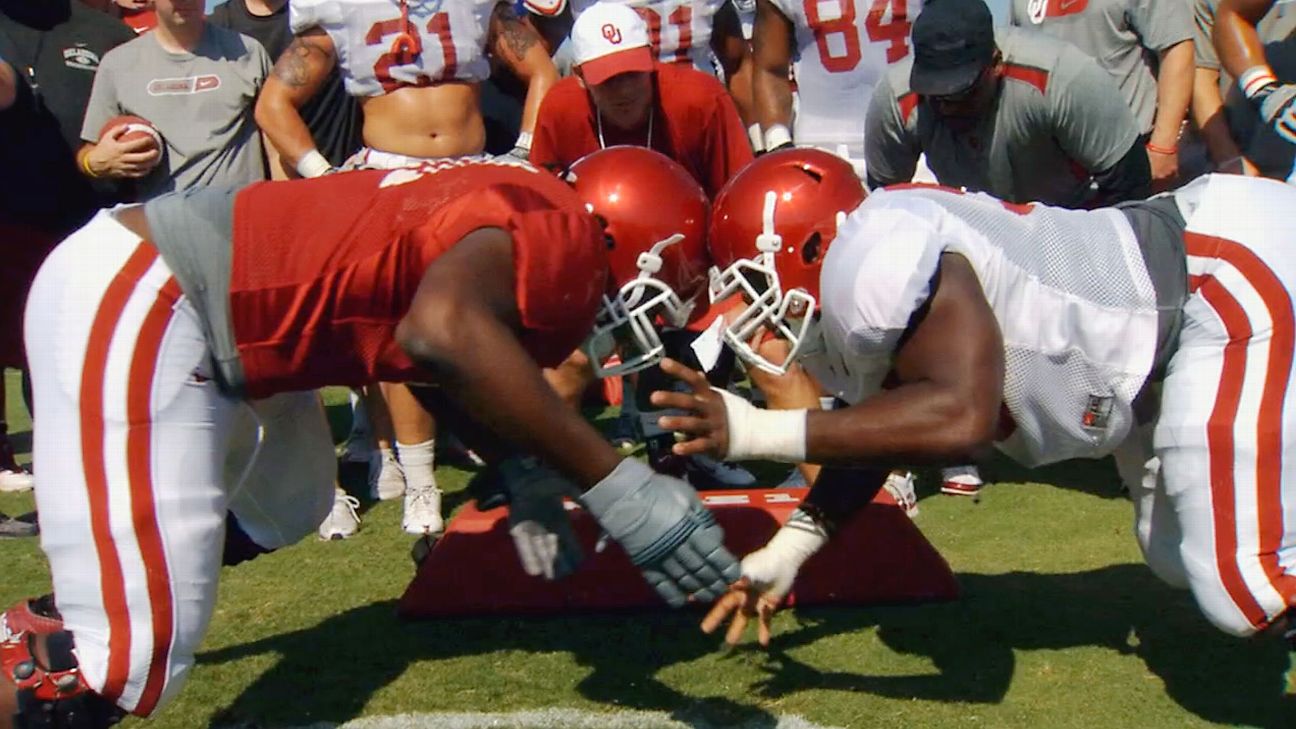
- The Collision: This is the heart of the “Oklahoma Drill.” The players collide with full force. The offensive player attempts to break through the tackle or run through the defender, while the defender aims to bring the ball carrier down.
- The Outcome: The drill concludes when the ball carrier is tackled behind the line of scrimmage, fails to gain the designated yardage, or successfully breaks through the initial tackle and gains the required yardage. The focus is on the immediate collision and the outcome of that physical engagement.
Variations and Coaching Points
Coaches often introduce variations to target specific skill sets or address weaknesses observed in their team.
- Adding a Blocker: To simulate protection schemes or the challenge of breaking through a line, an offensive lineman might be added to block for the ball carrier, creating a 2-on-1 scenario.
- Adding a Second Defender: To train pursuit angles or the ability to tackle in space, a second defensive player might be introduced, forcing the initial defender to make the first contact and the second to make the wrap-up tackle.
- Emphasis on Technique: Coaches will constantly provide feedback on technique. For offensive players, this includes driving their legs, keeping their pads low, and maintaining balance. For defensive players, it emphasizes proper tackling form: wrapping up, driving through the ball carrier, and using the shoulders and arms effectively. They might focus on specific aspects like “stripping the ball” for defenders or “keeping the legs churning” for the offense.
The “Oklahoma Drill” is more than just a physical contest; it’s a tactical exercise where fundamental football skills are honed. The controlled environment allows coaches to dissect individual performances, identify areas for improvement, and reinforce the essential techniques that form the bedrock of successful play.
The Legacy and Evolution of the Oklahoma Drill
The “Oklahoma Drill” has cemented its place in football lore as a potent training tool, but like many aspects of sports, it has undergone significant evolution and scrutiny. Its raw intensity, while effective for building toughness, has also raised concerns about player safety and the potential for injury. This has led to discussions about its continued relevance and the search for safer alternatives that still achieve similar developmental goals.
A Bygone Era’s Hallmark
For many years, the “Oklahoma Drill” was a ubiquitous feature of football practices across various levels, from high school to professional leagues. It represented an era where the physicality of the game was emphasized perhaps more than the immediate welfare of the players. Coaches often used it as a gauge of a team’s aggression, grit, and determination. The sheer spectacle of the drill, with its violent collisions, also contributed to its legendary status. It was a visceral demonstration of the courage and toughness required to play the sport.
Safety Concerns and Modern Adaptations
In recent decades, a growing awareness of concussions and other football-related injuries has prompted a re-evaluation of high-impact drills like the “Oklahoma Drill.” While it undeniably builds toughness, the inherent risk of severe injury—from neck injuries to severe bruises and sprains—has led many coaches and organizations to reconsider its widespread use.
- Reduced Repetition: Many programs now limit the number of times the “Oklahoma Drill” is performed in a practice or season.
- Modified Drills: Coaches have developed variations that reduce the full-contact aspect while still simulating critical game situations. These might include drills focused on specific tackling techniques with less full-speed collision or blocking drills that emphasize technique over brute force.
- Technique-Focused Drills: Instead of full-on collisions, coaches might employ drills that isolate specific techniques. For instance, instead of a full tackle, a player might practice the “wrap-up” motion on a padded dummy or a stationary object. Similarly, blocking drills might focus on footwork and pad level without full-contact collisions.
- Emphasis on Player Welfare: The modern approach to football training prioritizes player safety. This means that any drill, including the “Oklahoma Drill,” must be carefully evaluated for its risk-reward ratio. Coaches are increasingly trained in techniques to teach tackling and blocking in ways that minimize the risk of injury.
The Enduring Influence
Despite the safety concerns, the underlying principles of the “Oklahoma Drill” – simulating game intensity, developing tackling and blocking skills, and building physical and mental toughness – remain vital to football. Its influence can be seen in the design of many contemporary drills that aim to achieve similar objectives through safer means. The “Oklahoma Drill” serves as a historical benchmark, a reminder of how the sport has evolved and the ongoing commitment to balancing performance with the well-being of its athletes. While the exact iteration of the “Oklahoma Drill” might be less common, its spirit of intense, skill-focused competition continues to inform football training practices, shaping how players are prepared for the demands of the gridiron.
LifeOutOfTheBox is a participant in the Amazon Services LLC Associates Program, an affiliate advertising program designed to provide a means for sites to earn advertising fees by advertising and linking to Amazon.com. Amazon, the Amazon logo, AmazonSupply, and the AmazonSupply logo are trademarks of Amazon.com, Inc. or its affiliates. As an Amazon Associate we earn affiliate commissions from qualifying purchases.