
The question “When was Oregon established?” delves into a rich tapestry of history, spanning millennia of indigenous habitation, centuries of European exploration, and decades of determined American westward expansion. More than just a date on a calendar, the establishment of Oregon as a state is the culmination of geological forces, cultural encounters, political maneuvering, and the sheer will of pioneers seeking new beginnings. To truly understand its establishment, one must journey through its ancient past, trace the paths of explorers, witness the epic migrations, and finally arrive at the momentous day it officially joined the United States.

Ancient Roots: Pre-Colonial Oregon
Long before European contact, the land that would become Oregon was a vibrant mosaic of diverse indigenous cultures, each with a deep spiritual and practical connection to the landscape. Their civilizations flourished for thousands of years, shaping and being shaped by the unique environment of the Pacific Northwest.
Indigenous Peoples and Their Enduring Legacy
Evidence suggests human habitation in Oregon dates back at least 15,000 years, with archaeological sites revealing sophisticated tools, trade networks, and complex societal structures. Numerous tribes, including the Chinook, Nez Perce, Kalapuya, Umpqua, Coquille, Takelma, and many others, inhabited distinct regions, speaking a variety of languages and developing unique cultural practices. They thrived by skillfully utilizing the region’s abundant natural resources – salmon from the rivers, berries from the forests, and game from the mountains and plains. Their societies were often organized around kinship, oral traditions, and a profound respect for the natural world. Villages dotted the banks of the Columbia River and the fertile Willamette Valley, serving as hubs for trade and cultural exchange. The intricate knowledge of the land possessed by these first peoples would later prove invaluable, albeit often unacknowledged, to the European and American newcomers.
Early European Encounters and Explorations
The first documented European contact with the Oregon coast occurred in the late 16th century, though these early encounters were sporadic and often driven by the pursuit of the mythical Northwest Passage. Spanish explorers like Bartolomé de Fonte and Bruno de Heceta charted parts of the coastline in the 17th and 18th centuries, but their interactions were limited. Captain James Cook, a British explorer, sailed along the coast in 1778, further mapping the region. These initial voyages marked the beginning of European claims to the territory, setting the stage for future disputes over ownership among European powers and, eventually, the United States. However, these early explorations were superficial, offering little insight into the vast interior of what would become Oregon.
The Dawn of American Interest: Expeditions and Fur Trade
The turn of the 19th century ushered in a new era of exploration, driven by America’s nascent westward expansionist ambitions and the burgeoning fur trade. These expeditions began to demystify the vast, unknown lands beyond the Mississippi River and firmly placed Oregon on the American imagination.
Lewis and Clark Expedition and Mapping the West
Perhaps the most pivotal event in drawing American attention to the Oregon region was the Lewis and Clark Expedition, commissioned by President Thomas Jefferson following the Louisiana Purchase of 1803. From 1804 to 1806, Meriwether Lewis and William Clark led their Corps of Discovery across the continent, reaching the mouth of the Columbia River in November 1805. They established Fort Clatsop near present-day Astoria, Oregon, spending the winter of 1805-1806 before their return journey. Their detailed maps, journals, and reports provided the first comprehensive American account of the Pacific Northwest, describing its geography, flora, fauna, and indigenous populations. This expedition solidified the United States’ claim to the region, albeit alongside competing claims from Great Britain and Spain.
The Fur Trade Era: Economic Drivers and Cultural Exchange
Following Lewis and Clark, the fur trade became the primary catalyst for further exploration and settlement. American and British fur companies, most notably the American Fur Company founded by John Jacob Astor and the British Hudson’s Bay Company, established trading posts throughout the region. Astor’s Fort Astoria (later Fort George under British control) was founded in 1811 as the first permanent American settlement on the Pacific Coast. Fur trappers, known as “mountain men,” explored vast tracts of wilderness, charting new routes and interacting extensively with indigenous communities. These economic ventures led to the establishment of rudimentary trails and a growing understanding of the interior, inadvertently paving the way for future pioneer settlement. The competition between American and British interests also fueled diplomatic tensions over the “Oregon Country,” a vast region claimed by both nations, stretching from California to Alaska.
The Oregon Trail and Mass Migration
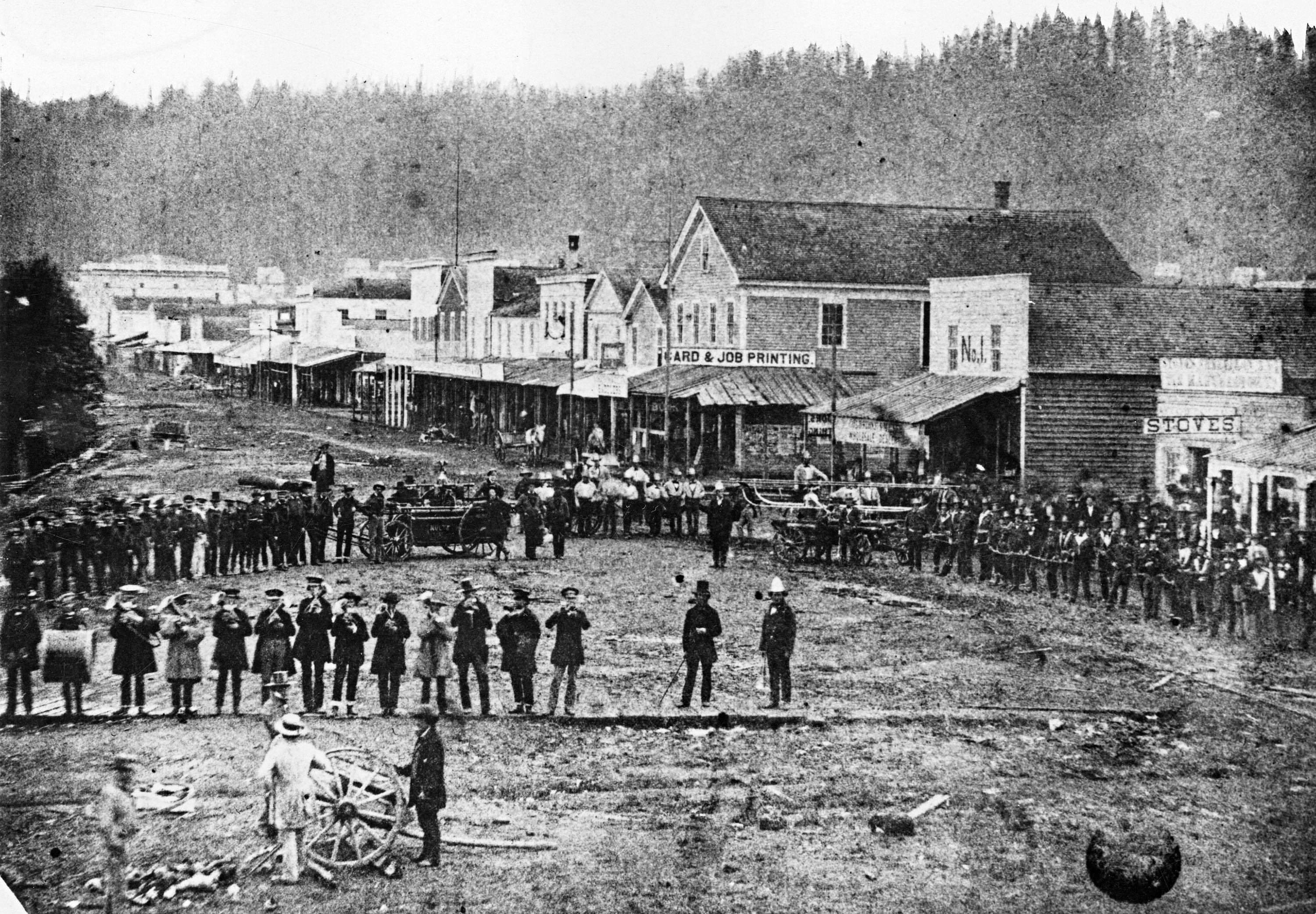
The 1840s witnessed a monumental shift in the history of Oregon: the advent of the Oregon Trail and the subsequent mass migration of American pioneers. This influx of settlers was arguably the most critical factor in the establishment of Oregon as a distinct American entity.
Pioneers’ Perilous Journey and Dreams of a New Life
Beginning in the early 1840s, thousands of American settlers embarked on the arduous 2,000-mile journey along the Oregon Trail, originating primarily from Independence, Missouri. Driven by a potent mix of “Manifest Destiny,” the promise of fertile farmland, economic opportunity, and escape from economic downturns or disease in the eastern United States, these pioneers faced immense challenges. Disease, accidents, harsh weather, and difficult terrain claimed many lives along the six-month trek. Despite the perils, the steady stream of wagon trains brought thousands of Americans to the Willamette Valley, rapidly shifting the demographic balance in the disputed territory. The presence of a growing American population exerted significant pressure on the United States government to secure its claim to the region.
Establishing Settlements and Provisional Government
As settlers poured into the Willamette Valley, the need for organized governance became paramount. Initially, informal gatherings and mission settlements, such as those established by Jason Lee and Marcus Whitman, provided some structure. However, by 1843, a formal provisional government was established at Champoeg by the American settlers. This “Provisional Government of Oregon” was a critical step, demonstrating the settlers’ capacity for self-governance and providing a framework for law, order, and land claims in the absence of a clear national authority. This early government operated under a unique set of circumstances, sharing the territory with both indigenous nations and British interests, yet it laid the groundwork for future political structures.
Towards Statehood: Political Maneuvering and Defining Borders
The mid-19th century was a period of intense diplomatic negotiation and internal political development that ultimately cemented Oregon’s path to statehood. Resolving the boundary dispute with Great Britain and establishing a formal territorial government were crucial precursors.
The Oregon Territory and Boundary Disputes
The conflicting claims over the Oregon Country between the United States and Great Britain had been a source of tension for decades, leading to the “Fifty-four Forty or Fight!” slogan during the 1844 presidential election. Ultimately, diplomacy prevailed. The Oregon Treaty of 1846 resolved the boundary dispute, formally dividing the territory at the 49th parallel, effectively giving the land south of that line (including most of present-day Oregon, Washington, and parts of Idaho and Wyoming) to the United States. With the international boundary settled, the U.S. Congress formally established the Oregon Territory on August 14, 1848, with Oregon City as its first capital. This act officially transitioned the region from a loosely governed provisional entity to an organized U.S. territory, subject to federal law and administration.
The Road to Admission: Debates and Decisions
The path from territory to statehood was not without its complexities. Key issues that dominated political discussions included land ownership, the status of indigenous peoples, and crucially, the question of slavery. While the majority of Oregon settlers were from midwestern states and generally opposed slavery, the territory’s enabling act allowed for a vote on the issue. This led to spirited debates and, eventually, the adoption of a constitution that banned slavery but also contained controversial exclusion clauses targeting African Americans. Despite these internal divisions and controversies, the territorial government diligently worked towards meeting the requirements for statehood, including drafting a constitution, defining its boundaries, and demonstrating a sufficient population. The efforts of territorial governors and delegates to Congress ultimately paved the way for admission.
Oregon Becomes a State: A Legacy Unveiled
The final chapter in Oregon’s establishment as a state marks a defining moment in American history, representing the successful culmination of centuries of events and the realization of westward expansion.
February 14, 1859: A Pivotal Date
On February 14, 1859, President James Buchanan signed the act admitting Oregon to the Union as the 33rd state. This date is the definitive answer to “When was Oregon established?” It officially integrated the state into the federal system, granting it representation in Congress and the full rights and responsibilities of statehood. The admission of Oregon marked a significant milestone in the westward movement, extending the United States’ reach to the Pacific Ocean and completing a major phase of its continental expansion. The new state’s boundaries were largely defined by the 1846 treaty with Great Britain and subsequent territorial divisions, giving it the distinctive shape recognized today.

Enduring Impact and Historical Significance
The establishment of Oregon on February 14, 1859, was more than just a political formality; it was the formal recognition of a new American identity forged in the crucible of the Pacific Northwest. The legacy of its establishment is multifaceted, reflecting the resilience of indigenous cultures, the adventurous spirit of explorers, the tenacity of pioneers, and the complexities of national expansion. The historical landmarks across Oregon—from ancient petroglyphs and tribal cultural centers to Fort Clatsop, remnants of the Oregon Trail, and historic buildings in Salem and Portland—serve as tangible reminders of this long and intricate journey. Understanding when Oregon was established requires acknowledging the deep historical layers that underpin its present-day character, a vibrant testament to its profound and diverse past.
LifeOutOfTheBox is a participant in the Amazon Services LLC Associates Program, an affiliate advertising program designed to provide a means for sites to earn advertising fees by advertising and linking to Amazon.com. Amazon, the Amazon logo, AmazonSupply, and the AmazonSupply logo are trademarks of Amazon.com, Inc. or its affiliates. As an Amazon Associate we earn affiliate commissions from qualifying purchases.