
Orlando, a city synonymous with theme park thrills and sunshine, beckons millions of visitors each year. But beyond the parades and rollercoasters, understanding the Orlando weather is crucial for planning a truly memorable trip. From the sweltering humidity of summer to the pleasant breezes of spring and fall, Orlando’s climate plays a significant role in shaping your travel experience. This guide delves into the nuances of Orlando’s weather, offering insights to help you pack accordingly, choose the best time to visit, and make the most of your stay, whether you’re seeking luxury travel, budget travel, or unforgettable family trips.

Understanding Orlando’s Tropical Savanna Climate
Orlando, situated in the heart of Florida, experiences a tropical savanna climate, characterized by distinct wet and dry seasons. This means you can expect hot, humid summers and warm, generally drier winters. The Florida peninsula’s location influences its weather patterns, making it a region susceptible to humidity and afternoon thunderstorms, especially during the warmer months.
Seasonal Breakdown and What to Expect
To effectively plan your Orlando adventure, it’s beneficial to understand what each season typically brings in terms of weather. This knowledge can influence your choice of hotels, attractions, and even the types of activities you prioritize.
Summer: The Peak of Heat and Humidity (June – August)
Summers in Orlando are undeniably hot and humid. Temperatures frequently soar into the high 80s and low 90s Fahrenheit (around 31-33 degrees Celsius), with the humidity making it feel even hotter. The “feels like” temperature can often reach the triple digits. This is also the wet season, with daily afternoon thunderstorms being a common occurrence. These storms are usually intense but short-lived, often bringing a brief respite from the heat before the sun returns.
- Temperatures: Highs typically range from 89°F to 93°F (32°C to 34°C).
- Humidity: High, often exceeding 70-80%.
- Rainfall: Daily afternoon showers and thunderstorms are common.
- What to pack: Lightweight, breathable clothing (cotton, linen), shorts, t-shirts, a rain jacket or poncho, comfortable walking shoes, sunscreen, a hat, and sunglasses. Staying hydrated is paramount. Consider bringing a reusable water bottle to refill throughout the day at attractions.
Despite the heat, summer is a popular time for family trips to Orlando, largely due to school holidays. Theme parks like Walt Disney World Resort and Universal Orlando Resort are bustling during these months. To beat the heat, plan your park visits for early mornings or late evenings, take advantage of indoor attractions, and schedule breaks at your resort or hotel. Many resorts offer fantastic pool facilities, providing a perfect way to cool down.
Fall: A Sweet Spot for Visitors (September – November)
As the calendar turns to fall, Orlando begins to experience a welcome shift in its weather. While still warm, the oppressive humidity of summer starts to recede, making tourism more comfortable. September can still be quite warm and wet, but October and November generally offer some of the most pleasant weather of the year. Temperatures begin to cool down, and the frequency of those intense afternoon thunderstorms decreases.
- Temperatures: Highs range from the mid-70s to the low 80s Fahrenheit (24-28°C) in October and November.
- Humidity: More moderate than in summer.
- Rainfall: Less frequent, but still possible, especially in early fall.
- What to pack: A mix of summer clothing with the addition of a light sweater or long-sleeved shirt for cooler evenings. Comfortable walking shoes are still essential for exploring landmarks and attractions.
This period is ideal for exploring outdoor attractions, enjoying the local culture, and dining at Orlando’s diverse restaurants. The fall season also brings festive events, including Halloween celebrations at theme parks and Thanksgiving gatherings. Booking accommodation in advance is still recommended, as this is a popular time for travel.
Winter: Mild and Pleasant Conditions (December – February)
Orlando’s winters are a stark contrast to those experienced in many other parts of the United States. You won’t find snow or freezing temperatures here. Instead, expect mild and pleasant conditions, making it a fantastic escape for those seeking to avoid the cold. Daytime temperatures are typically in the 60s and 70s Fahrenheit (15-25°C), though evenings can get cooler, sometimes dipping into the 40s or 50s Fahrenheit (4-15°C).
- Temperatures: Highs are usually between 65°F and 75°F (18-24°C).
- Humidity: Low, contributing to the comfortable feel.
- Rainfall: Minimal, with this being the driest period of the year.
- What to pack: Light layers are key. Pack t-shirts, long-sleeved shirts, light sweaters or fleeces, and a light jacket for the evenings. Jeans or comfortable trousers are suitable for daytime wear.
Winter is a prime time for tourism in Orlando, particularly around the Christmas holidays when theme parks are elaborately decorated. Many visitors opt for long-term stays during these months to enjoy the pleasant climate. This season is perfect for outdoor activities, golf, exploring nature preserves, and visiting landmarks without the intense heat. When considering hotels, you might find a wider range of amenities like heated pools or cozy indoor lounges particularly appealing during the cooler parts of the day.
Spring: Warmth and Blooming Beauty (March – May)
Spring in Orlando is another beautiful season, characterized by warming temperatures and blooming flora. March can still feel like winter in the early part of the month, but by April and May, the heat and humidity begin to build. Temperatures are comfortable for the most part, making it excellent for exploring everything Orlando has to offer, from its world-renowned theme parks to its charming local culture.
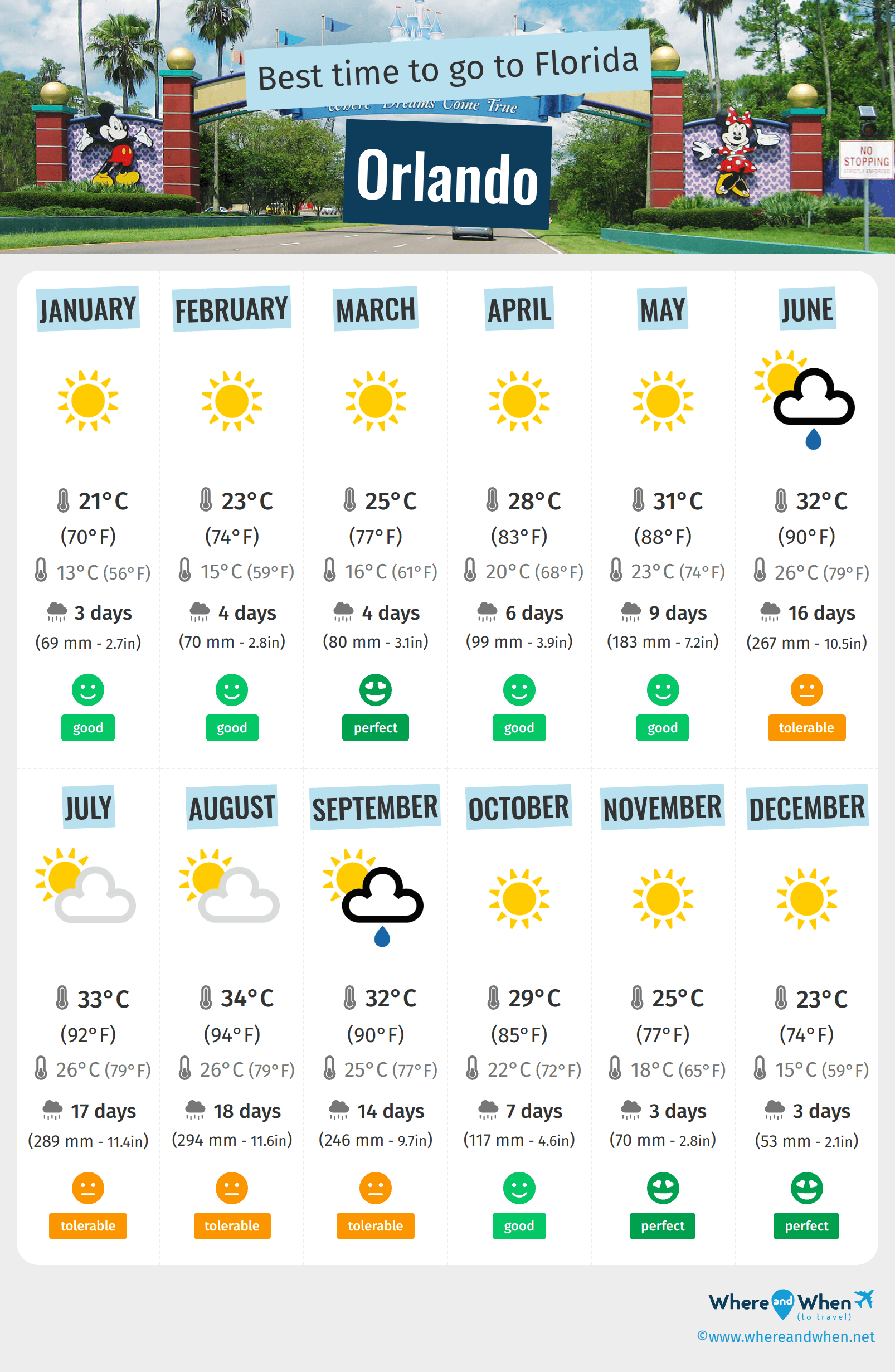
- Temperatures: Highs gradually increase from the 70s Fahrenheit (21-26°C) in March to the low 80s Fahrenheit (27-29°C) by May.
- Humidity: Starts to increase as summer approaches.
- Rainfall: Occasional showers are possible, with a rise in frequency as summer nears.
- What to pack: Similar to fall, a versatile wardrobe is recommended. Lightweight clothing, t-shirts, shorts, and comfortable walking shoes are essential. A light jacket or sweater might be useful for cooler mornings and evenings. Sun protection remains important.
Spring Break often sees a surge in visitors, so accommodation and attraction tickets should be booked well in advance. This season is fantastic for enjoying outdoor dining experiences and visiting nature attractions like Wekiwa Springs State Park. The generally pleasant weather makes it ideal for any type of travel, whether you’re on a budget travel adventure or indulging in luxury travel.
Beyond the Average: Special Weather Considerations
While the seasonal breakdown provides a good overview, Orlando‘s weather can also present some unique considerations that every traveler should be aware of.
Hurricane Season: Preparation and Awareness
Florida is located in a region prone to hurricanes, with the official hurricane season running from June 1st to November 30th. While not every year sees a direct hit, the possibility exists. It’s essential for travelers visiting during this period to stay informed about weather forecasts and be prepared.
- What to do: Monitor official advisories from sources like the National Hurricane Center. Check your travel insurance policy for hurricane-related coverage. Have a plan in case of evacuation. Many hotels and resorts have emergency preparedness plans in place.
- Impact on travel: Flights can be cancelled, and attractions may temporarily close. However, if a storm is not imminent, Orlando often continues with its operations, albeit with increased caution. Flexibility in your travel plans is advisable.
The Sun: A Constant Companion (and Potential Hazard)
The Orlando sun is a defining feature of its climate, offering plenty of opportunities for outdoor enjoyment. However, it also means that sun protection is non-negotiable.
- Sunburn: The sun’s rays can be intense, especially during the summer months. Always apply broad-spectrum sunscreen with a high SPF, reapply frequently, and seek shade during the peak sun hours (typically 10 am to 4 pm).
- Dehydration: The combination of heat and humidity can lead to dehydration quickly. Carry water with you at all times and drink it regularly, even if you don’t feel thirsty. Many theme parks and restaurants offer free water refills.
- Heat Exhaustion/Stroke: Be aware of the symptoms of heat exhaustion (dizziness, nausea, headache) and heat stroke (high body temperature, confusion, loss of consciousness), which require immediate medical attention. Take breaks indoors or in shaded areas, and avoid strenuous activity during the hottest parts of the day.
Making the Most of Orlando’s Weather
Understanding Orlando‘s weather is the first step towards an enjoyable trip. The second is to leverage that knowledge to enhance your experience.
Choosing Your Visit Time: Balancing Weather and Crowds
The “best” time to visit Orlando often depends on your priorities.
- For the best weather: Late fall (October-November) and late winter/early spring (February-March) generally offer the most comfortable temperatures with less humidity and rain.
- For the fewest crowds: Mid-January to early February, and late August through September (outside of holiday weekends) tend to be less crowded, though this can coincide with hotter or wetter periods.
- For families with school-aged children: Summer and holiday periods (Christmas, Easter, Spring Break) are often the only options, requiring strategic planning to manage crowds and heat.
Regardless of when you choose to visit, booking accommodation and attraction tickets in advance is highly recommended, especially for popular resorts and theme parks. Websites that offer hotel comparison can be invaluable for finding the best deals.

Packing Smart for Orlando’s Climate
Your packing list should directly reflect the season you’re visiting.
- Footwear: Comfortable walking shoes are paramount. You’ll be doing a lot of walking in theme parks, exploring landmarks, and enjoying the city.
- Rain Gear: Even outside of the official wet season, unexpected showers can occur. A lightweight, packable rain jacket or a sturdy umbrella is a wise addition.
- Sun Protection: Sunscreen, hats, and sunglasses are essential year-round.
- Layers: Especially for winter and shoulder seasons, packing layers allows you to adapt to changing temperatures throughout the day.
- Swimwear: Even if you’re not planning a beach vacation, Orlando’s numerous hotel and resort pools offer plenty of opportunities for a refreshing dip.
By thoroughly understanding and respecting Orlando’s climate, you can transform potential weather challenges into opportunities for enjoyment. Whether you’re experiencing the vibrant energy of Disney Springs, marveling at the architecture of historic St. Augustine (a day trip away), or simply relaxing by the pool at your chosen villa, a little weather preparation goes a long way in ensuring your Orlando adventure is nothing short of spectacular.
LifeOutOfTheBox is a participant in the Amazon Services LLC Associates Program, an affiliate advertising program designed to provide a means for sites to earn advertising fees by advertising and linking to Amazon.com. Amazon, the Amazon logo, AmazonSupply, and the AmazonSupply logo are trademarks of Amazon.com, Inc. or its affiliates. As an Amazon Associate we earn affiliate commissions from qualifying purchases.