
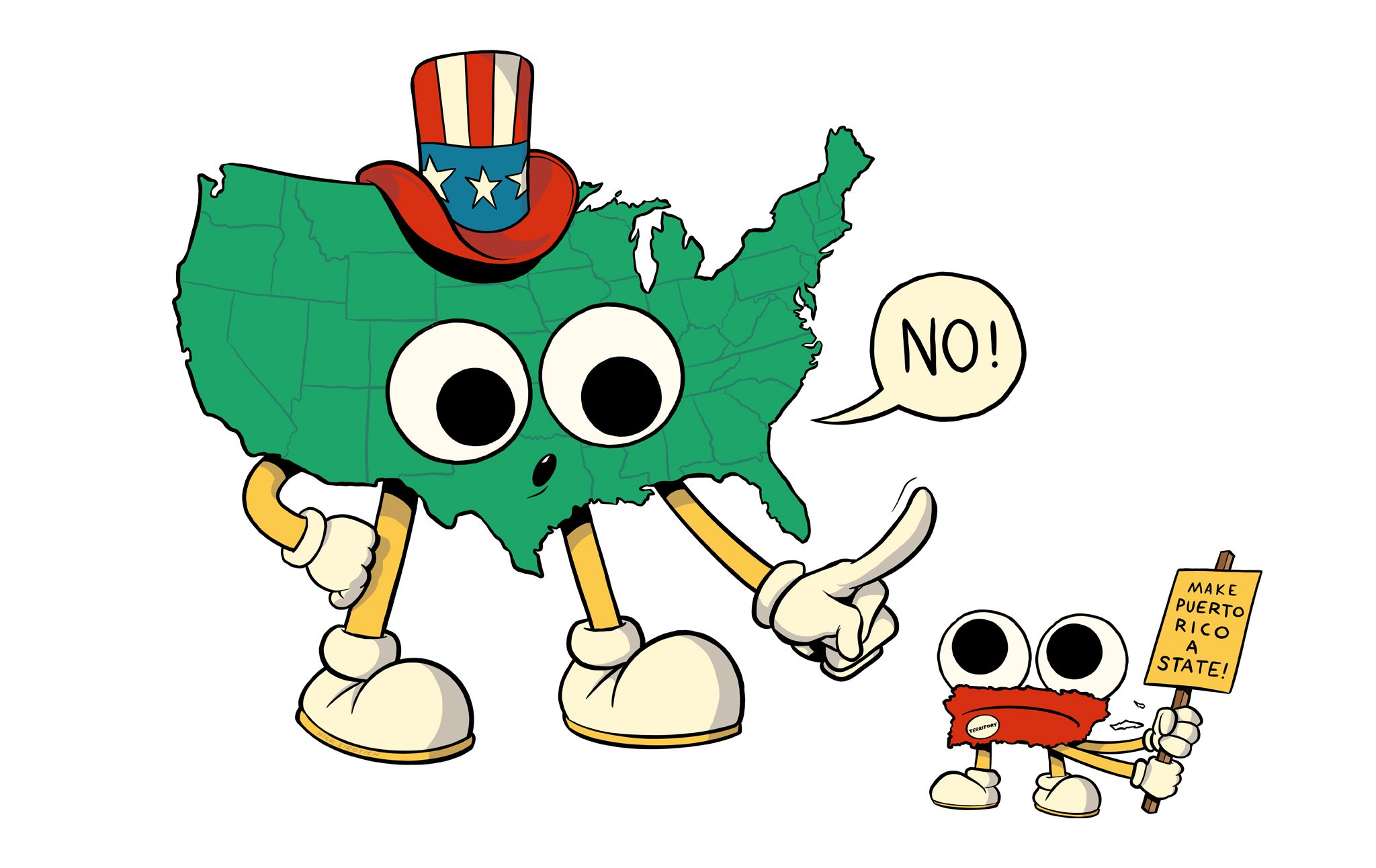
Puerto Rico, a vibrant Caribbean jewel, often sparks curiosity about its political status. While it shares a deep and intricate relationship with the United States, it remains a U.S. territory, not a state. This distinction has significant implications for its residents, governance, and its unique position on the world stage. Understanding this status requires delving into a complex history of colonialism, political evolution, and ongoing debate.
The journey of Puerto Rico from a Spanish colony to a U.S. territory is a pivotal part of its story. After the Spanish-American War in 1898, Spain ceded Puerto Rico, along with other territories, to the United States under the Treaty of Paris. This marked the beginning of a new chapter, one characterized by evolving interpretations of citizenship, governance, and self-determination.
The Historical Roots of a Complex Relationship
The initial period under U.S. control was one of military rule, followed by the Foraker Act of 1900, which established a civilian government but maintained significant U.S. authority. This act classified Puerto Rico as an “unincorporated territory,” a legal distinction that has shaped its relationship with the mainland. Under this designation, fundamental rights and constitutional protections were not automatically extended to the island in the same way they would be to a state.
A major turning point arrived in 1917 with the Jones-Shafroth Act, which granted Puerto Ricans U.S. statutory citizenship. This meant that individuals born in Puerto Rico were U.S. citizens, able to serve in the U.S. military and travel freely to the mainland. However, this citizenship was not the same as that held by those born in a state; it was a statutory citizenship, bestowed by Congress, rather than a constitutional one. This subtle yet significant difference has been a recurring theme in the ongoing discussions about Puerto Rico’s political future.
The Evolution of Governance and Representation
Over the decades, Puerto Rico has seen its governance evolve. The Puerto Rican Federal Relations Act of 1950, also known as Public Law 600, allowed Puerto Rico to draft its own constitution. This led to the establishment of the Commonwealth of Puerto Rico in 1952, a status that granted the island greater internal autonomy while maintaining its territorial ties to the U.S. The Commonwealth status, while popular among many Puerto Ricans, is not a recognized status under international law, and its precise meaning has been a subject of much legal and political interpretation.
Despite having its own elected governor and a bicameral legislature, Puerto Rico lacks full representation in the U.S. Congress. Its sole representative in the House of Representatives, the Resident Commissioner, can participate in debates and committees but cannot vote on final passage of legislation. This lack of voting representation is a significant grievance for many on the island, as it means they have no direct say in the laws that govern them and affect their lives. Furthermore, Puerto Ricans cannot vote in U.S. presidential elections, even though they are U.S. citizens.

The Economic and Political Realities of a U.S. Territory
The territorial status of Puerto Rico has profound economic consequences. While it is part of the U.S. customs territory, meaning goods can move freely between the island and the mainland without tariffs, it is subject to U.S. federal laws. However, a critical difference lies in taxation. Puerto Ricans do not pay federal income tax on income earned in Puerto Rico. This has historically been seen as an incentive for businesses to operate on the island, but it also means that Puerto Rico does not receive the same level of federal funding as states, particularly in areas like Medicare and Medicaid.
The island has also faced significant economic challenges, including a prolonged recession and a substantial debt crisis. The current economic situation has further intensified the debate over statehood, commonwealth status, and even independence. Proponents of statehood argue that it would bring greater federal investment, economic stability, and full voting rights for Puerto Ricans. They point to the economic benefits enjoyed by existing states and believe that statehood would level the playing field.

The Ongoing Debate: Statehood, Commonwealth, or Independence?
The question of Puerto Rico’s political status is not a settled one; it is a dynamic and deeply debated issue. Several referendums have been held over the years to gauge public opinion. While these have shown varying levels of support for different options, no clear consensus has emerged that has led to a definitive change in status.
Statehood has consistently garnered significant support. Advocates believe it is the only way to achieve full political equality and economic parity with the continental United States. They envision Puerto Rico as the 51st state, with representation in Congress and access to the same federal programs and resources as other states. This would, in their view, unlock the island’s full economic potential and address long-standing disparities.
The Commonwealth status, while often described as a form of self-government in association with the U.S., has also been a strong contender. Supporters of the commonwealth argue that it offers a unique blend of autonomy and U.S. citizenship that best suits the island’s identity and cultural heritage. They emphasize the ability to maintain distinct cultural traditions while benefiting from the security and economic ties to the U.S. However, critics argue that the current commonwealth status is inherently unequal and does not provide sufficient political or economic power.
A smaller but vocal segment of the population advocates for Independence. This option envisions a sovereign nation of Puerto Rico, free from U.S. political control. Proponents of independence often highlight the island’s distinct national identity and believe that true self-determination can only be achieved through full sovereignty. However, this path also raises significant questions about economic viability and international relations.
The U.S. Congress ultimately holds the power to grant statehood or to facilitate any change in Puerto Rico’s status. However, political will on the mainland has been a significant obstacle. The complex dynamics of U.S. politics, including concerns about the potential addition of a new state with its own unique political leanings, have contributed to the inertia.
Beyond the political discourse, Puerto Rico offers a captivating travel experience, blending rich history, stunning natural beauty, and a vibrant culture. From the historic streets of Old San Juan, a UNESCO World Heritage site, to the lush El Yunque National Forest, the island beckons with diverse attractions. Visitors can explore the Bacardi Distillery, experience the lively music scene, and indulge in the delicious local cuisine. The accommodations range from luxury resorts like the Dorado Beach, a Ritz-Carlton Reserve, to charming boutique hotels and vacation rentals, catering to every traveler’s preference. The island’s unique status, while a subject of ongoing political debate, contributes to its distinct identity and allure, making it a destination that is both culturally rich and politically significant. The story of Puerto Rico is one of resilience, identity, and an ongoing quest for self-determination, woven into the fabric of its stunning landscapes and the spirit of its people.
LifeOutOfTheBox is a participant in the Amazon Services LLC Associates Program, an affiliate advertising program designed to provide a means for sites to earn advertising fees by advertising and linking to Amazon.com. Amazon, the Amazon logo, AmazonSupply, and the AmazonSupply logo are trademarks of Amazon.com, Inc. or its affiliates. As an Amazon Associate we earn affiliate commissions from qualifying purchases.